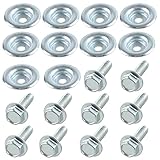
I’ve seen a lot of weird stuff come across my workbench over the years, and frankly, a lot of it is just glorified junk. You see these fancy kits with all sorts of specialized fasteners, and you think, ‘This is it! This will solve all my problems!’ Then you end up with a drawer full of tiny screws you’ll never use and a hole in your wallet.
That’s why I wanted to talk about something specific today: a 325 bolts and nuts. It sounds niche, right? But understanding what it actually means, and more importantly, what it doesn’t mean, can save you a ton of frustration and a good chunk of cash. Let’s cut through the noise.
Peeling Back the Layers of a 325 Bolts and Nuts
Let’s get this straight right off the bat: ‘a 325 bolts and nuts’ isn’t some magical, industry-standard designation for a specific type of fastener. Nobody’s going to walk into a hardware store and ask for ‘a 325 bolts and nuts’ and expect a helpful answer. It’s more likely a descriptor for a kit or a collection of bolts and nuts, usually implying a certain quantity or a general assortment. Think of it like a mixed bag of candy – there’s variety, but you don’t get a specific flavor profile unless someone tells you what’s in the bag.
When you see a product labeled like this, especially online, it’s often marketing speak. They’re trying to convey that you’re getting a decent amount of hardware for your buck, likely covering a range of common sizes and types. The ‘325’ is the number of individual pieces. So, ‘a 325 bolts and nuts’ is simply a bundle containing 325 pieces of assorted bolts and nuts. The real question then becomes: what kind of bolts and nuts are they? That’s where the devil, or the disappointment, often lies.
I remember buying a ‘Mega Bolt and Nut Assortment’ once that claimed to have hundreds of pieces. Sounded great. I figured it would cover all those little projects I kept putting off.
When it arrived, it was mostly tiny machine screws, the kind you find in eyeglass repair kits, and a handful of washers that barely fit anything. I think maybe 50 of the pieces were actual usable bolts for general household fixes.
The rest? Dust collectors. That experience taught me that the number of pieces is less important than the quality and variety of those pieces.
It’s a classic case of quantity over quality, and it’s a trap many DIYers fall into. If you’re looking for a specific size or type of fastener for a important job, a generic ‘325 bolts and nuts’ kit is probably going to let you down. You’re better off buying exactly what you need, even if it means a separate trip or ordering a smaller, more specific pack.
What to Actually Look for (besides a Big Number)
So, if the number ‘325’ isn’t the be-all and end-all, what should you be looking for when you’re in the market for a general assortment of bolts and nuts? It breaks down into a few key areas: material, common sizes, types of threads, and the presence of accompanying hardware like washers. (See Also: Are All Honda Atv Bolt Patterns The Same )
Material: Most general kits will be made of either zinc-plated steel or stainless steel. For most indoor, general-purpose use, zinc-plated steel is fine. It offers decent corrosion resistance and is relatively inexpensive. However, if you’re working on anything outdoors, in a damp environment, or where rust is a concern, stainless steel is the way to go. It costs more upfront, but it won’t degrade and potentially fail like zinc-plated steel can over time. I’ve had zinc-plated bolts rust and seize up in outdoor furniture, forcing me to cut them off – a real pain. Always check the material, especially if the listing is vague.
Common Sizes: This is where the ‘325 bolts and nuts’ kits can be hit or miss. A good assortment should include a range of diameters, typically from smaller machine screw sizes (like #6 or #8) up to larger ones (like 1/4 inch, 5/16 inch, and maybe even 3/8 inch). Equally important is the length. You want a mix of short bolts for light-duty connections and longer ones for deeper assemblies. If a kit predominantly features only one or two sizes, it’s not a versatile assortment.
Thread Type: Bolts and nuts come with different thread pitches. The most common for general use are coarse threads (UNC – Unified National Coarse) and fine threads (UNF – Unified National Fine). For most DIY and general repairs, coarse threads are what you’ll encounter. Fine threads are used when more precise adjustments are needed or in situations where vibrations might loosen the fastener. A decent kit should have a mix, but a heavy bias towards coarse threads is usually acceptable for a general bundle.
Washers: Honestly, almost every bolt needs a washer. Flat washers distribute the load, preventing the bolt head or nut from digging into the material. Lock washers help prevent loosening due to vibration. A kit that includes a good selection of both flat and lock washers (in compatible sizes) adds significant value. If a kit only includes bolts and nuts, you’ll likely end up buying washers separately anyway, which adds to the overall cost and hassle.
Common Bolt and Nut Kit Contents: A Verdict
| Component | Typical Presence (in a decent 325-piece kit) | Verdict |
|---|---|---|
| Assorted Bolts (Zinc-Plated Steel) | High | Standard, good for most indoor use. |
| Assorted Nuts (Zinc-Plated Steel) | High | Matches bolts, key. |
| Assorted Bolts (Stainless Steel) | Medium | Great to see, especially for outdoor use. |
| Assorted Nuts (Stainless Steel) | Medium | Matches stainless bolts. |
| Flat Washers (Zinc-Plated) | High | Very important, don’t skip. |
| Lock Washers (Zinc-Plated) | Medium | Useful for vibration-prone applications. |
| Nylon Insert Lock Nuts (Nyloc) | Low | Less common in general kits, but a plus. |
| Carriage Bolts | Low | Specialized, not usually in broad assortments. |
| Wing Nuts | Low | For hand-tightening, often included. |
The ‘325 Bolts and Nuts’ Kit: Real-World Use Cases (and When to Avoid Them)
Okay, so when is grabbing a ‘325 bolts and nuts’ assortment actually a good idea? I’d say it’s best for those times when you need a variety of fasteners for general, non-important repairs around the house, garage, or workshop. Think of fixing a loose cabinet hinge, reassembling a garden bench, tightening up a wobbly chair, or attaching a bracket for a shelf where the load isn’t extreme. These are the tasks where having a few different sizes readily available saves you a trip to the store mid-project.
My personal anecdote here: I was building a simple workbench out of scrap wood. I had a bunch of different thicknesses of wood to join, and I needed a variety of bolt lengths. I ended up buying a moderately priced, mid-sized assortment kit (not specifically ‘325’ but in that ballpark) and it was a lifesaver. I didn’t have to rummage through dozens of tiny bins or buy a whole box of one size when I only needed three bolts. It made the job significantly smoother.
However, and this is a big one, you should absolutely avoid these general kits for anything structural, safety-important, or that requires high precision. This includes things like building a deck, repairing a vehicle, installing heavy machinery, or any application where fastener failure could lead to serious injury or significant damage. For those situations, you need to buy specific, rated fasteners from a reputable supplier. The cheap steel in a generic kit might not have the tensile strength or shear strength required. It’s like using a toothpick to hold up a heavy mirror – it just won’t cut it.
Also, if you’re working with specialized materials, like certain types of plastics or composites, you might need specific thread patterns or head types that won’t be found in a standard assortment. Always consider the demands of your project before you commit to a grab-bag approach. It’s about matching the fastener to the job, not just having a fastener. (See Also: Are Ak Bolts Interchangeable )
Common Mistakes and How to Dodge Them
One of the biggest mistakes people make with these assorted kits is assuming all the pieces are created equal. They’re not. Cheap bolts and nuts can have poor thread engagement, soft metal that strips easily, or inconsistent plating that offers little protection against rust. I once tried to use a nut from a generic kit on a bolt I already had, and the threads just wouldn’t catch properly. It was like trying to screw a square peg into a round hole, except the pegs and holes were both slightly misshapen. It turned out the nut was manufactured to slightly off-spec dimensions. Frustrating, to say the least.
Another common pitfall is not checking the included sizes and types before you buy. If a kit lists ‘325 pieces’ but upon closer inspection (or reading reviews), you see it’s 300 tiny screws and only 25 actual bolts, that’s not a good deal for most people. You’re paying for a lot of filler. Always look for a detailed breakdown of what’s included, or at least a range of common sizes. If the listing is vague, proceed with extreme caution.
My contrarian take? Most people buy too many assorted kits. They have three different boxes of assorted screws and bolts, each containing mostly the same common sizes. They think having more variety is better, but in reality, they’re just accumulating duplicates of the less useful items. Instead of buying multiple ‘assorted’ kits, consider buying one decent-sized one that has a good variety and then supplementing it with specific sizes or types you find yourself using most often. You’ll end up with a more usable collection and less wasted money.
Finally, don’t forget about the tools. You’ll need a decent set of wrenches or sockets that match the bolt and nut sizes in your kit. A universal wrench set might seem convenient, but it often leads to rounding off bolt heads. Having the right-sized tool makes a huge difference in how easily and cleanly you can work with your fasteners. So, factor in the cost of decent tools if you don’t already have them.
Practical Tips for Using Your Assorted Hardware
Once you’ve got your ‘325 bolts and nuts’ kit, here are a few tips to make the most of it and avoid common headaches. First, organize it. As soon as you get the kit, dump it out and sort the bolts by size and type, and do the same for the nuts and washers. A simple plastic organizer with multiple small compartments is your best friend here. Labeling each compartment is even better. This way, when you need a specific bolt, you don’t have to dig through a jumbled mess.
Second, inspect as you go. Before you use any bolt or nut from the assortment, give it a quick once-over. Check the threads for damage, make sure the head isn’t bent, and that the plating looks decent. If something looks off, set it aside. It’s better to use a piece you trust, even if it means you have to go find a replacement. A single failing fastener can compromise the entire assembly.
Third, when in doubt, use a washer. As I mentioned, washers are important. Use flat washers to spread the load and prevent damage to your material, especially with softer woods or plastics. Use lock washers (split or toothed) when you’re concerned about vibration loosening the connection. It’s a small step that adds a lot of security and longevity to your work.
Fourth, consider thread locker for important joints. While most general kits won’t include thread locker, if you’re using bolts from an assortment for something that will experience any kind of jiggling or vibration, applying a dab of blue thread locker (the removable kind) can make a world of difference. It prevents those nuts from slowly backing off over time, which can be a real nuisance and a potential safety hazard. (See Also: Are All Bolt Patterns The Same )
Finally, if you find yourself repeatedly needing a specific size or type of bolt that’s rare in your assortment, make a note of it. After a few projects, you’ll start to see patterns in what you use most. Then, you can buy a small box of just those specific fasteners. This hybrid approach – a general assortment for variety, supplemented by specific, frequently used items – is how you build a truly useful hardware collection without breaking the bank or ending up with drawers full of useless bits.
Frequently Asked Questions About General Bolt and Nut Kits
Are ‘325 Bolts and Nuts’ Kits Good for Beginners?
For absolute beginners tackling very minor repairs, a general assortment kit can be a convenient starting point. It allows you to experiment and see what sizes and types you might need more of later. However, it’s important to understand that these kits are generally not for anything requiring significant structural integrity or precise engineering. They’re best for light-duty household fixes. Don’t rely on them for anything important.
Can I Use a Zinc-Plated Bolt and Nut Outdoors?
You can, but it’s not ideal. Zinc plating offers some rust resistance, but it’s not permanent, especially in wet or humid outdoor conditions. Over time, the zinc will wear away, and the steel underneath will start to rust. For any outdoor application where longevity and corrosion resistance are important, stainless steel fasteners are a much better, albeit more expensive, choice. Expect zinc-plated hardware to need replacement sooner outdoors.
How Do I Know If the Bolts and Nuts in a Kit Will Fit Together?
Typically, a reputable kit will make sure that the nuts provided are designed to fit the bolts included. The important factor is the thread pitch and diameter. For example, a 1/4-20 bolt (meaning 1/4 inch diameter, 20 threads per inch) should come with 1/4-20 nuts. Most general assortments stick to common coarse threads for ease of compatibility. If you’re unsure, check the product description for specific thread sizes or look at customer reviews where people often discuss fitment issues.
What Is the Difference Between Coarse and Fine Threads in a Kit?
Coarse threads (like UNC) have fewer, larger threads per inch. They are easier and faster to thread and are generally more resistant to damage from dirt or cross-threading. Fine threads (like UNF) have more, smaller threads per inch, allowing for finer adjustments and greater strength in some applications, but they are more susceptible to damage and cross-threading. General kits often include more coarse-threaded fasteners as they are more common for everyday use.
Conclusion
So, when you see ‘a 325 bolts and nuts,’ understand it’s a quantity, not a specification. It’s a grab bag, and you need to be smart about what you’re grabbing. Don’t let the number fool you into thinking you’re getting a high-quality, all-purpose solution. Focus on the material, the range of sizes, and whether it includes those all-important washers.
For quick fixes and light-duty tasks, a well-chosen assortment can be a real time-saver. But for anything that matters, anything structural or safety-related, you’re far better off buying exactly what you need, piece by piece. It might seem like more effort upfront, but it saves you the headache and potential disaster of using the wrong fastener.
My advice? Buy smart, organize ruthlessly, and always use a washer. You’ll thank yourself later.