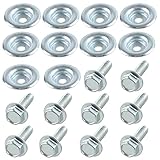
I remember the first time I stripped a bolt. It was a classic case of overconfidence and cheap tools. I was trying to save a buck, thinking, ‘It’s just a bolt, how hard can it be?’ Turns out, pretty darn hard when you’ve mangled the head trying to force it out.
That experience taught me a brutal lesson about a 325 a 140 a 490 a 255 bolt never reuse. Some things are just designed for single use, and trying to cheat the system ends up costing you way more in time, frustration, and potential damage.
This isn’t some corporate memo telling you to follow rules. This is me, after years of wrenching and regretting, telling you what’s actually smart and what’s a waste of your Saturday.
Why Some Bolts Are One-Hit Wonders
Look, not all bolts are created equal, and definitely not all are meant to be yanked out and shoved back in like a worn-out sock. When you’re dealing with specific fasteners, like certain types of locking bolts or bolts that are designed to deform as they’re tightened, reusing them is basically asking for trouble. Think about those little pinch bolts on some suspension components, or certain axle bolts. They’re engineered to slightly mushroom or deform into place to create a super secure lock.
Once they’ve done their job and deformed, they’ve lost that important integrity. Put them back in, and they might not seat properly, they might not have the same clamping force, or worse, they could work themselves loose over time.
I learned this the hard way when a brake caliper bolt I reused backed out on me during a spirited drive. Thankfully, it was just a scare, but it could have been a lot worse. The vibration and stress of driving is no joke, and a compromised fastener is an invitation for disaster.
The common advice you’ll hear is ‘always use new bolts.’ And yeah, for important stuff like engine internals or suspension, that’s usually the best advice. But it’s not always about the type of bolt, it’s about the material and the torque spec. If a bolt is a specific grade, say a Grade 8.8 or 10.9, and it’s been torqued to its exact specification, the threads can get stretched or stressed.
Reusing it means you’re already starting with a bolt that’s been taken to its limit. It’s like trying to stretch a rubber band back to its original shape after you’ve already pulled it to its breaking point.
It’s just not going to have the same elasticity or strength. For me, any bolt that has a important function and a very specific torque value is a prime candidate for replacement. I’ve seen too many ‘almost’ failures to mess around with that.
Sometimes, the reason a bolt is a one-and-done deal is because of its locking mechanism. Many modern vehicles use self-locking bolts with pre-applied threadlocker or designs that deform the threads.
These are not meant to be disturbed. If you remove them and try to put them back, that locking feature is gone. You might be tempted to just add some fresh threadlocker, but that’s often a band-aid. The original design integrity is compromised.
I once tried to reuse a handful of these on a motorcycle fairing that I was constantly removing for access. Big mistake. One of them vibrated loose and my fairing started flapping like a bird’s wing.
Had to pull over and limp home, praying the others stayed put. That taught me that for anything with a built-in locking mechanism, new is the only way to go. It’s just not worth the risk.
What to Look for: Red Flags on Your Fasteners
So, how do you know when a bolt is begging for retirement instead of a second tour of duty? It’s not rocket science, but it does require a bit of paying attention. First off, visually inspect the bolt.
Are the threads looking chewed up, cross-threaded, or otherwise damaged? If you can see nicks, gouges, or any deformation on the threads, that’s a big red flag. It means the bolt has likely encountered resistance when it was installed or removed, and that resistance can compromise the threads’ integrity. Think of it like trying to screw a slightly bent screw into a piece of wood.
It’s not going to go in straight, and it’s not going to hold as well. The same applies to metal threads. (See Also: Are All Honda Atv Bolt Patterns The Same )
I once spent an hour trying to get a bolt to thread into a casting, only to realize I was trying to force a slightly mangled bolt. Ended up cross-threading it and had to drill and tap the whole thing. Lesson learned: inspect the threads before you even think about putting it back.
Beyond the threads, check the head of the bolt. Is it rounded out? Are the drive slots (whether it’s a hex, Torx, or Phillips) looking chewed up or stripped?
If you had to use excessive force or the wrong tool to get it out, the head is probably compromised. A bolt with a rounded-out head is not only a pain to remove next time, but it also might indicate that the bolt itself was subjected to excessive torque or impact.
This can weaken the bolt shaft. I’ve got a few bolts sitting in my ‘scrap’ bin that look okay from a distance, but up close, you can see the hex head is slightly deformed from when I had to use a pipe wrench on it because my socket kept slipping. That bolt is now relegated to holding my garden hose reel. Definitely not for anything structural.
Another thing to watch out for is any signs of stretching or elongation. This is harder to spot visually unless you’re experienced, but sometimes you can feel it. If a bolt feels ‘soft’ or like the threads are just spinning without much resistance even when you know it should be tight, it might be stretched.
This is especially true for high-tensile bolts that have been torqued repeatedly. They can undergo plastic deformation, meaning they stretch beyond their elastic limit.
When that happens, the bolt is basically permanently weakened. I’ve had bolts feel okay on install, but then start backing out on their own after a few hundred miles. That’s a classic sign of a stretched bolt that lost its clamping force. For important applications, if you have any doubt at all, err on the side of caution and get a new bolt.
You can find good quality ones for relatively cheap, especially for common sizes like a 325 a 140 a 490 a 255 bolt never reuse.
Common Mistakes and Why They Bite You
The most common mistake people make, myself included, is the ‘it looks fine’ syndrome. You pull a bolt out, it doesn’t look terrible, and you think, ‘Why spend $2 on a new one when this one still has threads?’
This is where you’re gambling with your project’s integrity. That microscopic bit of thread damage, or the slight stretching you can’t see, can make all the difference.
I once reused a few suspension bolts on an old project car. They looked okay, and I torqued them to spec. A few months later, I hit a pothole, and one of the bolts failed. The wheel wobbled, and I had to get it towed.
The mechanic took one look and said, ‘See this thread damage? This bolt was already weak.’
Cost me a tow, a new bolt, and a lot of embarrassment.
Another common pitfall is the over-reliance on threadlocker to ‘fix’ a questionable bolt. People will reuse a bolt that’s a bit worn and then slather it with red Loctite, thinking that’ll hold it. While threadlocker is fantastic stuff, it’s not a magic wand.
It’s meant to supplement the clamping force and vibration resistance of properly seated, undamaged fasteners. If the threads are damaged or the bolt is stretched, the threadlocker might hold it for a while, but under significant stress, it can still fail. (See Also: Are Ak Bolts Interchangeable )
It’s like putting a fancy bandage on a broken bone. It looks like you’re fixing it, but the underlying problem remains.
For anything that’s under serious load or vibration, like engine mounts, exhaust components, or anything in the drivetrain, new fasteners are a must.
People also make the mistake of assuming all bolts are created equal. They’ll grab a random bolt from their miscellaneous bin because it ‘looks about the right size’ and thread it in. This is a recipe for disaster.
Bolts come in different grades (like Grade 5, Grade 8, or metric equivalents like 8.8, 10.9, 12.9) which denote their strength. They also have different thread pitches and lengths. Using a bolt of the wrong grade means it might not have the tensile strength to hold the load, leading to failure.
Using a bolt with the wrong thread pitch can damage the threads in the mating part or simply not seat properly, leading to a loose connection. I once tried to reuse an old exhaust bolt on a lawnmower engine. It was the same size, but it was a lower grade.
The heat and vibration quickly caused it to stretch and the muffler started rattling loose, making a terrifying racket. Stick to the manufacturer’s specifications or use equivalent, high-quality replacement fasteners. If you’re unsure about a specific bolt, like a 325 a 140 a 490 a 255 bolt never reuse, it’s always better to research its specs.
Real-World Use Cases: When New Is the Only Option
There are certain applications where the cost of a new bolt is laughably small compared to the potential consequences of using an old one. The most obvious is anything related to safety systems.
Think about seatbelt bolts, brake caliper bolts, suspension components like control arm bolts, or steering linkage nuts and bolts. These are life-important.
A failure here isn’t just an inconvenience; it can be catastrophic. Manufacturers specify new fasteners for these areas for a reason. They’ve undergone rigorous testing and calculations, and they know that a used bolt, even one that looks okay, might not perform to the required safety standard under stress. I’ve had friends who thought they’d save a few bucks by reusing brake caliper bolts.
One guy’s caliper came loose at speed. He was lucky to avoid an accident. Now, he’s the first guy to tell you to buy new bolts for brakes.
Engine and drivetrain components are another area where you absolutely do not want to reuse bolts unless explicitly stated otherwise. This includes head bolts, connecting rod bolts, main bearing cap bolts, and anything holding the transmission or differential together. These bolts are often subjected to extreme heat, pressure, and shear forces. Many of these bolts are torque-to-yield, meaning they are designed to stretch a specific amount to achieve the precise clamping force needed.
Once they’ve yielded, they’ve reached their elastic limit and are permanently altered. Reusing them can lead to improper clamping, gasket failure, or even catastrophic mechanical failure.
I once had a buddy who reused head bolts on a rebuild. The engine overheated within a week because the head gasket started leaking due to insufficient clamping force. He ended up having to pull the engine again and buy new bolts.
The cost of the second rebuild was far greater than the initial savings.
Here’s a table that breaks down some common areas where reusing bolts is a bad idea, and why: (See Also: Are All Bolt Patterns The Same )
| Application Area | Why You Should NOT Reuse Bolts | Opinion/Verdict |
|---|---|---|
| Brake System (Calipers, Rotors, Mounts) | Important for safety. Bolts can be stressed, threads damaged, and clamping force reduced, leading to caliper or rotor detachment. | Absolutely NO. Safety first. |
| Suspension Components (Control Arms, Struts, Ball Joints) | Subject to constant shock and vibration. Bolt failure can lead to loss of steering control or wheel detachment. | Never. Your wheels need to stay attached. |
| Engine Internals (Head Bolts, Rod Bolts, Main Caps) | Torque-to-yield bolts are common. Reusing them leads to improper clamping, leaks, and potential engine failure. High heat and pressure stress. | 100% New. Engine integrity is most important. |
| Exhaust System Components | Subject to extreme heat cycles and vibration. Bolts can stretch and weaken, leading to leaks and noise. Special high-temp bolts are often used. | Usually Not. Heat cycling weakens them. |
| Seatbelts and Safety Harnesses | Directly related to occupant safety. Any compromise can lead to failure in an accident. | Absolutely Not. Life-saving hardware. |
Practical Tips for Fastener Management
Alright, so we’ve established that reusing bolts, especially important ones, is generally a bad idea. But what’s the best way to manage your fasteners so you’re not scrambling to find replacements every time you turn a wrench? First, invest in a good set of quality sockets and wrenches. This sounds basic, but using the wrong size socket or a worn-out tool is a surefire way to strip a bolt head, turning a reusable bolt into scrap.
Having the right tool for the job means you’re less likely to apply excessive force or damage the fastener. I keep a dedicated set of impact sockets for my impact wrench and a set of regular sockets for my breaker bar, making sure I’m using the appropriate tool for the job.
A good torque wrench is also a must. Not only does it prevent over-tightening (which can stretch or break bolts), but it also makes sure you’re meeting the manufacturer’s specifications for important fasteners.
Organization is key. When you’re taking something apart, especially a complex assembly, use a system to keep track of your bolts. Small plastic containers with lids, magnetic bowls, or even Ziploc bags labeled with masking tape can work wonders.
For really complex jobs, you can even draw a diagram of where each bolt came from. This prevents you from mixing up different lengths or types of bolts, which is a common mistake. For example, on a car door panel, you might have three different lengths of screws. If you mix them up, you could end up with screws sticking out where they shouldn’t, or not being able to get the panel back on flush.
I’ve learned the hard way that a few minutes spent organizing saves hours of frustration later.
When in doubt, buy new. It’s a simple mantra, but it’s incredibly effective. Most common bolts are relatively inexpensive.
If you’re working on a project and you’ve removed a bolt that’s involved in a important system, or if it looks even slightly suspect, just buy a new one. You can often find direct replacements at your local auto parts store or online hardware retailers.
For specialty bolts, like the a 325 a 140 a 490 a 255 bolt never reuse, look for reputable fastener suppliers online. They usually have detailed specifications and can help you find exactly what you need. It’s a small investment for peace of mind and the assurance that your work is safe and sound. Don’t be the person who cuts corners on fasteners – it’s rarely worth the risk.
People Also Ask
Can You Reuse Lug Nuts?
Generally, it’s advised not to reuse lug nuts, especially if they show any signs of wear, corrosion, or deformation on the seating surface. The threads can become stretched or damaged over time, compromising their ability to hold the wheel securely. While some might get away with it for a short while, the risk of a wheel coming loose is too high to justify reuse for important safety components like these. Always opt for new lug nuts when you have your tires removed or replaced.
Are Wheel Bolts Single Use?
Many modern wheel bolts, particularly those designed for alloy wheels or with specific locking mechanisms, are intended for single use. They are often made of materials that can stretch or deform slightly when torqued to specification, creating a secure lock. Reusing these bolts can lead to a loss of clamping force or the bolt working itself loose over time, which is a serious safety hazard. Always check your vehicle’s manual or consult a professional if you’re unsure about reusing wheel bolts.
What Happens If You Reuse a Torque-to-Yield Bolt?
If you reuse a torque-to-yield (TTY) bolt, you are gambling with the integrity of the assembly. These bolts are designed to stretch to a specific point to achieve the correct clamping force. Once they have yielded, they have permanently deformed. Reusing them means they won’t achieve the correct clamping force, leading to potential leaks (like head gaskets), premature wear, or even catastrophic failure of the component they are holding. It’s a important area where replacement is almost always mandatory.
Can I Reuse a Bolt with Thread Locker?
While thread locker is designed to keep bolts from loosening due to vibration, it’s not a substitute for a healthy bolt. If a bolt’s threads are damaged, stretched, or otherwise compromised, simply adding more thread locker isn’t a reliable fix. The thread locker helps, but the underlying weakness of the fastener remains. For important applications, it’s best to use new bolts even if they previously had thread locker applied. The thread locker itself is also often a single-use product in terms of its effectiveness after the initial application and curing.
Final Thoughts
Look, the bottom line is that while you can sometimes get away with reusing a bolt, especially on non-important items, it’s a gamble that rarely pays off in the long run. The few bucks you save on a replacement fastener are nothing compared to the potential costs of failure – be it a ruined project, a damaged component, or even a safety issue.
My advice? Treat fasteners with respect. If it’s a important component, a high-stress area, or a bolt that looks even slightly suspect, just replace it. It’s the cheapest insurance you can buy for your work and your safety. Keep an eye out for those a 325 a 140 a 490 a 255 bolt never reuse situations.
Next time you’re deep into a project, take a moment before you reinstall that old bolt. Ask yourself: is this really worth the risk? My guess is probably not.