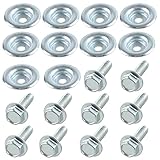
I swear, for a solid week, my toolbox was a war zone. Bolts everywhere. Little baggies of confusion. I was trying to figure out the deal with a 325 a 425 bolts for a project that felt simple on paper but quickly devolved into a metallurgy mystery novel. Everyone online just talks numbers and standards, but nobody tells you what it feels like when you’ve got two bolts that look identical in your hand but one is suddenly going to strip your threads or snap under load. It’s maddening.
You’d think fasteners would be straightforward, right? They’re just… metal sticks with threads. But dive a little deeper, and the differences, especially between common sizes like these, can be pretty significant for your sanity and your project’s integrity.
Let’s cut through the jargon and talk about what actually matters when you’re staring down a pile of hardware.
The Subtle but Significant Differences in 325 vs 425 Bolts
Okay, let’s get down to brass tacks, or rather, steel and alloy. When you’re looking at a 325 a 425 bolts situation, you’re not just picking a number out of a hat.
These designations refer to specific material properties, primarily strength and hardness, as defined by industry standards. For the most part, people are talking about the SAE (Society of Automotive Engineers) J429 standard, which is super common for bolts used in automotive and general mechanical applications. The J429 standard categorizes bolts into grades, and while it doesn’t have a ‘Grade 325’ or ‘Grade 425’ directly, these numbers often get tossed around in relation to the tensile strength requirements. It’s a bit of a shorthand, really, and can sometimes lead to confusion because the official grades are 1, 2, 5, 7, and 8.
However, in the world of manufacturing and sometimes even in parts catalogs, you might see references to strength levels that align with these kinds of numbers, where a ‘325’ might imply a lower strength material and a ‘425’ a higher one. Think of it as a simplified way someone is trying to communicate strength without getting bogged down in the full SAE grade details, or possibly referring to different regional or older standards.
The real meat of the difference lies in the materials used and how they are heat-treated. Grade 2 bolts, for instance, are your everyday, run-of-the-mill bolts. They’re common, relatively soft, and good for general assembly where high stress isn’t a concern. Grade 5 bolts are a step up, heat-treated to offer more strength.
Then you have Grade 8 bolts, which are significantly stronger and harder, suitable for heavy-duty applications where failure is not an option. When people informally talk about ‘325’ strength, they’re likely pointing to something comparable to a lower-end bolt, maybe even softer than a Grade 2 in some contexts, or just a basic, unhardened steel. A ‘425’ strength, on the other hand, hints at something closer to, or exceeding, the strength of a Grade 5 or even a Grade 8 bolt, depending on the exact context and the manufacturer’s interpretation or proprietary naming. It’s the tensile strength—how much pulling force a bolt can withstand before it breaks—that’s the big differentiator.
A higher number implies greater tensile strength, meaning it can handle more load. This directly impacts what kind of jobs you can use each bolt for.
Using a weaker bolt where a stronger one is needed is a recipe for disaster, leading to loose connections, bent bolts, or outright failure.
The implications go beyond just strength. Harder bolts are also more resistant to deformation and wear. So, if you’re working on something that experiences vibration or significant mechanical stress, a higher-strength bolt (like what a ‘425’ designation might imply) will hold its connection more reliably and for longer. Conversely, you don’t want to use an overly hard bolt in a situation where some flexibility or give is needed, as it might transfer stress to other components or simply snap under shock loads if it’s too brittle. It’s a balancing act, and understanding these implied strength levels is the first step to not wasting money and time on the wrong hardware.
Why the Material and Heat Treatment Are the Real Story
Forget the numbers for a second and think about the raw ingredients. The actual composition of the steel is key.
Bolts designated with higher strength ratings, like what you might associate with a ‘425’ strength, are typically made from alloy steels. These aren’t just plain old carbon steel; they have other elements like chromium, molybdenum, or vanadium mixed in. (See Also: Are All Honda Atv Bolt Patterns The Same )
These alloying elements, combined with specific heat treatments, are what give the bolt its enhanced mechanical properties. Heat treatment is where a lot of the magic happens. Processes like quenching and tempering are used to make the steel harder and stronger.
Quenching involves heating the metal to a high temperature and then rapidly cooling it, making it very hard but also brittle. Tempering is a subsequent process where the metal is reheated to a lower temperature and held there for a period, which reduces brittleness while retaining much of the hardness and increasing toughness—the ability to absorb energy and deform without fracturing. This is the dance that turns a piece of plain steel into something that can hold your engine together.
When you see a bolt that’s supposed to be in the ‘425’ strength category, you can almost guarantee it’s undergone a more rigorous heat treatment than a bolt in the ‘325’ category, which might be made from a simpler carbon steel and perhaps not heat-treated at all, or only minimally. This difference in treatment is why a Grade 5 bolt feels noticeably sturdier than a Grade 2, and a Grade 8 is a whole other ballgame. The SAE J429 standard outlines specific tensile strength ranges for each grade. For example, a Grade 2 bolt has a minimum tensile strength of around 60,000 psi, a Grade 5 is around 85,000 psi, and a Grade 8 is a hefty 150,000 psi.
If someone is using ‘325’ and ‘425’ as a proxy for strength, they are likely implying a bolt that falls somewhere below a Grade 2 (for ‘325’) and somewhere around a Grade 5 or even higher (for ‘425’). It’s a less precise system, but it highlights the fundamental difference: one is likely standard steel, the other is engineered steel with superior performance characteristics.
This isn’t just about making a bolt tougher; it’s about making sure it performs predictably under stress, vibration, and varying temperatures without yielding or breaking. When you’re assembling anything important, from a bike frame to a piece of machinery, knowing this fundamental difference is what separates a reliable build from one that’s going to need constant tightening or, worse, fail catastrophically.
Common Mistakes People Make When Choosing Bolts
This is where I’ve personally thrown money into the void. The biggest mistake?
Assuming all bolts are created equal. I once tried to save a few bucks by buying a bulk pack of what looked like perfectly good bolts for a custom shelf bracket. They were cheaper, sure, but after I tightened them down, the shelf felt… wobbly. A few weeks later, one of the bolts had visibly stretched, and the shelf was listing like the Titanic.
Turns out, I’d bought what were basically glorified screws, not proper structural bolts. I should have been looking for something with a higher grade marking, or at least confirming the tensile strength. The other massive blunder is overlooking the thread pitch and diameter for the specific application. You can have the strongest bolt in the world, but if it doesn’t thread properly into the nut or the tapped hole, it’s useless.
This is especially true when you’re dealing with metric versus standard imperial threads, or even fine versus coarse threads within the same system. Mixing these up will lead to either not being able to thread the bolt at all, or worse, cross-threading, which damages both the bolt and the mating component.
Another common pitfall is ignoring the environmental factors. Are these bolts going to be exposed to moisture, salt, or corrosive chemicals?
If so, a standard steel bolt, even a strong one, will rust and degrade over time, weakening the connection. You need to be looking for corrosion-resistant materials like stainless steel, or bolts with protective coatings like zinc or a black oxide finish, depending on the severity of the exposure. Many people just grab whatever looks right and hope for the best, which is a gamble you don’t want to take with anything that carries weight or is subject to movement.
My buddy Kevin once tried to use a bunch of shiny new bolts he found at a flea market for his trailer hitch. They looked great, but after a single rainstorm, they were already showing rust spots. He ended up having to replace them with proper, coated hardware before they compromised the hitch’s safety. (See Also: Are Ak Bolts Interchangeable )
It’s these little details—strength, thread compatibility, and environmental resistance—that make the difference between a job done right and a recurring headache.
| Bolt Characteristic | ‘325’ Implied Strength | ‘425’ Implied Strength | Verdict |
|---|---|---|---|
| Material | Likely basic carbon steel | Likely alloy steel | Higher strength requires better alloys. |
| Heat Treatment | Minimal or none | Significant (quenching & tempering) | Heat treatment is key to hardness and toughness. |
| Tensile Strength (Estimate) | Lower (comparable to < Grade 2) | Higher (comparable to Grade 5 or above) | The core difference for load-bearing. |
| Typical Applications | Light duty, non-important assemblies | Medium to heavy duty, structural components | Match the bolt to the job’s demands. |
| Corrosion Resistance | Poor (unless coated) | Varies, depends on alloy and coating | Key for outdoor or wet environments. |
Putting Bolts to Work: Real-World Applications and Use Cases
So, where do bolts with these kinds of implied strength differences actually show up? If you’re looking at something that falls into the ‘325’ category—meaning lower strength, less solid—you’re generally talking about applications where the load is minimal and failure wouldn’t cause immediate danger or significant damage.
Think of things like attaching a decorative trim piece, assembling lightweight furniture that won’t bear much weight, or in applications where the bolt is primarily there to hold components together in a static position and isn’t subjected to shear or tensile stress. These are often the bolts you find in basic flat-pack furniture kits or in housings for electronics where the plastic or light metal casing provides most of the structural integrity.
They’re cheap, readily available, and do the job for low-stakes tasks. I’ve used bolts like this for small DIY projects around the house, like mounting a small spice rack or securing a decorative sign to a fence post.
They serve their purpose, but you’d never catch me using them for anything load-bearing.
On the flip side, when you’re dealing with bolts that represent a ‘425’ strength level, you’re moving into the territory of significant structural integrity. This is where bolts that are comparable to SAE Grade 5 or Grade 8 come into play. These are the workhorses for automotive repairs, like attaching suspension components, engine mounts, or exhaust systems.
They’re used in construction for framing, decks, and structural supports. Any application where vibrations are present, where significant loads are applied, or where the failure of the fastener could lead to a dangerous situation calls for this level of strength. I used Grade 8 bolts (which is what a ‘425’ might loosely represent) when I rebuilt the suspension on my old truck.
The old bolts were worn and stretched, and I needed fasteners that could handle the constant shock and stress of driving. Using a lower-grade bolt there would have been incredibly foolish and dangerous. Even in home workshops, if you’re building anything sturdy—a workbench, a heavy-duty shelving unit, or a trailer hitch—you’ll want fasteners in this higher strength category.
The key is to identify the forces your assembly will experience and select a bolt that demonstrably exceeds those requirements, not just guess based on appearance.
How to Identify Bolt Strength Markings
The most reliable way to know a bolt’s strength is to look for markings on its head. SAE Grade 2 bolts have no markings. Grade 5 bolts have three radial lines (like a Mercedes-Benz logo). Grade 8 bolts have six radial lines. Higher grades have even more elaborate markings. If you see numbers like ‘325’ or ‘425’, they are likely not official SAE markings but might be manufacturer-specific codes or references to older/different standards. In such cases, it’s best to consult the manufacturer’s specifications or look for alternative identification like color-coding or packaging information if available. When in doubt, always err on the side of caution and assume a bolt without clear, recognized strength markings is of lower quality.
Contrarian Opinion: You Don’t Always Need Grade 8
Here’s something that might ruffle some feathers. Everyone online, especially in the DIY and automotive forums, seems to preach that “only Grade 8 will do” for anything remotely important.
And sure, for important safety components like steering or brake systems, I agree. You want the absolute best you can get. But for a lot of DIY projects, like building a sturdy workbench or attaching a heavy-duty gate, a good quality Grade 5 bolt is often perfectly sufficient, and frankly, cheaper and easier to work with. Grade 8 bolts are harder, yes, but they are also more brittle. (See Also: Are All Bolt Patterns The Same )
In situations with a lot of vibration, a Grade 8 bolt is more likely to fracture under shock loads than a slightly softer Grade 5 bolt, which has more ductility. I learned this the hard way when a friend used Grade 8 bolts for a farm gate.
The gate got hit by a stray branch, and the bolt snapped clean off, rendering the whole gate useless until it was replaced. A Grade 5 would have likely bent and allowed the gate to absorb some of the impact without catastrophic failure.
Plus, Grade 8 bolts are harder to drill if you ever need to modify them, and they can be overkill, leading to over-tightening and stripping threads on softer mating materials. So, while “stronger is better” sounds logical, it’s not always the practical or even the safest answer. Know your application, and don’t just blindly follow the ‘Grade 8 or bust’ mantra.
When to Use Stainless Steel Bolts
Stainless steel bolts are your go-to for anything exposed to moisture or corrosive elements. They’re not always as strong as high-carbon steel bolts of comparable grades, but their resistance to rust and corrosion is invaluable. For outdoor furniture, boat hardware, marine applications, or even just kitchen fixtures that might get wet, stainless steel is the way to make sure longevity and prevent unsightly rust stains or structural degradation. Just be mindful that there are different grades of stainless steel, with 304 being common for general use and 316 offering superior corrosion resistance, especially in saltwater environments.
Faq: Sorting Out Bolt Confusion
What Does It Mean If a Bolt Has No Markings?
If a bolt has no markings on its head, it’s typically a Grade 2 bolt according to SAE standards. These are your basic, everyday bolts made from plain carbon steel. They’re suitable for light-duty applications where high strength or significant stress isn’t a concern. However, they are the weakest of the common grades and should not be used for important structural or load-bearing applications where failure could be dangerous.
Is a Grade 5 Bolt Stronger Than a Grade 2?
Yes, a Grade 5 bolt is significantly stronger than a Grade 2 bolt. Grade 5 bolts are heat-treated, giving them a higher tensile strength and yield strength. They are commonly used in automotive applications and general mechanical assembly where more solid performance is needed than a standard Grade 2 can provide. You can usually identify Grade 5 bolts by the three radial lines on their heads.
Can I Use a Grade 8 Bolt Instead of a Grade 5?
Generally, yes, you can use a Grade 8 bolt in place of a Grade 5 bolt, as it is stronger. However, it’s not always the best choice. Grade 8 bolts are much harder and more brittle. While they offer superior tensile strength, they might not absorb shock loads as well as a Grade 5, potentially leading to fracture. Also, their extreme hardness can sometimes be detrimental to softer mating materials or if overtightening occurs. Always consider the specific needs of your application.
What Is the Difference Between Coarse and Fine Threads?
Coarse threads have fewer threads per inch (TPI), while fine threads have more. Coarse threads are generally stronger, easier to start, and less likely to cross-thread. Fine threads offer finer adjustment capabilities and can provide a more secure hold in thin materials or under vibration because they engage more surface area. The most common coarse thread is UNC (Unified National Coarse), and the most common fine thread is UNF (Unified National Fine). It’s important to match the thread type (coarse or fine) and size to the mating nut or tapped hole.
How Do I Know If I Have a Metric or Imperial Bolt?
Metric bolts are specified using millimeters (e.g., M8 x 1.25, where M8 is the diameter and 1.25 is the thread pitch in mm). Imperial bolts are specified using fractions of an inch for diameter (e.g., 1/4-20, where 1/4 is the diameter and 20 is the TPI) and their thread standard (e.g., UNC or UNF). The markings on the bolt head also differ; metric bolts usually have a number representing their property class (e.g., 8.8, 10.9), while imperial bolts use grades (2, 5, 8). If you’re unsure, measuring the diameter and counting threads per inch or the thread pitch in millimeters is the definitive way to tell.
Final Thoughts
So, the long and short of it is that when you’re trying to figure out a 325 a 425 bolts situation, you’re likely dealing with a simplified way of talking about bolt strength. The real story is in the material, the heat treatment, and ultimately, the tensile strength. Don’t just grab the cheapest option or the one that looks right. Understand what your project demands.
I learned that lesson the hard way with that wobbly shelf. It’s worth spending a little extra time, and a few more dollars, to get the right fasteners. A little research upfront can save you a lot of headaches, failed projects, and potentially dangerous situations down the road. Always check those markings on the bolt head, and if you’re unsure, ask someone at a reputable hardware store or consult the manufacturer’s specs.
Next time you’re in the fastener aisle, take a moment. What’s this thing holding together? What forces will it face? Make an informed choice, and your projects will thank you for it.