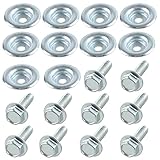
I remember staring at a pile of brand-new bolts, my knuckles scraped bloody, and a gnawing feeling in my gut. The timing chain job on my old Civic was supposed to be straightforward, but I’d somehow ended up with a mixed bag of fasteners. The question burned: are 2 2 and 2 4 timing chain guide bolts the same? It’s a detail that seems small, but when you’re deep in an engine and relying on every single piece to be right, it’s everything.
This isn’t just about one car; it’s a question that pops up for a lot of DIYers and even some shop guys when they’re dealing with specific engine codes or parts numbers. You see a bolt, it looks like it fits, but the devil is always in the details, especially with important engine components like timing chains.
Why You Can’t Just Assume Bolts Are Bolts
Look, I get it. When you’re staring down a timing chain job, the last thing you want to worry about is whether bolt number 22 is identical to bolt number 24. They look the same, right? Same thread pitch, same length, same head. If you’re a casual observer, you’d probably swap them without a second thought. I’ve been there. I once spent a whole Saturday trying to figure out why my timing was off by a tooth after a chain replacement, only to discover I’d used a slightly softer bolt on the primary guide. It’s the kind of mistake that makes you question your life choices and the quality of aftermarket parts.
The reality is, manufacturers use different part numbers for a reason. Sometimes it’s a subtle difference in material strength, sometimes it’s a slight variation in the shoulder or flange under the head that affects how it seats or distributes pressure. On a timing chain system, which operates under precise tension and moves at high speeds, these small differences can become big problems.
A guide bolt that’s even a fraction of a millimeter too long could theoretically interfere with the chain’s path. A bolt made of a slightly weaker alloy might stretch or deform under the constant vibration and heat, leading to premature wear or, worst-case scenario, failure.
I’ve seen guides loosen up because the bolt wasn’t quite right, and that’s a terrifying sound when you’re driving.
The common advice to ‘just match the old one’ is usually good, but it’s not foolproof. Old bolts can be corroded, stretched, or damaged in ways that aren’t immediately obvious. And if you’re working on an engine where the original bolts are long gone or you bought a used part without the full hardware kit, you’re flying blind. This is where understanding the nuances of fastener specifications becomes important. You can’t just eyeball it and hope for the best. You need to know what you’re looking for, and sometimes, that means digging into service manuals or reliable technical forums where people have already made the mistakes you want to avoid.
Decoding Part Numbers: 2 2 vs. 2 4
Let’s get down to brass tacks on the actual question: are 2 2 and 2 4 timing chain guide bolts the same? The short answer is: often, no. While they might look visually identical, the numbers 22 and 24 in a part numbering system typically signify a difference. This difference could be in material, plating, length (even by a tiny fraction), thread form, or the head design. For important components like those holding down timing chain guides, any deviation from the original specification can lead to issues down the line.
Think of it like this: a manufacturer doesn’t assign unique part numbers to identical items. If two bolts were truly interchangeable in every single aspect that matters for their function, they’d likely share a single part number. The fact that there are distinct numbers, like ‘2 2’ and ‘2 4’, strongly suggests a difference in engineering, manufacturing, or intended application. This is especially true for something as precise as a timing chain system. These systems are designed with very tight tolerances. The guides themselves are often plastic or a composite material, and the bolts need to apply a specific, controlled clamping force without damaging the guide or the engine block.
I’ve personally encountered situations where a bolt with a slightly different head diameter or a subtly altered thread profile caused the component it secured to sit at a minuscule angle, which then caused the timing chain to rub or misalign. It’s the kind of thing you’d never spot on a quick visual inspection but would manifest as noise, wear, or performance issues later. When I’m sourcing parts for a important job like this, I’m not just looking at the bolt head; I’m looking for the OE (Original Equipment) part number and cross-referencing it meticulously. If I see different numbers for what looks like the same bolt, I’m digging deeper. It’s not worth the risk of a few dollars saved on a generic bolt versus the potential thousands in engine repair if something goes wrong. (See Also: Are All Honda Atv Bolt Patterns The Same )
It’s also worth mentioning that sometimes, within the same manufacturer, part numbers can evolve. An older part number might be superseded by a newer one that is an exact replacement. However, when you see two different numbers like 2 2 and 2 4, especially on seemingly similar fasteners, the assumption should be that there is a difference until proven otherwise by solid documentation.
What to Look for: Beyond the Obvious
When you’re trying to figure out if these bolts are the same, or if you’re replacing them, you need to go beyond just the basic dimensions you can see. Here’s what I check:
- Material and Grade: Bolts are made of different steel alloys and have specific strength grades (e.g., Grade 8.8, 10.9, 12.9). A higher number generally means a stronger bolt. Using a weaker bolt in a high-stress application is a recipe for disaster. I’ve seen cheap aftermarket bolts snap or strip out threads because they weren’t hardened properly.
- Thread Pitch and Form: While they might look the same, there can be subtle differences in thread pitch (threads per inch) or thread form (e.g., coarse vs. fine, or specialized thread profiles for specific materials). An incorrect thread form can lead to insufficient clamping force or damage to the threaded hole.
- Head Design: Look at the head of the bolt. Is it a standard hex head? Does it have a flange? If so, what’s the diameter and width of that flange? The flange can distribute load over a larger area, which is important for components like timing chain guides that might be made of softer materials. Even a millimeter difference in flange diameter can affect how the guide sits.
- Length and Shoulder: Measure the overall length. Then measure the length of the threaded portion and the unthreaded shoulder, if present. A bolt that’s even slightly too long can bottom out prematurely in the threaded hole, or worse, protrude into a passage or interfere with moving parts. A shoulder can also be designed to locate the part accurately.
- Plating and Coating: Sometimes, different part numbers can indicate different plating (like zinc, black oxide, or specialized anti-corrosion coatings). This might seem minor, but in environments prone to corrosion, it can affect the bolt’s lifespan and its ability to be removed later.
I once received a set of guide bolts for a BMW where the OE bolts had a very specific, almost polished shoulder, and the aftermarket ones had a rougher finish and a slightly different shoulder length. They threaded in fine, but the guide didn’t sit perfectly flush. It took me hours to realize why. The shoulder was the issue, not the thread. It’s these subtle, non-obvious features that often differentiate part numbers.
Common Mistakes and How to Avoid Them
Mistakes with timing chain components are costly, both in terms of money and time. Here are a few I’ve learned the hard way, or seen others make:
1. Not Identifying the Correct Part Number from the Get-Go: This is the big one. Assuming 2 2 and 2 4 are interchangeable is the most common error. Always, always, always try to find the OE part number for your specific vehicle’s year, make, model, and engine code. Use reputable online parts catalogs or your vehicle’s service manual. If you’re replacing bolts, buy them from a dealer or a trusted OE parts supplier. Aftermarket ‘universal’ bolts are often a gamble.
2. Reusing Old Bolts: Unless you’re absolutely certain the old bolts are in pristine condition and you have a way to verify their integrity (which is rare), don’t reuse them. They’ve been subjected to stress cycles, heat, and vibration. They could be weakened, stretched, or have microscopic cracks. A new set of bolts is cheap insurance compared to a catastrophic timing failure.
3. Over-Torquing or Under-Torquing: This is a classic. Every bolt in the timing system has a specific torque specification. Over-torquing can strip threads, warp components, or even break the bolt. Under-torquing means the component won’t be held securely, which can lead to noise, wear, or detachment. Invest in a good torque wrench and learn to use it correctly. Don’t forget about torque-to-yield bolts, which require a specific sequence and angle tightening.
4. Damaging the Threads in the Block: When removing old bolts, especially if they’re seized, it’s easy to damage the threads in the engine block or cylinder head. If this happens, you’ll need to chase the threads with a tap or, in severe cases, use a thread repair insert (like a Heli-Coil). Damaged threads mean the new bolt won’t seat properly or achieve the correct clamping force.
5. Ignoring the Guide Material: Timing chain guides are often made of plastic or a composite. These materials are sensitive to overtightening and can crack or deform. The bolt’s job is to secure the guide, not to crush it. Always pay attention to the torque specs and how the guide is reacting as you tighten. (See Also: Are Ak Bolts Interchangeable )
Contrarian Opinion: “Everyone says you NEED OEM bolts for important stuff. Honestly, for some of these, a good quality aftermarket bolt can be fine, but you need to be a damn expert to tell the difference, and most people aren’t. So, yeah, stick to OEM if you’re not 100% sure. The few bucks saved isn’t worth the sleepless nights.”
A Real-World Scenario: The V6 Mystery
A buddy of mine was working on a Ford 3.0L V6. He’d bought a timing chain kit that came with all the chains, sprockets, tensioners, and, supposedly, all the necessary bolts. He was meticulously putting it back together, but he ran into a problem with the timing chain guides. There were two types of bolts included for the guides, and they looked identical. The kit didn’t have a clear diagram distinguishing which bolt went where, and the original bolts were long gone. He picked one, then the other, and they both threaded in just fine. He ended up using the longer ones on the primary guides and the shorter ones on the secondary, figuring that made sense.
Fast forward a few weeks, and the engine started making a weird, rhythmic ticking noise. It wasn’t constant, but it was there, especially at idle and low RPMs. He pulled his hair out trying to find it. He checked valve lash, injector noise, exhaust leaks.
Nothing. Eventually, out of sheer frustration, he decided to pull the timing cover again. What he found was that one of the ‘shorter’ bolts he’d used on a secondary guide was actually just a hair too short. It hadn’t fully engaged the threads in the block, and over time with the chain’s movement and vibration, the guide had started to work itself loose.
The ticking was the chain slapping against the slightly detached guide. He’d spent hours troubleshooting and had to redo a significant portion of the job because he’d guessed on those bolts.
It was a hard lesson: if the part numbers are different, there’s usually a reason.
This is why I always emphasize getting the correct OE part number. If you’re doing the job yourself, get the service manual. If you’re buying parts, buy from a dealer or a reputable vendor who can guarantee OE quality and provide accurate part number information. Don’t rely on a generic ‘kit’ that might cut corners on fasteners.
Comparing Fasteners: A Table of Truths
Here’s a quick rundown of what to consider when comparing seemingly similar bolts, especially for important applications like timing chain guides. This isn’t exhaustive, but it covers the main points I check.
| Feature | What to Look For (Example: 2 2 vs. 2 4) | Potential Impact of Difference | My Verdict |
|---|---|---|---|
| Material Grade | Bolt 2 2 might be Grade 10.9, Bolt 2 4 might be Grade 12.9. | Weaker bolt could stretch/fail under load. | Important – Use the higher grade or OEM spec. |
| Thread Pitch | Same overall thread length but different TPI (Threads Per Inch). | Improper seating, reduced clamping force, stripped threads. | Important – Must match exactly. |
| Head Design (Flange Diameter) | Bolt 2 2 has a 16mm flange, Bolt 2 4 has a 18mm flange. | Guide sits unevenly, potential for stress cracks in guide. | Important – Flange size matters for load distribution. |
| Unthreaded Shoulder Length | Bolt 2 2 has a 5mm shoulder, Bolt 2 4 has a 7mm shoulder. | Bolt 2 4 might bottom out in shallow threaded hole, or guide won’t seat properly if shoulder is too long for its intended location. | Important – Affects seating and depth. |
| Plating | Bolt 2 2 is plain zinc, Bolt 2 4 has a black oxide coating. | Minor corrosion resistance difference. Usually not important unless specific environment. | Minor – OEM coating preferred for consistency. |
When manufacturers assign different part numbers, they’re almost always compensating for one or more of these differences. So, no, 2 2 and 2 4 timing chain guide bolts are generally not the same. Assuming they are is a gamble you shouldn’t take. (See Also: Are All Bolt Patterns The Same )
FAQ
Can I Use a Bolt From a Different Engine If It Looks the Same?
Generally, no. Even if the bolt looks identical and threads in, it might have subtle differences in material strength, thread pitch, or head design that are important for timing chain components. Using the wrong bolt can lead to premature wear, incorrect tension, or outright failure of the timing system, which is a very expensive repair.
What Happens If a Timing Chain Guide Bolt Comes Loose?
If a timing chain guide bolt comes loose, it can cause the guide to shift or detach. This can lead to the timing chain slapping against the loose guide, causing noise, accelerated wear on the chain and guides, or even the chain jumping a tooth, resulting in severe engine damage like bent valves and damaged pistons. It’s a serious issue that needs immediate attention.
How Important Is the Torque Specification for Timing Chain Bolts?
Extremely important. Timing chain bolts must be torqued to the manufacturer’s exact specifications. Over-torquing can strip threads, damage the guide or mounting surface, or even break the bolt. Under-torquing means the component won’t be held securely, leading to potential detachment and the catastrophic failures mentioned above. Always use a calibrated torque wrench.
Are There Universal Timing Chain Guide Bolts I Can Buy?
While universal kits exist, I’d be very wary of them for important components like timing chain guide bolts. They are often designed to fit a wide range of applications, meaning they might not perfectly match the specific requirements of your engine. For timing components, it’s always best to use OE-specified parts to make sure proper fit, function, and longevity. The risk of using a ‘universal’ bolt that isn’t quite right is too high.
Verdict
So, to circle back to the burning question: are 2 2 and 2 4 timing chain guide bolts the same? The overwhelming evidence and common sense point to no. These aren’t just random identifiers; they represent specific engineering choices by the manufacturer. When you’re dealing with the heart of your engine’s timing, there’s no room for guesswork. The cost of a few correct bolts is minuscule compared to the potential damage from using the wrong one.
My advice? Always source your replacement fasteners based on the exact OE part number for your vehicle. If you’re unsure, a quick call to a dealership’s parts department or a deep dive into a reputable service manual will save you headaches, money, and potentially a blown engine. Trust me, I’ve learned that lesson the hard way, and it’s one worth remembering.
Don’t let a small fastener detail turn into a major repair bill. If you’re in doubt about whether 2 2 and 2 4 timing chain guide bolts are the same for your specific application, take the extra time to find out for sure. Your engine will thank you.