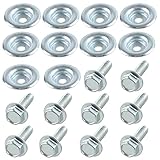
I remember staring at a pile of hardware, completely baffled. The project was simple: fix a wobbly cabinet door. The instructions called for ‘010 3 bolts,’ and I had no earthly clue what that meant. Was it a measurement? A type? A cryptic code from a mad engineer? It felt like trying to decipher ancient hieroglyphs just to tighten a hinge.
Years later, after countless trips to the hardware store and enough frustration to wallpaper a small country, I finally get it. It’s not some arcane secret. Understanding ‘are 010 3 bolts’ is less about memorizing codes and more about common sense and knowing what to ask for. Let’s cut through the confusion.
Decoding the Mystery: What ‘010 3 Bolts’ Actually Means
Alright, let’s get this straight from the jump. When you see ‘010 3 bolts,’ it’s not a single, universally recognized standard like a Phillips head or a metric M6. This is where most people get tripped up, and frankly, it’s often the fault of poorly written instructions or vague product descriptions. The ‘010’ is almost certainly referring to a gauge size, and the ‘3’ is the length in inches. Think of it like this: gauge is the diameter (how thick the bolt is), and the number is how long it is.
The gauge system is where things get a little fuzzy. For smaller screws and bolts, especially those used in electronics or finer woodworking, you’ll often see gauge numbers like 0, 1, 2, 3, 4, 6, 8, 10, and so on.
The higher the number, the thicker the bolt. So, a ‘0’ gauge bolt is thinner than an ‘8’ gauge bolt.
The ‘010’ part is likely a typo or a shorthand for ‘0’ gauge, or perhaps it’s an older, less common gauge designation. I’ve seen variations like this pop up in older manuals or on imported hardware where the labeling isn’t standardized. My own saga with a vintage stereo cabinet involved similar labeling nightmares.
The original screws were tiny, and the manual vaguely stated ‘gauge 0 screws, 3 inches long.’ I spent nearly two hours online, convinced I needed some rare, specialized fastener, only to realize I was overthinking it. I ended up finding identical screws in a bulk pack at a local hobby shop, specifically for model making.
The frustration was immense, but the relief when they fit was even bigger.
The length, ‘3,’ is usually pretty straightforward. It means 3 inches. This is measured from the underside of the head to the tip of the bolt. Sometimes, especially with flat-head screws, the length includes the head itself.
For bolts with a distinct head (like hex or pan heads), it’s typically measured from just under the head. If you’re unsure, it’s always best to measure a similar bolt you already have or check the manufacturer’s specs if available. Trying to guess the length can lead to bolts that are too long and poke out the other side, or too short to provide adequate grip, rendering them useless. This is a lesson I learned the hard way trying to assemble a bookshelf; the bolts were just a quarter-inch too short, and the whole thing felt flimsy until I swapped them out.
The real takeaway here is that ‘010 3 bolts’ is a descriptive, albeit slightly ambiguous, way of identifying a specific fastener. It’s not a brand name or a complex classification. It’s a diameter and a length. The ambiguity usually lies in the ‘010’ part, which requires a bit of context to nail down. If you’re in doubt, take a picture of the item needing repair, or better yet, bring a sample of a similar bolt with you to the hardware store.
The number ‘010’ in ‘010 3 bolts’ is where the real fun begins. As I mentioned, it’s almost certainly a gauge size, but the ‘010’ itself is odd. Standard screw gauges usually increase in whole numbers: 0, 1, 2, 3, 4, 6, 8, 10, 12, 14.
A ‘010’ might be a typo for ’10’, or it could be an older, less common gauge, or even a double-digit representation of a single-digit gauge in some specific industrial contexts. My gut feeling, based on countless hours wrestling with hardware, is that it’s either a typo for ‘0’ or ’10’, or it’s a very niche gauge. Most common DIY applications don’t use gauges that low unless it’s for very delicate electronics or perhaps very specific types of cabinetry hardware. For example, if you’re working on a small jewelry box or a delicate electronic enclosure, you might encounter something close to this.
But for general furniture, home repair, or even most automotive tasks, you’re looking at larger gauge numbers.
I’ve had projects where the instructions were as clear as mud. One time, I was assembling a miniature dollhouse kit, and the hardware bag had these tiny, almost needle-like screws.
The accompanying sheet just said ‘tiny screws, 3mm length.’ No gauge.
I ended up buying a variety pack of micro screws, and it took me about three tries to find ones that fit the pre-drilled holes without stripping them. It’s a good reminder that context is king. If the item you’re fixing is small and delicate, like a piece of vintage audio equipment or a small electronic device, then a low gauge number (like 0, 1, 2, or even something smaller) is probable. (See Also: Are All Honda Atv Bolt Patterns The Same )
If it’s a piece of furniture or something requiring more structural integrity, a higher gauge (like 6, 8, or 10) is far more likely. So, if ‘010 3 bolts’ appears, and the item is substantial, I’d suspect it’s a typo for ’10’ or possibly ‘8’. If it’s tiny, then it might indeed be referring to a gauge closer to 0, and ‘010’ is just a weird way of writing it.
Here’s a practical tip: don’t assume. If you can’t find the exact ‘010’ gauge bolt, look at the hole it needs to go into. You can use a caliper or a ruler to measure the diameter of the hole. Then, you can compare that measurement to the diameter of standard screw gauges. For example, a #6 screw is typically around 0.138 inches (3.5mm) in diameter, and an #8 screw is about 0.164 inches (4.2mm). A #0 screw is very small, around 0.060 inches (1.5mm). If your hole measures closer to 1.5mm, then ‘010’ might be a clumsy way to denote a gauge near 0. If it’s closer to 4mm, ’10’ is a much safer bet.
I once spent a frustrating Saturday trying to find ‘010’ bolts for a custom keyboard build. The instructions were terrible.
After hours of searching online and in local stores, I finally went to a specialty fastener shop. The owner, a grizzled guy who’d been doing this for 50 years, took one look at the hole and said, ‘That’s an M3 screw, probably a 4mm length, and your ‘010’ is bollocks.
You need a 3mm diameter screw, about 4mm long.’ He was right. The ‘010’ was a misnomer for a metric M3 screw, which has a nominal diameter of 3mm.
So, sometimes, the best way to decipher these vague labels is to look at the hole and the context, not just the label itself.
Comparing Common Fasteners: Size Matters
When you’re dealing with fasteners, especially when deciphering vague terms like ‘010 3 bolts,’ it’s helpful to have a general idea of common sizes and their typical uses. This isn’t an exhaustive list, but it covers some of the most frequently encountered sizes in DIY and home repair. The gauge is the diameter, and the length is in inches. Remember, the ‘010’ is still the wildcard here. For the sake of comparison, I’ll include what a gauge of ‘0’ and ’10’ typically represent, and you can use this to estimate what might be intended if ‘010’ is a typo.
| Gauge/Size | Approx. Diameter (inches) | Approx. Diameter (mm) | Common Uses | My Verdict |
|---|---|---|---|---|
| #0 | 0.060″ | 1.5mm | Very small electronics, watch repair, tiny hinges on doll furniture. Extremely delicate. | Rarely seen outside of precision work. If you need this, you know it. |
| #1, #2, #3 | ~0.073″ – 0.099″ | ~1.8mm – 2.5mm | Smaller electrical connectors, eyeglass screws, very light-duty applications. | Still quite small, but more common than #0. Precision required. |
| #6 | 0.138″ | 3.5mm | Cabinet hardware, small electrical boxes, general light assembly. | A good mid-range screw for many household tasks. You’ll find this a lot. |
| #8 | 0.164″ | 4.2mm | General construction, mounting fixtures, heavier cabinet work, some automotive. | A workhorse. If you’re unsure, an #8 is often a safe bet for general use. |
| #10 | 0.190″ | 4.8mm | Hanging heavier items, framing, structural wood assembly, thicker materials. | Definitely beefier. Use when you need serious holding power. |
| 1/4″ (6mm) | 0.250″ | 6.35mm | Larger furniture assembly, mounting heavy hardware, structural applications. | Getting into proper bolt territory. For things that need to stay put. |
So, if your ‘010 3 bolts’ are for a delicate electronic device, a gauge near ‘0’ is plausible. If it’s for general home repair, like a cabinet hinge or a shelf bracket, I’d lean towards ‘010’ being a typo for ’10’ or maybe ‘8’. The ‘3’ for length in inches is the easiest part to verify. If you have an existing bolt, just grab a ruler. Measure from the very bottom of the head to the tip. If it’s roughly 3 inches, then you’ve confirmed the length. If it’s significantly shorter or longer, you’ve got another clue that ‘010’ might be pointing you in the wrong direction entirely.
My own misadventures with fastener sizes have taught me patience and the value of having a small assortment of common screws and bolts on hand. I once tried to reattach a drawer pull on an old dresser. The original screw was lost.
The hole looked like it needed a medium-sized screw. I grabbed what I thought was an #8, 1-inch screw. It went in too easily and stripped the hole. Turns out, it was a #10 that was just slightly too large, and the hole was actually closer to a #6 size.
This taught me that even a slight difference in diameter can make a screw useless or damaging. Always try to match the original or measure the hole carefully. And if you’re really stuck, bringing the component with you to the hardware store is often the most foolproof method.
Putting ‘010 3 Bolts’ to Work: Real-World Scenarios
Let’s talk about where you might actually encounter something described as ‘010 3 bolts’ and how to handle it. Most often, this kind of vague labeling appears in instruction manuals for furniture assembly, especially flat-pack items or kits. It can also show up on generic hardware sold in bulk or in less reputable online marketplaces where standardization isn’t a top priority. The ‘010’ is the enigma, but the ‘3’ (inches) is usually a reliable length.
Scenario 1: Assembling a Small Shelf Unit.
Imagine you’re putting together a small, three-tier spice rack or a wall-mounted organizer. The instructions say, ‘Use two 010 3 bolts to secure the bracket.’ If the bracket is lightweight and the holes are small, it’s likely referring to a smaller gauge. I’d start by assuming ‘010’ is a typo for ‘8’ or ’10’ and a length of 3 inches.
Grab a ruler and measure the existing holes if possible. If you can’t measure the hole, try to find a bolt that fits snugly. A bolt that’s too loose will be ineffective, and one that’s too tight will strip the wood or the hole. For this kind of application, I’d lean towards a #8 or #10 gauge, 3 inches long.
I’d probably buy a small pack of each and see which one fits best. If they’re for pre-drilled holes, the diameter needs to be spot on. (See Also: Are Ak Bolts Interchangeable )
Scenario 2: Repairing Vintage Electronics or Small Appliances.
This is where a gauge closer to ‘0’ becomes more plausible. For instance, if you’re trying to reassemble the casing of an old transistor radio or a small fan, you might find tiny screws. If the ‘010’ is indeed a gauge, and the item is delicate, it could be referring to something like a #0, #1, or #2 gauge screw, but likely not 3 inches long. A 3-inch screw would be enormous for most electronics casings.
In this context, the ‘3’ might also be a typo, or the entire designation is a red herring. My advice here is to look for micro-screws, often sold in assortments for electronics repair.
Measure the original screw if you have it, or the hole it came out of. If you don’t have a sample, take the device to a specialty electronics repair shop and ask for their advice.
They often have bins of tiny, specific screws.
Scenario 3: Custom Woodworking or Craft Projects.
If you’re building something custom, the term ‘010 3 bolts’ might be specific to a particular plan or design. This is where it gets tricky because it might be a non-standard designation. My approach here would be to consider the structural requirements. A 3-inch length suggests it’s meant to go through at least two pieces of wood of moderate thickness.
If it’s a decorative element, appearance might matter more than strength. If it’s structural, you need a gauge that can handle the load. I’d probably default to a standard #8 or #10 gauge screw, 3 inches long, and if that doesn’t look right or feel strong enough, I’d step up to a 1/4-inch bolt. I once had to replace a bolt holding a heavy wooden gate latch.
The original was corroded and snapped. The instructions were useless. I measured the hole, estimated the wood thickness, and ended up using a 5/16-inch, 3-inch carriage bolt. It was overkill, but it was secure.
You learn to trust your instincts and the feel of the hardware.
The key takeaway in real-world application is to use the ‘010 3 bolts’ as a starting point, not a definitive rule. Assess the item you’re working on. Is it delicate or solid? What size is the hole? Can you find an existing screw that fits? If all else fails, and you’re dealing with something common like furniture, a #8 or #10 gauge screw, 3 inches long, is a good educated guess. For anything more specialized, direct measurement and comparison are your best friends.
Common Mistakes When Buying Fasteners
I’ve made enough mistakes buying fasteners to fill a small hardware store bin. It’s easy to get it wrong, especially when faced with vague labels like ‘010 3 bolts.’ Here are the blunders I’ve learned to avoid, and you should too.
- Ignoring the Gauge vs. Thread Count: For bolts and screws, gauge refers to the diameter. Thread count (or TPI – threads per inch) refers to how fine or coarse the threads are. Sometimes instructions might specify TPI, especially for specialized applications or older hardware. If you just match diameter and length, you might end up with threads that don’t engage properly. For most common DIY stuff, the gauge is primary, but it’s worth a glance.
- Assuming ‘Close Enough’ is Good Enough: That #8 screw is almost the same size as the #10, right? Wrong. I’ve forced screws that were slightly too big, stripping the wood and creating a loose connection. I’ve also used screws that were too small, leading to a wobbly assembly that eventually failed. For important joints, the fit needs to be precise. This is especially true if you’re replacing a fastener.
- Confusing Length Measurements: As mentioned, length can sometimes include the head, especially for flat-head screws. For other types, it’s measured from under the head. If you just eyeball it or measure incorrectly, you can end up with a bolt that’s too long and pokes through, or too short to get a good grip. Always measure carefully or bring a sample.
- Not Considering Material Compatibility: Are you using steel bolts in an area prone to moisture? They’ll rust. Are you using zinc-plated screws where you need stainless steel for corrosion resistance? You’ll have problems down the line. The material matters for durability and appearance. For outdoor projects or damp areas, stainless steel or galvanized fasteners are your friends.
- Buying Only What You Think You Need: I’ve gone to the store for ‘three bolts’ and ended up needing five because I underestimated the number of connection points or because a couple didn’t fit right. It’s often cheaper and more practical to buy a small box or assortment of common sizes than to make multiple trips. For ‘010 3 bolts,’ if you suspect it’s a typo for ‘8’ or ’10’, buy a small pack of both lengths if possible.
My biggest blunder involved a porch swing. The original bolts were heavily rusted and I needed to replace them. I measured what I thought was the diameter and length.
What I didn’t account for was the type of bolt head and the corresponding nut. I bought standard hex bolts, but the original swing had carriage bolts with smooth, rounded heads that wouldn’t snag clothes. When I installed the new ones, the heads stuck out awkwardly.
It was a minor cosmetic issue, but it was a clear sign I hadn’t thought the whole thing through. It’s a small detail, but it’s these details that separate a quick fix from a proper repair.
So, pay attention to the head type, length, gauge, and material. It saves you time, money, and a whole lot of headache. (See Also: Are All Bolt Patterns The Same )
When to Call in the Pros (or Just Get Better Hardware)
There comes a point in any DIY project where you realize you’re either in over your head, or the materials you’re using are just… not cutting it. When it comes to fasteners, and specifically trying to figure out what the heck ‘are 010 3 bolts’ actually means, sometimes the best solution is to get better hardware or admit defeat and ask for help.
If you’re wrestling with something structural – think deck railings, load-bearing shelves, or anything where failure could cause injury or significant damage – and you’re unclear about the fasteners, it’s time to consult a professional. A good carpenter or handyman can tell you instantly what size and type of bolt you need. They’ve got a lifetime of experience and a toolbox full of common sizes.
I once tried to reinforce a wobbly garden gate myself. I kept buying bolts that felt too flimsy. Finally, I asked my neighbor, who’s a retired contractor, to take a look.
He pointed out I needed lag bolts with washers, not just simple machine screws. It was a five-minute fix for him, and saved me a lot of future frustration (and potential gate collapse).
On the flip side, sometimes the issue isn’t your understanding, but the quality of the hardware itself. Cheap, unbranded screws and bolts from obscure online sellers can be made of soft metal, have inconsistent threading, or simply not match the stated specifications.
I’ve had experience with generic hardware kits where the ‘screws’ felt so soft they bent when I applied moderate pressure. If you’re constantly stripping screw heads, having bolts that don’t thread properly, or finding your finished project feels loose and unstable, it might be time to invest in higher-quality fasteners from a reputable hardware store. Brands like GRK Fasteners (for wood screws) or specific industrial suppliers for bolts often offer superior quality and consistency.
While they might cost a bit more, the difference in performance and longevity is usually well worth it.
For the ‘010 3 bolts’ conundrum specifically, if you’ve measured, compared, and you’re still unsure, here’s what I’d do: go to a well-stocked, local hardware store (not a big box store with limited staff knowledge). Bring the item you’re trying to fix, or at least a sample of a similar fastener. Talk to the staff. A good hardware store employee can often identify what you need by looking at the hole or the component.
They might even have a gauge chart or a set of calipers to help you measure precisely. If you’re still drawing a blank, and it’s not a important structural component, I’d consider buying a small assortment of the most likely candidates: perhaps a pack of #8 x 3-inch screws and a pack of #10 x 3-inch screws. One of them is highly likely to be the correct size or a very close, acceptable substitute.
Faq: Understanding Bolt and Screw Sizes
What Does ‘010 3 Bolts’ Mean?
It most likely refers to a bolt with a gauge size of ‘0’ (or a similar small gauge, as ‘010’ is an unusual designation) and a length of 3 inches. The gauge number indicates the diameter, with lower numbers being thinner. However, ‘010’ could also be a typo for ’10’ or another common gauge. The length is almost always measured in inches for this type of description.
How Do I Measure a Bolt Diameter?
You can use a ruler or calipers to measure the diameter across the widest part of the bolt’s shaft, excluding the threads if possible. For standard screw gauges (#0, #6, #8, #10, etc.), you can compare your measurement to charts available online or at hardware stores, as each gauge corresponds to a specific diameter in millimeters and inches.
What Is the Difference Between a Screw and a Bolt?
Generally, a bolt is designed to pass through two or more parts and is secured with a nut, while a screw is designed to thread into one of the parts being joined. However, the terms are often used interchangeably in casual conversation, and many fasteners can function as either depending on the application and whether a nut is used.
How Do I Know If a Bolt Is Too Long or Too Short?
A bolt that is too short won’t provide enough grip or secure the connection properly, leading to weakness. A bolt that is too long will protrude excessively, potentially causing interference, snagging, or an unsightly appearance. Ideally, a bolt should thread through the material completely and end flush or with a small, tidy amount of thread showing, or secure fully with its nut without excessive overhang.
Conclusion
So, after all that digging, the mystery of ‘are 010 3 bolts’ usually boils down to a gauge size and a length. The ‘010’ part is the most likely source of confusion, often being a typo or an uncommon designation. Your best bet is to use context: is the item delicate or solid? Can you measure the hole? If you’re unsure, grabbing a few common sizes like #8 and #10, 3 inches long, from a reputable hardware store is a solid plan.
Don’t get bogged down by cryptic labels. Think about the hole, the material, and the required strength. And remember, a little patience and a trip to a good hardware store can solve most fastener mysteries. For your next project involving are 010 3 bolts, you’ll be far better equipped to find exactly what you need, or a darn good substitute.