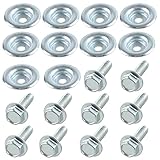
I remember staring at a pile of used head bolts from my old ’04 Silverado, the kind with the 5.3 Vortec engine. It was sitting in my driveway, a monument to my questionable life choices and even more questionable mechanic skills.
I’d pulled the heads off because, well, you know – that classic coolant-in-the-oil smell. My buddy, who’s seen more engines than I’ve had hot dinners, casually asked, ‘Are you gonna reuse those?’ I just blinked. Reusing bolts?
That felt… wrong. But then I thought, these things are beefy.
They’re not like those flimsy little things holding your dashboard trim on. This got me thinking: are 2004 Chevrolet 5.3 head bolts reusable?
The answer isn’t a simple yes or no, and it’s definitely not something you want to guess wrong about.
The Big Question: To Re-Torque or Not to Re-Torque?
Let’s cut to the chase: are 2004 Chevrolet 5.3 head bolts reusable? The official GM service manual, and honestly, most reputable mechanics, will tell you ‘no.’ They’re generally considered torque-to-yield (TTY) fasteners.
This means they are designed to be stretched to a specific point during installation, and once they’ve been stretched, they’ve done their job. The idea is that this precise stretching creates the exact clamping force needed to seal the head gasket against the block.
Pulling them out means they’ve already gone through that stretching process. Trying to stretch them again, even if they look okay, is playing with fire. You might get lucky, or you might be setting yourself up for a catastrophic failure down the road, and believe me, fixing a blown head gasket is a pain in the backside you don’t want to repeat.
Now, before you toss that whole box of bolts in the scrap metal bin, let’s talk about the ‘grey area.’ I’ve heard stories, seen forum posts, and even talked to guys who have reused them with no apparent issue.
The common wisdom is that if the bolts show absolutely no signs of stretching – no necking down (where the bolt gets thinner in the middle), no stripped threads, and they measure up to their original length within spec – some people will reuse them. But here’s the rub: how do you really know they haven’t yielded? Measuring them is one thing, but you can’t see microscopic metal fatigue. It’s like asking if a bungee cord is still good after being stretched to its absolute limit a dozen times.
It might look fine, but the elasticity is compromised. I learned this the hard way on a different project. I reused some supposedly ‘good’ suspension bolts, saved myself about $50, and then had a wheel bearing go out prematurely because the suspension geometry was slightly off due to the bolts not holding their torque.
Lesson learned: sometimes saving a few bucks upfront costs you a lot more later.
The reality is, when you’re dealing with an engine like the 5.3 Vortec, which is known for its power and its… let’s say ‘character,’ you want everything to be spot-on. The head gasket seal is arguably the most important junction in the entire engine. It keeps combustion pressure in, coolant out of the cylinders, and oil where it belongs. If those bolts haven’t been stretched precisely to their designed yield point, you’re gambling with that seal.
And when it fails, it’s not just a simple fix. You’re looking at another head removal, potentially damaged heads or blocks, and a lot more time and money. So, while technically you might be able to reuse them if they look perfect, the risk often outweighs the reward, especially if you’re doing the work yourself and don’t have a professional shop breathing down your neck about warranty.
For a daily driver that you rely on, I’d strongly lean towards new ones. It’s cheap insurance for peace of mind.
What to Look for (and What to Absolutely Ignore)
Okay, let’s say you’re determined to inspect these bolts like a hawk. What exactly are you looking for?
First off, visual inspection is key, but it’s only the first step. You want to check for any signs of damage on the threads. Are they dinged up, cross-threaded, or showing any corrosion that looks like it’s eaten into the metal? If you see anything like that, chuck ’em. (See Also: Are All Honda Atv Bolt Patterns The Same )
Next, and this is the big one for torque-to-yield bolts, you’re looking for what mechanics call ‘necking.’ This is where the bolt has been stretched beyond its elastic limit and has started to deform, becoming visibly thinner in the middle section.
You can sometimes see this by holding the bolt up to the light and looking down its length. It might not be a dramatic difference, but if you can see a section that looks thinner than the rest, that bolt has yielded and is compromised. It’s history.
Another thing to check is the bolt head. Are there any cracks or signs of stress around the hex head where it meets the shank?
Sometimes, improper tools or over-tightening can start to crack the metal there. If you find any cracks, no matter how small, that bolt is garbage. The shank itself should be straight.
If you roll it on a flat surface and it wobbles, it’s bent, and that’s a no-go. Now, here’s where it gets tricky. Even if all these visual checks pass with flying colors, the bolt could still have been stretched beyond its optimal point. This is where measurement comes in.
Most manufacturers provide a ‘free length’ specification for new bolts. You can measure your used bolts and compare them to the new bolt length.
If they’re longer than the spec, they’ve yielded. However, the tolerance for this measurement is usually very tight, and you need a good set of calipers or a precise ruler to get an accurate reading. You also need to know the exact length spec for your specific 5.3 engine model.
If you can’t find that spec, or if your measurements are borderline, it’s a gamble.
My own experience with this involved a set of exhaust manifold bolts on an older Jeep. They looked fine, I measured them, and they seemed within spec.
I reused them. A few months later, I developed a nasty exhaust leak. Turns out, even though they hadn’t visibly ‘necked,’ they hadn’t held their torque properly because they had been stressed too many times. The manifold gasket blew.
It was a similar situation to head bolts – important sealing application. That taught me that ‘looks good’ and ‘is good’ aren’t always the same thing, especially when it comes to fasteners under extreme stress. So, while you can inspect them, the absence of visible flaws doesn’t guarantee they’re still fit for purpose. The common advice to visually inspect is fine, but it’s not the whole story.
You need to consider the potential for unseen damage and the important nature of the application.
The Contrarian Take: Why Some Guys Swear by Reusing Them
Alright, let’s address the elephant in the room. Everyone and their uncle is going to tell you to buy new head bolts. And for the most part, they’re right. But there’s a faction out there, usually the guys who do this stuff for a living or have been wrenching for decades, who will tell you that for certain applications, and with careful inspection, reusing them is perfectly fine.
Their argument often boils down to a few key points. First, they’ll say that the ‘torque-to-yield’ label is sometimes overly cautious. They believe that if a bolt hasn’t shown significant signs of stretching or damage, it still has plenty of life left. They might argue that the factory specs are designed with a massive safety margin, and you’re just throwing away perfectly good hardware by replacing it every time.
Second, they point to the sheer number of bolts in an engine. A 5.3 Vortec has 10 head bolts per cylinder bank, so 20 total. New ones can add up in cost, especially if you’re going for premium aftermarket ones. For a budget build or a farm truck that just needs to get the job done, saving a few hundred bucks on bolts can seem like a smart move.
They might also say that the manufacturing process for these bolts, especially the older ones, was incredibly solid. They were built to last. I remember talking to an old-timer mechanic who swore by reusing main bearing cap bolts on a big block Chevy. He’d been doing it for 30 years. (See Also: Are Ak Bolts Interchangeable )
His reasoning? ‘If they ain’t stretched, they ain’t broke.’
He’d check them with a micrometer and visually inspect them, and if they passed his rigorous standards, he’d put them back in. He claimed he never had a failure directly attributable to reusing those specific bolts.
Here’s my two cents on this contrarian view: I get it, I really do. There’s a certain satisfaction in being able to salvage parts and save money.
And yes, some older fasteners were built like tanks. However, the technology and engineering behind modern engines have advanced. Torque-to-yield isn’t just a marketing term; it’s based on material science and the desire for precise, repeatable clamping forces.
The risks associated with head bolt failure are immense. If you’re talking about a show car or a weekend warrior that you don’t rely on daily, maybe the risk is more acceptable. But for a daily driver, the cost of a blown head gasket – the downtime, the towing, the potential for collateral engine damage – far outweighs the savings on a set of head bolts that might cost you a couple hundred bucks. So, while the ‘reuse them if they look good’ crowd has a point about cost savings and potentially solid older bolts, for me, when it comes to the heart of my engine, I’m sticking with new.
The Cost of New vs. Used: A Practical Look
Let’s talk money. Because, let’s be honest, that’s often the biggest driver when we’re staring down a repair bill. When it comes to the head bolts for your 2004 Chevrolet 5.3, the decision to reuse or replace often comes down to weighing the cost of new hardware against the potential cost of failure. A full set of new head bolts for a 5.3 Vortec can range significantly in price.
You can get basic, run-of-the-mill replacement bolts from brands like Dorman or Fel-Pro for around $50 to $80 for a complete set. These are generally fine for a standard rebuild where you’re not pushing the engine hard. They meet or exceed OEM specifications and are designed for single use, just like the originals.
If you’re looking for something a bit more solid, perhaps for a slightly modified engine or just for the added peace of mind, you can step up to premium aftermarket bolts. Brands like ARP (Advanced ARP Racing Products) are the gold standard for many engine builders. Their studs or bolts are typically made from higher-grade steel, offer superior clamping force, and are often designed to be reusable (though they still have their own inspection criteria). A set of ARP head studs for a 5.3 Vortec can set you back anywhere from $150 to $300, sometimes even more, depending on the specific application and coatings. That’s a significant jump from the budget options.
| Option | Estimated Cost (Set of 20) | Pros | Cons | Verdict |
|---|---|---|---|---|
| Used Bolts (if inspected & deemed reusable) | $0 (cost of inspection tools) | Cheapest option, potentially saves money. | High risk of failure, unseen damage, voids warranty. | Avoid for daily drivers. Only consider for non-important applications with extreme caution. |
| Standard Replacement Bolts (e.g., Dorman, Fel-Pro) | $50 – $80 | Affordable, meets OEM specs, readily available. | Designed for single use, standard strength. | Good value for stock or mild rebuilds. A safe bet. |
| Premium Aftermarket Bolts/Studs (e.g., ARP) | $150 – $300+ | Superior strength, higher clamping force, often reusable (per manufacturer), ultimate peace of mind. | Higher initial cost. | Best option for performance builds, forced induction, or when maximum reliability is most important. |
Now, consider the ‘cost of failure.’ If a used bolt fails, you’re looking at a minimum of $500-$1000 in parts and labor to pull the heads again.
This doesn’t even include potential damage to the block or heads if the failure is severe. That $50-$80 for new standard bolts suddenly looks like a bargain. Even the $150-$300 for ARP studs, when weighed against the risk of a blown head gasket, starts to seem like a sensible investment for a high-mileage or frequently used vehicle. I had a friend who tried to save money by reusing some suspension components on his truck.
A few months later, a ball joint failed, and he ended up with a twisted fender, a bent control arm, and a tow bill. The parts he ‘saved’ on would have cost him way less than the resulting damage. It’s the same principle here.
The upfront cost of new, quality head bolts is usually a fraction of the potential repair bill and headache caused by reusing compromised fasteners.
Real-World Use Cases and Practical Tips
So, who might get away with reusing head bolts on a 2004 Chevrolet 5.3, and what are the practical tips if you’re tempted? Honestly, the only scenario I could comfortably entertain reusing them is if you’re working on a project vehicle that isn’t your daily driver.
Think of a farm truck that hauls light loads occasionally, a project Jeep that you tinker with on weekends, or a race car where you rebuild the engine every season anyway. In these situations, the consequences of a bolt failure are less dire than if your daily commute depends on that engine running flawlessly. Even then, I’d still be hesitant. The amount of labor involved in removing heads means you want to do it right the first time.
If you absolutely insist on inspecting and potentially reusing them, here are some practical tips that might save your bacon, but no guarantees: 1. Get a good service manual: Find the exact torque specs and, more importantly, the ‘free length’ specification for your specific engine. This is a must.
2. Use a high-quality micrometer or digital caliper: Eyeballing it isn’t good enough. You need precise measurements. Measure the length of every single bolt multiple times and compare it to the spec. (See Also: Are All Bolt Patterns The Same )
If any are even slightly longer than the maximum allowable length, they’re out. 3. Get a thread chaser (not a tap): If the threads look a little dirty but aren’t damaged, use a thread chaser (which just cleans the threads without cutting new ones) on both the bolt and the block to make sure they thread in smoothly.
Do NOT use a tap on the block unless the manual specifically calls for it, as it can remove too much material. 4. Cleanliness is most important: Make sure the bolt holes in the block are perfectly clean and dry. Any debris or fluid can cause the bolt to feel tight before it’s properly torqued, leading to inaccurate clamping force.
A bolt hole cleaning tool is a great investment here. 5. Lubricate properly: Use the correct lubricant on the bolt threads and under the bolt heads as specified in the service manual.
This makes sure consistent clamping force. Many TTY bolts require specific oil or even a bit of assembly lube.
I once had a customer who swore he could reuse his head bolts on a Ford 4.6L. He’d done it on older engines before.
I warned him. He insisted. Six months later, his engine was making a terrible knocking sound, and he had coolant pouring out of the exhaust.
Turns out, one of the reused bolts had yielded just enough to let the head gasket shift under pressure. The piston skirt actually hit the valve.
The repair bill was nearly $5,000. He came back, sheepishly, and bought a full set of ARP studs. That was a hard lesson for him, and a strong reminder for me of why I almost always recommend new fasteners for important engine components. It’s not about being overly cautious; it’s about understanding the forces at play and the potential for disaster.
Faq: Your Burning Questions About 5.3 Head Bolts
Are 2004 Chevrolet 5.3 Head Bolts Torque to Yield?
Yes, the original equipment head bolts used on the 2004 Chevrolet 5.3L Vortec engines are generally considered torque-to-yield (TTY) fasteners. This means they are designed to be stretched to a specific point during installation to achieve optimal clamping force for the head gasket seal. Once they have been stretched to their yield point, they are technically meant for single use.
Can I Tell If a Head Bolt Has Yielded Just by Looking at It?
Visually inspecting a head bolt is a good first step, but it’s not foolproof. You should look for obvious signs of damage like stripped or corroded threads, cracks around the head, or a visible thinning or ‘necking’ of the bolt shaft. However, a bolt can still yield internally without showing dramatic external signs, meaning it has stretched beyond its elastic limit and may not hold torque effectively.
What Happens If I Reuse Head Bolts That Have Yielded?
Reusing yielded head bolts significantly increases the risk of head gasket failure. If the bolts haven’t achieved the correct clamping force, the head gasket may not seal properly. This can lead to coolant leaking into the cylinders or oil passages, combustion gases leaking out, or even the head shifting on the block, all of which can cause major engine damage and require costly repairs.
How Much Do New Head Bolts for a 5.3 Vortec Typically Cost?
A set of standard, direct-replacement head bolts for a 5.3L Vortec engine typically costs between $50 and $80. For higher-performance or premium aftermarket options, such as those from ARP, you can expect to pay anywhere from $150 to over $300 for a complete set of studs or bolts, depending on the specific product and materials used.
Final Verdict
So, to circle back to that pile of bolts from my ’04 Silverado: were they reusable? Technically, maybe, if I was willing to gamble. But after digging into it, and remembering all the headaches I’ve had from cutting corners, the answer for me became a resounding ‘no.’
The risk just isn’t worth the potential savings. When you’re dealing with sealing the combustion chamber, you want the best possible chance of success. For your 2004 Chevrolet 5.3, investing in a fresh set of head bolts is the safest and most reliable path forward, especially if this truck is your daily driver or you rely on it heavily. It’s one of those parts where spending a little extra upfront can save you a whole lot of pain, time, and money down the road.
If you’re on a tight budget, go for a reputable standard replacement set. If you’re building something with a bit more power or demand absolute reliability, consider the premium options. Don’t let anyone convince you that reusing torque-to-yield bolts is a smart shortcut. I’ve seen too many engines cry uncle because of it. Next time you’ve got those heads off, do yourself a favor and budget for new head bolts. Your engine will thank you.