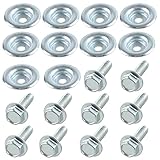
So, you’re staring down a head gasket job on your 2000 Chevy 4.3? You’ve probably got a stack of parts on the bench, or at least a mental list. And then you get to the head bolts. The big question pops into your head: are 2000 Chevy 4.3 head bolts reusable? I remember the first time I asked that question. My buddy, who’s a mechanic, just grunted and said, “Depends on how much you like rebuilding engines twice.” Not exactly the clear answer I was hoping for.
Let’s cut through the noise. Most of the time, the answer is a resounding NO. But why? And what’s the actual risk if you’re tempted to cut corners? It’s not just about saving a few bucks; it’s about whether your engine will hold together after you button it all back up.
What Makes Head Bolts Special Anyway?
Head bolts aren’t just glorified screws holding your engine’s lid on. They’re precision components designed to handle immense pressure and heat. Specifically on engines like the 4.3L V6 in your 2000 Chevy, these bolts are often torque-to-yield (TTY). This means they’re designed to stretch a specific amount when torqued to their final angle. This stretch is what provides the precise clamping force needed to seal the head gasket against the engine block.
Think of it like stretching a rubber band. You can stretch it a little, and it’ll spring back. Stretch it too much, and it’ll weaken or even break. TTY head bolts are engineered to be stretched just right to achieve optimal clamping force. Once they’ve been stretched to their yield point during the initial torquing process, their elasticity is compromised. Reusing them means they’ve already gone through that important stretching phase. They might not have the same strength or ability to maintain that precise clamping force anymore. This is a big deal, especially in a high-stress environment like the combustion chamber.
The materials used are also a factor. They’re typically high-strength steel alloys, but even these have limits. Repeated thermal cycles – heating up and cooling down – combined with the initial stretch, can lead to fatigue. Imagine bending a paperclip back and forth. Eventually, it gets weak and breaks. Head bolts experience similar stresses, albeit on a much grander scale. So, while they might look perfectly fine, their internal structural integrity could be compromised. This isn’t something you can see with the naked eye, which is why manufacturers specify replacement.
The common advice you’ll hear from many sources, including some old-school mechanics who’ve been doing this since before TTY bolts were common, is that if they look good, they’re fine. I’ve heard it. I’ve even been tempted by it. But that’s a dangerous gamble. The cost of a new set of head bolts is a fraction of what it costs to tear the engine down again if they fail. And trust me, a blown head gasket is bad enough the first time around. Having it happen again because you reused bolts? That’s a special kind of automotive pain.
The 4.3L Vortec engine, while generally a stout powerplant, isn’t immune to the stresses of daily driving, towing, or even just sitting and getting old. The heat and pressure cycles it endures are significant. The head gasket is the seal that keeps everything contained – oil, coolant, and combustion gases. If that seal leaks, you’re in for a world of hurt, from overheating and milky oil to misfires and catastrophic engine damage. And compromised head bolts are one of the most common culprits for a repeat failure.
Let’s talk about measurements. Some guys will tell you to measure the bolt’s length. If it hasn’t stretched past a certain spec, they say it’s okay. This is a method that might have worked on much older engines with different bolt designs. However, with modern torque-to-yield bolts, simply measuring length isn’t a foolproof indicator of their remaining integrity. The important factor is the stretch that occurred during torquing, which directly affects the bolt’s tensile strength and its ability to maintain clamping force. While a visual inspection or a length check might reveal obvious damage like threads being stripped or the bolt being bent, it won’t tell you if the metal has fatigued or exceeded its elastic limit.
I learned this the hard way, not on a 4.3L, but on a different GM V6. I had a coolant leak, pulled the heads, and everything looked pretty clean. The bolts didn’t look bent.
I measured them, and they were within the ‘acceptable’ range according to a Haynes manual I was using at the time. I reused them, torqued everything to spec, and drove away. Three months later, I was back where I started, only this time, the coolant was mixing with the oil more aggressively. The mechanic who ended up fixing it (because I sure wasn’t touching it again) explained that the bolts had lost their “clamping power” from being reused.
It was a $1200 lesson that cost me a lot more than a set of bolts. I don’t skimp on head bolts anymore, and you shouldn’t either.
The reality is, when you torque a TTY bolt, you’re stretching it. That’s its job. Once it’s stretched, it’s already worked. It’s like stretching a spring; it loses some of its original tension. Trying to reuse it is like expecting that stretched spring to provide the same resistance. It won’t. For an engine that needs a reliable seal under extreme pressure and temperature, this is a recipe for disaster. The engine builder’s specifications, whether from GM or a reputable aftermarket manufacturer, are there for a reason. They’ve done the engineering and testing to know what works and what doesn’t.
The Risks of Reusing Those Bolts
So, what happens if you ignore the advice and reuse your 2000 Chevy 4.3 head bolts? You’re basically rolling the dice with your engine.
The most immediate and common consequence is a premature head gasket failure. Remember, the head gasket’s job is to create a perfect seal between the cylinder head and the engine block. This seal has to withstand the explosive forces of combustion, high temperatures, and the constant flow of coolant and oil.
If your head bolts can’t provide the consistent, precise clamping force they were designed for, that seal is going to fail. You’ll start seeing symptoms like coolant in the oil, oil in the coolant, external coolant leaks, or combustion gases blowing past the gasket, leading to overheating and loss of compression. (See Also: Are All Honda Atv Bolt Patterns The Same )
Beyond just a repeat head gasket failure, reusing bolts can lead to more serious internal engine damage. Imagine a tiny leak at the combustion chamber. Over time, hot combustion gases can start to eat away at the head gasket material, accelerating its failure. If that leak is right at a coolant passage, you can get coolant seeping into the cylinders.
This can wash the lubricating oil off the cylinder walls, leading to increased wear and eventually scoring the cylinder walls or damaging piston rings. If oil gets into the combustion chamber, you’ll see excessive blue smoke and oil consumption. The metal itself can also be compromised. The constant thermal cycling and the inability of the weakened bolts to maintain proper clamping force can lead to distortion of the cylinder head or the block deck surface over time, making future repairs even more difficult and costly.
Another significant risk is uneven clamping force. Even if you manage to torque the reused bolts to the specified angle, they might not exert the same pressure across the entire surface of the head gasket as they did when they were new. This uneven pressure creates stress points and areas where the gasket is not fully sealed. These weak spots become prime candidates for leaks to develop. You might get away with it for a while, but it’s a ticking time bomb. It’s like trying to secure a lid on a pot with some loose screws and some tight ones; it’s not going to seal properly, and something will eventually seep out.
I remember a guy at the local car club who was really proud of how he saved money on his restoration. He rebuilt a classic truck engine and reused the main bearing cap bolts because they looked “perfect.” A few thousand miles later, he had a catastrophic bearing failure. The engine basically self-destructed.
The mechanic said the bolts had stretched and lost their ability to hold the caps tight under load. The slight savings upfront cost him a complete engine rebuild, not to mention the stress and frustration.
The same principle applies to head bolts. They’re doing a vital job under immense stress, and their integrity is most important.
You’re not just saving money; you’re actively inviting failure. The potential for engine damage, the cost of repeated repairs, and the sheer headache involved far outweigh the minimal savings of reusing head bolts.
It’s also worth considering the manufacturer’s recommendations. For the 2000 Chevy 4.3, GM specified new head bolts for a reason. Their engineers designed the engine and tested it thoroughly. When they say to use new bolts, they mean it. This isn’t a suggestion; it’s a specification based on making sure the longevity and reliability of the engine. Ignoring these specifications is akin to ignoring the warning lights on your dashboard; eventually, something is going to go very wrong. The cost of new head bolts is a small price to pay for peace of mind and the assurance that your engine will perform as intended and last for years to come.
The specific type of head gasket you are using also plays a role. Modern multi-layer steel (MLS) head gaskets, which are common on many engines including newer versions of the 4.3L, are highly dependent on precise and even clamping force to function correctly.
They are designed to seal with very specific pressures. If the bolts are weakened or have lost their clamping ability, the MLS gasket cannot do its job effectively.
It’s like trying to use a high-performance tire on a car with worn-out shocks; the tire can’t perform to its potential because the supporting components aren’t up to par. The head bolts are the foundation for the head gasket’s seal. Compromising that foundation guarantees that the gasket will eventually fail.
How to Tell If Bolts Are Really Bad (beyond Guessing)
Visual inspection is your first line of defense, but it’s woefully inadequate for determining the true condition of torque-to-yield head bolts. You’re looking for obvious physical damage: bent bolts, stretched threads, signs of rust or corrosion that might have weakened the metal, or any nicks or gouges. If you see any of that, toss the bolt immediately. No question. However, the vast majority of bolts that fail due to reuse won’t show any of these external signs. They look perfectly normal.
The common “measure the length” method is what many DIYers rely on, and it’s often promoted in older repair manuals or by mechanics who haven’t kept up with modern bolt technology. The idea is that if a TTY bolt is stretched beyond a certain manufacturer-specified limit (you’d need to find the exact spec for your specific engine and bolt type), it’s no longer reusable. For many TTY bolts, this limit is typically around 0.020 to 0.040 inches beyond their original length. You’d measure a new bolt for comparison, then measure your removed bolts. If any are significantly longer than the new ones, or longer than the maximum specified limit, they are considered worn out.
Here’s the rub: this method is flawed for TTY bolts. TTY bolts are designed to stretch. That stretch is what makes them work. Just because a bolt hasn’t visibly stretched beyond a certain point doesn’t mean it hasn’t been stressed beyond its elastic limit. The metal can fatigue internally without a noticeable change in length. Think of it like a spring that’s been over-compressed; it might still look the same length, but it won’t have the same springiness. The torque-to-yield specification is about the bolt’s internal tension after stretching, not just its external length. (See Also: Are Ak Bolts Interchangeable )
A more reliable, though less common for home mechanics, method involves using a bolt stretch gauge. This is a specialized tool that measures the exact stretch of the bolt with much higher precision than a standard tape measure or caliper. You’d typically measure a new bolt, then measure the removed bolts. If the stretch is within the manufacturer’s recommended range, the bolt might be considered reusable by some. However, even with a stretch gauge, you’re still relying on the assumption that the bolt’s internal metal hasn’t fatigued. The manufacturer’s recommendation for TTY bolts is almost always to replace them, regardless of measurement. They’ve done the math and testing to know that reuse introduces too much risk.
Here’s my practical advice, gleaned from wrenching on my own stuff and seeing what happens when folks cut corners: Trust the professionals and the engineers who designed the engine. If your 2000 Chevy 4.3 came with torque-to-yield head bolts (which it almost certainly did), the manufacturer’s recommendation is to replace them. Period. The cost of a new set of quality head bolts is relatively low compared to the potential cost of engine failure.
I’ve seen too many engines come back for a second teardown because someone tried to save a few bucks on bolts. It’s never worth it. The real “test” is the engine’s performance after the repair. If it leaks or overheats, you’ve already failed, and the reused bolts are a prime suspect.
The best way to know if they’re truly bad is to buy new ones and eliminate the doubt.
There’s also the factor of the bolt’s material properties changing. When a TTY bolt is stretched, the molecular structure of the steel is altered. It’s not just a simple elastic deformation. This process makes it stronger in its intended stretched state but also makes it more susceptible to fatigue and less able to withstand repeated stress cycles. The original manufacturers of these bolts spend a lot of time and money developing these specific alloys and heat treatments. Reusing a bolt means you’re basically asking it to perform beyond its designed lifespan, even if it looks okay on the outside. It’s a gamble you don’t want to take with your engine’s heart.
Let’s look at the typical torque sequence and angle tightening. For TTY bolts, the sequence matters immensely, but so does the final angle. This final angle tightening is what makes sure the bolt is stretched precisely. If you reuse a bolt that has already been stretched, it won’t reach the same proper tension, or it might stretch too much in the wrong way, leading to uneven clamping. This is why professional rebuilds always specify new TTY bolts. They’re not trying to upsell you; they’re trying to make sure a reliable repair. The visual aspect is misleading; the internal integrity is what matters.
| Inspection Method | Verdict | Why |
|---|---|---|
| Visual Inspection (Bends, Rust, Thread Damage) | NO | Obvious damage means the bolt is compromised. Easy to spot, but doesn’t reveal internal fatigue. |
| Length Measurement (vs. New Bolt) | MAYBE (but still risky) | If significantly longer than spec, it’s definitely bad. But length alone doesn’t guarantee integrity of TTY bolts. |
| Bolt Stretch Gauge | MAYBE (still risky) | Measures stretch more accurately. If within spec, it’s less likely to fail immediately, but internal fatigue is still a concern. |
| Manufacturer Recommendation (TTY Bolts) | DEFINITELY NO | Engineers designed them to be used once. Reuse introduces unacceptable risk of failure. This is the most reliable guidance. |
People Also Ask: Common Questions Answered
Can I Reuse My Old Head Bolts?
For most modern engines, especially those using torque-to-yield (TTY) head bolts like your 2000 Chevy 4.3 likely has, the answer is a strong no. TTY bolts are designed to stretch to a specific point to achieve the correct clamping force. Once they’ve been stretched, their elastic properties are compromised, and they lose their ability to maintain that precise clamping force reliably. Reusing them significantly increases the risk of head gasket failure and potential engine damage.
What Happens If I Reuse Head Bolts?
Reusing head bolts, especially TTY bolts, can lead to a premature head gasket failure. This means leaks, overheating, coolant mixing with oil, or oil in the coolant. In more severe cases, it can lead to further internal engine damage, such as scored cylinder walls or distorted block surfaces, making future repairs much more complex and expensive. The clamping force provided by reused bolts is often inconsistent, creating weak points in the head gasket seal.
How Do I Know If My Head Bolts Are Bad?
Visually, head bolts might look fine even if they are compromised. Obvious signs of damage like bending, stretching, or corrosion mean they are bad. However, for TTY bolts, the compromise is internal. Measuring their length compared to new bolts can give an indication if they’ve stretched significantly, but even bolts within a supposed length tolerance can be fatigued. The most reliable way to know is to follow the manufacturer’s recommendation, which for TTY bolts is always to replace them.
What Is the Torque Spec for 2000 Chevy 4.3 Head Bolts?
The torque specifications for the 2000 Chevy 4.3L V6 typically involve a multi-step torquing process followed by an angle tightening. This is characteristic of torque-to-yield (TTY) bolts. For accurate figures, you should always consult a service manual specific to your year and model. Generally, it involves an initial torque, followed by several passes of increasing torque values, and then a final tightening by a specific number of degrees (e.g., 90 degrees, then another 90 degrees). Never guess these values; use a reliable service manual.
Are Gm 4.3 Vortec Head Bolts Torque to Yield?
Yes, the head bolts used on the GM 4.3L Vortec V6 engine, including those in 2000 models, are generally torque-to-yield (TTY) bolts. This design is common for many modern engines to achieve precise clamping force for the head gasket. Because they are designed to stretch, they are not meant to be reused after installation. Always replace them with new ones when performing head gasket service on your 4.3L.
What Size Are the Head Bolts on a Chevy 4.3?
The specific sizes of the head bolts can vary slightly depending on the exact revision of the 4.3L engine, but they are typically a mix of M8 and M10 bolts. More importantly than the diameter and length, however, is their torque-to-yield (TTY) specification and the required tightening sequence and angle. Focusing solely on the physical size without considering the TTY nature and tightening procedure is a common mistake that leads to problems.
Myths and Realities of Bolt Reuse
There’s a persistent myth out there, especially among older gearheads, that if a bolt looks good, it’s good. I’ve heard it said, “If it ain’t broke, don’t fix it.” When it comes to head bolts on a modern engine, that’s just plain dangerous advice. The reality is that the important failure mode for torque-to-yield (TTY) bolts isn’t visible. It’s internal material fatigue and exceeding the elastic limit of the metal. You can hold a used TTY bolt in your hand, it’ll look perfect, but its ability to clamp has been compromised. This myth likely stems from a time when engines used simpler, non-stretch bolts that were much more forgiving of reuse.
Another common misconception is that measuring bolt length is a foolproof way to determine reusability. While a bolt that has stretched significantly beyond its original length is definitely bad, a bolt that hasn’t stretched much isn’t necessarily good. TTY bolts are designed to stretch a precise amount. This stretch is what creates the necessary clamping force. (See Also: Are All Bolt Patterns The Same )
Once they’ve been torqued and stretched, they’ve done their primary job. Trying to get them to do it again means they might not stretch evenly or to the correct final tension. The subtle internal changes are what matter most, and these aren’t always apparent through simple length checks. It’s like judging a piece of fruit by its skin; you can’t always tell its internal quality.
Then there’s the idea that if you’re just doing a minor repair, like replacing a leaky valve cover gasket, you might be able to get away with reusing bolts. This is a slippery slope.
While valve cover bolts are usually much smaller and less stressed, head bolts are holding the entire combustion chamber together. They are under constant, extreme pressure and temperature cycles. Even if you’re not replacing the head gasket itself, if you’ve removed the cylinder head for any reason, you’ve disturbed the clamping force.
The gasket will have been compressed and stressed. The bolts themselves have been stretched.
Reassembling with reused bolts in this scenario is still a gamble, and a much higher-stakes one than just a valve cover. Why risk it when the head is already off?
I’ve spoken to mechanics who swear they’ve reused head bolts dozens of times on older engines without issue. And that might be true for those specific engines and bolt types.
But the 2000 Chevy 4.3 is not an ancient engine. It uses technology that demands precision. The manufacturers of these engines and the bolts themselves have put a lot of engineering into making sure reliability. Ignoring that engineering and relying on anecdotal evidence from a bygone era is a recipe for disaster.
The cost of a new set of head bolts is peanuts compared to the potential cost of a blown engine. It’s simply not a gamble worth taking. When you see a set of ARP or Fel-Pro head bolts for your 4.3, they aren’t just fancy replacements; they’re engineered to be reliable, often being stronger and more consistent than OEM TTY bolts. That’s the direction you want to go when you’re serious about a repair.
The contra-opinion I sometimes hear is that modern engines are over-engineered and that manufacturers specify new parts unnecessarily to boost their parts sales. While I agree that sometimes specifications can be overly conservative, head bolts are not one of those areas. The clamping force of a head gasket is a important factor in engine longevity.
The forces involved in combustion are immense, and any compromise in the seal can quickly lead to cascading failures. The engineering behind torque-to-yield bolts is specific and aims to create a highly reliable seal that can withstand these forces repeatedly. The risk of catastrophic failure from reusing them is simply too high to justify the minimal cost savings. It’s better to be safe than sorry when it comes to the internal workings of your engine.
The reality is that manufacturers like GM have moved to TTY bolts precisely because they offer a more reliable and consistent clamping force when installed correctly. This precision is what allows them to achieve better sealing, higher performance, and longer engine life. When you try to reuse them, you’re undoing all that engineering. It’s like trying to reuse a high-performance brake rotor; it might look okay, but its structural integrity under extreme stress is gone. The engine needs every component to be performing at its best, especially those under the most duress, like head bolts and gaskets.
This is why when you buy a new head gasket set for your 4.3, it often doesn’t come with head bolts. They assume you’ll buy them separately because they must be new. If they were commonly reusable, they’d be included. The fact that they aren’t is a pretty clear indicator. You’re better off spending the money on new, quality bolts from a reputable brand like Fel-Pro, Mahle, or even an upgraded set from ARP if you’re looking for extra strength and reliability. Trying to save a few bucks here is a false economy.
Verdict
So, let’s put this to bed. Are 2000 Chevy 4.3 head bolts reusable? The overwhelming consensus, backed by engineering principles and countless mechanic experiences, is no. The risk of premature head gasket failure, and the potential for more serious engine damage, simply isn’t worth the savings. Think of it as an insurance policy for your engine’s health.
If you’ve already reused them and are waiting for the other shoe to drop, or if you’re contemplating it now, my honest advice is to pull the heads again and put in new ones. The cost of a set of quality head bolts is a drop in the bucket compared to rebuilding an entire engine or dealing with the aftermath of a blown gasket caused by bolt failure. Don’t let a few bucks save you a few thousand dollars in potential repair bills down the road.
Your 4.3L engine deserves the best. Give it new head bolts, torque them correctly with a proper torque wrench and angle gauge, and you’ll have peace of mind knowing that important seal is going to hold. It’s the only way to do the job right and avoid coming back to it sooner than you have to.