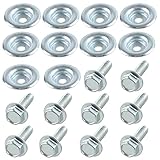
I remember the first time I heard about ‘a and a bolt baltimore’. It sounded like some arcane secret whispered in the back rooms of hardware stores. For years, I was that person, chasing down every shiny new gadget that promised to make life easier, only to end up with a drawer full of expensive paperweights.
Let’s be clear: the hype around some of this stuff is insane. You see it online, everyone’s raving, but when you get it home, it’s just… meh. Or worse, it’s actively frustrating.
I’ve spent my fair share of money and time figuring out what’s actually worth your attention and what’s just a waste of perfectly good cash. So, if you’re looking to cut through the noise and find out what truly works when it comes to ‘a and a bolt baltimore’, you’ve come to the right place.
The Real Deal with Fasteners: Beyond the Fancy Names
Look, we’re talking about bolts and things that hold them. It’s not rocket science, but man, some people act like it is. The marketing around fasteners, especially for specific applications or in certain regions like Baltimore, can be downright misleading. You’ll see terms like ‘high-tensile,’ ‘self-tapping,’ ‘corrosion-resistant,’ and it all starts to blur into this overwhelming jargon.
My first few projects involved grabbing whatever looked solid at the local big-box store, and I paid for it. I had a deck railing come loose once because I used the wrong kind of screw – looked fine, felt okay, but after a few seasons, the wood around it started to rot and the screw just pulled out. Cost me a weekend and a lot of embarrassment to fix.
The truth is, for most everyday tasks, you don’t need the aerospace-grade titanium alloy bolt. You need something that’s appropriate for the materials you’re joining, the environment it’ll be in, and the load it’s expected to bear. For instance, if you’re building something outdoors in Baltimore, where humidity and salt air can be an issue, a plain zinc-plated steel bolt is going to rust faster than you can say ‘frustrating.’ You’re much better off looking at stainless steel or even galvanized options.
I learned this the hard way when a simple garden planter project turned into a rust bucket in under a year. The fasteners themselves weren’t the main event, but they sure made the whole thing look like crap and compromised its integrity.
When you’re out there, trying to find the right ‘a and a bolt baltimore’ situation, pay attention to the material. Stainless steel is your friend for outdoor or damp environments. It’s more expensive, sure, but the longevity and aesthetic preservation are usually worth it. For indoor, dry applications, standard steel bolts with a zinc or even a black oxide finish are often perfectly fine and much cheaper. Don’t fall for the trap of buying the ‘strongest’ bolt if it’s not necessary. An over-engineered solution is often just an expensive one.
Consider the head type too. Hex heads are common and good for use with a wrench. Pan heads are flatter and can look cleaner. Countersunk (or flat head) screws are designed to sit flush with the surface, which is great for woodworking or when you don’t want anything sticking out. Each has its purpose, and picking the wrong one can lead to aesthetic issues or functional problems. I once spent ages trying to get a cabinet door to hang straight, only to realize the countersunk screws I used were slightly too proud, preventing the door from closing flush. A quick swap to a slightly shorter screw did the trick.
Decoding Material and Coatings: What Actually Resists the Elements
This is where most people get it wrong, and frankly, where a lot of manufacturers rely on confusion. When you’re dealing with anything that might see a bit of moisture, or if you live in a place like Baltimore where the air can be salty or humid, the material and coating of your fasteners are most important. I’ve seen folks use standard steel bolts on outdoor furniture, only to have them start showing rust spots within months. It’s not just ugly; it weakens the bolt over time.
Let’s break it down. For general indoor use, plain steel is fine. If it has a zinc plating, that gives it a bit of corrosion resistance.
Black oxide is more for looks and offers minimal protection. But once you step outside, or into a garage that gets damp, or near a swimming pool, you need to step up. Stainless steel is the golden child here.
It’s inherently resistant to rust and corrosion. There are different grades of stainless steel (like 304 and 316), with 316 being even more resistant to saltwater, so if you’re right on the coast, 316 is your best bet. I learned this when I replaced some fence hardware. Used standard stainless bolts, and they were fine.
Then I built a trellis near a sprinkler head that hit it constantly – started seeing orange streaks within a year. Switched to 316, and it’s been perfect ever since. (See Also: Are All Honda Atv Bolt Patterns The Same )
Another option is galvanized steel. This is steel that’s been coated in zinc, usually through a hot-dipping process. It’s much more solid than electroplated zinc (which is what you often find on standard hardware store bolts). Hot-dip galvanized fasteners are great for exterior applications, especially structural ones where you need strength and decent corrosion resistance without the higher cost of stainless.
However, they can be a bit rougher looking and sometimes the threads are a little gunked up, so you might need to chase them with a die if precision is needed. I used galvanized lag bolts for some heavy-duty framing on a shed, and they held up great against the weather, though cleaning up the threads took a bit of extra effort.
Here’s a thought that might sound contrarian: sometimes, plain old steel with a good quality coating is perfectly adequate for many outdoor jobs, especially if you’re not expecting constant submersion or extreme salt exposure. For instance, if you’re building a simple raised garden bed that you might replace in 5-7 years anyway, a good quality zinc-plated bolt might save you money upfront and still do the job. You don’t always need to go for the most expensive option if your project’s lifespan or exposure isn’t extreme. It’s about matching the fastener to the reality of its use, not just to the marketing hype.
Common Mistakes and How to Avoid Them
I’ve made enough mistakes in my DIY life to fill a hardware store. When it comes to fasteners, the most common error I see – and have committed – is overthinking or underthinking the application. People either buy the most expensive, heavy-duty bolt they can find for a project that doesn’t need it, or they grab the cheapest thing on the shelf for something that demands serious holding power. Both are a waste of money and potentially a safety issue.
Let’s talk about shear strength versus tensile strength. Most people just grab a bolt and assume it’s strong.
But strong in what way? Shear strength is how much force it can take to cut or break the bolt sideways. Tensile strength is how much force it can take to pull it apart along its length. For things like hanging a shelf, you’re primarily dealing with shear strength due to gravity.
For something like a turnbuckle or a chain, you might be dealing with tensile strength. Understanding which kind of stress your fastener will encounter is key. I once tried to hang a heavy mirror with just a couple of standard wood screws.
Looked fine, but the weight was pulling them downwards, creating shear stress. They started to pull out after a month. Switched to lag bolts specifically designed for shear loads, and it’s been solid ever since.
Another huge mistake is not pre-drilling holes correctly, or at all. For wood, especially hardwoods, trying to drive a bolt or screw without a pilot hole is asking for trouble. You’ll split the wood, strip the threads of the fastener, or just not get it in straight. The rule of thumb is to drill a pilot hole slightly smaller than the shank (the unthreaded part) of the bolt or screw.
For lag bolts into hardwood, I’ll often go a bit smaller than the threads. For machine bolts going into pre-tapped holes or with a nut, you want the pilot hole to be the exact size of the clearance hole, so the bolt slides through easily.
I learned this the hard way trying to assemble a workbench. The instructions said ‘pilot hole,’ and I figured ‘eh, it’s softwood, I can just screw it in.’ Halfway through, the wood cracked and the bolt was at a weird angle.
Had to disassemble, patch the hole, and start over. Lesson learned: read the damn instructions and pre-drill.
Thread engagement is also important. If you’re using a bolt with a nut, you want at least a few full threads showing past the nut. (See Also: Are Ak Bolts Interchangeable )
If the nut is flush with the end of the bolt, you don’t have enough thread engagement for maximum strength. The same applies to bolts going into tapped holes. If the bolt only goes in a little bit, it’s not going to hold as well as it should. I saw a friend try to assemble a metal frame using bolts that were too short.
They looked okay, but the frame wobbled. Turns out, they only had about two threads engaged in the nut.
We replaced them with longer bolts, and the whole thing became rock solid.
Practical Tips for Buying and Using Fasteners
Alright, let’s get practical. You’re looking for ‘a and a bolt baltimore,’ and you’re overwhelmed. Here’s what I do. First, figure out exactly what you need. Is it for wood, metal, concrete? What’s the environment – indoor, outdoor, wet, salty? What kind of load will it bear? Once you have those answers, you can start narrowing it down.
When you go to the store or shop online, don’t just grab the first thing that looks right. Read the packaging. It should tell you the material (steel, stainless steel, brass), the coating (zinc-plated, galvanized, chrome), the thread type (coarse or fine), and the size (diameter and length). For metric fasteners, you’ll see an ‘M’ followed by the diameter (e.g., M6) and then the thread pitch (e.g., M6x1.0). For imperial, it’s usually a fraction or a gauge number for diameter and inches for length (e.g., 1/4-20 x 1.5 inches, where 20 is the number of threads per inch).
Here’s my table for common fastener types and what I generally reach for:
| Fastener Type | Typical Use Case | Material/Coating Recommendation | My Verdict |
|---|---|---|---|
| Wood Screws | Joining wood pieces | Zinc-plated steel (indoor), Stainless steel (outdoor/decking) | Good for general carpentry, but don’t use for structural loads without pilot holes. Stainless for decks is a no-brainer. |
| Lag Bolts | Heavy-duty wood connections, framing | Hot-dip galvanized steel or Stainless steel | My go-to for anything structural that involves wood. Get the right length! |
| Machine Bolts (Hex, Carriage, etc.) | Joining metal, or metal to wood/other material with nuts or tapped holes | Zinc-plated steel (indoor), Stainless steel (outdoor/marine), Hot-dip galvanized (heavy outdoor) | Versatile. Always use washers. Stainless is king for anything exposed. |
| Concrete Anchors (Wedge, Sleeve) | Attaching things to concrete or masonry | Zinc-plated steel (dry), Stainless steel (damp/exterior) | Follow the weight ratings religiously. Don’t skimp here if you value what you’re hanging. |
A quick tip on washers: always use them. They distribute the load over a wider area, preventing the bolt head or nut from digging into the material, which can weaken it. For wood, a flat washer is usually fine. For metal, consider a lock washer if vibration is a concern, though I find a properly tightened nut with a flat washer is often sufficient for most non-important applications. The idea that you always need a lock washer is a bit of an oversimplification that adds cost and complexity for little gain most of the time.
The ‘why Not Just Use That?’ Test: When Cheaper Isn’t Better
We’ve all been there. You’re halfway through a project, you realize you’re missing one important bolt, and you’re staring at a $5 stainless steel option and a $0.50 zinc-plated steel one. The temptation to just grab the cheap one is immense, especially if you’re on a tight budget or if the project feels somewhat temporary. But this is precisely where I’ve learned to be stubborn and pay the extra. The cost difference, when you factor in the potential for failure, replacement, and the sheer annoyance, is almost always negligible.
Consider the scenario of building a simple outdoor bench. You’re using treated lumber, which is great. You need bolts to hold the legs to the seat. You could use standard zinc-plated bolts.
They’re cheaper, readily available. Fast forward a year or two. The zinc coating starts to wear, especially where the wood flexes slightly or where rain pools.
Rust starts to form. The bolt’s strength is compromised. Then, maybe someone sits on the bench a little too hard, and a leg gives way because the bolt failed.
You’ve got a broken bench, potentially a damaged deck or patio, and you have to buy new lumber, new bolts, and spend more time fixing it. That initial saving of a couple of bucks per bolt just evaporated.
Now, contrast that with using stainless steel bolts. Yes, they cost more upfront, maybe $3-5 more per bolt in this scenario. But they are designed to resist corrosion. They will look good for years. (See Also: Are All Bolt Patterns The Same )
They will maintain their structural integrity. The bench remains safe and functional. The total cost of ownership, over the life of the bench, is almost certainly lower with the stainless steel option, not to mention the peace of mind.
I did a fence repair last spring where I needed to replace a few pickets and their connecting rails. I used standard galvanized screws for the rails. They were fine.
But the pickets themselves? I used stainless steel screws. The galvanized screws on the old rails are already starting to show rust streaks down the wood.
The stainless steel pickets look as good as the day I put them on. It’s a small detail, but it makes a difference in how the whole project ages.
The common advice is often to ‘use the right tool for the job.’ I’d extend that to ‘use the right fastener for the job.’ It’s not just about strength; it’s about longevity and suitability for the environment. For my own projects, I’ve adopted a rule: if it’s outdoors, exposed to the elements, or in a damp area, I default to stainless steel or high-quality hot-dip galvanized unless there’s a very specific reason not to.
For indoor, dry applications, I’m more flexible and will often opt for good quality zinc-plated steel to save money. This simple heuristic has saved me a ton of headaches and money in the long run. It’s about thinking ahead, not just about getting the job done today.
Frequently Asked Questions About Fasteners
What’s the Difference Between a Bolt and a Screw?
Generally, a bolt is designed to be used with a nut and passes through holes in the parts being fastened. A screw is designed to be inserted into a pre-drilled hole and creates its own threads or uses existing threads in the material. While there’s overlap, this is the most common distinction.
How Do I Know If I Need Stainless Steel?
If your project is outdoors, near saltwater, in a humid environment, or in any situation where rust would be a problem aesthetically or structurally, you should consider stainless steel. For indoor, dry applications, other finishes like zinc plating are often sufficient.
Should I Use Washers with Bolts?
Yes, in most cases. Washers distribute the load from the bolt head or nut over a larger surface area, preventing damage to the material being fastened and helping to create a more secure connection. They also help if the surface isn’t perfectly flat.
What Does ‘coarse Thread’ Versus ‘fine Thread’ Mean?
Coarse threads have fewer threads per inch and are generally stronger and easier to start, making them suitable for softer materials or faster assembly. Fine threads have more threads per inch, offering a more precise fit, greater resistance to vibration loosening, and better holding power in harder materials, but can be more prone to cross-threading.
Final Verdict
So, when it comes down to it, figuring out the right fastener for your project, whether you’re in Baltimore or anywhere else, is less about the fancy jargon and more about understanding the basics of material, environment, and load. I’ve definitely learned that skipping on quality fasteners, especially for outdoor or structural applications, is a false economy.
My advice? Don’t be afraid to spend a little extra on stainless steel or galvanized if it’s going to be exposed to the elements. It’s the difference between a project that looks good for years and one that starts looking sad after one rainy season. And for goodness sake, pre-drill your holes. Your wood and your sanity will thank you.
Next time you’re staring at a wall of bolts, remember this: a little foresight goes a long way. What’s the one fastener mistake you’ll never make again?