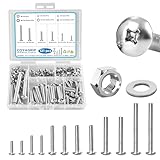
I remember the first time I tried to swap out my skateboard trucks. I grabbed a random pack of hardware, thinking ‘bolts are bolts,’ right? Wrong. I ended up with bolts that were way too short, and my trucks wobbled like a drunken sailor on shore leave. It was a disaster. This whole question of, ‘are 7/8 bolts long enough for my skateboard trucks,’ is one of those things you don’t think about until it bites you in the rear end.
It seems simple, but the right bolt length is actually pretty important for a solid ride. Too short, and you’re compromising stability and safety. Too long, and you risk snagging things or just generally looking like you don’t know what you’re doing.
Let’s cut through the confusion and talk about what actually works and why.
The Real Deal on 7/8 Inch Bolts
Alright, let’s get straight to it. When you’re asking ‘are 7/8 bolts long enough for my skateboard trucks,’ the honest answer is… it depends.
But most of the time, for a standard setup, NO. For most skaters, 7/8 inch bolts are actually too short. Think about it.
Your truck baseplate has a certain thickness, and then you’ve got the kingpin nut that needs to thread on securely. A 7/8 inch bolt is barely long enough to get a few good threads on that nut, if at all, once it’s pulled through the deck, the truck baseplate, and any risers you might be running. Seriously, I’ve seen people try to make them work, and it’s just begging for trouble.
The nut barely bites, which means it can loosen up way easier. That’s not just annoying; it’s dangerous.
I learned this the hard way after a nasty fall that I’m pretty sure was caused by a loose truck. I was riding a brand new board, felt great, and then BAM. Lost control.
Turns out, the kingpin nut had vibrated almost completely off because the bolts were just too short to hold it. That was an expensive lesson in bolt length.
The common advice you’ll find online is that 7/8 inch bolts are meant for when you’re not running risers. And that’s technically true, but even then, they are on the absolute fringe of being too short. A riser pad is that plastic or rubber piece that sits between your deck and your truck. They’re used to prevent ‘wheel bite’ (when your wheel touches the deck during a turn, stopping you dead) or to add a bit of shock absorption.
Even a thin riser, like 1/8 inch, will make 7/8 inch bolts completely inadequate. You’ll be lucky if you get a single thread engaged on the kingpin nut. So, if you even think you might want risers, or you’re just unsure, steer clear of 7/8 inch bolts.
They’re a false economy. You might save a dollar or two initially, but you’ll likely end up buying new bolts and potentially dealing with a damaged deck or a serious injury. It’s just not worth the risk.
The real workhorse for most standard skateboard setups is the 1-inch bolt. One inch gives you enough clearance to go through the deck, the baseplate, and still have plenty of thread left to securely fasten the kingpin nut. It’s the Goldilocks length for a lot of people. But we’ll get into other lengths and what they’re for in a bit. (See Also: Can I Buy A Full Auto Bolt Carrier )
What to Look for: Beyond the Length Number
Okay, so we’ve established that 7/8 inch bolts are usually a bad idea for most people asking ‘are 7/8 bolts long enough for my skateboard trucks.’ But length isn’t the only thing that matters. You’ve got to consider the type of bolt head and the thread. These might sound like minor details, but they can make a difference in how easy it is to install them and how they perform over time.
Bolt heads come in a few main styles. You’ll see Phillips head, which is that classic cross shape.
Then there’s Allen head, which is the hexagonal socket. Most skateboard hardware comes with Phillips heads, but Allen heads are becoming more common and I actually prefer them. Why?
Because a Phillips head can get stripped out pretty easily, especially if you’re not careful with your screwdriver or if the metal is a bit soft. An Allen key tends to give you a more solid grip and more torque, meaning you can tighten the bolt down properly without as much risk of chewing up the head.
Plus, if you’re ever in a pinch and need to swap out hardware on the go, you’re more likely to have an Allen key that fits than a Phillips screwdriver of the right size. I carry a small multi-tool with an Allen key specifically for this reason.
It’s saved me more than once.
The thread pitch is also worth a mention. Most skateboard bolts use a standard thread, but sometimes you’ll find slightly finer threads on higher-end hardware. For the average skater, this isn’t a huge concern. Just make sure the nuts you get are compatible with your bolts.
They usually come as a set for a reason. The most important thing is that the threads are clean and not damaged.
You don’t want to be forcing a nut onto a bolt; it should thread on smoothly for at least half the length before you even start tightening. If it feels gritty or like it’s binding, something’s wrong. Either the bolt or the nut is defective, or you’ve cross-threaded it, and you should stop immediately.
Finally, the material matters. Most bolts are steel. You’ll find different grades of steel, but for skateboard hardware, you’re generally looking at something reasonably strong and corrosion-resistant. Stainless steel is a good option if you skate in damp conditions, but it can be a bit more expensive. For everyday street skating, standard coated steel bolts are perfectly fine. Just avoid anything that feels super light or flimsy. You want hardware that feels substantial.
Common Mistakes to Avoid
One of the biggest mistakes people make, besides picking the wrong length, is not realizing how much the deck thickness and riser pads influence bolt choice. Decks themselves vary in thickness. A thinner, more flexible deck might require slightly shorter bolts than a thick, stiff one, even with the same risers. Always factor in your deck’s construction. Also, people often forget to account for the thickness of their bearing spacers if they use them. These little metal cylinders sit inside your wheel, between the bearings. If you add those into the equation, especially with risers, you can see how quickly your bolt length needs increase.
Another mistake is overtightening. I know I said Allen heads give you more torque, but that doesn’t mean you should crank them down like you’re trying to fuse the truck to the deck. Overtightening can strip the threads on the bolt or the nut, crack your deck around the truck mounting holes, or even warp the baseplate of your trucks. (See Also: Are Mercruiser 5 7 Engines Four Bolt Mains )
Snug is good. Really, really tight is bad. You want the bolt to be firmly seated against the deck and the truck baseplate, with the kingpin nut snug against the truck, but you shouldn’t be putting your entire body weight into tightening it.
A good rule of thumb is to tighten until you feel resistance, then give it about another half to a full turn. Check them periodically, especially after the first few sessions on a new setup.
When Do 7/8 Inch Bolts Actually Work?
Okay, so I’ve been pretty hard on 7/8 inch bolts, and for good reason. But are there any situations where they’re actually the right choice? Yes, but they are few and far between for most skaters. The primary scenario where 7/8 inch bolts might be considered is if you are running an ultra-thin deck (think old-school popsicle decks from back in the day that were really thin, or some specialized downhill decks) AND you are absolutely, positively not using any riser pads at all. Even then, I’d still be hesitant.
Let’s consider a hypothetical. Imagine you have a deck that’s exceptionally thin, maybe 1/4 inch or even less.
And let’s say you’re not using any risers because you’ve got very small wheels, or you’re doing very specific technical street skating where you want the lowest possible center of gravity and you’re willing to risk wheel bite. In this very specific scenario, a 7/8 inch bolt might thread onto the kingpin nut enough to hold. But, and this is a massive ‘but,’ it would be cutting it extremely close.
You’d have very few threads engaged, and the kingpin nut would be sitting very low on the bolt. This makes it much more susceptible to vibrations loosening it, and it’s generally just not a secure connection. I’ve seen friends try this in the past when they were trying to save money or were impatient, and almost all of them regretted it. The peace of mind that comes with knowing your trucks are securely bolted down is worth the few extra dollars for longer bolts.
For anyone else – if you’re riding modern popsicle decks, mini-cruisers, longboards, or any board where you might even consider risers (even 1/8 inch), 7/8 inch bolts are almost certainly going to be too short. The risk of a loose truck and the potential for crashes far outweighs any perceived benefit of using such short bolts. It’s better to have bolts that are slightly too long and can be tightened securely than bolts that are too short and leave you with a precarious connection. Trust me on this one. I’ve seen too many people learn this lesson the hard way.
Bolt Lengths for Different Setups
So, if 7/8 inch is usually too short, what lengths should you be looking at? This is where it gets more practical. The length of your skateboard truck bolts is measured from the underside of the bolt head to the end of the bolt. The key is to have enough bolt length to go through your deck, your truck baseplate, and any riser pads, and still have enough thread left to securely engage the kingpin nut. Here’s a general guide, but remember, deck thickness and riser thickness are variable:
| Riser Pad Thickness | Recommended Bolt Length | Notes |
|---|---|---|
| 0 inches (No Risers) | 1 inch | For most standard setups with wheels 52-54mm. If your deck is particularly thick, consider 1.25 inches. |
| 1/8 inch (3mm) | 1.25 inches | This is a very common setup for street skating to prevent wheel bite with slightly larger wheels or looser trucks. |
| 1/4 inch (6mm) | 1.5 inches | Good for larger wheels (56mm+) or if you like very loose trucks. Also common on cruiser boards. |
| 1/2 inch (13mm) or more | 1.75 inches or longer | Typically for longboards or very specialized setups where significant wheel clearance is needed. |
As you can see from the table, 1-inch bolts are the go-to for a basic setup with no risers. They offer a good balance for most street and park skating. If you’re adding even a thin riser pad, you almost immediately need to step up to 1.25-inch bolts. Anything more than a 1/8 inch riser, and you’re probably looking at 1.5-inch bolts or longer. This is why I always tell people to buy their hardware after they’ve decided on their risers and wheels, or at least have a good idea of what they’ll be using. Trying to guess can lead to buying hardware that’s either too short or unnecessarily long and heavy.
Don’t be afraid to go slightly longer than you think you need, as long as it’s not excessive. It’s better to have a bit of extra bolt sticking out past the nut than to have the nut barely on the threads. You can always grind down the excess bolt length if it bothers you, but you can’t magically add length if it’s too short. Some skaters even like to grind down the ends of their bolts to a rounded point after installation. It looks clean and prevents the bolts from snagging on anything during slides or rough terrain. It’s a small detail, but it shows you’re paying attention to the little things that make a difference.
The Importance of Secure Hardware
Let’s talk about why this all matters so much. When you’re skating, your trucks are basically your connection to the pavement. They dictate how your board turns, how stable it is at speed, and how it responds to your input. If the hardware holding those trucks to your deck isn’t secure, all of that goes out the window. A loose kingpin nut, caused by bolts that are too short, is a recipe for disaster. It can lead to unpredictable board behavior, sudden stops, and potentially serious injuries. I’ve seen perfectly good skaters bail hard because a truck started wobbling uncontrollably mid-trick or mid-ride.
Think about the forces involved when you’re skating. You’re jumping, landing, turning, grinding. All of these actions put significant stress on your hardware. The bolts and nuts are what keep everything together. If they’re not properly tightened and engaged, they can work themselves loose. This is especially true with the vibrations that are constantly happening when you’re rolling. The kingpin nut is specifically designed to be snug, providing enough tension to keep the truck from wobbling but allowing it to pivot for turning. If there aren’t enough threads for that nut to grip onto securely, it will eventually back off. It’s not a matter of if, but when. (See Also: Can Am Merverick X3 Max Xrs Wheel Bolt Pattern )
This is why the question ‘are 7/8 bolts long enough for my skateboard trucks’ is so important to get right. It’s not just about aesthetics or a minor inconvenience.
It’s about the fundamental safety and functionality of your skateboard. When you’re dropping into a halfpipe, hitting a steep hill, or landing a complex trick, you need to have absolute confidence in your equipment. That confidence starts with the knowledge that your trucks are firmly attached to your deck with the correct hardware. It’s a foundational element of skateboarding that you shouldn’t overlook.
Investing in the right length bolts and making sure they are properly installed is one of the cheapest and most effective ways to improve your skating experience and stay safe.
Faq: Your Skateboard Bolt Questions Answered
Are 7/8 Bolts Too Short for Risers?
Yes, almost always. Even the thinnest riser pads (1/8 inch) will make 7/8 inch bolts too short to properly engage the kingpin nut. You’ll typically need at least 1.25-inch bolts for a 1/8 inch riser, and longer for thicker risers.
What Happens If My Skateboard Bolts Are Too Short?
If your skateboard bolts are too short, the kingpin nut won’t have enough threads to grip onto. This means the nut can loosen easily due to vibrations and impacts, leading to wobbly trucks, unpredictable board behavior, and a significant risk of crashes and injury. It compromises the structural integrity of your setup.
Can I Use Longer Bolts Than Recommended?
You can use longer bolts than the minimum recommended, but avoid going excessively long. Bolts that are too long can potentially snag on things during slides, feel heavier than necessary, or even poke through the deck if they are extremely long and your deck is thin. However, slightly longer is usually better than too short, as you can always grind down the excess if needed.
How Often Should I Check My Skateboard Hardware?
You should check your skateboard hardware regularly, especially after the first few riding sessions on a new setup or after installing new hardware. Periodically, check them every few weeks or before any significant skating session. Listen for any unusual rattling sounds and visually inspect for loose nuts or bolts.
What Is the Standard Bolt Size for Skateboards?
The most common and standard bolt size for skateboards, especially for setups without riser pads, is 1 inch. However, many skaters use 1.25-inch or 1.5-inch bolts to accommodate riser pads or larger wheels.
Final Verdict
So, to sum it up, when you’re asking ‘are 7/8 bolts long enough for my skateboard trucks,’ the practical answer for most people is no. They are too short for the vast majority of setups, especially if you’re using any kind of riser pads, which most skaters do at some point.
Your best bet is to invest in hardware that’s the right length for your specific setup – factoring in your deck, your wheels, and any risers you’re running. A 1-inch bolt is a good starting point for a no-riser setup, but don’t be afraid to go to 1.25-inch or 1.5-inch if you need the clearance. It’s a small component, but it makes a huge difference in how your board rides and how safe you are.
Before you slap those trucks on, double-check your hardware length. Your ankles will thank you.