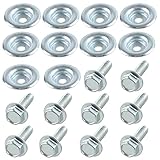
I remember the first time I saw the term ‘a 525 bolts’ staring back at me from a cryptic online forum. I’d been neck-deep in a DIY project, convinced I was about to build something amazing. Then, bam. Confusion. What the heck is a 525 bolt and why would anyone be talking about it like it’s some kind of secret handshake?
Look, I’ve spent more money than I care to admit on hardware that turned out to be complete overkill, or worse, just plain wrong for the job. You learn fast when your projects start to sag or, heaven forbid, fall apart. So, when I see terms like ‘a 525 bolts’ floating around, my first thought is always: what’s the actual story? Is this some obscure industrial thing, or just a bunch of jargon?
Let’s cut through the noise.
When Are You Actually Dealing with a 525 Bolts?
Honestly, the biggest confusion around ‘a 525 bolts’ is that it’s not a standard fastener classification you’ll find in your local hardware store’s bins, nor is it a universally recognized engineering term like ‘Grade 8’ or ‘carriage bolt.’ Instead, it’s most commonly encountered in specific contexts, primarily related to automotive applications, particularly older models or specialized performance builds. Think of it less as a type of bolt and more as a reference point within a particular system or component list.
For example, if you’re digging into the service manual for a classic muscle car, or perhaps rebuilding a specific transmission or engine assembly, you might see a diagram or parts list that calls out ‘a 525 bolts’ for a particular bracket, mount, or cover. This usually means there’s a specific bolt, identified by its manufacturer’s part number (which might be 525, or related to a 525 series component), that is designed for that exact spot. It’s not about the bolt’s material grade or thread pitch in isolation, but its role in a larger, sometimes proprietary, system.
I ran into this exact issue years ago while trying to restore a vintage motorcycle. The exploded diagram in the manual had a little asterisk next to a few fasteners, indicating they were ‘special’ or ‘specific.’ One of those was labeled something like ‘Bolt 525-A.’ I spent ages trying to find a bolt with ‘525’ stamped on it, assuming it was some super-hardened alloy. Turns out, it was just a standard M8 bolt with a particular length and head type that the manufacturer used for that specific application, and their internal part numbering system just happened to use ‘525’ as a prefix for a whole batch of similar fasteners.
The key takeaway here is that if you see ‘a 525 bolts,’ your first step should be to identify where it’s supposed to go and consult the specific documentation for that item. Is it holding a brake caliper bracket? Is it part of an exhaust manifold assembly? Is it securing a fairing on a motorcycle? The context is everything. Without that, you’re just chasing a ghost of a part number.
This also explains why you won’t find a dedicated aisle for ‘525 bolts’ at Home Depot. These are almost always OEM (Original Equipment Manufacturer) or specialized aftermarket parts. Trying to substitute them without understanding the original spec can lead to headaches. You might get a bolt that fits, but if the tensile strength, thread depth, or even the head type is slightly off, it could compromise the integrity of the assembly. I’ve learned the hard way that ‘close enough’ is rarely good enough when it comes to important fasteners, especially in a moving machine.
What to Look for When Replacing ‘a 525 Bolts’
Okay, so you’ve identified that you need a replacement for ‘a 525 bolts.’ What’s the actual process of finding the right one, beyond just squinting at a part number? This is where you need to put on your detective hat. The first and most vital piece of information is the original specification. If you have the faulty bolt in hand, that’s your golden ticket. Examine it closely. What are its dimensions? This includes the overall length (from the underside of the head to the tip), the shank diameter (the main threaded part), and the thread pitch (how many threads per inch or millimeter). You can measure these with a ruler, a caliper, or even a thread gauge.
Beyond the physical measurements, consider the material and grade. While ‘525’ itself isn’t a grade, the bolt will have a material specification. Look for markings on the bolt head. Common markings indicate SAE grades (like Grade 2, 5, 8, or 8.8, 10.9, 12.9 for metric).
These markings tell you about the bolt’s strength. For automotive applications, you’re often dealing with higher grades (Grade 5 or 8 for SAE, or 8.8 and above for metric) because they need to withstand vibration, stress, and temperature fluctuations. Using a bolt that’s too weak is a recipe for disaster. I once used a bolt that looked identical but was a lower grade for a suspension component.
It vibrated loose within 50 miles, and the resulting damage was far more expensive than a proper bolt would have been. (See Also: Are All Honda Atv Bolt Patterns The Same )
The head style is also important. Is it a hex head, a socket head (Allen), a button head, or something else? The original head style often dictates the tool needed for installation and removal, and in tight engine bays or undercarriages, clearance can be a major issue. You might need a specific type of head to get a wrench or socket in there.
Consider the thread type – is it standard coarse thread, fine thread, or a specialized thread? And don’t forget coatings or finishes. Some bolts are zinc-plated for corrosion resistance, while others might have specific anti-seize compounds or thread-locking patches applied from the factory. If the original bolt had a locking feature, you’ll want to replicate that with either a new bolt that has it or by using an appropriate thread-locking compound like Loctite.
Finally, the source matters. If you can find the OEM part number and order directly from the manufacturer or a reputable dealer, that’s often the safest bet, especially for important components. If you’re going the aftermarket route, stick to well-known brands that specialize in automotive fasteners. Trying to source ‘a 525 bolts’ from an unverified seller on a discount site is a gamble that rarely pays off.
Here’s a quick comparison of common automotive bolt grades:
| Marking (SAE) | Marking (Metric) | Approx. Tensile Strength (PSI) | Typical Use | My Verdict |
|---|---|---|---|---|
| (None) / 2 | 4.6 | ~60,000 | Light duty, non-important components | Avoid for anything structural. |
| 5 | 8.8 | ~120,000 | General automotive, suspension, engine mounts | Good all-rounder, but check specs. |
| 8 | 10.9 | ~150,000 | High-stress applications, chassis, important components | The go-to for serious work. |
| (Rare) | 12.9 | ~170,000+ | Extreme duty, racing, specialized engines | Overkill for most, but necessary for some. |
Common Mistakes When Dealing with Specific Bolts
The trap with specialized fasteners, like those referred to as ‘a 525 bolts,’ is assuming all bolts are created equal. This is a mistake I’ve seen people make countless times, and frankly, I’ve made it myself early on. The most frequent blunder is simply grabbing a bolt that looks the same from your miscellaneous hardware bin or a generic online supplier. You might get lucky, but more often than not, you’re setting yourself up for failure. What appears to be a perfect fit could have a slightly different thread pitch, meaning it might thread in, but it won’t achieve the correct clamping force and could strip out or loosen over time.
Another common pitfall is overlooking the material strength. As I mentioned, ‘525’ isn’t a strength indicator. If the original bolt was a high-tensile Grade 8, and you replace it with a Grade 2 that happens to have the same dimensions, you’re asking for trouble. Vibrations, shock loads, or even just the torque applied during tightening can cause the weaker bolt to stretch, deform, or snap.
I remember a friend who replaced a set of important engine bolts on his project car with what he thought were identical ones from a hardware store. A few hundred miles later, the engine started making a terrifying knocking sound. Turns out, one of the lower-grade bolts had stretched and allowed the component it was holding to shift, leading to catastrophic internal damage. The cost of the replacement engine dwarfed the savings on the bolts.
People also frequently disregard the specific head style and drive type. Sometimes, there’s a very good reason why a manufacturer chose a particular head – maybe it’s a low-profile bolt needed to clear another component, or a special flange head designed to distribute load over a larger surface area. Trying to force a standard hex head into a spot where only a button socket head will fit is a losing battle and can damage the surrounding parts. And don’t get me started on using the wrong tool for the job. Trying to crank down a Torx bolt with a Phillips screwdriver will just strip the head, making removal and replacement a nightmare.
Finally, there’s the issue of thread locking. Many important fasteners in automotive and machinery applications are designed to be used with thread-locking compounds or have self-locking features like nylon inserts or prevailing torque features. Skipping this step, or not using the correct type of thread locker (e.g., using high-strength red Loctite on something that needs to be removed regularly), can lead to bolts loosening over time or becoming nearly impossible to remove later. Always check if thread locker was specified on the original fastener.
One area where I see a lot of confusion is with metric vs. SAE threads. While they look similar, they are NOT interchangeable. Trying to force an SAE bolt into a metric thread, or vice-versa, will damage both the bolt and the threaded hole. Always confirm your thread standard.
Can You Mix Metric and Sae Bolts?
No, you absolutely cannot mix metric and SAE bolts interchangeably. While some thread sizes might appear visually similar, their thread pitch and angle are different. Forcing an SAE bolt into a metric hole, or the other way around, will damage the threads on both the bolt and the component it’s being screwed into. This can lead to a weak connection that might fail under stress or require costly repairs to the threaded hole. (See Also: Are Ak Bolts Interchangeable )
Real-World Applications and Anecdotes
I’ve encountered the cryptic ‘a 525 bolts’ reference most often in the context of vintage Japanese motorcycles and specific American muscle car engine components. For instance, when working on a ’70s Honda CB750, you’d often find these references in the carburetor assembly diagrams. They weren’t special bolts in terms of material, but they were precisely sized – often with a specific length and a 6mm thread pitch – to make sure the float bowls sealed correctly and the airbox connected without any gaps. If you used a slightly longer bolt, you could bottom it out and crack the delicate aluminum casting. If you used one with the wrong thread, it wouldn’t seat properly, leading to fuel leaks or air leaks, both of which are obnoxious to diagnose.
On the car side, I recall a particularly stubborn project involving a Ford 351 Windsor V8. The intake manifold gasket was weeping oil, and the service manual had a section detailing the torque sequence and the specific bolts to be used, with some designated as ‘Type 525.’
These particular bolts were slightly shorter than some of the others holding the manifold down, and they had a specific radius under the head, rather than a sharp chamfer. This radius was important for making sure proper seating against the manifold and preventing stress risers that could crack the aluminum manifold itself.
I tried to use a generic bolt from my stash that was almost identical, but the slight difference in the head radius meant it didn’t seat perfectly. It wasn’t immediately obvious, but over time, the heat cycles caused micro-movements, and the gasket started to fail again, forcing me to tear it all down a second time. That was a hard lesson in paying attention to the subtle details that manufacturers build into their designs.
The takeaway from these experiences is that while ‘a 525 bolts’ might just be an internal part number or a placeholder in a manual, it signifies a fastener that is specific for a reason. It’s not about reinventing the wheel; it’s about understanding why the original engineer chose that particular bolt for that particular job. Was it for clearance? Load distribution?
Thread engagement? Correct sealing? Often, it’s a combination of factors. My rule of thumb now is: if a part number is that specific, and especially if it’s tied to a important component like an engine or drivetrain, find the exact replacement or a direct, verified equivalent.
The time and money saved by not having to redo the job far outweighs the perceived cost savings of a generic substitute.
I’ve also seen situations where a bolt might be part of a kit or a sub-assembly. For example, a brake caliper might come with its own set of bolts designed to fit perfectly within the caliper bracket. Calling those out as ‘a 525 bolts’ in a larger parts breakdown just means ‘the bolts that belong to the 525 sub-assembly.’ It’s an organizational reference, not a technical specification of the bolt itself.
What Is a 525 Bolt in Automotive?
In automotive contexts, ‘a 525 bolts’ is not a standard classification. Instead, it typically refers to a specific fastener identified by an internal part number, often from the manufacturer’s own catalog or service manual. This number ‘525’ might be a prefix or a suffix in a longer part number and usually denotes a bolt used for a particular component or assembly within that vehicle. The important aspect is not the number ‘525’ itself, but the exact specifications (size, thread pitch, length, material grade, head style) of the bolt that this number represents within its specific application, such as for a mounting bracket, engine component, or accessory.
Practical Tips for Sourcing and Using
When you’re hunting for a specific fastener like ‘a 525 bolts,’ don’t waste your time guessing. Your first and best resource is always the manufacturer’s official parts catalog or service manual for the specific make and model of your vehicle or equipment. These documents will have diagrams and lists that identify parts by their official numbers. If you can find the OEM part number, that’s gold. Websites like RealOEM.com for BMW, or Mopar’s official parts catalog for Chrysler/Dodge/Jeep, are incredibly useful for this.
If you can’t get the exact OEM number, or if you’re looking for an aftermarket option, start by meticulously measuring the bolt you need to replace. I cannot stress this enough: caliper measurements for diameter and thread pitch, and a ruler or tape measure for length. Know whether it’s metric or SAE. If it has any markings on the head, note them down – they tell you the strength grade. (See Also: Are All Bolt Patterns The Same )
Once you have those specs, your next stop should be specialized fastener suppliers. Online retailers like McMaster-Carr, Bolt Depot, or Fastenal are fantastic resources. They have extensive databases where you can filter by diameter, thread pitch, length, head type, material, and grade. You can often find direct replacements or very close equivalents. When I needed a specific bolt for a vintage European car once, I used McMaster-Carr’s website, filtered down to the exact dimensions and thread pitch, and found a perfect match in stainless steel, which was an upgrade for corrosion resistance.
When you find a potential replacement, compare its specifications against your original bolt’s measurements and known requirements. Pay attention to the thread engagement – is the length sufficient for proper threading into the receiving part without bottoming out or being too short to provide adequate grip? Also, consider the head type. Will it clear surrounding components? Will your wrench or socket fit on it?
If you’re unsure about the material grade, always err on the side of caution and go for a higher grade if the dimensions are otherwise correct, especially for any load-bearing application. For example, if you can’t confirm the grade of the original bolt but know it’s for a suspension part, using a Grade 8 (SAE) or 10.9 (Metric) is a safe bet. Remember to use the appropriate torque wrench settings for the bolt’s grade and size. Overtightening can strip threads or break the bolt, while undertightening can lead to loosening and component failure.
Finally, if the original bolt used thread locker, make sure to apply the correct type (blue for medium strength, red for high strength, green for wicking) to your new fastener. This is often overlooked but is a important step in making sure a secure and lasting assembly.
When to Consider Upgrading
Sometimes, when you’re dealing with a specific fastener like ‘a 525 bolts,’ you might be tempted to just replace it with the exact same thing. And for many applications, that’s perfectly fine. However, there are situations where upgrading can significantly improve the longevity, safety, or performance of your project.
The most obvious upgrade is to better materials. If the original bolt was standard steel and prone to rust, switching to stainless steel or a similarly corrosion-resistant alloy can prevent future issues, especially if the component is exposed to the elements or road salt. I’ve found that for many exterior body panel fasteners or parts of the exhaust system, stainless steel makes a huge difference in preventing seized bolts down the line.
Another common upgrade path is to a higher strength grade. If the original bolt was, say, a Grade 5, but the application experiences significant vibration or stress, upgrading to a Grade 8 or a metric equivalent like 10.9 or 12.9 can provide much greater resilience. This is particularly relevant for engine mounts, suspension components, or any part that’s subject to dynamic loads. I once had a recurring issue with a bracket on a dirt bike that kept loosening. Upgrading the bolts to a higher tensile strength, along with using a good quality thread locker, solved the problem permanently. It wasn’t just about holding power; it was about resisting the fatigue from constant jolts.
You can also consider upgrading the head style or drive type if it makes sense for accessibility or tool compatibility. For example, if an original hex head bolt is in a really tight spot and hard to torque properly, switching to a socket head cap screw (Allen bolt) might give you better access with an Allen key or driver, allowing for more precise tightening. This has to be done carefully, though, to make sure the new head style doesn’t interfere with any other parts.
Some specialized aftermarket components might even come with their own unique fasteners designed for optimal performance within that specific part. For instance, high-performance brake caliper kits or aftermarket turbocharger kits often include their own set of high-grade, often titanium or specially coated, bolts that are designed to handle extreme temperatures and pressures. In these cases, using the provided hardware is generally the best approach, as it’s been engineered to work with the new component.
However, it’s important to be cautious. Not every bolt needs an upgrade, and sometimes sticking to the OEM spec is the safest bet. For instance, some aluminum components have very specific torque requirements and thread engagement lengths, and using a bolt that’s too strong or too long could actually damage the softer aluminum. Always research the component and the criticality of the fastener before deciding to deviate from the original specification or upgrade. The goal is always to maintain or improve the integrity and safety of the assembly.
Conclusion
So, the mystery of ‘a 525 bolts’ isn’t really a mystery at all. It’s usually just a label for a bolt that’s specific to a particular make, model, or component. The real trick is figuring out why it’s specific and matching its dimensions, material, and strength to your needs.
Don’t get caught out by generic parts. Take the time to measure, research, and source correctly. Whether you’re working on a classic car, a motorcycle, or some other piece of machinery, using the right fastener is a must for safety and reliability.
Next time you see a cryptic bolt reference, you’ll know exactly what to do to find the right replacement.