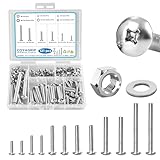
I remember staring at a pile of assorted hardware, a fresh set of performance brake pads in my hand, and a gnawing suspicion in my gut. I’d just spent a small fortune on those pads, and now I needed new caliper bolts because the old ones were rusted beyond belief. I’d grabbed a handful from my ‘spare parts’ bin, thinking, ‘Surely, these look the same, right?’ Spoiler alert: they weren’t.
This whole question of whether are the bolts in brake calipers universal is a bit of a minefield. The short answer, the one nobody likes to hear, is usually no, not really. But the ‘why’ is more important than a simple yes or no, and it’s something that can save you a ton of headaches and, more importantly, keep you from having a brake failure.
The Myth of the Mighty Universal Bolt
Let’s cut to the chase: the idea that you can just grab any old bolt and expect it to hold your brake caliper securely is, frankly, dangerous. I’ve seen too many times where someone’s ‘fix’ was held together by hope and a prayer, or worse, a bolt that looked right but was fundamentally wrong. My own initial foray into replacing caliper bolts after a particularly nasty winter involved a trip to the hardware store and a lot of ‘close enough’ thinking. I ended up with bolts that threaded in okay, but the shank diameter was just a hair too small.
When I torqued them down, they felt… soft. Not the solid, reassuring engagement you want when you’re dealing with the system that stops your car.
The problem isn’t just about threading into the bracket; it’s about shear strength, thread pitch, length, and the type of material. Caliper bolts are specifically designed to withstand the immense forces and vibrations generated during braking. They’re not just holding a piece of metal in place; they’re part of a system that can be subjected to thousands of pounds of force. Think about it: when you slam on the brakes, the caliper is trying to clamp down on a rotor that’s spinning at potentially hundreds of miles per hour, and the energy has to go somewhere. That energy is transmitted through those bolts.
My worst experience was with a set of aftermarket caliper bolts I bought online. They looked identical to the OEM ones, and the seller even claimed they were ‘universal fit.’
I installed them, torqued them to spec, and went for a test drive. Within 50 miles, I started hearing a faint clunking. By 100 miles, it was a distinct knocking sound every time I braked. Pulling over, I found one of the bolts had worked itself almost entirely loose.
The threads in the caliper bracket were slightly stripped, and the bolt itself had a visible deformation. That was a hard lesson: ‘universal’ in the automotive world often means ‘barely fits anything,’ and that’s not good enough for brakes. It cost me a tow truck ride and a set of proper OEM bolts, which were surprisingly affordable once I stopped looking for ‘universal’ solutions.
What Actually Makes a Caliper Bolt Different?
Okay, so if they aren’t universal, what exactly makes one caliper bolt different from another? It boils down to a few key specifications that are surprisingly precise. First up is the thread pitch and diameter. This is a must.
A bolt with the wrong thread pitch won’t engage properly, or worse, it might cross-thread and damage the caliper bracket. Even if the diameter seems right, a different pitch means it won’t seat correctly.
Then there’s the shank diameter and length. The shank is the smooth part of the bolt between the threads and the head. It needs to be the exact size to properly fit the hole in the caliper and its bracket, making sure even clamping force. Too short, and you won’t get enough thread engagement. (See Also: Can I Buy A Full Auto Bolt Carrier )
Too long, and it could interfere with other components or not allow the caliper to seat fully.
Material strength is another huge factor. Most caliper bolts are made from high-strength steel, often with specific ratings like Grade 8.8, 10.9, or even higher. This rating tells you how much stress the bolt can handle before deforming or breaking. Using a hardware store bolt with a lower grade rating is asking for trouble. You might get away with it for a while, but under hard braking or in high-stress situations, it could fail. I’ve seen people try to use bolts from, say, a lawnmower or a piece of furniture, thinking it’s just a bolt. It’s not. It’s a important safety component.
Finally, there’s head type and size. While less important than threads or strength, the head needs to fit the caliper’s mounting points and allow for proper torque application. Some caliper bolts have specific head shapes or lengths to clear other parts of the suspension or brake assembly. For example, some have shoulders or specific recessions to prevent them from interfering with brake lines or dust shields.
Common Mistakes People Make
- Assuming all M10 or M12 bolts are the same.
- Ignoring the thread pitch and just matching diameter.
- Using bolts with lower tensile strength ratings than OEM.
- Not checking the overall length and shank diameter.
- Reusing old, corroded bolts.
I once helped a buddy who was swapping out his entire brake system on an older Japanese sports car. He’d bought a ‘kit’ online that claimed to fit his make and model. When it came to the caliper bolts, they looked right, but the heads were slightly different. We tried to use them, and they went in, but the socket head was a bit shallow. When we torqued them, the socket started to round out. We stopped immediately, realizing we’d nearly ruined them. Turns out, that specific car used bolts with a slightly longer head for clearance. It was a small detail, but one that would have caused major issues down the line, potentially leading to loose calipers.
Where Do ‘universal’ Bolts Even Come From?
So, if there’s no such thing as a truly universal bolt for brakes, where does this idea come from? Mostly, it’s a marketing ploy for generic hardware or a misunderstanding of how car parts are designed. Manufacturers (OEMs) engineer brake systems with specific components. They don’t design a caliper that can accept any bolt from a hardware store’s fastener aisle. They design a caliper, a bracket, and the bolts that connect them, all working in harmony.
The closest you get to ‘universal’ is often with aftermarket kits that are designed to fit a range of vehicles within a specific category, like ‘most GM vehicles from 1990-2010’ or ‘sport compact applications.’ These kits will usually contain different bolt lengths and thread pitches, sometimes with spacers, to account for the variations across those models. However, even these aren’t truly universal. They are specific to a set of applications. If you have a 2005 Chevy Cavalier and a 2008 Chevy Cobalt, the caliper bolt might be the same. But if you then try to fit that bolt on a 2015 Ford Focus, you’re likely out of luck. The system is just too different.
Another place you might encounter the ‘universal’ idea is with certain types of brake upgrades. For instance, if you’re swapping a larger brake caliper from a different model onto your car (a common mod), you might need adapter brackets. These brackets are designed to mate the new caliper to your existing knuckle. Sometimes, the bolts that attach the caliper to the adapter bracket might be more standardized. But the bolts that attach the adapter bracket to your knuckle are almost always specific, and the bolts that attach the caliper to the adapter are still dictated by the caliper and adapter design. It’s a cascade of specificity.
I learned this the hard way trying to do a big brake kit swap on my old Nissan. The kit came with these beefy adapter brackets, and the bolts to attach the Brembo calipers to the brackets were supplied.
They were beautiful, high-strength Torx bolts. But the bolts that held the adapter bracket to my steering knuckle? Those were supposed to be my old ones, reused.
The problem was, my old bolts were a slightly different grade and the threads were a bit worn from years of service. The adapter bracket was also thicker than the original caliper bracket. The combination meant I didn’t have enough thread engagement on the knuckle side. I torqued them down, and they felt tight, but there was a slight wiggle. (See Also: Are Mercruiser 5 7 Engines Four Bolt Mains )
I ended up having to source new, higher-grade bolts for the knuckle attachment point, specifically the correct length and thread to make sure full engagement.
How to Find the Right Bolts (without Guessing)
So, you’re faced with needing new caliper bolts. What’s the smart way to go about it? Stop thinking ‘universal’ and start thinking ‘specific.’ The absolute best and safest way is to get the original equipment manufacturer (OEM) part number for your specific vehicle. Your car’s make, model, year, and even trim level can affect which parts are used. You can get this information from:
- Your car’s service manual: These are detailed books that list every part and its number.
- Dealership parts department: Give them your VIN, and they can look up the exact part. Yes, it might cost a bit more, but you know it’s right.
- Reputable online OEM parts retailers: Many sites allow you to search by VIN or vehicle.
If OEM is out of the question due to cost or availability, look for reputable aftermarket brands. Companies like Brembo, Centric, or Power Stop often make direct-fit replacement bolts or kits. When buying aftermarket, make sure the product description explicitly states it is for your exact year, make, and model. Read reviews, too. Other people will often chime in if a part doesn’t fit or causes issues.
Here’s a little table I put together based on my own experiences sourcing these things. It’s not exhaustive, but it gives you an idea of what to look for and where the cheap options often fall short.
| Type of Bolt | Pros | Cons | My Verdict |
|---|---|---|---|
| OEM Bolts | Guaranteed to fit, correct material strength, designed for your car. | Can be the most expensive option. | The gold standard. If you can afford it, do it. |
| Reputable Aftermarket (e.g., Brembo, Centric) | Often very high quality, direct fit for specific applications, good value. | Still need to verify compatibility carefully. | Excellent alternative to OEM if you find the right part number. |
| Generic Hardware Store Bolts | Cheap and readily available. | Massive risk. Wrong thread pitch, material strength, length, and potential for cross-threading or failure. Absolutely NOT recommended for brakes. | Avoid like the plague. Your life depends on your brakes. |
| ‘Universal’ Online Kits | Might seem like a good deal, promises wide compatibility. | Rarely truly universal. Often a ‘one size fits few’ approach, can lead to fitment issues, improper torque, or component failure. | High risk for low reward. Stick to specific fitment. |
I learned this when I was trying to save a buck on my first car, a beat-up old Civic. I needed caliper bolts, and the local auto parts store had a bin labeled ‘Metric Bolts.’
I grabbed a couple that looked about right. They threaded in! Fantastic, I thought.
I torqued them down, and they felt okay. Fast forward a few weeks and a hard stop in the rain.
I heard a loud ‘ping!’ followed by a sickening grinding noise. One of the bolts had snapped clean off, right at the caliper bracket.
Thankfully, the caliper stayed somewhat attached, but my brakes were toast, and I was lucky I didn’t cause an accident. The ‘metric bolts’ were likely low-grade steel, not hardened and tempered for automotive use. A $5 mistake that could have cost me thousands in damage or worse.
The Dangers of Incorrect Caliper Bolts
Let’s be blunt: using the wrong bolts in your brake calipers is asking for serious trouble. It’s not a minor inconvenience; it’s a direct threat to your safety and the safety of anyone else on the road. The primary danger is brake failure. If the bolts aren’t the correct strength or thread pitch, they can loosen over time due to vibration and the stresses of braking. A loose caliper can lead to: (See Also: Can Am Merverick X3 Max Xrs Wheel Bolt Pattern )
- Reduced braking performance: The caliper won’t be able to apply consistent pressure to the rotor.
- Grinding or rattling noises: As the caliper shifts.
- Damage to brake components: The loose caliper can damage the rotor, pads, and the caliper bracket itself.
- Complete caliper detachment: This is the worst-case scenario, where the caliper comes completely off the vehicle while driving. This leads to immediate, catastrophic loss of braking on that wheel and can cause a severe loss of control, potentially leading to a crash.
I’ve heard stories, and seen the aftermath, of vehicles where a caliper bolt failure caused the rotor to seize up violently, locking the wheel. This can cause a spin or a rollover. It’s not hyperbole; it’s physics. Those bolts are under incredible stress, and they need to be precisely engineered for the job.
Beyond outright failure, using incorrect bolts can cause long-term damage. If a bolt is slightly the wrong diameter or length, it can put uneven stress on the caliper bracket. Over time, this can lead to cracks or deformation in the bracket, which is a much more expensive part to replace than a bolt. Stripped threads in the caliper bracket from using the wrong bolt are also common. Repairing stripped threads often involves drilling and tapping for a larger bolt or using a thread insert (like a Heli-Coil), which is a repair, not a proper fix. And remember, these are brakes. You want the proper, factory-designed connection, not a cobbled-together repair.
It’s also worth noting that some modern vehicles use specific torque-to-yield bolts or require specific lubrication on the threads or under the bolt head. These aren’t details you’ll find on a generic bolt. Using the wrong bolt might mean you can’t achieve the correct torque, or you over-torque it, leading to thread damage. The entire assembly is designed to work within very tight tolerances, and deviating from that is playing with fire.
The Bottom Line: Specificity Is Key
Look, I’m all for saving money and doing things yourself. It’s why I wrench on my own cars. But there are certain areas where you just don’t cut corners, and your braking system is at the absolute top of that list. The question of whether are the bolts in brake calipers universal is really a question of safety. The answer is a resounding ‘no.’
Manufacturers spend millions on research and development to make sure every single component in your braking system works together perfectly. Those caliper bolts are not just fasteners; they are engineered safety devices. They have specific tensile strengths, thread pitches, lengths, and materials that are chosen to withstand the extreme conditions they operate under. Trying to substitute them with generic hardware or even ‘universal’ aftermarket parts that aren’t specifically designed for your vehicle is a gamble with incredibly high stakes.
I’ve learned this through experience, sometimes the hard way. I’ve wasted money on parts that didn’t fit, and I’ve seen the consequences of using the wrong parts. The peace of mind that comes from knowing your brakes are holding together with the exact components they were designed for is worth more than any perceived savings from using something ‘universal.’ So, my advice? Always go specific. Get the OEM part number, or a reputable aftermarket part that explicitly lists your vehicle as compatible. Your car, and more importantly, your life, depend on it.
Conclusion
So, to wrap this up, if you’ve been wondering if are the bolts in brake calipers universal, the honest truth is no, they are not. It’s a tempting thought, a quick fix that could save a few bucks, but the risks far outweigh any potential savings. The specific engineering that goes into brake components means that a generic bolt just won’t cut it. You need bolts that are designed for your vehicle’s exact specifications.
I’ve seen too many shortcuts lead to major problems, from noise and vibration to outright component failure. The cost of a proper set of caliper bolts from the dealer or a trusted aftermarket supplier is negligible compared to the potential cost of an accident, damage to other components, or worse. Don’t let the allure of a universal solution lead you down a dangerous path.
The next time you’re doing brake work, take the extra time to verify you have the correct bolts. Look up your VIN, consult your service manual, or call your local dealership’s parts department. It’s the responsible thing to do for your vehicle and for everyone sharing the road with you.