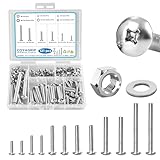
So, you’re staring at a freshly machined flywheel, ready to bolt it to the crankshaft, and you get to the bolts. The big question pops into your head: are flywheel bolts necessary? I mean, they look like regular bolts, right? Why all the fuss? I remember the first time I rebuilt a small block Chevy engine back in my dad’s garage. We had the flywheel resurfaced, shiny and perfect. I grabbed a handful of generic Grade 8 bolts from the hardware store, thinking, ‘What’s the difference?’ That little shortcut cost me a weekend of headaches and a not-so-cheap tow truck bill.
It turns out, not all bolts are created equal, especially when it comes to the important connection between your engine’s crankshaft and its flywheel. This isn’t just about holding things together; it’s about managing immense forces and making sure your car’s drivetrain behaves itself. So, let’s cut through the BS and talk about why these specific fasteners are a must.
Why Those Specific Flywheel Bolts Matter (more Than You Think)
Look, I’m all for saving a buck, but when it comes to engine components that are under constant, violent stress, you can’t just wing it. Flywheel bolts are a prime example. They aren’t just glorified nuts and bolts; they’re engineered for a very specific, very demanding job. Imagine the torque handshake happening between the crankshaft and the flywheel. Every time you blip the throttle, every time you clutch in and out, those bolts are flexing, gripping, and enduring shear forces that would make a regular bolt weep. Standard hardware store bolts might look similar, but they lack the metallurgy and the precise design that keeps your engine from tearing itself apart.
The crankshaft snout on an engine is usually tapered, and the flywheel has a corresponding bore. When you tighten the flywheel bolts, you’re not just clamping the flywheel down; you’re also using the bolts to pull the flywheel tightly onto that taper, creating a secure, locked-in fit. This isn’t just about torque.
It’s about creating a friction lock that prevents any rotational slippage. If the bolts aren’t strong enough, or if they stretch and loosen under vibration, that taper fit can start to creep. That’s when you get that sickening clunking sound, or worse, the flywheel can start to wobble, damaging the crankshaft and the transmission input shaft. I saw a buddy’s project car suffer precisely this fate – a slow, grinding noise that turned into a catastrophic failure because he reused old, slightly stretched flywheel bolts that he thought were ‘still good’.
He ended up needing a new crankshaft flange and a complete clutch replacement. Cost him triple what new bolts would have set him back.
The sheer rotational speeds and the explosive combustion events happening inside your engine put incredible stress on this joint. A failure here isn’t a minor inconvenience; it’s an immediate, potentially dangerous situation. The flywheel can detach, causing massive damage to the engine block and whatever else it decides to hit on its way out. So, when you ask are flywheel bolts necessary, the answer is a resounding YES. And not just any bolts, but the correct ones for your application.
What Makes a ‘real’ Flywheel Bolt Different
So, what’s the secret sauce that makes a dedicated flywheel bolt special? It boils down to a few key things: material strength, thread design, and often, a specific head design that mates perfectly with the flywheel. Most dedicated flywheel bolts are made from high-strength steel alloys, often heat-treated to achieve specific tensile and shear strength ratings. You’ll see terms like ‘Grade 10.9’ or even higher, indicating their superior toughness compared to standard hardware store bolts, which might be Grade 5 or 8 at best. This higher strength means they can withstand the immense clamping forces and the shock loads without yielding or fracturing.
The threads are another big deal. Flywheel bolts typically have a finer thread pitch than standard bolts. This allows for finer control when torquing them down, making sure you can reach the precise clamping force specified by the manufacturer. It also contributes to a stronger grip. Think of it like this: more threads engaged means more surface area for the bolt to hold onto, and finer threads can create a tighter, more secure fit. Some manufacturers also use rolled threads, which are stronger and more uniform than cut threads, further enhancing their durability.
Beyond the material and threads, the head of the bolt is designed to work with the flywheel. Many flywheel bolts have a slightly larger diameter head or a specific chamfer on the underside of the head. This isn’t just for looks; it’s to make sure optimal contact with the flywheel’s counterbore. This large surface area helps distribute the clamping force evenly across the flywheel material, preventing localized stress points that could lead to cracks or deformation. (See Also: Can I Buy A Full Auto Bolt Carrier )
Some even feature a ‘shank’ or a pilot diameter on the bolt that fits into a precise hole in the crankshaft, acting as a dowel pin for perfect alignment and added security. This eliminates any possibility of the flywheel walking or shifting relative to the crankshaft.
When you buy a set of flywheel bolts from a reputable automotive supplier, you’re getting fasteners that have been designed and tested to work together as a system. This is the kind of engineering you’re paying for, not just the metal. It’s the peace of mind knowing that this important link in your drivetrain is secured with the right stuff.
Common Mistakes & Why They’re Dumb
Alright, let’s talk about the ways people mess this up, because believe me, I’ve seen it all. The most common blunder is reusing old flywheel bolts. People think, ‘They came out, they’ll go back in!’ Big mistake. Flywheel bolts are torque-to-yield fasteners in many applications, meaning they are designed to stretch slightly when torqued to their final specification. This stretch is what provides the necessary clamping force. Once stretched, they have a reduced capacity to hold that tension, and on the next heat cycle or vibration event, they can loosen. Reusing them is like playing Russian roulette with your engine.
Another idiotic move is grabbing a handful of generic high-strength bolts from the local hardware store. As I mentioned, they might be strong, but they probably don’t have the correct thread pitch, the right head design, or the specific metallurgical properties needed to withstand the torsional and vibrational loads of an engine. I once worked on a car where someone did this, and within a few thousand miles, the bolts had stretched and backed out just enough to cause a horrendous rattling noise. The flywheel wasn’t properly seated, and the crankshaft snout took a beating. The owner learned the hard way that ‘close enough’ isn’t good enough here.
Using the wrong torque specification is also a classic. Manufacturers specify a precise torque value, and sometimes even a torque-plus-angle sequence. Guessing or using a generic torque value can either under-tighten the bolts, allowing slippage, or over-tighten them, potentially stripping threads in the crankshaft or even cracking the flywheel. I’ve seen both happen. The fine threads and high-strength materials require careful attention to detail. Don’t just crank on them until they feel tight. Get a torque wrench, find the correct spec for your engine, and follow it religiously. It’s not rocket science, but it does require a bit of precision.
Finally, neglecting to properly clean the crankshaft threads and the flywheel bolt holes is a rookie error. Dirt, oil, or old thread locker can interfere with the proper seating of the bolt and affect the torque readings. Make sure everything is clean and dry, and if the manufacturer specifies thread locker, use the correct type and quantity. A little bit of preventative cleaning can save you a world of pain down the road.
When You Might Actually Get Away with It (spoiler: Rarely)
Now, for the contrarian take that might get me some hate mail: are flywheel bolts always absolutely, positively necessary in the exact, OEM-specified form? Well, in most performance, modern, and high-stress applications, the answer is a hard yes. But for some very specific, low-stress, older-style applications, you might get away with using extremely high-quality, appropriately rated generic bolts if you’re on an absolute shoestring budget and understand the risks. I’m talking about very basic, low-RPM, low-torque engines where the flywheel is relatively light and the stresses are minimal. Think some very old, simple industrial engines or very specific vintage tractor engines where the flywheel is practically bolted onto a stub shaft with minimal rotational demands.
Even then, it’s a gamble. The reason dedicated flywheel bolts exist is to provide a margin of safety and reliability that generic bolts simply don’t offer. You’d be looking for bolts with the exact same thread pitch and diameter, a minimum tensile strength of Grade 10.9, and a head design that provides adequate clamping surface area. You’d also need to carefully research the original torque specifications and potentially use a thread-locking compound designed for high vibration and temperature environments.
Honestly, the cost savings are usually so minimal compared to the potential failure cost that it’s almost never worth it. I once had a very old lawnmower engine where the flywheel was held on by just two bolts that were basically just heavy-duty cap screws. They were relatively low stress. But that’s a rare exception. (See Also: Are Mercruiser 5 7 Engines Four Bolt Mains )
For any car, truck, motorcycle, or even performance-oriented small engine, using dedicated flywheel bolts is the only sensible route. The energy managed by your engine’s rotating assembly is immense. The forces on the flywheel are extraordinary. Why would you risk the integrity of your entire powertrain with questionable fasteners? It’s a bit like trying to save money by using duct tape to fix a leaky brake line. It might hold for a bit, but when it fails, it’s going to be spectacular and expensive. Stick to the parts designed for the job. The peace of mind alone is worth the extra expense.
Practical Tips for Installing Flywheel Bolts
Let’s get down to brass tacks on how to do this right. First off, always get the correct flywheel bolts for your specific engine. Don’t guess. Consult your vehicle’s service manual or a reputable parts supplier. They’ll have the exact specifications, including thread size, length, and any special head requirements. Once you have them, inspect each bolt for any damage or defects – nicks, burrs, or damaged threads. If anything looks off, don’t use it.
Cleaning is absolutely most important. Thoroughly clean the bolt holes in the crankshaft and the mating surfaces of the flywheel. Use a degreaser and a lint-free cloth. Make sure all old thread locker, grease, or debris is removed. For the crankshaft threads, using a tap that matches the bolt thread size is a good idea to chase out any corrosion or old thread locker. Make sure the threads are dry before installing the bolts.
When installing, apply a small amount of the specified thread-locking compound if required. Don’t go overboard; too much can interfere with torque readings and make a future removal a nightmare. Follow the manufacturer’s tightening sequence. This is usually a star pattern, working your way up to the final torque value in stages. For example, snug all bolts first, then torque to half the final spec, then to the full spec. Some manufacturers use a torque-plus-angle method, where you tighten to a specific torque, then turn the bolt an additional number of degrees. Use a reliable torque wrench and make sure it’s calibrated. I personally prefer to go around twice with the torque wrench to make sure everything is even.
Here’s a quick rundown of what to look for in a quality flywheel bolt kit:
| Feature | Why It’s Important | My Verdict |
|---|---|---|
| Material Strength (e.g., Grade 10.9+) | Withstands extreme clamping and shear forces without yielding. | A must for safety and longevity. |
| Correct Thread Pitch & Length | Makes sure proper engagement with crankshaft and correct clamping force. | Absolutely vital; generic bolts are a gamble. |
| Specific Head Design | Provides proper surface area for clamping and alignment. | Helps prevent flywheel damage and slippage. |
| Rolled Threads | Stronger, more durable threads resistant to stripping. | A sign of quality and increased reliability. |
| Included Washers (if specified) | Distributes clamping force and maintains tension. | Use them if they come with the bolts and are specified. |
Finally, after installation, if you have the opportunity, it’s not a bad idea to re-torque the bolts after a short break-in period, especially on a fresh engine build or if you’re unsure about the initial torque. This is often recommended by manufacturers. It just adds another layer of assurance that everything is staying put.
Flywheel Bolts vs. Crankshaft Bolts: What’s the Difference?
This is a question that sometimes gets people confused, and it’s good to clear up. When we talk about ‘flywheel bolts,’ we’re specifically referring to the fasteners that attach the flywheel to the crankshaft. These are the ones we’ve been discussing – designed for high tensile and shear strength, specific thread pitches, and solid head designs to handle the direct rotational forces and the impact of clutch engagement.
Now, ‘crankshaft bolts’ can be a broader term. Sometimes people use it to refer to the bolts that hold the crankshaft pulley or harmonic balancer onto the front of the crankshaft. These have a completely different set of requirements. They primarily deal with torsional vibration and keeping the pulley from coming off, and they often have a different thread size and strength rating. They don’t endure the direct shock loads of clutch engagement or the explosive power strokes of combustion in the same way flywheel bolts do.
There’s also the crankshaft main bearing cap bolts. These are incredibly strong, massive bolts that hold the main bearing caps in place, keeping the crankshaft centered and supported within the engine block. Their job is to withstand the massive downward forces generated by combustion. They are in a league of their own in terms of size and strength. (See Also: Can Am Merverick X3 Max Xrs Wheel Bolt Pattern )
The key takeaway here is that each fastener in an engine has a specific role and is engineered accordingly. The bolts holding your flywheel are unique because of the stresses specific to that rotational joint. They are not interchangeable with pulley bolts, bearing cap bolts, or generic hardware store bolts. The engine design relies on each part doing its intended job with the correct specifications. So, when you’re looking for parts, be precise. Ask for ‘flywheel bolts’ for your specific make and model, not just ‘crankshaft bolts,’ to avoid any confusion and make sure you get the right component for the right job. It’s about specificity in engineering.
People Also Ask:
Can You Reuse Flywheel Bolts?
Generally, no. Many flywheel bolts are designed to stretch slightly when torqued to their final specification (torque-to-yield). Once stretched, they lose some of their ability to maintain clamping force, making them prone to loosening under vibration and stress. Reusing them is a significant risk that can lead to engine damage.
What Happens If Flywheel Bolts Loosen?
If flywheel bolts loosen, the flywheel can start to shift or wobble relative to the crankshaft. This can cause significant damage to the crankshaft snout, the transmission input shaft, and the flywheel itself. In severe cases, a loose flywheel can detach, causing catastrophic engine damage and posing a serious safety hazard.
Are Flywheel Bolts Stronger Than Regular Bolts?
Yes, dedicated flywheel bolts are typically made from higher-strength steel alloys and are heat-treated to withstand the extreme tensile and shear forces they endure. They also often have specific thread designs and head configurations optimized for their important application, making them stronger and more reliable than standard hardware store bolts.
How Tight Should Flywheel Bolts Be?
Flywheel bolts must be tightened to the manufacturer’s specified torque value and often in a specific sequence or with an additional angle turn. This information is found in the vehicle’s service manual. Overtightening or undertightening can lead to component damage or failure.
Conclusion
So, to wrap this whole thing up, are flywheel bolts necessary? Absolutely. There’s no cutting corners here. The forces involved in your engine’s drivetrain are immense, and these fasteners are engineered to manage them reliably. Reusing old bolts, grabbing generic hardware, or guessing at torque specs is a recipe for disaster, plain and simple. It’s like trying to build a house with cheap lumber – it might stand for a bit, but you’re inviting trouble.
When you’re working on your engine, whether it’s a routine repair or a full rebuild, always invest in the correct, new flywheel bolts for your application. It’s a relatively small cost compared to the potential damage and downtime if something goes wrong. Think of it as cheap insurance for one of the most important connections in your vehicle.
Next time you’re pulling a transmission or working on your clutch, remember the importance of these often-overlooked components. Your engine will thank you for it in the long run.