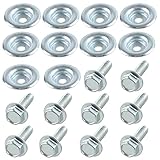
Look, I’ve been there. Staring at a pile of nuts and bolts, trying to figure out if the one I’ve got in my hand is the right damn size. You’re elbow-deep in a project, maybe fixing a carburetor or wrestling with a piece of furniture, and you realize you’re missing that one specific fastener. It’s a situation that’s tested my patience more times than I care to admit. So, when you’re asking yourself, ‘a 7 16 20 bolt has what head?’, it’s not just about the number; it’s about saving yourself a trip to the hardware store or a frustrating afternoon.
The thread count and diameter are obvious enough with a good caliper, but the head? That’s where things get murky. It’s not as simple as just knowing the size. There are different types of heads, and they matter. A lot.
We’re going to cut through the noise and get straight to what you need to know, from someone who’s actually spent hours wrestling with these things, not just reading about them.
Why the Head Type Matters More Than You Think
Alright, let’s get down to brass tacks. You’ve got a 7/16-20 bolt. The ‘7/16′ is the diameter of the bolt shank, and the ’20’ is the number of threads per inch (TPI). That’s standard stuff. But ‘a 7 16 20 bolt has what head?’ is the million-dollar question because the head isn’t just a cap. It’s how you interact with the bolt. It’s what your wrench, socket, or screwdriver grabs onto. Get it wrong, and you’re spinning your wheels, literally and figuratively.
For a 7/16-20 bolt, the most common head types you’ll encounter are hex heads and carriage bolts. Now, the hex head is your workhorse. It’s what you’ll find on the vast majority of bolts you grab from a bin. It’s designed to be turned with a wrench or a socket.
The standard size for a 7/16 hex head bolt is typically 5/8 inch across the flats. Yeah, I know, it seems weird that the wrench size isn’t directly related to the bolt diameter in a simple way.
It’s one of those things you just have to remember or look up. I’ve got a little cheat sheet taped inside my toolbox for this exact reason.
It’s saved me countless minutes of head-scratching.
Then you have carriage bolts. These have a smooth, domed head with no external drive mechanism – no hex, no square. The underside of the head is usually square to prevent it from turning once it’s tightened. You’ll typically find these used with a nut on the other side, often in woodworking or where you want a clean, snag-free finish. Because they don’t have external drive surfaces, you don’t ‘turn’ a carriage bolt in the same way. You hold the bolt head and turn the nut.
I remember a time, early in my DIY journey, when I grabbed what I thought was the right bolt for a garden gate repair. It threaded in fine, the diameter and thread count were correct. But it had a hex head, and the old one was a carriage bolt. That meant the back of the gate was sticking out weirdly and snagging on everything. It was a simple oversight, but it made the whole fix look sloppy. It taught me that the head type is just as important as the thread size.
There are also less common ones like cap screws (often with an internal hex, or Allen head) or slotted/Phillips head bolts, but for a general 7/16-20 bolt, you’re usually looking at a hex head or a carriage bolt. The key takeaway is that the head type dictates the tool you use and the application it’s best suited for.
Decoding the Wrench Size: The Hex Head Mystery
Let’s dig a bit deeper into the hex head, because that’s where most of the confusion lies when you’re trying to answer ‘a 7 16 20 bolt has what head?’ The head itself is the part that sits proud of the surface, and for a hex head, it’s got six sides. The size of this head is measured across the flats – the distance between two opposite sides. For a 7/16-20 bolt, the standard across-the-flats measurement for the hex head is 5/8 inch. (See Also: Are All Honda Atv Bolt Patterns The Same )
Now, why 5/8 inch? It’s a historical thing, tied to how fasteners were standardized over time. It’s not a direct ratio to the bolt diameter. Think of it like shoe sizes – a size 9 shoe isn’t exactly 9 inches long. It’s just how the system works. This is also why having a good socket set is so darn useful. You’ll find yourself reaching for that 5/8 inch socket (or wrench) time and time again for 7/16-inch diameter bolts.
I’ve seen people try to muscle the wrong size wrench onto a bolt head, and it’s a recipe for stripped corners. You round off the head, and suddenly that bolt is a real pain in the backside to remove or tighten. It’s a lesson learned the hard way, usually when you’re in a hurry and the sun is setting. I once spent a solid hour trying to get a seized 7/16 bolt out because the previous person had used a slightly too-large wrench, rounding off the hex corners beautifully. It looked like a bumpy little mushroom cap by the time I was done with it.
It’s not just about the tool fitting; it’s about the tool gripping properly. A snug fit makes sure you can apply torque effectively and safely without damaging the fastener. So, when you’re in doubt, grab a 5/8 inch socket or wrench. If it feels loose or requires excessive force to get on, it’s probably not the right size, or the bolt head itself is damaged.
There are also different grades of bolts, and while this doesn’t directly affect the head size, it’s important to keep in mind. Higher grade bolts (like Grade 8, often marked with 6 radial lines on the head) are stronger and might be used in more demanding applications. This doesn’t change the fact that a 7/16-20 Grade 8 bolt will still have a 5/8 inch hex head. The head size is about the form of the fastener, not its material strength.
The Humble Carriage Bolt: A Different Beast
So, we’ve hammered the hex head. Now, let’s talk about its less flashy cousin: the carriage bolt. When you’re dealing with a 7/16-20 carriage bolt, the question ‘a 7 16 20 bolt has what head?’ has a different answer. It’s not about a size you measure with a wrench. Carriage bolts have a distinctive mushroom-shaped, smooth dome head. Below the dome, there’s a short, square section that sits in a corresponding square hole. This square neck is the key feature that stops the bolt from turning when you tighten the nut on the other side.
Because of this design, you don’t use a wrench on the head of a carriage bolt. Instead, you typically use a wrench or socket on the nut. The head is just there to provide a smooth surface and a stable point of contact on one side of the material you’re joining. This makes them ideal for applications where you want to prevent the bolt head from being turned, perhaps to deter vandalism or just to create a cleaner look.
I’ve used carriage bolts extensively in building outdoor furniture and fences. They give a really clean finish on the visible side, and the square neck makes sure they don’t spin around when you’re trying to get a nut on tight. The domed head is also less likely to snag on clothing or equipment compared to a hex head. I remember rebuilding an old wooden picnic table; replacing the old, rusted bolts with new carriage bolts made the whole thing feel much more solid and look a lot tidier. The smooth dome was a nice touch, too.
When you’re selecting a carriage bolt, you’re mainly concerned with the diameter, length, thread pitch (7/16-20 in this case), and the head style (dome). The square neck is usually proportional to the bolt diameter. For a 7/16-inch bolt, you’ll typically find a square neck that fits into a roughly 1/2-inch square hole.
Some carriage bolts might have slightly different head shapes, like a low-profile dome or even a slightly pointed head for specific applications, but the fundamental principle of the smooth dome and square neck remains. It’s a design that prioritizes a clean appearance and secure fastening without the need for access to turn the bolt head itself.
Common Mistakes and How to Avoid Them
Alright, let’s talk about where people usually screw up. It’s easy to get tripped up, especially when you’re not a professional mechanic or machinist. The biggest mistake, hands down, is assuming all bolts of a certain diameter are the same. They’re not.
Mistake #1: Assuming thread pitch. A 7/16 bolt could be 7/16-14 (coarse thread) or 7/16-20 (fine thread). They look similar, but they won’t thread into the same nut or tapped hole. Trying to force the wrong one can damage the threads. Always double-check the thread pitch. If you don’t have a thread gauge, the simplest way is often to try a nut you know is correct. If it threads on smoothly, you’ve likely got the right pitch. If it binds up after a turn or two, stop. It’s the wrong one. (See Also: Are Ak Bolts Interchangeable )
Mistake #2: Not checking the head type. As we’ve covered, ‘a 7 16 20 bolt has what head?’ isn’t a single answer. Using a hex head where a carriage bolt is needed, or vice-versa, leads to functional and aesthetic problems. You might end up with a bolt that sticks out too far, or you might not be able to tighten it properly. Always look at the bolt you’re replacing, or the hole you’re fitting it into, to understand the required head type.
Mistake #3: Using the wrong tool size. This is a classic. Over-rounding a hex head with a wrench that’s too big (or worn out) is a common frustration. It makes the bolt incredibly difficult to remove. Invest in a decent socket set with clear markings. If you’re using a wrench, make sure it’s snug on the flats. Avoid adjustable wrenches whenever possible for important tasks; they tend to slip and round off fasteners.
Mistake #4: Ignoring bolt grade. While this doesn’t directly affect head size, using a low-grade bolt in a high-stress application is asking for trouble. A Grade 2 bolt is fine for a garden gate, but you wouldn’t want it holding your car’s suspension together. The grade is usually stamped on the head. Look for the markings – no markings or just one small line might indicate a lower grade. Multiple lines or a number like ‘8’ indicate higher strength.
My own screw-up? I once bought a whole box of what I thought were 7/16-20 bolts for a trailer hitch reinforcement. They threaded in. They had the right head size. But they were actually 7/16-14. I didn’t realize until I was trying to torque them down and they felt ‘mushy’ as they tightened. I’d hammered a coarse thread bolt into a fine thread hole. It wasn’t pretty, and I had to drill them all out. Cost me time, money, and a lot of swearing.
| Bolt Feature | Common Type (7/16-20) | Description | Best Use Case | Verdict |
|---|---|---|---|---|
| Head Type | Hex Head | Six-sided head, requires wrench/socket | General assembly, machinery, automotive | Most versatile, easy to tighten/loosen |
| Head Type | Carriage Bolt | Smooth dome head with square neck | Woodworking, fences, where smooth finish is needed | Clean look, prevents turning from the head side |
| Head Size (Hex) | 5/8 inch across flats | Standard size for 7/16 hex head | Application dependent, tool fit is key | Must match tool for proper grip |
| Thread Pitch | 20 TPI (Fine) | 20 threads per inch | Applications requiring tighter tolerances, vibration resistance | Important for proper fit; cannot be interchanged with coarse thread |
When Only a Specific Bolt Will Do
Sometimes, you’re not just looking for any bolt that fits. You’re looking for a specific type because of how it’s supposed to function. This is where understanding the details of ‘a 7 16 20 bolt has what head?’ becomes really important. Let’s say you’re working on an older piece of equipment, a classic car, or even a historical building restoration. The original design specified certain types of fasteners, and for good reason.
For instance, many older machines used hex head bolts, but some might have used square heads. Square heads have a distinct advantage in certain tight spots or when you need to get a good grip with an older style of wrench. They offer more surface area for a given size compared to a hex head if you’re measuring edge-to-edge, though across-the-flats is the standard measurement. The typical size for a 7/16 square head bolt would also be 5/8 inch across the flats, mirroring the hex head standard.
Another scenario is when you need a specific finish. If you’re building a high-end piece of furniture, a smooth, aesthetically pleasing head is most important. That’s when a carriage bolt with its rounded dome shines. Or maybe you need a bolt that can only be tightened from one side, like in certain paneling or access points. A carriage bolt with its locking square neck is perfect for this.
Then there are specialized bolts. You might encounter socket head cap screws (often called Allen bolts) where the head has an internal hexagonal recess. For a 7/16-20 socket head cap screw, the internal hex size would typically be 3/8 inch. These are designed for situations where you need a clean, flush finish and a strong fastening, often found in machinery where the bolt head might otherwise interfere with moving parts. The key is that the socket head allows for a very precise and strong tightening, often with less risk of slipping compared to an external hex.
The thread pitch itself, 20 TPI in this case, is also a specific requirement. Fine threads (like 20 TPI) have less depth per thread than coarse threads (like 14 TPI). This means they have more threads packed into the same length of bolt, which can lead to a more secure fastening, especially in materials prone to vibration, as there’s less chance of them vibrating loose. They also require more turns to thread in the same distance compared to coarse threads.
So, when you’re deep in a project and need that specific fastener, don’t just grab the closest thing. Take a moment to identify the exact requirements: diameter, thread pitch, head type, and even the grade if strength is a concern. It saves you a world of hurt down the line. I learned this the hard way trying to match a bolt for a vintage motorcycle fuel tank; the original was a slotted pan head, and trying to substitute a Phillips head just looked wrong and didn’t feel as secure.
Faq: Your Burning Questions Answered
What Is the Standard Wrench Size for a 7/16 Bolt?
For a standard 7/16-inch diameter hex head bolt, the most common wrench or socket size is 5/8 inch across the flats. This size is used regardless of the thread pitch (e.g., 7/16-14 or 7/16-20). It’s important to use the correct size tool to avoid stripping the bolt head. (See Also: Are All Bolt Patterns The Same )
Are 7/16-14 and 7/16-20 Bolts Interchangeable?
No, they are not interchangeable. The ’14’ and ’20’ refer to the thread pitch (threads per inch). A 7/16-14 bolt has a coarse thread, while a 7/16-20 bolt has a fine thread. They will not thread into the same nut or tapped hole, and attempting to force one into the other can damage the threads.
What’s the Difference Between a Hex Head Bolt and a Carriage Bolt?
A hex head bolt has a six-sided external head designed to be turned with a wrench or socket. A carriage bolt has a smooth, domed head with a square neck underneath that sits in a square hole to prevent it from turning. The carriage bolt is typically turned by its nut, not its head.
How Do I Know If I Need a Fine Thread or Coarse Thread Bolt?
The best way to know is to examine the bolt or the hole you’re fitting it into. If you have a nut that fits perfectly, check its threading. Alternatively, use a thread gauge or try fitting a known fine-thread nut and a known coarse-thread nut onto the bolt. If you’re replacing a bolt, match the existing one precisely. Fine threads (like 20 TPI) are generally used where vibration is a concern or tighter tolerances are needed.
Practical Tips for Bolt Identification
Beyond just knowing the numbers, a few practical habits can save you a lot of grief when you’re dealing with fasteners. First off, get yourself a decent caliper. It doesn’t have to be a fancy digital one, but a reliable set of Vernier calipers will let you measure the shank diameter and, importantly, the width across the flats of a hex head. This is your best friend for confirming bolt sizes.
Second, invest in a complete socket and wrench set. Having a good range of metric and imperial sizes means you’re less likely to reach for an adjustable wrench and round off a bolt head. Look for sets that clearly mark the sizes, usually etched or stamped. For those 7/16-inch bolts, make sure your set includes a 5/8-inch socket.
Third, keep a small container of assorted nuts with the correct thread pitches (like 7/16-14 and 7/16-20) handy. If you’re unsure about a bolt’s thread pitch, you can quickly test it by seeing which nut threads on smoothly. This is a quick field test that beats guessing.
Fourth, when you remove a bolt that you might need to replace or reuse, take a clear photo of it, especially the head and any markings. If it’s a specific type, like a carriage bolt, note its head shape and length. This photo is a lifesaver when you’re back at the store or ordering online.
Finally, don’t be afraid to ask for help at the hardware store. Most employees have seen it all and can point you in the right direction. Just be prepared to describe what you’re working on and show them the bolt or fastener you need to match. They can often help identify not just the size but also the correct type for your application.
Final Thoughts
So, when you’re staring down a project and asking yourself, ‘a 7 16 20 bolt has what head?’, remember it’s not just one simple answer. You’re usually looking at a 5/8 inch hex head, which needs a 5/8 inch wrench or socket. But it could also be a carriage bolt, where the head itself isn’t turned but serves a different purpose. The thread pitch of 20 TPI is fine, so make sure you’re matching that too. Don’t get caught out by assuming.
I’ve wasted enough time and money on the wrong fasteners to know that a little bit of attention to detail upfront saves you a massive headache later. Grab that caliper, check your tools, and take a second look before you buy. It’s the difference between a job done right and a frustrating trip back to the store.
Next time you’re at the hardware store, take a moment to look at the different bolt heads. See how they’re designed for different uses. It’s a small thing, but it clicks. Understanding the nuances of a 7 16 20 bolt has what head can make all the difference in your project.