I remember the first time I tried to swap out my old, sticky brake calipers. I figured, hey, it’s just a couple of bolts, right? They’ve gotta be standard. Turns out, I was dead wrong, and it cost me a whole Saturday and a fair bit of cursing. So, let’s cut to the chase: are brake caliper bolts universal? The short answer is: not really, and anyone who tells you otherwise is probably trying to sell you something or hasn’t actually been elbow-deep in a wheel well.
This whole idea of universal parts in the automotive world is a myth peddled by people who don’t actually wrench on cars themselves. The truth is, when it comes to something as vital as your brakes, specifics matter. A lot. We’re talking about safety here, not just convenience.
So, Are Brake Caliper Bolts Universal? Let’s Not Kid Ourselves
Look, I get the appeal. You’ve got a squeaky caliper, you need a replacement part, and you just want it done. The idea that a bolt is a bolt, and therefore universal, sounds like a shortcut to saving time and money. But in reality, the world of automotive fasteners is a minefield of subtle differences that can make all the difference between a safe repair and a catastrophic failure. Brake caliper bolts aren’t just holding a decorative piece; they’re clamping down on metal discs spinning at high speeds, generating intense heat and force. That’s why they’re engineered with specific tolerances, materials, and thread pitches for each vehicle application.
When people ask if brake caliper bolts are universal, they’re usually thinking about the basic thread size and length. And yes, you’ll find M10, M12, and maybe even M14 bolts used across many vehicles. You’ll also find common lengths.
But that’s where the universality pretty much ends. The important factors are the grade of the steel, the specific thread pitch (which can vary even for the same nominal size), the head type and size (to fit your specific wrench or socket), and often, the presence of thread-locking compounds or specific torque-to-yield requirements. Get one of these wrong, and you’re asking for trouble.
I once had a buddy try to use a slightly longer bolt he had lying around because he couldn’t find the exact OEM one. It looked like it fit, but after a few hard stops, he swore he heard a grinding noise.
Turns out the slightly longer bolt was bottoming out in the caliper bracket, preventing it from fully seating and clamping the caliper properly. Expensive lesson learned.
It’s not just about the bolt itself, either. The associated hardware, like washers, lock washers, or crush washers, are often specific to the application and designed to work with the particular bolt and mounting surface. Ignoring these can lead to loosening over time, which, you guessed it, is bad for braking. The manufacturers spend a lot of engineering time making sure these components work together as a system. Trying to mix and match is like trying to build a house with mismatched bricks – it might stand for a bit, but it’s not going to be structurally sound.
The common advice you’ll find online, especially on forums, often simplifies this to ‘just match the thread size and length.’ While that’s a starting point, it’s dangerously incomplete. It fails to account for the material strength (grade), thread pitch variations, and important torque specifications. The weight of the vehicle, the expected operating temperatures, and the forces exerted on the braking system all play a role in determining the exact specifications of the caliper bolts. So, while a bolt might physically screw into a hole on a different car, it doesn’t mean it’s safe or correct to use it.
What to Look for: Beyond Just ‘a Bolt’
Okay, so if they aren’t universal, what should you be looking for when you need new brake caliper bolts? First off, the absolute best bet is to get the exact part number for your specific year, make, and model. This isn’t just a suggestion; it’s the golden rule of brake work. Your owner’s manual might have a diagram, or you can use online parts catalogs. Many reputable auto parts stores will have these databases, and you can even go directly to the manufacturer’s website or a dealership’s parts department.
When you’re looking at the specifications (assuming you can find them, which isn’t always easy for aftermarket parts), pay attention to these key details: (See Also: Can I Buy A Full Auto Bolt Carrier )
- Thread Size and Pitch: This is the most obvious one. Look for it in the format M[diameter] x [pitch] (e.g., M10 x 1.25). Even if you don’t know the pitch, make sure it matches what you removed.
- Length: Measure the bolt from the underside of the head to the tip.
- Grade (Strength): This is important. Bolts are graded by strength, usually indicated by markings on the bolt head (e.g., 8.8, 10.9, 12.9 for metric). For caliper bolts, you’re generally looking for higher grades (like 10.9 or 12.9) because of the stress they endure. Using a lower-grade bolt is a recipe for disaster.
- Material: While most are high-strength steel, some might have specific coatings for corrosion resistance.
- Head Type: Most caliper bolts are hex head, but the size of the hex (e.g., 13mm, 14mm, 17mm) matters for the tool you’ll use.
- Special Features: Some bolts have shoulders or specific lengths under the head to make sure proper seating. Some might even come with pre-applied threadlocker.
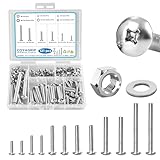
I’ve seen plenty of cheap aftermarket ‘universal’ kits that include a handful of bolts of varying sizes, often with a generic ‘check fitment’ warning. This is where you have to be really careful.
If you’re buying a bolt that’s supposed to fit a whole range of vehicles, it’s highly unlikely to be the optimal or safest choice for your specific car. I once bought a generic brake hardware kit for a friend’s older Honda. It had various bolts and springs, but the caliper slide pin bolts were slightly undersized. They went in okay, but the caliper didn’t feel as firm as it should have.
We ended up having to track down the correct OEM slide pins to get the braking feel back to normal. It was a waste of $20 and a good chunk of time.
My personal stance is this: if you can’t find the exact specs or a direct replacement part number for your vehicle, it’s usually better to source from a reputable OEM supplier or a trusted aftermarket brand that explicitly lists compatibility with your car. Don’t rely on vague descriptions or ‘one-size-fits-most’ claims for safety-important components like these.
The ‘why’ Behind the Specificity: Engineering for Safety
So, why all this fuss about specific bolts? It boils down to engineering and safety. Your brake system isn’t just a collection of parts; it’s a meticulously designed system where every component has a role and specific requirements. The bolts holding your brake caliper are subjected to a punishing environment: extreme temperature fluctuations (from ambient to hundreds of degrees Celsius during heavy braking), constant vibration, shock loads, and immense clamping forces.
Think about it: the caliper, with its pistons, is squeezed against the brake pads, which are then pressed against the spinning rotor. The bolts are the anchors keeping all of that together.
If a bolt is too weak (wrong grade), it could stretch or even snap under load. If the thread pitch is wrong, it might not engage fully, leading to a loose connection that can vibrate apart over time. If the bolt is too long or too short, it might not seat correctly, compromising the clamping force or damaging other components. The specific length and shank design of a caliper bolt are often engineered to make sure it seats properly in the caliper bracket and the caliper itself, providing the correct contact surface and preventing movement.
I remember a situation where a cheap caliper bolt replacement on a rear drum brake (which use a similar principle for the wheel cylinder mounting) failed. The bolt sheared clean off. It wasn’t just a minor inconvenience; it meant the wheel cylinder wasn’t anchored, and the brake shoe mechanism couldn’t engage properly. The car had significantly reduced braking power on that wheel. It was terrifying. This happened because the replacement bolt, while seemingly the right size, was likely a lower grade and wasn’t hardened properly for the stresses involved. The forces on disc brake caliper bolts are even higher.
This is why you’ll often see two bolts for the caliper itself, and then separate slider pin bolts (which allow the caliper to move slightly to self-adjust). These slider pins are often coated and have specific lubrication requirements. The main caliper mounting bolts are usually high-strength, often with a thread locker pre-applied from the factory. They are designed to be torqued to very specific values, sometimes including an angle after initial torque. This precision makes sure the caliper is firmly secured and can move as intended to apply braking force evenly.
Manufacturers specify these parts for a reason. They’ve done the calculations, the testing, and have factored in real-world conditions. When you deviate from those specifications, you’re basically gambling with your safety and the safety of others. The cost of a set of proper caliper bolts is pennies on the dollar compared to the potential cost of an accident caused by a fastener failure. (See Also: Are Mercruiser 5 7 Engines Four Bolt Mains )
Common Mistakes and Misconceptions
The biggest mistake people make is assuming that because a bolt fits, it’s automatically the right one. This ties back to the ‘are brake caliper bolts universal’ question. People see a bolt that threads in and think, ‘Great, it works!’ They don’t consider the material strength, the precise thread engagement, or the required torque. This is a dangerous oversight.
Another common misconception is that all ‘OEM’ parts are automatically better than aftermarket. While OEM parts are designed to factory specs, not all aftermarket parts are created equal. Some aftermarket manufacturers produce high-quality components that meet or exceed OEM standards. The problem is distinguishing the good from the bad, especially when you’re looking at generic or ‘universal’ kits. I’ve personally seen aftermarket brake pads that squealed like a dying banshee after 500 miles, while OEM ones lasted twice as long with no noise. The same can be true for fasteners.
Here’s a mistake I made early in my wrenching days: reusing old caliper bolts. Unless the manufacturer explicitly states they are reusable and designed for multiple installations, it’s generally best practice to replace them. Why? Because repeated tightening and loosening can stress the metal, and there’s always a risk of microscopic damage that might not be visible but could compromise its integrity over time. Many performance or racing applications, and some OEM recommendations, treat caliper bolts as single-use items, especially if they are torque-to-yield bolts. While not all caliper bolts are torque-to-yield, it’s a good habit to replace them, especially if they look worn, rusted, or have damaged threads.
Then there’s the issue of thread locker. Many caliper bolts come with a specific type or amount of thread locker pre-applied. If you’re replacing them, you need to make sure you use the correct thread locker (blue for general use, red for permanent, though red is usually too much for caliper bolts unless specified) or a new bolt with it pre-applied. Skipping this step or using the wrong type can lead to bolts backing out over time due to vibration. I learned this the hard way after a rear caliper bolt worked itself loose on a highway pull-away. A few seconds of grinding, and I pulled over to find the bolt almost completely out. Never again.
Finally, people often underestimate the importance of torque. Simply ‘snugging’ the bolts is not enough. The manufacturer’s specified torque value is there for a reason. Too loose, and they can vibrate out. Too tight, and you risk stripping the threads in the caliper bracket or even stretching/breaking the bolt itself. Using a calibrated torque wrench is a must for important fasteners like these.
Here’s a table summarizing some common pitfalls:
| Mistake | Consequence | Verdict |
|---|---|---|
| Using generic ‘universal’ bolts | Incorrect fit, material failure, compromised safety | Avoid at all costs. Never use on safety-important parts. |
| Reusing old caliper bolts | Potential for stress fractures, loosening, or failure | Generally not recommended. Replace if possible. |
| Ignoring thread locker | Bolts can loosen due to vibration | Always use appropriate thread locker or buy bolts with it. |
| Not torquing bolts correctly | Too loose = failure; Too tight = damage/stripping | Mandatory use of a calibrated torque wrench. |
| Assuming ‘fits’ means ‘correct’ | Missed important spec differences (grade, pitch, length) | Verify part numbers and specs meticulously. |
Real-World Application: When ‘close Enough’ Isn’t
I had a situation a few years back with a slightly older BMW E46. The caliper bracket bolts were a specific size and grade, and one of them had a slightly rounded head from a previous amateur attempt at repair. I needed to replace it, fast, because I was prepping for a track day. I popped down to my local fastener shop, the kind with bins and bins of bolts. I found something that looked identical: same diameter, same length, same thread pitch (I could tell by eye and feel). The guy assured me it was high-tensile steel, probably a 10.9 or 12.9 grade.
I installed it, torqued it to spec, and thought nothing of it. Fast forward to the track day. After my first session, driving hard, I started hearing a faint but persistent clunking noise from that corner. It got worse during the second session. I pulled into the pits, and sure enough, the caliper was sitting a little crooked. The ‘close enough’ bolt had stretched slightly under sustained heavy braking and vibration, allowing the caliper to shift just enough to create that noise and, more importantly, compromise braking performance. The wheel was significantly hotter than the others, too, indicating uneven pad wear and potential drag.
I had to pull the car off the track and limp home. The ‘universal’ bolt from the fastener shop was a failure. It was a stark reminder that for important components like brake caliper bolts, ‘close enough’ is a dangerous gamble. The exact material composition, heat treatment, and manufacturing tolerances make a real difference when you’re pushing a vehicle to its limits, or even just relying on it for daily stops. The factory bolts, even if they look like generic hardware, are specifically engineered for that application. They have to meet stringent OEM quality control standards, which you often don’t find in generic hardware bins.
This experience cemented my belief that for brakes, steering, and suspension components, always go for the OEM part number or a reputable manufacturer known for making exact-fit replacement parts for your specific vehicle. Brands like Brembo, Bosch, or Zimmermann for brake components are generally safe bets, but even then, you should cross-reference their part numbers to make sure they are for your exact model and trim. Trying to save a few bucks on a fastener that holds your entire braking system together is just asking for trouble, and the ‘close enough’ approach can end up costing you far more in repairs, time, and potentially, your safety. (See Also: Can Am Merverick X3 Max Xrs Wheel Bolt Pattern )
Practical Tips for Replacing Caliper Bolts
If you’re planning to replace your brake caliper bolts, here are a few practical tips to make the job smoother and safer:
- Get the Right Part: This is the most important step. Use your vehicle’s year, make, and model to look up the specific part number. If you’re unsure, consult a trusted parts supplier or mechanic. Don’t guess.
- Gather Your Tools: You’ll need the correct size socket or wrench for the bolt head, a torque wrench (calibrated!), potentially some penetrating oil if the bolts are stubborn, and a wire brush to clean the threads in the caliper bracket.
- Clean the Threads: Once the old bolt is out, use a wire brush (or even a dedicated thread chaser if you have one) to clean the threads in the caliper bracket. This makes sure the new bolt will thread in smoothly and achieve the correct torque.
- Apply Threadlocker (if needed): If your new bolts don’t come with pre-applied threadlocker, use a medium-strength blue threadlocker (like Loctite 242 or equivalent) on the threads. Apply it about two-thirds of the way up the bolt threads, avoiding the very tip.
- Torque Correctly: This cannot be stressed enough. Find the manufacturer’s specified torque value for your vehicle and use a calibrated torque wrench. Tighten the bolts in stages if there are multiple bolts per caliper.
- Check for Movement: After torquing, give the caliper a good wiggle. There should be no looseness.
- Bed in Your Brakes: After replacing any brake components, it’s good practice to perform a brake bedding procedure. This helps seat the pads and rotors properly and makes sure optimal performance. Your new pads/rotors should come with instructions for this.
- Don’t Rush: Brake work is safety-important. Take your time, double-check your work, and if you’re ever unsure, stop and seek professional help. It’s not worth the risk.
I learned the hard way about cleaning threads. I once tried to install new caliper bolts on a car that had seen many salty winters. The threads in the bracket were a bit corroded. I just screwed the new bolt in, figuring it would cut through the rust. It seemed okay, but when I torqued it, it felt a bit ‘spongy’ – like it wasn’t threading in fully. I ended up having to back it out, clean the threads properly, and then re-torque. It took an extra 30 minutes, but it was worth it to know it was secure. Moral of the story: don’t cut corners on preparation.
Can I Use a Bolt From a Different Car Model?
Generally, no. While you might find a bolt that physically threads in, it’s unlikely to have the same material grade, thread pitch, length, or coatings as the one specified for your vehicle. Using a bolt from a different car model is a significant safety risk.
How Do I Know If My Caliper Bolts Are Bad?
Signs of bad caliper bolts can include rattling noises, a spongy brake pedal, uneven brake pad wear, or if you notice the caliper itself is loose or shifts during braking. Visual inspection might reveal rust or damaged threads, but often, failure occurs without obvious prior symptoms.
Are Caliper Bracket Bolts Reusable?
It depends on the manufacturer’s recommendation. Many caliper bolts, especially those that are torque-to-yield or have pre-applied threadlocker, are considered single-use items. If in doubt, it’s safest to replace them with new ones designed for your specific vehicle.
What Happens If a Caliper Bolt Breaks?
If a caliper bolt breaks or comes loose, it can lead to a severe reduction or complete loss of braking on that wheel. This is extremely dangerous and can cause loss of control of the vehicle, leading to accidents.
Conclusion
So, to circle back to the main question: are brake caliper bolts universal? The answer is a resounding no. While some basic dimensions might overlap, the important specifications that make sure safety and performance are vehicle-specific. Relying on generic hardware for something as vital as your brakes is a gamble you shouldn’t take.
My advice? Always source the exact replacement part for your car. Whether it’s from the dealership, a trusted OEM supplier, or a reputable aftermarket brand, make sure it’s designed for your vehicle. The minor cost savings of using a ‘universal’ bolt are simply not worth the immense risk involved.
If you’re unsure about the correct part or the installation process, don’t hesitate to consult a professional mechanic. Your safety, and the safety of others on the road, depends on it. Next time you’re doing brake work, remember this: specificity is king when it comes to caliper bolts.