I remember the first time I saw a mechanic eyeball a important fastener and just know it was tight enough. My jaw practically hit the floor. I’d spent hours with a torque wrench, second-guessing every click. Then someone mentioned ‘a 325 bolt torque’ and I thought, ‘Great, another number to memorize!’ It turns out, it’s not quite that simple, and if you’re out there fumbling with torque specs, you’re probably doing it harder than it needs to be.
Most DIYers, myself included at first, get bogged down in the minutiae. We think more data equals better results. But when it comes to torque values, especially something as specific as a 325 bolt torque, understanding the why behind the number is way more important than just plugging it into a wrench.
This isn’t about impressing your buddies with technical jargon. It’s about getting the job done right, without stripping threads or having parts shake loose on the highway. Let’s cut through the noise.
Why That Specific Number Matters (and When It Doesn’t)
Look, nobody wakes up in the morning thinking, ‘Gee, I really want to learn about a 325 bolt torque today.’ It usually comes up because you’ve got a specific project – maybe you’re rebuilding a carburetor, reattaching a manifold on an older car, or working on some industrial equipment. Suddenly, that obscure number is staring you in the face from a service manual or a parts diagram.
The thing is, a torque value like 325 inch-pounds (or foot-pounds, depending on the scale) isn’t arbitrary. It’s a carefully calculated force designed to achieve a specific clamping load. When you tighten a bolt, you’re stretching it slightly, and that stretch creates tension, which holds two (or more) parts together. Too little torque, and the parts might vibrate apart.
Too much torque, and you can stretch the bolt beyond its elastic limit, permanently deforming it, or worse, stripping the threads in the mating material. That last one? That’s a special kind of expensive pain. I once tried to overtighten a drain plug on a motorcycle; the cost to helicoil that aluminum oil pan was about $180, plus a whole Saturday I’ll never get back.
What does 325 actually feel like? Well, if we’re talking foot-pounds (ft-lbs), which is common for larger fasteners, it’s a significant amount of force. Imagine holding a 1-foot long bar and pushing down with 325 pounds of weight at the end. That’s a lot. If it’s inch-pounds (in-lbs), it’s much less – 325 in-lbs is roughly 27 ft-lbs. The scale is important. Always check the units!
The context of a 325 bolt torque is key. Is it for aluminum? Steel? A high-vibration environment? These factors influence the material’s tolerance for stress. For instance, a steel bolt going into a steel block can handle more clamping force than a steel bolt going into an aluminum housing, because aluminum deforms much more easily. That’s why you’ll see lower torque specs for fasteners in aluminum components.
When I was working on an old Triumph motorcycle, the manual called for a seemingly odd torque on a carburetor mounting bolt. It was something like 60 inch-pounds. I thought, ‘That can’t be right, it feels way too loose!’ So, I cranked it down a bit more. The next morning, I found a puddle of fuel under the bike. The gasket hadn’t sealed properly because I’d over-compressed it with too much torque, and it had blown out. Lesson learned: the number, even if it seems small or large, is usually there for a very good reason. Don’t guess.
Tools of the Trade: Getting Torque Right
You can’t just grab any old wrench and expect to hit a precise torque value. Sure, for some things, like tightening lug nuts until they feel ‘snug,’ a standard wrench is fine. But when you’re dealing with specific numbers like a 325 bolt torque, you need the right equipment. The primary tool, of course, is a torque wrench. (See Also: Do You Need Torque Caliper Bolts )
There are a few main types:
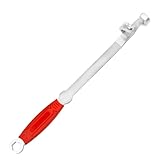
- Click-Type Torque Wrenches: These are the most common. You set your desired torque value, and when you reach it, the wrench gives an audible ‘click’ and often a slight break in the handle. They’re generally accurate enough for most automotive and general mechanical work. I’ve had a decent Craftsman clicker for about ten years, and it’s served me well for most jobs.
- Beam-Type Torque Wrenches: These have a needle that moves along a calibrated scale. You watch the needle as you tighten. They’re usually cheaper but harder to read precisely, especially in awkward positions. I’d avoid these for important applications if possible.
- Digital Torque Wrenches: These are electronically controlled and display the torque value on a screen. They often have audible and visual alerts as you approach the set torque. They’re generally more accurate and easier to use, especially for very low or very high torque values, but they come with a steeper price tag.
- Torque Screwdrivers: For very small fasteners, like those found in electronics or some firearms, you’ll use a torque screwdriver. They work on the same click-type principle but are much smaller and designed for lower torque ranges.
Beyond the torque wrench itself, you need to consider the adapter or extension you’re using. Every extra piece in the chain – a universal joint, a long extension – can slightly alter the torque applied to the fastener. Manufacturers often suggest compensating for this, but for most home mechanic tasks, it’s usually a minor consideration unless you’re dealing with extremely important torque values or very long extensions.
Also, keep your tools clean and in good condition. A greasy torque wrench is less reliable. If it’s been dropped or looks damaged, it’s worth getting it calibrated or replaced. Most professional shops calibrate their torque wrenches annually. For a DIYer, if you’re using it regularly, maybe every couple of years get it checked, or if you suspect it’s off.
For a specific spec like a 325 bolt torque, you absolutely need a reliable torque wrench. Trying to guess that value without one is a recipe for disaster. I’ve seen enough stripped bolts and cracked housings to know that proper tooling is a must for precision work.
Common Mistakes That Wreck Your Project
So, you’ve got the torque wrench, you’ve found the spec – what could possibly go wrong? Plenty. Honestly, I’ve made most of these mistakes myself, usually when I was in a hurry or thought I knew better than the manual. It’s humbling, and often expensive.
First off, using the wrong scale. I touched on this, but it bears repeating. Is it 325 ft-lbs or 325 in-lbs? They are worlds apart. Many torque wrenches can be set to either, and if you’re not paying attention, you’ll either under-torque or, more likely, massively over-torque a fastener. Over-torquing by 10x is a classic way to strip threads or snap a bolt head clean off. Imagine setting a wrench to 325 ft-lbs when it should be 32.5 ft-lbs. Yeah. Bad news.
Second, forgetting about thread lubrication or anti-seize. The torque spec is usually written assuming dry threads.
If you’re adding oil, grease, or anti-seize compound, you’re effectively lubricating the threads. This means you’ll reach the target torque reading before you achieve the desired clamping force. The fastener will be looser than intended.
Some manuals will provide different torque values for lubricated threads, but often they don’t. If in doubt, it’s often best to stick to dry threads for torque-important fasteners, or at least be aware that you might need to slightly over-torque to compensate, which is risky. I learned this the hard way on a turbocharger installation where the manual specified torque for dry bolts. I added a bit of anti-seize and ended up with exhaust leaks. (See Also: Do I Need Special Replacement Bolts For Car Engines )
Third, jerky or inconsistent application of force. When you’re tightening a bolt with a torque wrench, you need a smooth, steady pull. If you yank on it, the torque reading can spike, making you think you’ve hit the spec when you haven’t, or causing you to overshoot without realizing it. Get a feel for it – a slow, deliberate pull is key. No jerky movements!
Fourth, forgetting to back off the torque wrench. After you’ve hit the click, don’t leave the wrench set at that high torque value. Most manufacturers recommend backing off the setting to its lowest point or to zero. Leaving it wound up can damage the internal spring mechanism, leading to inaccurate readings over time. It’s a small step, but it keeps your tool accurate.
Finally, not checking torque in stages for multiple fasteners. If you’re torquing down a cylinder head or a manifold with many bolts, you can’t just torque them all to the final spec one by one. You need to go in a specific sequence, often in multiple passes, increasing the torque gradually. This makes sure the gasket seals evenly and prevents warping the component. A service manual will always outline this sequence. Ignoring it can cause leaks, cracks, and all sorts of headaches.
| Mistake | Consequence | Verdict |
|---|---|---|
| Wrong Scale (ft-lbs vs in-lbs) | Stripped threads, snapped bolt, parts separate | Catastrophic Failure |
| Lubricated Threads (without spec adjustment) | Under-torqued fastener, parts can loosen | Reliability Compromised |
| Jerky Pull on Wrench | Inaccurate reading, potential over/under-torque | Unpredictable Outcome |
| Leaving Wrench at High Setting | Damaged spring, inaccurate readings later | Tool Degradation |
| Ignoring Multi-Bolt Torque Sequence | Uneven sealing, warped components, leaks | Costly Re-work |
Real-World Applications and Surprises
So, where might you actually encounter a 325 bolt torque in the wild? It’s not a super common, everyday number you’ll find on your kitchen appliance. It’s more likely to be found in medium-to-heavy duty mechanical applications. Think older vehicles, agricultural equipment, or some types of industrial machinery. For example:
- Engine Components: Certain manifold bolts on some V8 engines, or perhaps intake/exhaust flange bolts where significant heat and pressure are involved.
- Suspension Parts: Some heavier-duty suspension linkages or mounting brackets might use fasteners in this range.
- Gearboxes and Drivetrains: A 325 bolt torque could be specified for certain covers or internal components where precise clamping is needed to prevent leaks or maintain alignment.
- Industrial Machinery: This is where you’ll see it more often – anything from pumps and compressors to heavy fabrication.
A genuine surprise for me was when I was rebuilding a pressure washer pump. The manual specified a torque value that, when converted to foot-pounds, landed right around 325. It was for the bolts holding the pump head to the crankcase. I initially thought it seemed high for a small pump, but the manual was insistent. The material was cast aluminum, and the bolts were steel. The reason? High operating pressures. If those bolts weren’t tight enough, the pump head would flex and leak, or worse, the seals would fail catastrophically under pressure. It was a good reminder that the required torque isn’t just about the bolt size; it’s about the entire system’s operating conditions.
Another instance was on a boat trailer. The U-bolts holding the axle to the frame had a specified torque. While it was a bit higher than 325, the principle was the same. You’re dealing with a lot of vibration and significant load. Under-torquing those could lead to the axle shifting or even coming loose – a truly terrifying prospect when you’re towing.
It’s always about the clamping force needed to keep things from moving or leaking under specific stresses. A 325 bolt torque suggests a scenario where that level of secure fastening is necessary. It’s not just a random number; it’s an engineering solution to a mechanical problem.
Contrarian Take: When ‘good Enough’ Is Actually Good Enough
Here’s something you won’t hear from the engineers or the guys who sell expensive torque wrenches: sometimes, the exact number isn’t the be-all and end-all. This is where my contrarian streak kicks in.
Everyone says, ‘Always torque to spec! Don’t guess!’ And for important components, absolutely. Cylinder heads, connecting rods, brake calipers – these are places where you don’t mess around. But what about that bracket holding a non-key piece of trim on your tractor, or a fender bolt on a lawnmower that isn’t subject to vibration or significant load? (See Also: Can You Use A Torque Wrench To Break Bolts Loose )
I’ve seen plenty of older equipment, built decades ago, that has never seen a torque wrench. And guess what? It mostly stays together. Why? Because over-engineering was common, fasteners were often oversized, and the loads weren’t as extreme as in modern, lightweight designs. My dad’s old Ford F-150 had bolts that felt like they were torqued with a pipe wrench, and that truck ran for 300,000 miles.
So, my opinion is this: understand the context. If a service manual gives a precise torque like a 325 bolt torque for a part that, if it failed, would cause a catastrophic accident or major damage, then yes, get it right. Use your torque wrench. But if it’s for something less important, and you have years of experience feeling what ‘tight enough’ feels like, sometimes you can get away with a good, firm tightening. It’s about risk assessment. Is the risk of a slightly over-tightened fender bolt worth the time and effort of setting up a torque wrench for a job that takes 30 seconds?
This advice comes with a massive caveat: you need to have a good feel for metal and threads. You need to know the difference between ‘tight’ and ‘too tight’ (where you feel the threads start to give or the bolt head deform). If you don’t have that feel, or if you’re unsure, always use the torque wrench. The cost of fixing a stripped bolt is almost always more than the cost of using the right tool in the first place. So, while I advocate for intuition in some cases, it’s a privilege earned through experience, not a shortcut for beginners.
Faq Section
What Is Torque in Simple Terms?
Torque is basically a twisting force. Think of it like using a wrench to turn a bolt. The amount of force you apply, multiplied by the distance from the center of the bolt to where you apply the force, gives you the torque. It’s how we specify how tight a fastener should be to create a specific clamping pressure without damaging anything.
How Do I Convert Torque Units?
The most common units are foot-pounds (ft-lbs) and inch-pounds (in-lbs). There are 12 inch-pounds in 1 foot-pound. So, to convert ft-lbs to in-lbs, you multiply by 12. To convert in-lbs to ft-lbs, you divide by 12. For example, if a spec was 325 in-lbs, you’d divide by 12 to get approximately 27.1 ft-lbs.
What Happens If I Overtighten a Bolt?
Overtightening can lead to several problems. You can strip the threads in the bolt or the material it’s screwed into, which means the fastener won’t hold properly. You can also stretch the bolt beyond its elastic limit, weakening it, or even snap the bolt head off. For gaskets, overtightening can crush them, leading to leaks.
When Should I Use a Torque Wrench?
You should always use a torque wrench for important fasteners where precise clamping force is required for safety or proper function. This includes engine components (like cylinder heads, connecting rods, main bearings), suspension parts, brake components, and anything in a service manual that specifies a torque value. If in doubt, use a torque wrench.
Final Thoughts
Figuring out a 325 bolt torque, or any torque spec for that matter, boils down to understanding the physics involved and respecting the engineering behind it. It’s not just about hitting a number; it’s about achieving the correct clamping force for the specific application, making sure safety and longevity. Don’t let the fear of getting it wrong paralyze you – use the right tools, read the manual, and when in doubt, err on the side of caution (and a torque wrench).
My own journey with torque specs has been a mix of frustrating mistakes and satisfying successes. The key takeaway is that precision matters, especially when dealing with forces that can easily exceed what materials can handle. So, next time you’re faced with a torque value, remember it’s there for a reason.
If you’re tackling a job that lists specific torque values, take the time to verify the units and use a calibrated torque wrench. It’s the cheapest insurance policy you can buy against costly repairs down the line.