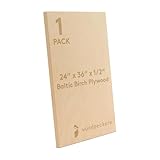
I remember staring at a pile of lumber at the hardware store, trying to figure out what I actually needed for this bookshelf project. The salesman was pushing this ‘premium’ plywood, talking about its stability and cost-effectiveness. It got me thinking, really thinking, about what goes into this stuff. So, are plywood solid wood? The short answer, the one that cuts through all the marketing fluff, is no, not in the way you’re probably picturing it.
It’s a bit like asking if a fruit salad is a single fruit. It’s made from fruit, but it’s a composite. Plywood is similar. It’s engineered, built up layer by layer. This fundamental difference is why it behaves so differently from a solid plank of oak or pine. Understanding this distinction is key to not wasting money on the wrong material for your projects, whether it’s a simple shelf or a more involved build.
What Exactly Makes Plywood, Well, Plywood?
Okay, let’s get down to brass tacks. When you see a piece of solid wood, you’re looking at a single, continuous piece that’s been sawn directly from a tree trunk. It’s got a grain pattern that flows consistently from one edge to the other. That’s the ‘solid wood’ you typically imagine – dependable, with its own unique character and, let’s be honest, sometimes a tendency to warp or crack if you look at it funny.
Plywood, on the other hand, is a bit of an underdog in the construction world, often misunderstood. It’s an engineered wood product made by gluing together thin sheets of wood veneer. These sheets are called ‘plies.’ The magic, if you can call it that, happens in how they’re stacked. Each ply is laid with its grain running in a different direction – usually at a 90-degree angle to the one beneath it. This cross-graining is the secret sauce. It’s what gives plywood a lot of its strength and stability. Think of it like a woven fabric versus a single thread; the weave is inherently stronger and less likely to tear in one direction.
The number of plies can vary. You’ll see 3-ply, 5-ply, and even more for thicker sheets. The core is typically made of less visually appealing wood, while the outer layers, the ‘face’ and ‘back,’ are usually from nicer hardwoods or softwoods. This layered construction is the core reason why plywood is less prone to warping, shrinking, and swelling compared to solid wood, especially when exposed to changes in humidity. It’s this engineered approach that makes you ask, ‘are plywood solid wood?’ and the honest answer is no, it’s something else entirely.
Why the Layering Matters (and When It Doesn’t)
The cross-graining isn’t just some fancy manufacturing trick; it’s the primary reason plywood is as useful as it is. For a solid wood plank, if you try to bend it along the grain, it’s relatively strong. But bend it across the grain, and it’s much weaker and prone to snapping. Plywood’s alternating grain directions distribute stress much more evenly. This makes it incredibly strong in all directions, which is why it’s often used for subflooring, structural sheathing, and even furniture carcasses where you need panels that won’t bow out over time.
I learned this the hard way on a workbench I built years ago. I wanted that ‘real wood’ look, so I used solid pine planks for the top. It looked great initially. But after a few seasons of damp shop air and the weight of tools, one of the planks started to cup noticeably. It looked like a gentle wave. Annoying doesn’t even begin to cover it. If I’d used a good quality exterior-grade plywood, that cupping would have been far less of an issue, if it happened at all. The alternating grain would have resisted that internal stress.
However, there’s a flip side. While plywood is strong and stable, the edges can be a bit of a mess. You’ll see the exposed plies, which don’t look great and can soak up finishes unevenly. This is why you often see projects where people use solid wood for the visible trim and edges, and plywood for the main panels. It’s a smart way to get the best of both worlds – the stability and cost-effectiveness of plywood, with the attractive, finished look of solid wood where it counts. So, while not solid wood itself, it plays very nicely with it. (See Also: Can A 4x8 Plywood Fit In A Honda Pilot )
My First Plywood Disaster: Not All Sheets Are Created Equal
My first real encounter with the ‘plywood isn’t just plywood’ reality came when I was building some simple storage shelves for my garage. I grabbed the cheapest ¾-inch construction grade plywood I could find. The salesman was happy, I was happy, thinking I’d scored a bargain. Big mistake. When I started cutting into it, the veneer on the outer layers started peeling away like sunburned skin. It was full of voids – actual air pockets – inside the layers. Drilling holes was a nightmare; the drill bit would catch on an internal layer and rip chunks out.
The finished product looked… well, it looked like it was made from the cheapest plywood. The edges were rough, the surface was inconsistent, and I swear I could feel it flexing under load more than I expected. I ended up having to cover the whole thing with a thin sheet of hardboard to make it presentable and somewhat rigid.
Lesson learned: not all plywood is created equal, and the price often reflects that. You get what you pay for, and sometimes ‘cheap’ just means ‘more headaches later.’ This is why understanding what you’re looking at is so important when you’re trying to answer the question: are plywood solid wood?
It’s about knowing there are different grades and types for different jobs.
The type of glue used is also a big deal. For most indoor furniture or cabinetry, a standard PVA glue is fine. But if you’re building something that might see moisture – like outdoor furniture, boat parts, or even that garage shelf I mentioned – you need exterior-grade plywood. This uses a more water-resistant adhesive, typically a phenolic resin. Forget to check, and you’ll end up with delamination, which is basically the layers separating. I once saw a picnic table made with interior ply just fall apart after a couple of rainy springs. Ugly stuff.
Comparing Plywood and Solid Wood: A Practical Breakdown
When you’re trying to decide between plywood and solid wood, it’s not just about looks. It’s about performance, cost, and the specific demands of your project. Solid wood offers unparalleled beauty and a certain prestige. Each piece is unique, with its own knots, grain variations, and color. For fine furniture where the wood itself is the star, solid wood is often the go-to. However, it comes at a higher cost and requires more careful handling to prevent movement. You also have to be mindful of grain direction when designing and building to minimize the risk of warping or cracking.
Plywood, on the other hand, is the workhorse. It’s generally more affordable, especially for larger panels. Its stability is its superpower. For structural components, large surfaces that need to stay flat, or projects where cost is a major factor, plywood often wins. Think cabinet boxes, drawer bottoms, subfloors, and even the backs of picture frames. It’s also easier to find in large, consistent sheets, which can save you time and labor compared to joining multiple smaller solid wood boards. (See Also: Can Bondo Be Applied To Plywood )
Here’s a quick look at how they stack up for some common applications:
| Application | Solid Wood Verdict | Plywood Verdict | My Pick & Why |
|---|---|---|---|
| Furniture Carcass (Cabinet Boxes) | Expensive, prone to movement. Overkill. | Excellent. Stable, cost-effective, strong. | Plywood. No contest for stability and budget. |
| Tabletop (Dining Table) | Beautiful, classic, can be costly. Needs careful finishing. | Can work for utility tables, but edge-treatment is key. Less ‘premium’ feel. | Solid Wood. For a dining table, the aesthetic and feel are most important. |
| Shelving (Garage/Workshop) | Can work, but prone to warping under load. | Fantastic. Holds weight well, very stable. | Plywood. Durability and stability over looks. |
| Decorative Trim/Molding | Ideal. Easy to shape, finishes beautifully. | Not suitable unless veneered or used in specific engineered applications. | Solid Wood. It’s made for this kind of detail. |
So, when you’re deciding, ask yourself what’s most important: the visual appeal of a continuous grain, the long-term stability, the budget, or the required strength. Often, a smart project uses both.
Common Plywood Mistakes to Avoid
One of the biggest mistakes people make, and I’ve been guilty of this, is not considering the grade of plywood for the intended use. There are different grades for the face veneers (like A, B, C, D) and the back veneers, and then there’s the core construction quality. Using a ‘C’ or ‘D’ grade for a visible surface means you’re going to be dealing with knots, patches, and voids. For anything that will be seen, you want at least a ‘B’ or ‘BB’ grade for the face, and ideally an ‘A’ or ‘AA’ for a really smooth finish. If you’re painting, a lower grade might be acceptable, but it’s still worth being aware of what you’re getting.
Another common pitfall is not accounting for edge treatment. As I mentioned, those exposed plies aren’t pretty. If you want a clean, finished look on the edge of a plywood panel, you need to do something about it. This could mean applying edge banding (thin strips of wood veneer or laminate that you glue on), using solid wood for the edge trim, or even filling and sanding the edge repeatedly to get a smoother surface. Just leaving it raw is usually a no-go for anything that isn’t hidden away in a closet or a workshop.
Lastly, and this relates to my earlier disaster, people often just grab the cheapest sheet available without considering its intended application. Construction grade plywood, often called CDX (meaning C-grade veneer on the face, D-grade on the back, and Exterior glue), is designed for sheathing walls and roofs, not for making beautiful furniture. It’s strong enough for those structural tasks, but it’s not pretty.
If you want something for cabinetry or furniture, you need cabinet-grade plywood, which has higher quality veneers and fewer internal voids. It’s an extra cost, sure, but it saves you hours of frustration and results in a much better-looking, more durable final product.
So, the question ‘are plywood soild wood’ is only part of the story; the type of plywood is the bigger question. (See Also: Can Cat Plywood Be Used For Exterior Siding )
Are Plywood Solid Wood? The Faq
Is Plywood Stronger Than Solid Wood?
Plywood is generally stronger and more stable than solid wood of the same thickness, especially when it comes to resisting warping, splitting, and expansion/contraction due to humidity. This is due to its cross-laminated construction. However, in terms of pure tensile strength along the grain, a thick solid wood plank might be stronger. For most practical applications where dimensional stability is key, plywood often outperforms solid wood.
Can Plywood Be Used for Structural Purposes?
Absolutely. Plywood is widely used for structural purposes in construction, such as subflooring, wall sheathing, and roof decking. Its strength, stability, and ability to hold nails and screws well make it an excellent choice for these applications. Different grades of plywood are specified for different structural uses based on their strength and water resistance.
Does Plywood Contain Formaldehyde?
Yes, most plywood adhesives contain urea-formaldehyde (UF) or phenol-formaldehyde (PF) resins. These resins are what bind the wood veneers together. While modern manufacturing has significantly reduced formaldehyde emissions compared to older products, it’s still a component. For those concerned about indoor air quality, there are low-formaldehyde or no-added-formaldehyde (NAF) plywood options available.
Is Plywood a Type of Engineered Wood?
Yes, plywood is a primary type of engineered wood. Engineered wood products are manufactured by binding together wood strands, particles, fibers, or veneers with adhesives or other binding agents to create composite materials. Plywood, made from layers of wood veneer glued together, fits this definition perfectly.
Conclusion
So, to wrap it all up: are plywood solid wood? No, they are not the same thing. Plywood is a composite material engineered from thin layers of wood veneer. While it’s derived from trees, its construction makes it behave differently from a solid plank. Understanding this fundamental difference is your first step to making informed decisions for your projects.
Don’t get me wrong, I use plywood all the time. It’s indispensable for many jobs due to its stability and cost-effectiveness. But you absolutely need to know what grade you’re buying and what you’re using it for. That cheap construction stuff is fine for a temporary form or a workshop partition, but for anything visible, invest in cabinet-grade. It’s the difference between a project you’re proud of and one that makes you cringe every time you look at it.
My advice? Always ask yourself what properties are most important for your specific task. If it’s visual beauty and a classic feel, lean towards solid wood. If it’s stability, strength under load, and budget, plywood is likely your best bet. And often, the smartest approach is a blend of both.