I remember staring at a pile of plywood samples, trying to figure out if my kitchen renovation was going to cost me my firstborn or just a significant chunk of my savings. The big question burning in my mind was: are plywood kitchens expensive? Everyone talks about MDF and particleboard being cheap, and solid wood being pricey. But where does plywood, that layered stuff, actually land on the cost spectrum? It’s not as straightforward as you might think, and frankly, the marketing around it can be a real mess. Let me break down what I learned from real-world experience, not just what glossy magazines tell you.
So, Are Plywood Kitchens Expensive Compared to the Rest?
Look, the simple answer to ‘are plywood kitchens expensive’ is: it depends. But generally, plywood falls in the middle ground, often costing more than the cheapest particleboard or MDF options, but less than high-quality solid wood. Think of it like this: particleboard is the bargain basement, MDF is the mid-range budget option, plywood is the solid contender, and solid wood is the premium pick.
My first kitchen disaster involved particleboard cabinets that bowed out like sad, waterlogged cardboard after a minor leak. Never again.
So, when I was planning my current kitchen, I deliberately steered clear of anything that looked like compressed sawdust held together with glue. I wanted something that felt substantial, something that wouldn’t disintegrate if it so much as sneezed in the general direction of humidity.
Plywood seemed like the sensible choice, a good balance of durability and cost. I ended up with ¾ inch birch plywood for my cabinet boxes, and honestly, it felt like a revelation compared to my previous experiences. The cabinet maker quoted me a price that was about 20-25% higher than what he would have charged for the lowest-grade MDF, but significantly less than solid cherry or maple. For me, that difference was entirely worth it for the peace of mind.
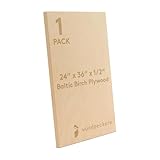
I also found that the finish quality on plywood tends to be superior right out of the gate, which can save on prep work and primer later on, eating into that cost difference. Don’t just assume ‘plywood’ means one thing either; the type of wood used for the veneers and the core material makes a big difference. Baltic birch plywood, for example, is a high-quality option that commands a higher price. Cheaper plywood might use poplar or even lower-grade veneers, bringing the cost down but potentially sacrificing some of that visual appeal and structural integrity.
I learned this the hard way when I accidentally ordered some lower-grade plywood for shelves, and the veneer had nasty knots and inconsistencies that made them look like they belonged in a workshop, not a kitchen. The key is to understand what kind of plywood you’re actually getting. It’s not all created equal, and the price tag reflects that directly.
What You’re Actually Paying for with Plywood Cabinets
When you opt for plywood kitchen cabinets, you’re not just buying wood; you’re buying a construction method that offers significant advantages. The price reflects the material itself – multiple thin layers of wood veneer, usually hardwood like birch, oak, or maple, glued together with a strong adhesive. This cross-graining technique is what gives plywood its strength and stability.
Unlike solid wood, which can warp, twist, and crack with changes in humidity and temperature, plywood is far more resistant to these dimensional changes. This is a HUGE deal in a kitchen, where steam from cooking, dishwashers, and dish drying can wreak havoc on less stable materials.
You’re also paying for the manufacturing process. High-quality plywood is made with precise machinery and strong, durable glues, often meeting specific standards for formaldehyde emissions (look for CARB II compliance, which is important for indoor air quality – something I learned the hard way after a bad experience with off-gassing furniture in my old apartment). The cost also accounts for the various grades of plywood.
You can get construction-grade plywood that looks rough, or premium furniture-grade plywood with smooth, uniform veneers and no knots. For kitchen cabinets, you’ll want the latter, which naturally costs more. The number of plies (layers) also affects the price; more plies generally mean a stronger, more stable, and more expensive panel.
I’ve seen cabinets advertised as ‘plywood’ that were actually just a thin plywood veneer over a particleboard core – that’s not what I’m talking about here, and those are definitely cheaper. True, solid plywood cabinet boxes are where the real benefits lie. (See Also: Can A 4x8 Plywood Fit In A Honda Pilot )
I remember one cabinet maker trying to upsell me on a ‘special’ veneer for the cabinet doors, claiming it was a huge upgrade. It turned out to be a slightly fancier plastic laminate. I pushed back and insisted on a simple, painted birch plywood door, and it looks fantastic and has held up way better than I expected. That experience taught me to ask specific questions about the core material and the veneer, not just accept the blanket term ‘plywood’.
Common Mistakes That Make Plywood Kitchens Seem More Expensive
One of the biggest ways people overspend on plywood kitchens is by not shopping around. I got quotes from three different cabinet makers for my last kitchen remodel.
The first guy was super slick, talked a big game about custom craftsmanship, and his price for ¾ inch birch plywood cabinets was eye-watering – about $15,000 for a medium-sized kitchen. The second guy was more down-to-earth, a smaller operation, and he came in at $11,000 for the exact same specs. The third one, a direct-to-consumer online company, offered flat-pack plywood cabinets for around $8,000.
I ended up going with the second guy because I wanted a bit more personalization and a local relationship, but the price difference was stark. Don’t just accept the first quote. Get at least three, preferably from different types of suppliers – local cabinet shops, national chains, and online retailers. Another mistake is not understanding the different grades and types of plywood.
If you’re sold on ‘plywood’ without specifying the wood species for the veneer (like birch, maple, oak) or the core material (like furniture-grade multi-ply birch vs. a cheaper softwood core), you might end up paying a premium for something that’s not as good as you thought.
I once almost bought cabinets advertised as ‘plywood’ that turned out to be a very thin birch veneer over a low-density particleboard core. That’s not a durable plywood cabinet!
It’s basically a particleboard cabinet with a nicer face. Make sure you’re getting solid plywood construction throughout the boxes, not just on the visible exterior. Also, over-customizing can blow the budget.
While custom is nice, every tweak, every unique corner cabinet, every special drawer configuration adds labor and material costs. Standard sizes are almost always more cost-effective.
For my own kitchen, I stuck to as many standard cabinet sizes as I could, only deviating for a specific necessity (a narrow pull-out spice rack). This saved me thousands.
Finally, poor installation is a hidden cost. Even the best plywood cabinets will look and perform poorly if they’re not installed plumb, level, and securely. Factor in the cost of professional installation if you’re not confident doing it yourself.
DIY installation can save money, but a botched job can cost you more in repairs and frustration than you would have paid a pro in the first place. (See Also: Can Bondo Be Applied To Plywood )
Real-World Costs: What I Actually Spent
Let’s get down to brass tacks. For my current kitchen renovation, which is a decent-sized U-shape, about 120 square feet of floor space, I opted for custom-built cabinet boxes made from ¾ inch Baltic birch plywood. The doors and drawer fronts were also solid birch plywood, painted a deep forest green.
I wanted that smooth, stable surface that paint adheres to beautifully without showing the grain pattern of cheaper veneers. The doors themselves were flat-panel, nothing fancy, to keep costs down. My total for all the cabinet boxes, doors, drawer fronts, hinges, and drawer slides came out to be exactly $13,450.
This was from a local, well-respected cabinet maker who specializes in custom work but also offers more standardized designs. Now, to give you some context, I got quotes for similar quality solid wood (like maple) that were around $18,000 to $20,000. Particleboard or MDF cabinets, if I had gone that route with decent hardware, might have been around $7,000 to $9,000, but I really didn’t want to risk it.
So, in my experience, are plywood kitchens expensive? They aren’t the cheapest option, but they represent a very solid middle ground. This $13,450 figure is not just for the wood; it includes good quality soft-close hinges and full-extension drawer slides, which are a must for me. I’ve had cheap hardware seize up or break, and it’s incredibly frustrating.
The cabinet maker charged me an additional $2,500 for installation, which I considered reasonable for the precision required. So, the total project cost for cabinets and installation was around $15,950. This might sound like a lot, but considering the expected lifespan and the quality I’m getting, I feel it’s a fair price.
I’m not expecting these cabinets to warp or fall apart after five years like my old particleboard ones did. It’s an investment in a kitchen that will hopefully last me for decades. The finish on the plywood is smooth as glass, and the cabinet boxes feel incredibly sturdy.
I’ve even leaned on them pretty hard while prepping food, and there’s zero flex or creaking. That’s the kind of quality that justifies the price for me.
| Material | Estimated Cost Range (Mid-size Kitchen) | Pros | Cons | Verdict |
|---|---|---|---|---|
| Particleboard/MDF | $7,000 – $10,000 | Cheapest upfront cost, smooth surface for painting. | Susceptible to water damage, less durable, can sag over time, can off-gas VOCs. | Budget-friendly but risky for longevity. Fine for rentals or very tight budgets. |
| Plywood (Good Quality) | $10,000 – $16,000 | Strong, stable, resistant to warping, good screw-holding power, durable. | More expensive than particleboard/MDF, can still be damaged by prolonged water exposure if not sealed well. | Excellent balance of cost, durability, and stability for most homeowners. |
| Solid Wood (Maple, Oak, Cherry) | $15,000 – $25,000+ | Premium aesthetic, can be refinished multiple times, highest perceived value. | Most expensive, prone to expansion/contraction, can be scratched or dented more easily. | The luxury option for those prioritizing natural beauty and willing to invest heavily and maintain carefully. |
Tips for Getting the Best Value From Plywood Kitchens
So, you’ve decided plywood is the way to go, but you don’t want to break the bank. First off, be specific about what you want.
Don’t just say ‘plywood’. Ask for the type of veneer wood (birch is a great all-rounder for cost and finish), the thickness of the panels (¾ inch for boxes is standard for good reason), and the number of plies if they know it. Baltic birch is often a good indicator of quality. Secondly, consider the hardware.
Fancy, integrated soft-close hinges and full-extension drawer slides add to the cost, but they make a world of difference in daily use and longevity. I’d rather have cheaper plywood boxes with great hardware than expensive boxes with flimsy slides.
Seriously, it’s a big deal. Another tip is to understand what ‘custom’ really means. Full custom cabinetry, where every single dimension is tweaked for your exact space, is the most expensive. Semi-custom or stock cabinetry made from plywood can offer significant savings. (See Also: Can Cat Plywood Be Used For Exterior Siding )
I found that choosing standard cabinet widths and depths, and only opting for custom solutions for awkward spaces, struck the perfect balance for me. For example, a standard 30-inch base cabinet is much cheaper than a custom 29.5-inch one.
Look for companies that offer plywood construction in their stock or semi-custom lines. Don’t be afraid to ask about factory finishes versus site-finished. Factory finishes are usually more durable and consistent, but if you’re painting yourself, getting raw plywood can save you money on the upfront cost, though you’ll need to do the prep work and painting yourself. I once painted some birch plywood cabinet doors myself, and while it saved me about $1,500, it took me three solid weekends of sanding, priming, and painting.
Worth it if you have the time and patience. Finally, consider the installation. If you’re a competent DIYer, installing cabinets yourself can save you a considerable chunk of money. However, if you’re not, hire a professional.
Poorly installed cabinets will look bad and can cause functional problems down the line, negating any savings. The cost of a good installer is usually worth it for peace of mind and a professional finish.
How Much Does a Plywood Kitchen Cost Per Linear Foot?
The cost per linear foot for plywood kitchens can vary wildly, but generally, you’re looking at something in the range of $300 to $800 per linear foot for cabinets, depending on the quality of plywood, hardware, doors, and whether it’s custom or semi-custom. This figure usually includes both the boxes and the doors, but not the countertops or installation. For a mid-range, good quality ¾ inch birch plywood kitchen with decent hardware, aiming for around $400-$500 per linear foot is a reasonable starting point for quotes.
Is Plywood Better Than Mdf for Kitchen Cabinets?
For cabinet boxes, yes, good quality plywood is generally considered better than MDF. Plywood offers superior screw-holding power, is more resistant to moisture damage (though not impervious), and is less prone to sagging over time, especially for shelves. MDF can be a good option for painted cabinet doors due to its smooth, uniform surface, but for the structural components, plywood has the edge in durability and stability.
What Is the Average Cost of Plywood Kitchen Cabinets?
The average cost for a medium-sized kitchen with plywood cabinets can range anywhere from $10,000 to $16,000 for good quality construction, not including installation, countertops, or hardware upgrades beyond standard. This average can swing significantly based on whether you’re buying semi-custom, custom-built, or pre-assembled units, and the specific type of plywood and door style chosen.
Can Plywood Kitchen Cabinets Be Painted?
Absolutely. Plywood kitchen cabinets, especially those with a birch or maple veneer, take paint very well. The key is proper preparation: cleaning, sanding, and priming with a high-quality primer designed for cabinetry. A smooth, even paint finish can be achieved, and it’s a popular choice for achieving a modern or transitional look without the cost of solid wood doors.
Final Verdict
So, are plywood kitchens expensive? My honest take is that they represent a fantastic middle ground for homeowners looking for durability and stability without the premium price tag of solid wood. They’re certainly not the cheapest option on the market, but the added cost over particleboard or MDF is a worthwhile investment for longevity and peace of mind. I’ve seen too many cheap cabinets fail prematurely to skimp on this core component. When you’re budgeting, think about the total value: how long will they last, how will they perform day-to-day, and how much do repairs or replacements cost down the line? Plywood usually wins out on those metrics.
My advice is to get detailed quotes. Understand exactly what kind of plywood you’re being quoted for, what hardware is included, and what the installation costs are. Don’t be afraid to ask questions until you feel completely comfortable. It’s your money and your kitchen, and you deserve to know what you’re paying for.
If you’re on the fence, consider a hybrid approach: plywood for the cabinet boxes and perhaps a more budget-friendly material for less visible internal components, or even MDF for painted doors if the budget is tight and you prioritize that smooth finish. But for the core structure, I’m sticking with quality plywood. It’s a decision I haven’t regretted.