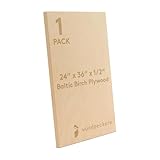
I remember staring at the lumber aisle last spring, my jaw practically hitting the floor. I needed a sheet of decent plywood for a workbench top, a simple project that suddenly felt like a luxury car purchase. Prices had gone absolutely bonkers. For months, it felt like every trip to the hardware store was a fresh reminder of how expensive building materials had become.
So, the question on everyone’s mind, especially if you’ve got a project brewing or a repair list longer than my arm, is simple: are plywood prices coming down? It’s not just about the numbers; it’s about whether you can finally start that shed or fix that fence without taking out a second mortgage.
The Rollercoaster Ride of Plywood Costs
Let’s cut to the chase: the wild west of plywood pricing we saw a couple of years ago has calmed down, but don’t expect pre-pandemic bargain basement deals anytime soon. You want to know if are plywood prices coming down? Yes, they have, significantly from their peak.
But “down” from stratospheric is still higher than where they used to be. Think of it like this: if the price of a standard 4×8 sheet of 3/4-inch CDX plywood shot up to $80 or even $100 at the absolute height of the frenzy, you might now be seeing prices closer to $40-$60, depending on your location, the specific grade, and the retailer. That’s a massive drop from the peak, but still a hike from the $20-$30 I used to casually budget for.
What happened? A perfect storm, really.
The pandemic shut down mills, kicked off a DIY boom fuelled by people stuck at home, and then supply chain nightmares added insult to injury. Mills couldn’t ramp up fast enough, and shipping costs went through the roof. It was a brutal lesson in supply and demand for us DIYers and contractors alike.
I learned this the hard way. I was planning to build some custom shelving in my garage and, seeing the prices, I put it off. I waited, hoping for a dip. When I finally went to buy the wood a few months later, thinking I’d missed the worst of it, the price had actually inched up again. It was infuriating. That’s when I realized waiting passively wasn’t always the winning strategy. Sometimes, you just have to bite the bullet, or at least do your homework to find the best available price right now.
The good news is that the acute shortages are mostly over. Mills are running, and while there can still be localized blips, the general availability is much better. This improved supply is the biggest driver of prices coming down from those insane highs.
However, several underlying factors keep prices from completely crashing back to earth. Lumber, the main ingredient in plywood, still has its own price fluctuations. Energy costs, which affect everything from manufacturing to transportation, haven’t exactly plummeted. And the demand, while maybe not as frenzied as during peak lockdown, remains relatively strong.
New home construction is always a big consumer, and home improvement projects, even if slightly less frantic, are still a constant. So, while we’re breathing easier, it’s a new normal, not a return to the old one.
Decoding Plywood Grades and Types: What to Actually Buy
Alright, so you’re looking at plywood, and it’s not just one thing. You’ve got a whole alphabet soup of grades and types, and the price differences can be staggering. (See Also: Can A 4x8 Plywood Fit In A Honda Pilot )
For most of us tackling projects around the house, you’re probably looking at one of two main players: CDX and AC. CDX is your workhorse. The ‘C’ and ‘D’ refer to the grade of the veneer on each side – ‘C’ is decent, ‘D’ has more knots and imperfections, so it’s not pretty but it’s strong.
The ‘X’ means it’s rated for exterior use, so it can handle some moisture. This is what most people grab for framing, sheathing, subflooring, and basic utility projects. It’s generally the most affordable option, which is why understanding its price fluctuations matters most for budget projects.
Then you’ve got AC, which is a step up. ‘A’ is the highest grade veneer, meaning it’s smooth and nearly flawless.
‘C’ is on the back. This is what you want for projects where the surface will be visible – think cabinet doors, built-in shelving that you’re painting or staining, or even furniture. It costs more, obviously, because you’re paying for that smooth, clean face. Beyond these common grades, there are specialty plywoods like sanded plywood (often called cabinet-grade, though that’s more a marketing term), hardwood plywoods (like birch or oak veneers over a softwood core, used for fine furniture and cabinetry), and marine-grade plywood (which uses waterproof glue and has higher quality veneers, but costs a fortune and is usually overkill unless you’re building a boat).
For the question ‘are plywood prices coming down?’, it’s important to specify which type. The price drop on basic CDX will likely be more pronounced than on high-end birch veneer plywood.
My own wood-buying journey has been a crash course in this. I once bought what I thought was cabinet-grade plywood for some simple shelves, only to realize later it was just sanded CDX.
It looked okay, but the underlying core had some voids, and it wasn’t as stable as I’d hoped. For something that was going to be painted, it was fine, but if I’d been staining it, I’d have been kicking myself. The key takeaway?
Understand what you need for your specific project. Don’t overbuy and pay for premium features you won’t benefit from, but also don’t skimp and end up with a subpar result.
A good rule of thumb is to aim for the lowest grade that will still meet your structural and aesthetic requirements. For most structural or hidden applications, CDX is the sweet spot, and its price movement is the most relevant to the general ‘are plywood prices coming down’ discussion.
Plywood Grade Comparison Table
| Plywood Grade | Typical Use | Pros | Cons | Price Verdict |
|---|---|---|---|---|
| CDX | Sheathing, subflooring, framing, utility projects | Economical, strong, widely available | Rough surfaces, visible knots/defects | Most price sensitive; significant drop from peak, but still up from historical lows. |
| AC | Cabinetry, visible surfaces, furniture | Smooth, paintable/stainable surface (A side) | More expensive than CDX, back veneer is ‘C’ grade | Price has come down, but premium cost remains for the ‘A’ face. |
| Baltic Birch (3/4″) | High-end cabinets, furniture, jigs | Very stable, strong, void-free core, good for joinery | Significantly more expensive, heavy | Prices are down from peak but remain high due to consistent demand and manufacturing complexity. |
Factors Influencing Plywood Prices Today
So, beyond the basic supply and demand of wood itself, what else is tugging at plywood prices? A lot, actually. First off, international trade and tariffs can still play a role. While the worst of the shipping container crunch has eased, global lumber markets are interconnected. If there are trade disputes or changes in import/export duties between major wood-producing countries and the US, it can trickle down to the cost of plywood here. Think about it: if the cost to bring certain types of wood or finished plywood into the country goes up, that cost is inevitably passed on to us. It’s not as direct as a mill shutdown, but it’s a constant background hum affecting overall pricing. (See Also: Can Bondo Be Applied To Plywood )
Then there’s the energy market. Plywood manufacturing is an energy-intensive process. Heating the glues, running the machinery, and especially transporting the finished product all rely on fossil fuels. When gas prices spike, so does the cost of production and delivery for pretty much everything, including plywood. Even if lumber itself is cheaper, the fuel to get it from the mill to the lumberyard and then to your local big box store can eat into those savings. I noticed this firsthand when fuel surcharges on freight started appearing on invoices a couple of years back. It’s an invisible tax on nearly every commodity.
The other big influencer is the housing market and construction trends. When new home building is booming, demand for plywood (used for sheathing, subflooring, etc.) goes through the roof. This naturally pushes prices up.
Conversely, a slowdown in construction can lead to an oversupply, which tends to drive prices down. Right now, interest rates have cooled some of the housing market’s hottest aspects, which should theoretically put downward pressure on prices. However, there’s also a persistent housing shortage in many areas, which keeps demand from completely drying up.
It’s a balancing act. For those asking are plywood prices coming down, this complex interplay means it’s not a simple, straight line. It’s more of a gradual settling after a chaotic climb, influenced by a web of economic factors.
When Waiting Backfires: My Personal Plywood Folly
I’ll admit it. I’m a bit of a bargain hunter. I like to think I’m smart about when I buy things, especially for my workshop. A few years ago, I needed a bunch of 1/2-inch CDX plywood for some shop jigs and drawer boxes. Prices were already lifted, not at their absolute peak, but definitely higher than I was used to. My thought process was, “They’ve got to come down further, right? This can’t last.” So, I waited. And I waited. I kept checking prices online, convincing myself that a better deal was just around the corner. Every week, I’d look and see it hovering around $55-$60 a sheet. Still too rich for my blood, I thought.
Then, seemingly overnight, the price jumped. Not just a little bit, but a significant chunk. It went from $60 to nearly $85 a sheet. Panic set in.
I’d missed my window. All that waiting, all that strategizing, and I’d ended up paying more than if I’d just bought it when I first noticed the lifted prices.
This wasn’t a gentle slope down; it was a sharp, unexpected spike. I ended up buying just enough for my immediate needs at the higher price, feeling like a total idiot. That experience taught me a brutally honest lesson: with volatile commodity prices, sometimes the best strategy is to buy what you need when you need it, especially if you can find a price that’s reasonable relative to the current market, rather than trying to time an unpredictable bottom.
This ties directly back to the question of whether are plywood prices coming down. While the general trend is down from the absolute madness, there are still significant short-term fluctuations. Local supply issues, regional demand spikes (maybe a hurricane hit and everyone needs sheathing), or even just a temporary overstock at a specific yard can cause prices to dip and then rebound quickly. Relying solely on a long-term prediction that prices will keep falling can leave you in the same boat as I was – watching prices go up when you least expect it. The advice I’d give now, based on that painful lesson, is to monitor your local suppliers, understand the typical price range for the grade you need, and be ready to buy when you see a price that’s on the lower end of that current range, rather than holding out for a mythical past price.
Practical Tips for Buying Plywood Now
Given all this, if you’re in the market for plywood, how do you navigate it without feeling like you’re being fleeced? First, shop around. Don’t just walk into the first big box store you see. Check prices at different lumberyards, independent hardware stores, and even online retailers if they offer delivery in your area. Sometimes, local yards have better deals on specific grades, especially if they’re trying to move inventory. I’ve found significant price differences, sometimes $10-$15 per sheet, just by checking two different suppliers within a 20-mile radius. (See Also: Can Cat Plywood Be Used For Exterior Siding )
Second, be flexible with your grades. As I mentioned, CDX is great for most utility purposes. If you’re building simple shop furniture or need a sturdy, paintable surface, a good quality CDX might serve you just as well as a more expensive AC grade, especially if the price difference is substantial. Conversely, if you absolutely need a smooth, void-free surface for a visible project, don’t try to cheap out.
Identify the minimum acceptable grade for your needs and stick to it. Don’t buy hardwood plywood if plain pine plywood will do for a painted toy box, but also don’t use knotty CDX for a fine furniture piece that will be stained.
Knowing the specs you actually require is your best defense against overspending.
Third, consider buying in bulk if you have the storage. Many lumberyards offer a discount for buying a full or half-pack of plywood (usually 25 or 50 sheets).
If you have multiple projects planned or can foresee needing a good amount of plywood in the near future, this can be a significant cost saver per sheet. Just make sure you have a dry, protected place to store it.
Moisture is the enemy of plywood, and warped sheets are useless. So, to answer ‘are plywood prices coming down’ for your specific project: yes, probably from their peak, but smart shopping, understanding grades, and a bit of flexibility are still key to getting the best bang for your buck in this new pricing environment.
Are Plywood Prices Going to Drop Further?
Predicting exact future prices for commodities like plywood is tough. While prices have fallen significantly from their 2021-2022 peaks due to improved supply, they are unlikely to return to pre-pandemic lows anytime soon. Factors like ongoing demand from construction, fluctuating energy costs, and global supply chain stability will continue to influence prices. It’s more likely we’ll see continued gradual stabilization with occasional regional or temporary price increases rather than a steep, prolonged drop.
What Is the Most Common Type of Plywood?
The most common type of plywood for general construction and DIY projects is CDX. The ‘C’ and ‘D’ refer to the veneer grades on the faces, with ‘C’ being better than ‘D’, and the ‘X’ signifies it’s rated for exterior use. It’s a good balance of strength, affordability, and availability for applications like subflooring, sheathing, and framing where appearance isn’t the primary concern.
Is Plywood Cheaper Than Osb?
Generally, yes, plywood is typically more expensive than Oriented Strand Board (OSB). OSB is made from compressed wood strands and glue and is often used as a substitute for plywood in applications like sheathing and subflooring due to its lower cost. However, plywood can offer superior strength, moisture resistance, and stability in certain applications, which can justify its higher price point.
Why Is Plywood So Expensive Right Now?
While prices have come down from their absolute highs, plywood remains more expensive than in pre-pandemic years due to a combination of factors. These include increased raw material costs (lumber), higher energy and transportation expenses, persistent demand from the construction and DIY sectors, and lingering supply chain vulnerabilities. The market has stabilized, but the cost structure for producing and distributing plywood has fundamentally shifted upwards.
Final Verdict
So, are plywood prices coming down? The short, honest answer is yes, they’ve dropped considerably from the insane peaks we saw a couple of years back. But don’t expect to find it at bargain-basement prices of the past. The market has settled into a new, slightly higher normal, influenced by a blend of supply availability, ongoing demand, and the general cost of doing business in the lumber industry.
My advice? Don’t get caught waiting for a mythical price drop that might never come, only to see prices tick up unexpectedly. Instead, understand the grade you need, do your local price comparisons, and be ready to pull the trigger when you see a price that’s fair for the current market. It’s about working with the reality of today’s costs, not chasing ghosts of yesterday’s prices.