I remember the first time I tried to plug my fancy new shop vac into the garage outlet at my rented apartment. It was a Tuesday, I had a mess of sawdust and drywall crumbs from a small project, and I just wanted to get it cleaned up before the landlord did his rounds. I flicked the switch, heard a click, and… nothing. Dead.
Zilch. Nada.
My immediate thought, and probably yours too, is ‘Am I allowed to use the outlets on my building?’ It’s a fair question, especially when you’re renting or in a shared space. We all assume outlets are just… there, for us to use, but the reality can be a bit more complicated than just plugging something in.
It’s not always about blatant rules; sometimes it’s about safety, about avoiding overloaded circuits that take down power for everyone, or even about protecting your own gear from dodgy wiring. So, before you go plugging in that industrial-grade compressor or that experimental 3D printer that hums like a tiny jet engine, let’s clear the air on what you can and can’t do.
The Rent Is Too Damn High (and So Is the Power Bill)
Look, the most common reason you might hesitate about using outlets in a rental or a shared building is the lease agreement. Most leases, even if they don’t explicitly say ‘thou shalt not plug thine own toaster into the communal hallway outlet,’ have clauses about responsible use of utilities and property. Basically, if it’s not your unit, or if it’s a common area, that outlet isn’t automatically yours to play with.
Think of it this way: the landlord pays for the electricity that runs through those walls. If you start powering your entire home workshop from the office suite downstairs, that’s not exactly what they signed up for. I once knew a guy who rigged up a massive server rack in his apartment’s tiny storage closet, pulling power from a dozen different wall sockets and a few extension cords he ran under the doors.
His internet was blazing fast, but when his breaker tripped and took down power for three floors, his landlord was… displeased. He got a formal warning and had to dismantle the whole setup.
It wasn’t about whether he was ‘allowed’ to plug things in, but about the sheer volume of power he was drawing and the fire hazard he was creating. Common sense is your first hurdle here. If it’s a standard outlet in your own living space, you’re generally in the clear for normal household appliances.
But if it’s an outlet in a hallway, stairwell, laundry room, or any other shared amenity, assume it’s off-limits unless explicitly stated otherwise. Those are usually for maintenance, emergency lighting, or common area functions.
For communal spaces, the rule is almost always ‘hands off.’ Those outlets are there for a reason, and it’s not for you to charge your electric scooter or run your portable karaoke machine. I’ve seen people plug Christmas lights into hallway outlets.
Annoying, sure, but potentially more than that. If those circuits are already carrying a load, adding yours could cause problems. It’s about respecting the building’s infrastructure. You wouldn’t tap into your neighbor’s water line, right?
Think of electricity the same way. The sheer volume of things people want to plug in nowadays – from charging multiple phones and laptops to running air purifiers and dehumidifiers – means older buildings can struggle.
Pushing that infrastructure with your own high-draw items, even in your own unit, can sometimes be a problem. Always check your lease; it’s the first place to look for any explicit restrictions.
What’s Drawing the Power, Anyway?
This is where things get a little technical, but bear with me. Understanding what you’re plugging in is key.
Not all outlets are created equal, and more importantly, not all circuits are designed for infinite use. Every electrical circuit in your building has a breaker, usually in a metal box somewhere in your apartment or a common area. This breaker is a safety device. (See Also: Are American Outlets Ac Or Dc )
It’s designed to ‘trip’ (cut off power) if too much electricity is drawn through that circuit, preventing overheating and fires. A standard 15-amp circuit breaker, for instance, is designed to handle a certain load.
Plugging in a single vacuum cleaner, a lamp, and a TV might be fine. But adding a powerful space heater, a microwave, and a toaster oven to the same circuit?
You’re asking for trouble. I learned this the hard way in my first solo apartment. I had my computer, a monitor, my printer, and a desk lamp all plugged into one power strip.
Then I decided to plug in my small shop fan because it was summer. Poof! Lights out for my entire living room. It wasn’t a catastrophic failure, just a tripped breaker. But it taught me to respect circuit load.
I had to go find the breaker box and flip it back on, and then I reorganized my plugs to spread the load across different circuits. It’s like trying to carry too many grocery bags at once – eventually, something’s gonna drop.
High-draw appliances are the usual suspects. Things like space heaters, hair dryers, microwaves, kettles, toasters, and power tools can pull a lot of amps.
If you plug several of these into the same circuit, especially if the circuit is already near its limit, you’ll trip the breaker. In some older buildings, the wiring itself might be a limiting factor.
It might not be able to safely handle the demands of modern electrical appliances. This is where the ‘am i allowed to use the outlets on my building’ question gets tricky. Even if your lease doesn’t forbid it, the building’s electrical system might effectively be saying ‘no.’
You might notice outlets feeling warm to the touch, or flickering lights when you turn something on – these are warning signs that the circuit is overloaded or the wiring is stressed. Ignoring these signs is a surefire way to cause damage or, worse, a fire. Always err on the side of caution. If you’re unsure about whether an appliance is too powerful for a particular outlet or circuit, it’s best to consult an electrician or at least research the appliance’s wattage and compare it to the typical capacity of your building’s circuits.
The Contradiction: ‘normal Use’ vs. Your Hobby
Here’s a point of contention for many DIYers and tinkerers: what constitutes ‘normal use’ versus ‘excessive use’? Most landlords and building managers would say that plugging in your TV, lamps, fridge, and charging your phone is normal. Running a high-powered 3D printer 24/7, operating a commercial-grade sewing machine for your side hustle, or setting up a small metalworking station with a grinder and welder in your apartment?
That’s probably not what they consider normal. I remember a friend who started getting into resin casting for his art. He needed a well-ventilated space, so he set up a small fan and a heater in a corner of his living room.
No problem, right? Then he decided he needed a dedicated UV curing station, which involved a powerful UV lamp that drew a decent amount of power. On top of his existing setup, this started tripping the breaker in his living room multiple times a day. He’d reset it, and within an hour or two, it would trip again.
He was technically using outlets in his own apartment, but the cumulative draw from his hobby equipment was clearly pushing the limits of the circuit. He eventually had to relocate his setup to a detached garage where he had more control over the electrical circuits.
Everyone says to just plug things in and use them, but that’s a bit too simplistic when you’re dealing with shared infrastructure or older buildings. The common advice to ‘just use the outlets’ assumes a modern, solid electrical system that can handle pretty much anything. That’s often not the case. (See Also: Are All Power Outlets Ac )
A contrarian opinion I hold is that people are too quick to blame the building when their breakers trip. Often, it’s simply a matter of understanding appliance wattage and circuit capacity. You are allowed to use the outlets on your building, within reason.
But ‘reason’ means not overloading circuits, not creating fire hazards, and not drawing an amount of power that is clearly excessive for a residential setting. If your hobby requires significant, consistent power draw, you need to do your homework.
That might mean figuring out which outlets are on which circuits, or even consulting with a qualified electrician to see if dedicated circuits can be installed (though that’s usually a no-go in rentals). Think about the power ratings. A small fan might be 50 watts, a laptop 60 watts, an LED lamp 10 watts.
A space heater can be 1500 watts. A microwave 1000 watts. See how quickly that adds up?
It’s your responsibility to manage that load, not the building’s problem when it goes wrong.
Am I Allowed to Use the Outlets on My Building? The Fine Print
The real answer to ‘am i allowed to use the outlets on my building’ lies in a few key places: your lease agreement, local building codes, and common sense regarding safety. Your lease is the primary document governing your tenancy.
It will likely have clauses about utility usage, alterations to the property, and prohibitions against creating nuisures or hazards. If it doesn’t explicitly ban using certain outlets, it’s generally implied that you can use outlets within your leased unit for typical household purposes.
However, using common area outlets is almost universally prohibited unless for approved building maintenance or specifically designated charging stations. Some leases might have specific addendums for commercial use if you’re running a home business, which could impact how you can use electricity.
Building codes are set by local authorities to make sure safety standards are met. While you as a tenant aren’t directly responsible for making sure the building meets code (that’s the landlord’s job), you can’t operate in a way that violates those codes. For instance, plugging in too many devices that cause overloaded circuits could be seen as a violation of safe electrical practice. Landlords are obligated to maintain the building’s electrical system in a safe working order. If you notice persistent issues like flickering lights, warm outlets, or frequently tripping breakers, you have the right to report it. They may need to bring in an electrician. Here’s a quick breakdown of what’s generally okay and what’s not:
| Usage Scenario | Verdict | Reasoning |
|---|---|---|
| Standard appliances in your own unit (TV, fridge, laptop, lights) | ✅ Allowed | Normal household function, expected utility use. |
| High-draw appliances (space heater, microwave, hair dryer) in your unit | ⚠️ Use Caution | Monitor circuit load; avoid using multiple high-draw items on the same circuit. |
| Power tools for personal projects in your unit | ⚠️ Use Caution | Assess circuit capacity; consider dedicated circuits if possible (often not in rentals). |
| Extension cords for temporary personal use within your unit | ✅ Generally Allowed | Make sure they are in good condition, properly rated, and not overloaded. Avoid daisy-chaining. |
| Any outlet in a common area (hallway, laundry room, lobby) | ❌ Not Allowed | Typically for building maintenance or specific amenities only. Risk of overloading shared circuits. |
| Running a home business with heavy power needs from standard outlets | ⚠️ Check Lease/Landlord | May require specific agreements or even dedicated circuits. Potential for lease violation. |
| Tampering with or modifying electrical systems | ❌ Strictly Prohibited | Illegal, dangerous, and voids landlord’s insurance. |
The key takeaway is that ‘allowed’ is a spectrum. While you’re generally free to use outlets in your private living space for everyday needs, pushing the boundaries with powerful equipment or in shared areas requires caution and an understanding of electrical safety. The National Electrical Code (NEC) in the US, for example, provides standards for safe electrical installations, but you won’t be consulting the NEC directly for your toaster. You’ll be relying on common sense and the guidance provided by your lease and landlord.
My Own Screw-Up: The Outlet Extender Debacle
I once lived in a place with a bizarre electrical setup. It was an older building, and one room, which I used as an office, seemed to have only two outlets. They were on opposite walls, and both seemed to be on the same circuit.
I had my computer, two monitors, a printer, a scanner, a desk lamp, and my Wi-Fi router all plugged in. That was already pushing it.
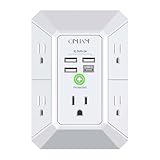
Then I decided I needed a small, quiet dehumidifier because the room got a bit stuffy. I bought one of those slim outlet extenders – the kind that plugs into a single outlet and gives you three more sockets. I plugged the dehumidifier into one of the new sockets.
Everything was fine for about two days. Then, one afternoon, thump. (See Also: Are Arc Trip Outlets Required In Hillsborough County )
Everything went dead. Not just the office, but the entire living room and kitchen went dark.
I’d overloaded not just the original outlet, but the entire circuit.
My mistake was thinking that adding more sockets with an extender meant more capacity. It doesn’t. An extender just gives you more places to plug things in; it doesn’t magically increase the amount of power the circuit can handle. It’s like putting more hooks on a coat rack without reinforcing the wall it’s attached to.
The wall will still hold only so much weight. So, I had to go hunting for the breaker box, which was in a dusty corner of the basement. After resetting the breaker, I had to rethink my setup.
I moved the dehumidifier to a different outlet in the hallway (which was on a different circuit, thankfully). I also made sure to unplug things when I wasn’t actively using them, especially the power-hungry scanner and printer. It taught me a valuable lesson: adding more plugs doesn’t add more power. It just gives you more options to potentially overload the existing power supply.
So, when you ask ‘am i allowed to use the outlets on my building?’, remember that the outlets themselves aren’t the bottleneck; the circuit they’re connected to and the building’s overall electrical capacity are. And those outlet extenders?
Use them wisely, and never for high-draw appliances unless you’re absolutely sure about the circuit’s capacity.
Practical Tips for Smart Outlet Use
So, you’ve got a better handle on the ‘am i allowed to use the outlets on my building’ question. Now, how do you actually use them without causing problems? Here are some practical tips I’ve picked up over the years:
- Know Your Circuits: This is the most important step. If you can find your building’s breaker box, take some time to label the breakers. Plug in a lamp in your living room, turn on the TV, and then go flip breakers one by one until the lamp and TV turn off. Label that breaker ‘Living Room Outlets’ or something similar. Do this for every room and major appliance. This helps you understand what’s connected and avoid overloading a single circuit.
- Wattage Awareness: Check the wattage (or amperage) of your appliances. You can usually find this on a sticker on the back or bottom of the device. A 15-amp circuit at 120 volts can handle about 1800 watts. A 20-amp circuit can handle about 2400 watts. Don’t exceed about 80% of that capacity for continuous use to avoid tripping breakers. So, for a 15-amp circuit, aim for loads under 1440 watts.
- Prioritize Appliances: When using multiple appliances, especially high-draw ones, try to stagger their use. Don’t run the microwave, toaster, and coffee maker all at the same time on the same circuit. Think about what’s absolutely necessary at any given moment.
- Inspect Your Gear: Always use surge protectors or power strips that are in good condition. Check cords for fraying or damage. If an outlet feels warm to the touch, or if plugs are loose, report it to your landlord immediately. Don’t try to fix it yourself.
- Common Sense in Common Areas: Reiterate this: if it’s not in your private unit, assume you can’t use it. Hallways, stairwells, laundry rooms – these outlets are not for your personal use. It’s a quick way to get into trouble with management.
- Invest in Smart Plugs (Wisely): Smart plugs can be useful for monitoring energy usage and turning devices on/off remotely. Some have built-in overload protection or energy monitoring features that can give you insight into how much power a device is drawing, which is invaluable for managing circuits.
- When in Doubt, Ask: If you’re planning a significant project that involves power tools or multiple electronics, or if you have any concerns about your building’s electrical capacity, talk to your landlord or a qualified electrician. It’s much cheaper and safer than dealing with the aftermath of an electrical issue.
When to Call the Pros (or Your Landlord)
Sometimes, the question isn’t just about ‘am i allowed to use the outlets on my building’ but about whether the building’s electrical system is even capable of supporting your needs safely. If you’re experiencing consistent problems – breakers tripping frequently, outlets that are always warm, or lights dimming when you turn on an appliance – these are not things to ignore. This indicates a potential issue with the wiring, the circuit capacity, or the overall electrical load in the building. In such cases, it’s your landlord’s responsibility to address the problem.
You should document the issues (take notes, maybe even photos or short videos if safe to do so) and then formally notify your landlord in writing. This creates a record of your communication.
DIY electrical work is dangerous and can void your lease, your insurance, and potentially lead to serious injury or fire. Unless you are a licensed electrician and it is your property, never attempt to alter or repair electrical wiring yourself. If you’re in a rental and need more power for a specific purpose – say, for a home office setup with multiple computers and peripherals, or for a serious hobby like 3D printing or electronics repair – and you suspect the existing circuits can’t handle it, your first step should be to discuss it with your landlord. They might be able to have an electrician assess the situation and potentially install a dedicated circuit, although this is less common in apartments and more likely in houses you rent.
If you own your condo or house, and you’re consistently hitting electrical limits, then it’s definitely time to call a qualified electrician. They can assess your home’s electrical panel, recommend upgrades, or install new circuits to safely accommodate your needs. Don’t underestimate the importance of a safe and reliable electrical system; it’s fundamental to modern living.
Conclusion
So, to sum it up, am I allowed to use the outlets on my building? Generally, yes, within your own rented space for normal household functions. But ‘normal’ is the operative word, and it comes with caveats. Overloading circuits, creating fire hazards, or using common area outlets is a definite no-go. It’s about respecting the infrastructure, your lease, and basic safety principles. My own little outlet extender disaster was a stark reminder that more plugs don’t mean more power, and the building’s electrical system has its limits.
Before you plug in that next power-hungry gadget, take a moment to consider its draw and the circuit it’s connecting to. Knowing your breakers and being mindful of appliance wattage are your best friends. If you’re consistently tripping breakers or seeing warning signs, don’t just keep resetting them – investigate or report it. A little bit of awareness goes a long way in keeping your space powered safely and avoiding unnecessary headaches with your landlord or, worse, a dangerous electrical incident.
Think about your busiest electrical times at home. What appliances are running simultaneously? Could they be on different circuits? It’s a good exercise to do today.