I remember the first time I tried to plug in my fancy new electric kettle. It had this thick, three-pronged cord, and my kitchen only had those old, two-hole outlets. Panic? Nah, more like annoyed curiosity. I’d seen three-prong plugs before, of course, but never really thought about what that third prong actually did. It looked important, like a little metal tongue sticking out. So, are 3 prong outlets grounded? The short answer is: usually, and they damn well should be.
It’s not some mystical connection to the earth that keeps your toast from burning. It’s a safety feature, plain and simple. And honestly, if you’re still rocking two-prong outlets everywhere, you’re playing a bit of roulette with your electronics and, more importantly, your safety.
Why That Third Prong Isn’t Just for Show
Let’s get this straight: the third prong on an outlet and plug isn’t just some extra bit of metal to make things look more complicated. It’s the ground wire, and it’s arguably the most important part of that whole three-wire system. Think of it as an emergency escape route for electricity. Normally, electricity flows from the ‘hot’ wire, through your appliance, and back through the ‘neutral’ wire. The ground wire just sits there, chilling, doing nothing. But if something goes wrong inside your appliance – like the hot wire accidentally touching the metal casing – that ground wire has a job to do.
Without a ground, if that hot wire touches the metal casing, the casing itself becomes live. If you then touch that casing while you’re also in contact with something else grounded (like a metal sink or a concrete floor), you become the path of least resistance. Zap. Not fun. With a ground wire connected to the outlet, and by extension to the earth via your home’s electrical system, that stray electricity has a much easier, safer path to go. It bypasses you and heads straight to the ground, often tripping a circuit breaker and cutting off the power before you get zapped. This is why understanding are 3 prong outlets grounded is so vital for home safety.
I learned this the hard way. I had an old toaster oven that had seen better days. It was a two-prong plug, naturally. One morning, I went to put my bread in, and my hand brushed the side of the oven as I was reaching for the lever. I didn’t get a full shock, but it was a sharp, unpleasant tingle that made me jump. I unplugged it immediately and tossed it. That tingle was my appliance telling me it was faulty, and the lack of a ground wire meant there was no safety net. The casing had become energized, and I was lucky it was just a tingle and not something worse.
The whole system relies on continuity. The ground wire in your appliance cord connects to the ground pin, which connects to the ground terminal in the outlet, which connects to the grounding system of your entire house. This system is usually connected to a grounding rod driven into the earth near your electrical panel. It’s a direct, low-resistance path to the earth, designed to handle fault currents safely. So, when you ask are 3 prong outlets grounded, the answer is a resounding ‘yes,’ and that grounding is your silent guardian against electrical hazards.
What to Look for: Identifying Grounded Outlets
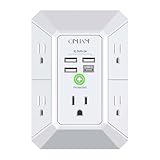
Spotting a grounded outlet is pretty easy once you know what you’re looking for. The most obvious sign is the presence of that third, round or U-shaped hole.
Standard outlets, the ones you see most often, have two vertical slots for the hot and neutral wires, and then that third hole below them for the ground pin. If an outlet has three holes, it’s designed to be grounded.
Now, the big caveat here is that just because the hole is there doesn’t automatically mean it’s actually connected to a ground wire. Sadly, sometimes older homes or shoddy electrical work might have outlets with the third hole that isn’t wired up. That’s why it’s always a good idea to get them checked out if you’re unsure.
How can you tell if it’s actually wired? The simplest way is to use a plug-in outlet tester. You can grab one of these for around $10-$15 at any hardware store. You just plug it in, and it has little lights that indicate the wiring status. If it shows a properly grounded outlet, you’re good to go. If it shows a fault or indicates no ground, then that outlet, despite having the third hole, isn’t providing any actual grounding protection. It’s like having a seatbelt with no buckle – looks the part, but useless in a crash.
Another clue, though less reliable, is the appliance plug itself. If an appliance has a three-prong plug, it was designed with grounding in mind for safety. If you consistently see appliances with three-prong plugs, it’s a good sign that the wiring in your home is generally up to snuff and designed for safety. However, I’ve seen plenty of places where older appliances with two-prong adapters were forced into three-prong outlets, or vice-versa. Don’t rely on that alone. The tester is your best friend here.
For the DIY-inclined, you can even pop off the cover plate (after turning off the power at the breaker, obviously!) and look at the back of the outlet. You should see a green or bare copper wire connected to the ground screw. That’s the ground wire. If you see that, and it’s securely attached, then your outlet is wired for ground. But honestly, if you’re not comfortable messing with electrical components, just get a cheap tester. It’s not worth the risk of getting shocked or messing up your wiring. (See Also: Are American Outlets Ac Or Dc )
Checking Your Outlet’s Grounding Status
- Purchase a plug-in outlet tester (widely available and inexpensive).
- Make sure the power is ON to the outlet you are testing.
- Plug the tester into the outlet.
- Observe the indicator lights on the tester. Consult the tester’s instructions to interpret the light pattern. A correct wiring configuration will be indicated by a specific set of lights.
I once bought a house that looked great on paper, but when I started using my power tools, I noticed some weird things. Some outlets felt a bit buzzy, and others just didn’t seem to offer the consistent power I expected. I grabbed a tester and went through the whole house. Turns out, about a third of my outlets had the third hole, but no actual ground wire connected. It was a shocker, no pun intended. I ended up having to have an electrician come in and fix it all. Cost a bit, but knowing my tools and appliances were safe was worth every penny.
The Old Two-Prong Problem: Why It’s a Risk
Ah, the humble two-prong outlet. These are the relics of a bygone electrical era, before safety standards really caught up with technology. They only have slots for the hot and neutral wires. What’s missing, of course, is the important ground connection. When we talk about are 3 prong outlets grounded, two-prong outlets are the answer to ‘no, they are not.’ They simply lack the physical connection point, and often, the associated wiring, for a ground wire.
The biggest issue with two-prong outlets is that they don’t provide protection against ground faults. As I mentioned, that third prong is a safety valve. Without it, if an appliance with a metal casing develops an internal fault and the hot wire touches the casing, the casing becomes energized. There’s no easy escape route for that electricity.
If you touch that appliance and are grounded yourself, you become the path to earth, and that can lead to a serious shock. For older appliances that only have two-prong plugs, you might be tempted to use a two-to-three prong adapter (often called a ‘cheater plug’). I’ve seen them used everywhere. While they can provide some protection if the outlet itself is properly grounded and the adapter has a ground tab connected to the outlet’s faceplate screw, relying on them is a shaky proposition.
Many times, those tabs aren’t connected, or the outlet they’re plugged into isn’t grounded. It’s a false sense of security.
My dad, bless his heart, swore by those cheater plugs for years. He had a bunch of old lamps and radios with two-prong cords. He’d always attach the little green wire from the adapter to a nearby nail or pipe, thinking he was clever. I kept telling him, ‘Dad, that’s not how it works!
You need a proper ground.’ He’d just wave me off.
Then one day, he was plugging in an old fan, and there was a spark, and the fan stopped working. He touched the metal housing, and he got a jolt that sent him flying backward. He was fine, just shaken up, but it was the wake-up call he needed.
We immediately had an electrician come in and replace all the two-prong outlets with grounded ones. It was a relatively small expense for a massive peace of mind.
It really hammered home for me that when it comes to electrical safety, there’s no cutting corners.
The common advice you’ll hear is to replace all two-prong outlets with grounded three-prong ones. I agree wholeheartedly. It’s not just about plugging in modern appliances; it’s about making sure a baseline level of safety in your home. If you have a house with two-prong outlets, you’re basically living with a known vulnerability. While modern appliances often come with three-prong plugs for a reason, older or ungrounded appliances can still be dangerous, and you can’t always tell when they’re about to fail. The safest bet is to upgrade your wiring. (See Also: Are All Power Outlets Ac )
How Grounding Actually Works: The Science (sort Of)
So, you’ve got your three-prong outlet. It has a hot slot, a neutral slot, and that ground hole. Inside the wall, the hot slot is connected to the ‘hot’ wire from your electrical panel. The neutral slot is connected to the ‘neutral’ wire. The ground hole? That’s connected to the ground wire, which, as I’ve said, eventually leads back to the earth. What makes this so effective is the principle of least resistance. Electricity, like water, always seeks the easiest path. The ground wire is intentionally designed to offer a very low-resistance path back to the earth.
Let’s say the internal wiring of your toaster shorts out, and the hot wire comes into contact with the metal chassis of the toaster. Without a ground, that metal chassis now has the same electrical potential as the hot wire – it’s live. If you touch it, your body, being a conductor (especially if you’re standing on a tile floor or something), provides a path of much lower resistance than the air or the insulation. Electricity will flow through you to the ground. It’s a bad day.
Now, with a properly grounded system, that same short circuit happens. The hot wire touches the metal chassis.
But this time, the chassis is connected via the ground wire to the earth. The resistance of the ground wire path is significantly lower than the resistance of your body. So, the electricity takes the path of least resistance – it flows through the ground wire, down to the earth.
This rapid flow of current is a ‘fault current.’ This large current surge is detected by your circuit breaker (or fuse, in older systems), which is designed to interrupt the flow of electricity when the current exceeds a safe limit. The breaker trips, cutting off power to that circuit.
The toaster is now dead, and you are safe. It’s a beautiful, simple safety mechanism when it’s working correctly.
There’s a bit of confusion out there, and some people say that the ground wire is just for lightning strikes. That’s not entirely accurate. While a properly grounded system does help dissipate the massive energy of a lightning strike safely into the earth, its primary, everyday function is to protect against internal appliance faults. It’s a constant, low-level safety feature, not just an occasional lightning arrester. The entire electrical code, like the National Electrical Code (NEC) in the United States, mandates grounding for safety reasons. It’s not optional; it’s a fundamental requirement for safe electrical installations. So, when you ask are 3 prong outlets grounded, understand that the answer implies a fundamental safety protocol is in place.
Grounding vs. Ungrounded Outlets Comparison
| Feature | Grounded Outlet (3-Prong) | Ungrounded Outlet (2-Prong) | Verdict |
|---|---|---|---|
| Safety Protection | High (provides path for fault current) | Low to None (no protection against ground faults) | Grounded is vastly superior. |
| Appliance Compatibility | Accepts both 2-prong and 3-prong plugs (with adapters for 2-prong if needed). | Accepts only 2-prong plugs. | Grounded offers more flexibility. |
| Cost of Upgrade | Moderate (requires rewiring or outlet replacement) | N/A (this is the basic, older standard) | The cost is an investment in safety. |
| Typical Use Cases | Modern homes, appliances requiring grounding (computers, kitchen appliances, power tools). | Older homes, appliances with 2-prong plugs (lamps, radios), often with adapters used. | Upgrade 2-prong to 3-prong is recommended. |
Common Mistakes and How to Avoid Them
One of the biggest mistakes people make is assuming that just because an outlet has three holes, it’s automatically grounded and safe. This is a dangerous misconception. As I’ve mentioned, older wiring or faulty installations can result in a three-hole outlet that isn’t actually connected to a ground wire. This gives a false sense of security. You plug in your expensive laptop, feeling safe, but if there’s a fault, you have no protection. Always, always test your outlets with a proper tester if you’re not sure. It’s cheap insurance.
Another common mistake is forcing a three-prong plug into a two-prong outlet using one of those two-to-three prong adapters, often called ‘cheater plugs,’ without making sure the adapter’s ground tab is properly connected to a grounded screw on the outlet. Many people just stick the plug in and ignore the tab. If the outlet isn’t grounded to begin with, the tab does nothing. If it is grounded, but the tab isn’t making solid contact with the metal faceplate screw, it’s also useless.
I’ve seen folks tie that little green wire to a nearby metal pipe or even a nail in the wall. That’s not a reliable ground. The proper method involves connecting that tab to the metal screw that holds the outlet’s faceplate to the electrical box, and that box needs to be properly grounded itself. It’s much simpler and safer to just replace the outlet.
People also tend to ignore warning signs. That slight tingle you get when touching an appliance? That buzzing sound from an outlet? Those aren’t just minor annoyances; they’re red flags. They indicate that something is wrong with the electrical system. Ignoring these can lead to a minor shock now and a potentially severe one later. I’ve heard stories of people experiencing shocks from touching refrigerators, washing machines, and even microwaves. These are all appliances that absolutely should be plugged into grounded outlets. The cost of a minor repair or outlet replacement pales in comparison to the potential for injury or property damage from an electrical fire. (See Also: Are Arc Trip Outlets Required In Hillsborough County )
Then there’s the DIY temptation gone wrong. While many electrical tasks can be tackled by a competent DIYer, messing with wiring, especially trying to ‘ground’ an ungrounded circuit without proper knowledge, can be incredibly dangerous.
Running new ground wires requires understanding your home’s existing electrical system, potentially adding a ground rod if needed, and making sure all connections are solid. If you’re not absolutely certain you know what you’re doing, hire a qualified electrician. They have the tools, the knowledge, and the experience to do it safely and correctly.
It’s much better to pay for professional work than to risk your safety or your home. The question are 3 prong outlets grounded is only half the story; the other half is making sure they stay properly grounded.
Frequently Asked Questions About Grounded Outlets
Do All Modern Homes Have Grounded Outlets?
Most modern homes built in the last few decades are wired with grounded outlets as standard. Building codes mandate this for safety. However, older homes, especially those built before the widespread adoption of three-wire systems, may still have ungrounded outlets. It’s always best to check if you’re in an older property.
Can I Replace a 2-Prong Outlet with a 3-Prong Outlet?
Yes, but only if there is a ground wire available in the electrical box. If there isn’t a ground wire, you cannot simply swap the outlet. You would need to have a ground wire run to the box by a qualified electrician, or install a GFCI (Ground Fault Circuit Interrupter) outlet, which can provide shock protection even without a ground wire, though it doesn’t offer the same protection for sensitive electronics.
Is It Safe to Use a 2-Prong to 3-Prong Adapter?
These adapters, often called ‘cheater plugs,’ can be safe IF the outlet is properly grounded and the adapter’s ground tab is securely connected to the outlet’s metal faceplate screw. However, many people use them improperly, or plug them into ungrounded outlets, negating any safety benefit. Replacing the outlet is always the safer and more reliable solution.
What Happens If I Plug a 3-Prong Plug Into a 2-Prong Outlet Without an Adapter?
You physically cannot. The third prong on the plug is designed to fit into the corresponding third hole on a grounded outlet. A two-prong outlet simply doesn’t have that hole, so the plug won’t go in. Attempting to force it can damage both the plug and the outlet.
How Can I Tell If My Electrical Outlets Are Grounded?
The easiest way is to use a plug-in outlet tester, which you can buy at hardware stores. It has indicator lights that show the wiring status. Visually, a grounded outlet has a third, round or U-shaped hole below the two vertical slots. However, the presence of the hole doesn’t guarantee it’s wired correctly; a tester is the definitive method.
Final Thoughts
So, the long and short of it is that yes, 3 prong outlets are generally designed to be grounded, and that grounding is a important safety feature that protects you from electrical shocks and fires. Just having the third hole doesn’t automatically mean it’s connected, so a quick check with an outlet tester is always a smart move if you’re in doubt. Don’t be like my dad and rely on sketchy adapters or hope for the best.
If you’ve got old two-prong outlets lurking around your place, seriously consider getting them upgraded. It’s not just about plugging in the latest gadgets; it’s about basic home safety. Think of it as an investment in peace of mind. Making sure are 3 prong outlets grounded throughout your home is a fundamental step towards a safer living environment.
What’s the oldest outlet in your house? And have you ever tested your outlets for grounding?