The low battery siren. It’s the soundtrack to travel hell. You’re in the airport, desperate to top up your phone before a red-eye, and you spot it: a glorious, blinking outlet. But a little voice in your head whispers, ‘Are airport outlets safe?’ I’ve been there, clutching my dying phone like a lifeline, paranoid about plugging in. Let’s cut the corporate fluff: most of the time, yeah, they’re fine. But ‘fine’ isn’t always ‘risk-free,’ and I’ve learned a thing or two about what to watch out for the hard way.
I remember one time in Denver, trying to charge my laptop. It was one of those weird, recessed outlets. Plugged in my trusty adapter, and… nothing. Then, a weird smell. Panic. I yanked it out, and a tiny puff of smoke escaped. Never again without a backup plan.
The Real Deal with Airport Power: Are Airport Outlets Safe?
Let’s get straight to it. When you’re staring down a 10-hour flight with 3% battery left, the urge to plug into that wall socket near Gate B12 is practically primal. So, are airport outlets safe? For the most part, yes. Airports are public spaces with a vested interest in not frying your expensive electronics or, worse, causing a fire. They’re typically wired to commercial standards, which means they should be grounded and protected by circuit breakers.
The actual electrical infrastructure within an airport is designed to be solid. Think about it: they’ve got to power flight information screens, security scanners, restaurants, shops, and all the lighting for a building that never sleeps. The outlets you see in seating areas are usually just extensions of this larger, professionally managed system. They’re not some jury-rigged setup from a dodgy landlord.
However, ‘professionally managed’ doesn’t mean ‘perfect.’ Maintenance can be spotty in high-traffic areas. You might encounter an outlet that’s loose, corroded, or has had its ground pin damaged by countless bags and carts being slammed against it. This is where the risk creeps in. A damaged outlet can lead to a faulty connection, which could potentially cause a surge or damage your device’s charging circuitry. It’s not common, but it’s not impossible.
I once saw a guy plug his charger into one of those older, two-prong outlets in a less-trafficked corner of an airport. His phone started making this weird buzzing noise, and the screen flickered. He immediately unplugged it, looking spooked. I have no idea if it was the outlet or his charger, but it’s the kind of thing that makes you pause and think. Was it a faulty outlet, or just a cheap charger? The ambiguity is the problem.
The biggest myth I’ve heard is that all airport outlets are ‘dirty’ or somehow infected with malware. That’s largely Hollywood sensationalism, or at least wildly exaggerated. While USB ports can theoretically be tampered with to transfer data (think ‘juice jacking’), a standard AC outlet is just a conduit for electricity. It can’t magically install viruses onto your laptop or phone without a connected device designed to do so. The real danger is electrical damage, not digital espionage, from a standard outlet.
What’s Really Going on Behind the Facade?
You see them everywhere: tucked into pillars, embedded in seats, sometimes even a row of them along a wall. These aren’t just random holes; they’re part of the airport’s electrical grid. The power comes from the airport’s main supply, which is managed by professional electricians and subject to safety regulations. Think of them like any other commercial building—they have to meet certain standards for safety and reliability. This includes proper grounding, which is your first line of defense against power surges and electrical faults.
The outlets themselves are usually standard NEMA 5-15 or 5-20 types in North America, or their international equivalents. These are designed to handle the kind of load your laptop or phone charger puts on them without breaking a sweat. The issue isn’t typically the type of outlet, but its condition and the circuitry it’s connected to. Imagine a highway: the road itself is built to handle traffic, but potholes and debris can still cause problems.
In my experience, the outlets that get the most abuse are the ones in high-traffic areas, especially near gates where people linger for hours. They take a beating. People wedge their chargers in at odd angles, trip over cords, and generally treat them like an afterthought. Over time, this wear and tear can loosen connections, damage the internal contacts, or even break the plastic housing. A physically damaged outlet is a potential hazard. It might not deliver consistent power, or it could pose a shock risk if the internal wiring becomes exposed, though this is rare. (See Also: Are American Outlets Ac Or Dc )
I had a particularly frustrating experience at an airport in Atlanta. I found an outlet that looked perfectly fine, but every time I plugged in my laptop charger, it would flicker on and off. It wasn’t my charger; I tested it on another outlet later. It was definitely the socket. I ended up having to find a seat closer to a coffee shop that had dedicated charging stations, which were, thankfully, more reliable. It’s that kind of inconsistency that makes you question the safety of any random outlet you stumble upon.
The wiring behind these outlets is usually solid, but it’s not infallible. Like any electrical system, it can fail. Faulty wiring, old breakers, or even power fluctuations from the grid can affect the power supplied. This is why using a surge protector is often recommended, not just for airport outlets, but for any outlet you’re unsure about. It adds an extra layer of protection for your precious electronics.
Spotting Dodgy Outlets: Your First Line of Defense
You’re standing there, phone at 1%, eyes scanning for salvation. Before you jam your charger in, take a quick sec. It sounds paranoid, but a little visual inspection can save you a lot of grief. First off, look at the outlet itself. Does it look physically damaged? Are there cracks in the plastic? Is it loose in the wall, wiggling when you try to plug something in? If it looks rough, walk away. There are usually more outlets than people realize, you just have to look a little harder.
Pay attention to the area around the outlet too. Is there any discoloration on the wall, like burn marks? Is there a weird smell, like burning plastic or ozone? These are red flags. I once saw an outlet in a quiet corner of an airport that was visibly blackened around the edges. No way was I plugging anything into that. It looked like it had overheated significantly in the past. My instinct said ‘nope,’ and I’m glad I listened.
The best-case scenario is finding an outlet that looks clean, secure, and like it’s seen regular use but not abuse. The ‘power stations’ or dedicated charging desks that many modern airports have installed are usually your safest bet. They’re designed for this purpose, often have built-in surge protection, and are maintained more regularly than random wall sockets. They tend to have a more professional finish, too, not just a standard duplex outlet stuck in a wall.
Here’s a quick rundown of what to look for:
| Warning Sign | What it Means | Verdict |
|---|---|---|
| Cracked or chipped plastic | Physical damage, potential for exposed wires or poor connection. | Avoid |
| Loose in the wall | Connection issues, can damage prongs on your charger or device. | Avoid |
| Discoloration or burn marks | Evidence of overheating, serious electrical fault potential. | BIG AVOID |
| Odd smells (burning plastic, ozone) | Overheating or electrical arcing. Very dangerous. | GET OUT |
| No ground pin (for 3-prong plugs) | Lack of safety feature, increases risk of surge damage. | Risky, avoid if possible |
| Outlet looks brand new/pristine | Could be fine, but sometimes indicates it’s been recently installed or replaced due to prior issues. Check for security. | Likely Okay, but be observant |
My rule of thumb: if it looks dodgy, it probably is. Don’t be the person who ends up with a fried phone because they were too impatient to find a better spot. It’s a gamble you don’t need to take when you’re already stressed about travel.
The ‘juice Jacking’ Myth and What to Actually Worry About
Let’s talk about ‘juice jacking.’ You’ve probably seen those dramatic warnings: plugging your phone into a public USB port can let hackers steal your data. While it’s technically possible for a malicious device to be inserted into a USB port to transfer data or install malware, the likelihood of encountering this in a major airport’s official charging station is extremely low. Airports, like businesses, are liable if their charging stations are compromised and lead to customer data breaches. It’s a reputational and legal minefield they’d rather avoid.
The real ‘juice jacking’ concern is usually more about those shady, third-party USB charging stations you sometimes see advertised in public places, or someone who has physically tampered with a port. At airports, the USB ports are often integrated into charging desks or power outlets. If you’re using one of these, and it looks official and well-maintained, the risk is minimal. I’ve used them plenty of times for a quick charge without issue. It’s the unofficial, ‘free charger’ stations that you should be wary of. (See Also: Are All Power Outlets Ac )
What I worry about more than data theft from a USB port is the electrical integrity of the AC outlet itself. Remember that incident I mentioned with the smoking adapter? That was pure electrical fault. The outlet was likely worn out, or the wiring behind it was faulty, causing an arc or a short circuit when I plugged in. This can damage your device’s power adapter, or even the device itself. It’s like plugging a faulty appliance into a wall socket; the socket might be the culprit.
Another thing people don’t think about is power quality. Even if an outlet is safe from a wiring perspective, the power supply to that area of the airport might be unstable. This can lead to voltage fluctuations, which aren’t great for sensitive electronics. While most modern chargers have built-in voltage regulators, consistent fluctuations can still stress components over time. It’s less of a ‘will it fry my device now?’ and more of a ‘will this shorten the lifespan of my device?’ question.
My contrarian opinion? Forget the data theft paranoia for airport AC outlets and USB ports. It’s largely overblown for official infrastructure. Focus on the physical safety and electrical integrity. A damaged AC outlet is a far more immediate and common threat to your gear than a hacker trying to steal your vacation photos via a USB cable. I’ve wasted more money replacing a fried phone charger (about $35 each time) than I ever would have lost to data theft from an airport charging station.
Practical Tips: How to Stay Powered Safely
Okay, so we’ve established that while generally safe, airport outlets aren’t entirely without risk. What’s a traveler to do when their battery icon is flashing red and they’re still hours from their destination? The best defense is a good offense. Invest in a reliable portable charger, or power bank. Seriously, this has been a lifesaver for me on countless trips. I carry one that can give my phone at least two full charges, and my tablet one. It cost me about $50 a few years back and has paid for itself a dozen times over in saved sanity.
When you do need to use an outlet, here’s my go-to process:
- Scan and Inspect: Before you even think about plugging in, do a quick visual check of the outlet and its surroundings. Look for damage, discoloration, or strange smells. If it looks sketch, move on.
- Test with a Non-Key Device (Optional): If you have something cheap and old you don’t care about, you could plug it in first to see if it works okay. I’ve never actually done this because it feels like overkill, but it’s an option.
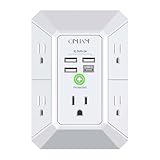
- Use a Surge Protector or Adapter with Built-in Protection: This is my preferred method. I have a small, travel-sized surge protector that also acts as a universal adapter. It adds a layer of protection against power spikes. It cost me around $25 and is worth every penny. It’s not a foolproof shield against a severely damaged outlet, but it’s better than nothing.
- Avoid Using Only USB Ports (If Concerned): While juice jacking is rare at official airport stations, if you’re hyper-concerned about data security, stick to using your AC adapter and plug it into the wall socket. If you must use a USB port, consider using a ‘USB data blocker’ – a small dongle that physically prevents data transfer, only allowing power through. They cost about $10.
- Sit Near a Dedicated Charging Station: Modern airports are increasingly installing these. They’re usually safer, more reliable, and designed for heavy use.
- Know When to Walk Away: If every outlet nearby looks questionable, or if you just have a bad feeling, don’t force it. Your device’s battery is probably not going to die that fast, and you can wait until you reach your hotel or a cafe outside the airport.
I once flew out of a smaller regional airport where the outlets were ancient and looked like they hadn’t been updated since the 70s. Every single one was loose and grimy. I ended up using my power bank for the entire 5-hour layover. It was a bit annoying, but way better than risking my laptop.
What About Those USB Wall Ports?
You’re walking through the airport, phone’s dying, and you spot it: a wall socket with USB ports built right in. Convenient, right? Sometimes. But here’s where you need to be a bit more discerning. These are often installed as a modern convenience, but their safety and reliability can vary wildly. They’re often wired into the same general circuits as the AC outlets, but the quality of the installation and the components can be a big factor.
The primary concern with these integrated USB ports, beyond the theoretical ‘juice jacking’ (which, again, is less likely in official airport infrastructure than often made out), is the quality of the internal charging circuitry. If the airport’s facilities team cut corners, or if these ports are poorly manufactured, they might not regulate voltage or amperage effectively. This can lead to slow charging, overheating of your device’s battery, or even damage to the charging port over time. It’s like using a cheap, unbranded wall adapter for your phone – you wouldn’t do it at home, so why trust it in a pinch?
I’ve had mixed experiences. Some work perfectly fine and charge my phone at a decent speed. Others seem to barely provide any power, and my phone’s battery percentage doesn’t budge, or worse, it actually decreases while plugged in. That’s a clear sign of a faulty or underpowered USB port. I’ve learned to treat them with a healthy dose of skepticism. If it’s not charging effectively, I unplug and find a standard AC outlet or, preferably, use my power bank. (See Also: Are Arc Trip Outlets Required In Hillsborough County )
The other issue is maintenance. These integrated ports can be harder to visually inspect for damage than a standard AC outlet. The USB port itself might look fine, but the internal connections could be loose or damaged. This can lead to intermittent charging or the same risk of electrical fault as a damaged AC outlet. If you notice any flickering or a strange smell when plugging into one of these, get away immediately.
For me, if I’m going to use a USB port, I prefer it to be part of a dedicated charging station that clearly looks well-maintained and professionally installed. Integrated wall USB ports are convenient, but if I have the choice, I’ll usually opt for a standard AC outlet and my own reliable charger and surge protector. It gives me more control over the quality of the power delivery and an extra layer of protection for my devices.
It’s about minimizing variables when you’re relying on a stranger’s electrical setup. The cost of a good power bank ($50-$80) and a travel surge protector ($20-$30) is peanuts compared to replacing a phone or laptop.
The total investment is under $100, but it buys you peace of mind for years.
Faq: Airport Outlet Safety
Are USB Ports in Airports Safe for Charging Phones?
While ‘juice jacking’ (data theft via USB) is a theoretical risk, it’s generally low for official airport charging stations. The primary concern is often the quality of the charging circuitry. Poorly made ports might not regulate power well, leading to slow charging or potential damage over time. It’s usually safer to use your own AC adapter and a surge protector if you’re concerned.
Can Plugging Into an Airport Outlet Damage My Device?
Yes, it’s possible, though not common. Damaged or faulty outlets can lead to power surges, inconsistent voltage, or short circuits, which could harm your device’s charging adapter or the device itself. This is why visual inspection and using surge protection are recommended.
Should I Use a Surge Protector at the Airport?
It’s a good idea, especially if you’re unsure about the outlet’s condition. A travel-sized surge protector or a power strip with surge protection adds an extra layer of safety against electrical spikes and can protect your electronics from potential damage.
What If an Airport Outlet Sparks or Smells Funny?
Immediately unplug your device and move away from the outlet. Sparks or strange smells indicate a serious electrical fault, such as overheating or arcing. Do not use that outlet or any nearby ones, and report it to airport staff if possible.
Final Verdict
So, are airport outlets safe? They’re generally designed to be, and for most people, plugging in will be perfectly fine. But ‘generally’ isn’t always ‘always.’ I’ve learned that a little caution goes a long way. Trust your gut if an outlet looks or smells off.
My advice is simple: don’t rely solely on those public outlets. Invest in a good power bank. It’s the single best piece of travel tech I own for battery anxiety. When you do plug in, use a surge protector. It’s a small price to pay for peace of mind and protection against a potentially faulty outlet.
Ultimately, the question of are airport outlets safe isn’t a simple yes or no. It’s about understanding the risks, taking reasonable precautions, and knowing when to trust your instinct over desperation. Travel safe, and keep that battery topped up responsibly.