I bought my first house five years ago, and like most people, I figured a lock was a lock. Grabbed a shiny new deadbolt from the hardware store, slapped it on the front door, and felt like a seasoned homeowner. Little did I know I was basically putting a polite ‘please ignore me’ sign on my front door. The truth is, when you start digging, you realize that no, are all door locks the same? Not by a long shot. It’s a rabbit hole of security, convenience, and sometimes, just plain bad engineering.
I’ve spent way too much time and money since then trying to figure out what actually keeps things out, and what’s just for show. Most of the time, what looks good and feels solid isn’t necessarily the best defense.
What’s Actually Inside That Metal Box?
Look, most people don’t think twice about what’s actually happening inside a door lock. You turn the key, the bolt slides, you’re good. But the devil, as they say, is in the details, and with door locks, the details are all about the mechanism. The most common type you’ll see on your average house door is the pin tumbler lock. It’s basically a series of tiny pins, cut to specific lengths, that have to align perfectly with the shear line of the cylinder for the lock to turn. The key has cuts that match these pins. If the pins aren’t all lifted to the exact right height by the key, the cylinder is blocked. Simple enough, right?
This design is pretty standard, but the quality of the materials and the precision of the manufacturing make a massive difference. You can have two locks that look identical, but one might have cheap, soft metal pins that can be easily shaved or damaged, while the other uses hardened steel that laughs in the face of a drill. The number of pins also matters – more pins, more complex key cuts, and generally more resistance to picking. Most common locks have 5 or 6 pins, but you can find commercial-grade ones with more.
Then there are wafer locks, often found on interior doors or older cabinets. These use flat wafers instead of pins. They’re generally less secure, easier to pick, and frankly, feel a bit flimsy.
I once had a set of wafer locks on a shed that a determined squirrel could have probably opened. It’s the kind of thing that makes you question your life choices when you realize how little security it actually offers. Beyond that, you get into more specialized stuff like dimple locks (a variation on pin tumblers with a different key profile) or tubular locks, often found on vending machines or bike locks, which have a circular key and a different internal mechanism. None of these are inherently ‘better’ than a well-made pin tumbler, but they represent different design philosophies, often for different applications.
The key takeaway is that ‘door lock’ is a broad category, and the internal workings are far from uniform.
The Big Three: Deadbolts, Knob Locks, and Smart Locks
When we talk about types of door locks that people actually interact with daily, a few main players come to mind, and here’s where the differences become glaringly obvious. First up, the knob lock. This is that roundish thing on your door, often with a simple push-button or turn-lock on the inside. They’re convenient, sure, but honestly, they’re mostly just there to keep the door shut.
A good kick or a strong shoulder can often defeat them. I learned this the hard way when a poorly secured storage unit lock, a cheap knob lock, gave way to a gust of wind and a slightly ajar door. Not exactly a burglar-stopping powerhouse.
They’re fine for interior doors or maybe a storm door, but for your main entry? Nope.
Then you have the deadbolt. Ah, the deadbolt. This is your friend.
It’s a separate mechanism that extends a solid metal bolt directly into the strike plate on the door frame. No springs, no trickery – just pure, solid extension.
The ‘dead’ part means it can’t be accidentally locked or opened by a spring mechanism. The most common is the single-cylinder deadbolt, which uses a key on the outside and a thumb turn on the inside. The double-cylinder deadbolt requires a key on both sides. (See Also: Are There Different Size Holes For Installing Door Locks )
While offering better security, these can be a fire hazard if you can’t get out quickly. My personal preference leans towards a high-quality single-cylinder deadbolt with a long throw bolt (that’s the part that sticks out) and a reinforced strike plate. Don’t cheap out here; it’s the most important line of defense.
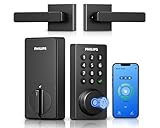
Now for the shiny new kid on the block: the smart lock. These are the ones you can control with your phone, voice assistant, or a keypad. They offer convenience like keyless entry and remote access, which is pretty cool when you’re juggling groceries or letting a friend in while you’re out. I’ve tried a few, and the setup can range from fiddly to surprisingly straightforward.
The biggest question people have is about security. Are they as safe as a good old deadbolt? It’s a mixed bag. Some are rock solid and use encryption that’s harder to crack than a typical physical lock.
Others… well, let’s just say they’re easier to bypass with a well-placed EMP device (kidding, mostly) or, more realistically, a sophisticated hacker who can exploit software vulnerabilities.
Battery life is also a thing. You don’t want to be locked out because your smart lock decided to take an unscheduled nap. The convenience factor is high, but you need to research specific models and understand the potential digital vulnerabilities, not just the physical ones.
Door Lock Comparison Table
| Lock Type | Primary Use Case | Security Level (Opinion) | Convenience (Opinion) | Notes |
|---|---|---|---|---|
| Knob Lock | Interior doors, closet doors | Low | High | Easy to defeat physically. |
| Single-Cylinder Deadbolt | Main entry doors | High | Medium | Standard, reliable security. Requires physical key or thumb turn. |
| Double-Cylinder Deadbolt | Main entry doors (where higher external security is needed) | Very High | Low | Requires key on both sides; potential fire hazard. |
| Smart Lock (High-End) | Main entry doors | High to Very High (dependent on model/encryption) | Very High | Keyless entry, remote access. Requires power and potential Wi-Fi/Bluetooth security checks. |
| Smart Lock (Low-End) | Main entry doors | Medium to High (dependent on model) | High | Convenient but may have weaker physical or digital security. |
Common Mistakes That Will Make You a Target
This is where I get a little angry, because I’ve seen so many people make the same dumb mistakes. Number one: relying on the lock that came with the door. Builder-grade locks are usually the cheapest thing the contractor could find. They look okay, but they’re often made of soft metal and have simple mechanisms. It’s like putting a fancy alarm sticker on a rusty tin can. I made this mistake with a back door at a rental property. It had a perfectly functional-looking knob lock, but a quick jiggle and it popped open. That’s not security, that’s an invitation. I swapped it out for a basic but solid deadbolt for about $40, and felt a million times better.
Mistake number two is ignoring the strike plate. This is the metal piece screwed into the door frame that the bolt goes into.
If it’s flimsy, short, or only held in by a couple of tiny screws, your fancy deadbolt is useless. A solid kick can shatter the wood around the strike plate, allowing the door to open right up, even if the lock itself is perfectly intact. You need long screws, ideally 3 inches or more, that go deep into the framing stud.
Don’t just use what comes in the box; upgrade that strike plate. It’s a cheap fix for a massive security hole. I remember installing a new deadbolt and thinking I was done, only to realize later that the old strike plate was still in place. A quick look showed it was barely holding on.
Replacing it with a heavy-duty one took less than 15 minutes and made the whole door feel infinitely more secure.
Another common blunder is using the same key for multiple locks around your house, especially if they’re different brands or types. While convenient, if that one key gets lost or copied, every lock it fits is compromised. It’s better to have different keys for your front door, back door, and garage. Also, people often overlook the quality of the cylinder itself. A cheap cylinder can be easily picked or “bumped” (using a special key to jiggle the pins into place). Even with good pins, a weak cylinder can be forced. When buying, look for terms like “pick resistant” or “drill resistant” if your budget allows. It’s not just about the bolt; it’s about the entire mechanism.
What to Actually Look for (and What to Ignore)
So, if you’re not just grabbing the first shiny thing, what should you be looking for? First, forget about aesthetics as your primary driver. (See Also: Are Sesame Seeds Kosher For Passoveris Pollock Kosher )
That brushed nickel finish might look nice, but it tells you nothing about how secure the lock is. Focus on the ANSI/BHMA grade.
This is a standard developed by the American National Standards Institute and the Builders Hardware Manufacturers Association. They grade locks on a scale of 1, 2, and 3, with Grade 1 being the highest security and durability. Grade 1 locks are typically used for commercial applications, but they’re the gold standard for home security.
Grade 2 is perfectly acceptable for most residential front doors, offering a good balance of security and cost. Grade 3 locks are generally for interior doors or low-security external doors.
Pay attention to the bolt throw. This is how far the bolt extends from the edge of the door. A longer throw (typically 1 inch or more for deadbolts) means the bolt engages deeper into the frame, making it harder to force the door open. Also, consider the material.
Hardened steel is your friend. A hardened steel bolt and cylinder housing will resist drilling and prying much better than softer metals.
When looking at smart locks, dive deep into reviews about their connectivity, app security, and battery life. Don’t just trust the marketing. Look for reports on how easily they can be bypassed physically or digitally.
Some smart locks are excellent, but others are basically a digital convenience with a flimsy physical lock underneath.
I learned this the hard way with a smart lock that had a sleek design but a weak internal mechanism. It looked great, felt okay to use, but a determined jiggle could actually flex the bolt enough to disengage it. Total garbage. I also found that some companies offer “Secured by Design” or similar police-preferred specifications.
While not a formal ANSI/BHMA grade, these are good indicators that the lock has been tested and approved by law enforcement or security experts. It’s an extra layer of assurance that the lock has been vetted beyond just basic functionality. When you’re comparing, look for these certifications and ratings. They cut through the marketing fluff and tell you what you really need to know about a lock’s performance.
Real-World Use: When Convenience Meets Security
Let’s talk about how these locks actually perform when life happens. I’ve got a few different setups at my place now, and the differences are stark. My main front door has a beefy Grade 1 deadbolt with a long throw and a hardened steel cylinder, plus a good quality knob lock for added measure (though I don’t rely on it for security). This thing feels like it’s part of the house. Turning the key is smooth, the bolt slides home with a satisfying ‘thunk,’ and I don’t worry about it. The only downside? It’s just a lock. I need my keys. Every. Single. Time.
Then I have a smart lock on my garage entry door. This one is a high-end model that’s been reliable.
I love being able to open it with my fingerprint or my phone when my hands are full. It integrates with my home security system, so I get notifications if it’s used. But here’s the rub: it needs batteries. (See Also: Are Sliding Door Locks Common )
About twice a year, it gives me a warning, and I have to remember to swap them out before it dies. I also had one instance where the app glitched, and I couldn’t open it with my phone for about 10 minutes. That was fun.
It made me realize that while smart locks offer amazing convenience, they introduce new points of failure: batteries, software, and internet connectivity. You’re trading one set of potential problems for another.
My contrarian take? Everyone raves about smart locks for convenience, and they are convenient, but I think people underestimate the sheer reliability and peace of mind a truly well-made traditional deadbolt offers.
You don’t need Wi-Fi for it to work. You don’t need to worry about a firmware update bricking it. For primary entry points where security is most important, I still trust a top-tier mechanical lock over any smart lock. That said, for secondary doors or specific scenarios where keyless entry is a life-saver (like a home gym door you might enter with sweaty hands), a good smart lock can be fantastic.
It’s not an either/or; it’s about choosing the right tool for the right door. The key is understanding the trade-offs and not blindly following trends.
The Faq – Your Burning Questions Answered
Can I Upgrade Just the Lock Cylinder?
Yes, in most cases, you can replace just the lock cylinder (the part the key goes into) without replacing the entire lock mechanism. This is a common and cost-effective way to improve the security of an existing lock, especially if the housing is still in good condition. Make sure to get a cylinder that’s compatible with your specific lock brand and model, and look for features like pick and drill resistance.
Are Expensive Door Locks Really More Secure?
Often, yes. Higher prices usually reflect better materials (hardened steel, superior alloys), more precise manufacturing for smoother operation and tighter tolerances, and advanced security features designed to resist picking, bumping, and drilling. However, it’s not always a direct correlation; a well-chosen Grade 2 lock can be more secure than a poorly designed Grade 1 lock. It’s about the specific features and build quality, not just the price tag.
Do Smart Locks Drain Batteries Quickly?
Battery life varies significantly by model, usage, and battery type. High-traffic doors or those with frequent Wi-Fi transmissions will drain batteries faster. Most reputable smart locks will provide ample warning before the batteries die, and many offer options for external power sources or backup keys. It’s wise to check battery life reviews for specific models you’re considering.
How Often Should I Replace My Door Locks?
There’s no strict schedule, but you should consider replacing your door locks if they start to feel stiff, sticky, or difficult to operate, if you’ve lost keys, if you’ve moved into a new home, or if your current locks are very old and have outdated security features. Even well-maintained locks can wear out over time, and replacing them every 7-10 years is a reasonable preventative measure for peace of mind.
What Does ‘bump Key’ Mean?
A bump key is a specially cut key that can be used to quickly open many pin tumbler locks. When inserted and struck, the impact momentarily aligns the pins, allowing the cylinder to be turned. While not as quiet or discreet as professional picking, it’s a relatively simple technique that can bypass many standard locks. Locks advertised as “bump resistant” have internal mechanisms designed to prevent this.
Final Thoughts
So, are all door locks the same? Absolutely not. From the cheap knob locks that are more decoration than security to the solid deadbolts and the tech-laden smart locks, there’s a massive spectrum of performance, security, and convenience. My biggest lesson has been that you can’t just assume a lock will do its job. You have to actively choose the right one for the right door, paying attention to the ANSI/BHMA grades, the bolt throw, the materials, and the strike plate.
Don’t be like me five years ago, thinking ‘a lock is a lock.’ It’s a false economy that can cost you dearly. Invest in good quality hardware, especially for your main entry points. And if you’re going smart, do your homework on the brand and model.
My advice? Go to a reputable locksmith or hardware store, explain your needs, and feel the weight and action of the locks yourself. It’s the best way to get a sense of what’s actually built to last and keep you safe.