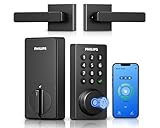
I remember the first time I saw one of those fancy digital door locks on a friend’s place. No keys? Just tap in a code? Seemed like pure sci-fi. My old deadbolt, the one I’d wrestled with on dark, rainy nights, suddenly felt… antique. But then the nagging thought kicked in: are digital door locks safe? It’s a question I hear a lot, and frankly, it’s one I wrestled with myself before finally making the switch. We’re talking about the primary defense for your home, after all. It’s not a decision to take lightly, and anyone who tells you it’s a simple ‘yes’ or ‘no’ is probably trying to sell you something.
Keys vs. Codes: What’s Really Going on?
Let’s get this straight from the get-go: your old-school key lock isn’t some impenetrable fortress. I’ve seen flimsy house keys bend like butter, and I’ve watched enough YouTube videos to know a determined person with a bit of know-how and the right tools can pick most traditional locks pretty darn fast. It’s a fact that makes me a little uneasy, but it’s the truth. Digital door locks, on the other hand, bring a different set of potential vulnerabilities and, dare I say, some pretty significant advantages.
The core idea is replacing a physical key with a digital credential – a PIN code, a fingerprint, a smartphone app, or even a remote fob. This shift is where the ‘safety’ debate really kicks off.
Think about it: with a physical key, if you lose it, you’re either retracing your steps in a panic or shelling out for a locksmith to rekey the entire thing. With a digital lock, if you lose your phone (or forget your code, which I’ve done more times than I care to admit), you can often disable that credential remotely or simply change the code with a few taps on another device. That’s a level of control traditional locks just can’t offer.
My own first foray into this world involved a smart lock I bought on a whim. I was constantly misplacing my keys, and the thought of never fumbling in my bag again was a huge draw.
The first week was a learning curve – I almost locked myself out twice trying to remember the sequence. But once I got the hang of it, the convenience was undeniable.
The real question isn’t whether they can be hacked, but how likely that is and what you can do to prevent it.
The ‘hacking’ Myth and How They Actually Work
The biggest fear people have is that their digital lock is just a fancy computer waiting to be hacked. And sure, theoretically, anything connected to a network can be hacked. But the reality of digital door locks and their security is a lot more nuanced than a Hollywood hacker movie.
Most modern digital locks use sophisticated encryption for their wireless communications, whether it’s Bluetooth or Wi-Fi. This isn’t the same as your home Wi-Fi password, which a script kiddie might brute-force. We’re talking about industry-standard encryption protocols that would require immense computing power and time to crack. My first smart lock, for instance, used Bluetooth.
The idea of someone standing outside my door trying to ‘hack’ my Bluetooth signal seemed far-fetched. It’s more likely they’d try a crowbar. (See Also: Are Sesame Seeds Kosher For Passoveris Pollock Kosher )
The actual ways these locks can be compromised are often far less technical and much more human-driven. Phishing scams, weak passwords on the associated smartphone apps, or even just someone shoulder-surfing your code are bigger threats than some shadowy cybercriminal targeting your specific lock. I learned this the hard way.
I’d set up my very first smart lock with a super-simple PIN – something like 1234. It was easy to remember, sure, but also incredibly easy to guess.
A neighbor’s kid figured it out within an hour of me telling them the code for a quick dog-sitting emergency. It wasn’t a hack; it was just plain dumb on my part.
The manufacturer’s documentation, if you bother to read it, often emphasizes strong, unique PINs and secure app practices. They’re not hiding anything; they’re just trying to stop people from doing what I did.
What Actually Makes a Digital Lock Secure?
So, if it’s not the ‘hacking,’ what gives? Several factors contribute to a digital lock’s real-world security. Firstly, the physical build. A digital lock that’s flimsy and easily pried off the door isn’t secure, no matter how fancy its electronics are. Look for solid construction, tamper-resistant screws, and a solid deadbolt mechanism. Many higher-end models have reinforced strike plates and thicker bolts that make brute-force attacks much harder. Secondly, the software and firmware. Reputable manufacturers regularly update their firmware to patch security vulnerabilities. This is why buying from established brands is generally a good idea. You want a company that’s invested in maintaining the security of its products, not one that will disappear after a year.
Then there’s the encryption. As I mentioned, Bluetooth and Wi-Fi connections should use strong, up-to-date encryption.
For locks that use Wi-Fi, make sure it’s WPA2 or WPA3 encrypted. If a lock relies on older, weaker encryption, it’s a red flag. Battery life is another, albeit indirect, security factor. A lock that constantly dies and requires you to switch to a battery backup or use a physical key in a pinch introduces moments of vulnerability.
Some locks have battery indicators and backup power options (like a 9V battery terminal on the outside), which are smart features. I’ve seen folks get locked out because their smart lock died mid-winter, and they couldn’t get the old-school battery compartment open in the freezing cold. For me, a lock that has a clear, easily accessible battery backup and alerts me well in advance is a must.
The goal is always to minimize the opportunities for physical tampering or manual override due to electronic failure. (See Also: Are Sliding Door Locks Common )
| Feature | Why It Matters | My Opinion |
|---|---|---|
| Physical Build Quality | Resists tampering and forced entry. | Key. A fancy code means nothing if the lock itself is weak. |
| Encryption (Bluetooth/Wi-Fi) | Protects data transmission from interception. | Very Important. Look for WPA2/WPA3 for Wi-Fi. |
| Firmware Updates | Patches security holes and improves performance. | Important. Shows manufacturer commitment to security. |
| Battery Backup & Alerts | Prevents being locked out due to power failure. | Highly Recommended. Smart and practical. |
| Tamper Alerts | Notifies you if someone is messing with the lock. | Nice-to-have. Offers peace of mind. |
Common Mistakes People Make (and How to Avoid Them)
The biggest mistake I see people make is treating a digital lock like a set-it-and-forget-it gadget. You absolutely have to engage with its security settings. First off, that default PIN? Toss it. Make it long, complex, and unique. Think more than four digits, mix numbers, and don’t use birthdates or obvious sequences. I have a different code for my front door than my garage, and neither is related to my phone number. Secondly, secure your smartphone. Your phone is often the master key to your lock. Use a strong passcode or biometric security (fingerprint, face ID) on your phone itself. If someone gets access to your opened phone, they’ve got access to your lock.
Another common pitfall is relying solely on the app for control. Many digital locks offer guest access with temporary codes or time-limited entry. This is fantastic for dog walkers, cleaners, or family members who need occasional access. However, if you don’t properly manage these temporary codes, they can become vulnerabilities.
I once had a cleaner leave, and I forgot to disable their code for about three weeks. It wasn’t a big deal in that instance, but the potential for someone to have lingering access is a serious oversight. Regularly review who has access and revoke it when it’s no longer needed. Also, don’t install a digital lock and then ignore firmware update notifications.
These updates are released for a reason, often to fix security flaws that have been discovered. Ignoring them is like leaving your front door wide open because you can’t be bothered to close it.
Real-World Use: My Experience and What to Watch For
After about three years of using various digital door locks, I can honestly say they’ve made my life easier. The convenience of not needing a physical key is huge, especially when my hands are full of groceries or when I’m heading out for a run and don’t want to carry a bulky set of keys. My kids can get into the house without me having to wait at the door.
The ability to grant temporary access to a neighbor when I’m away is invaluable. However, there have been hiccups. One lock I tested had a Bluetooth connection that was spotty, meaning I’d often have to stand there for 10-15 seconds trying to get the app to connect and open the door. That’s not just annoying; it’s a security concern if you’re in a hurry or feeling unsafe.
I’ve also experienced a couple of instances where the app just crashed, leaving me no choice but to use the physical key override, which felt like a step backward.
The key takeaway from my experience is that not all digital locks are created equal. Some are incredibly reliable and intuitive, while others feel like they’re still in beta. When you’re looking to buy, do your homework.
Read reviews that specifically mention security features, reliability, and ease of use. Pay attention to battery life claims and how the lock handles power outages. I now look for locks that offer multiple entry methods beyond just a PIN – fingerprint scanners are surprisingly quick and accurate, and a physical key backup that’s easily accessible is a must. My current favorite has a combination of a keypad, a fingerprint scanner, and a hidden keyhole, all managed via a solid app. (See Also: Are The Rams Locked Into The 6th Seed )
It’s given me the most confidence in its overall security and usability. The price point can also be an indicator; you often get what you pay for when it comes to the quality of the hardware and software.
People Also Ask: Addressing Your Concerns
Can a Digital Lock Be Hacked Remotely?
While it’s theoretically possible for any connected device to be hacked, modern digital locks use strong encryption that makes remote hacking extremely difficult. The primary risks are usually associated with weak user passwords, compromised smartphone apps, or physical access, rather than sophisticated remote cyberattacks.
Are Keypads More Secure Than Fingerprint Locks?
Both have their pros and cons. Keypads can be vulnerable to shoulder surfing or brute-force guessing if a weak code is used. Fingerprint locks can be affected by dirty or wet fingers, and there’s a slight theoretical risk of someone obtaining a usable print. Many users find fingerprint scanners faster and more convenient, but a strong, unique PIN on a keypad is still very secure when managed properly.
What Happens If the Power Goes Out?
Most digital door locks are battery-powered, so a power outage won’t affect their operation. However, if the batteries die unexpectedly, many models have a backup power option, such as a terminal on the outside where you can touch a 9V battery to temporarily power the lock, or a hidden physical keyhole for manual entry.
Are Digital Door Locks Worth the Cost?
For many people, the convenience, enhanced security features (like activity logs and temporary access codes), and peace of mind are well worth the investment. However, if you’re on a very tight budget or prefer the simplicity of traditional locks, the added cost might not be justified for your specific needs.
Final Thoughts
So, are digital door locks safe? My honest answer, after years of using them, is yes, they can be, and often they’re safer than the old mechanical locks we’ve relied on for decades. The key isn’t the technology itself, but how you use it. Treat your digital lock with the respect it deserves: use strong codes, keep your apps secure, and pay attention to updates and battery life. Don’t be that person who buys a fancy smart lock and then uses ‘1234’ as their PIN.
The biggest threats aren’t usually advanced cyber warfare; they’re simple human errors and physical vulnerabilities. By being mindful of how you set up and manage your digital lock, you can significantly enhance your home security. It’s about making informed choices and staying vigilant, just like you would with any security system.
If you’re considering making the switch, I’d encourage you to research specific models, read detailed reviews, and understand the features that matter most to you. Don’t just buy the cheapest one you find; invest in a reputable brand that prioritizes security and offers good support. Your peace of mind is worth it.