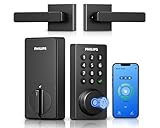
I remember the first time I bought one of those cheap fingerprint door locks. It was on sale, looked pretty sleek, and promised keyless convenience. I pictured myself breezing through the door, finger on the scanner, no more fumbling for keys in the dark. Sound familiar? Well, let me tell you, my experience was… less than smooth. It got me thinking: are cheap fingerprint door locks secure or easy to bypass? The answer, like most things involving your home’s security, isn’t a simple yes or no. It’s a spectrum, and ‘cheap’ often lands you on the wrong end of that spectrum.
The marketing hype around smart locks can be overwhelming. They promise advanced security, smooth integration, and ultimate convenience. But when you’re looking at the sub-$100 models, you’ve got to ask yourself if you’re really getting what you pay for, especially when it comes to protecting your home.
The Tech Under the Hood: What Makes a Fingerprint Lock Work (and Fail)
Alright, let’s get down to brass tacks. How do these things actually work, and where do the cheap ones cut corners? At its core, a fingerprint door lock uses a sensor to scan your unique fingerprint. This scan is then converted into a digital template and stored. When you place your finger on the sensor again, it scans, converts, and compares. If there’s a match, the lock mechanism (usually a motor that retracts a deadbolt or latch) engages, and voilà, you’re in. Simple enough, right?
The devil, as always, is in the details, especially with budget models. Cheaper sensors are often less sensitive and less precise. This means more failed scans. I can’t tell you how many times I’ve had to retry my fingerprint on a questionable lock, often with one hand full of groceries, feeling like I’m in a bad spy movie.
It’s not just annoying; it can be a sign that the underlying technology isn’t top-tier. Higher-end locks use capacitive sensors, which are much better at reading the ridges and valleys of your skin, even with slightly damp or dry fingers.
Budget locks might use optical sensors, which are basically tiny cameras. These can be tricked more easily and are more susceptible to wear and tear.
Then there’s the software and encryption. The template of your fingerprint is stored somewhere. On a cheap lock, this storage might be less secure. While it’s unlikely someone can reconstruct your actual fingerprint from the stored data, the encryption protecting it might be weak, or the process of comparing the scan to the template could be flawed, opening up other vulnerabilities. Some of these locks also rely on Bluetooth or Wi-Fi for app connectivity, and the security protocols used in cheaper versions might be outdated or easily exploitable. I once saw a demo (don’t ask me where) where someone could spoof a signal to open a very basic smart lock. It was eye-opening, to say the least.
The physical build quality is another huge factor. Cheap locks are often made with flimsier plastics and less solid internal mechanisms. This doesn’t just mean they might break down faster; it can also make them more susceptible to physical tampering. Think about it: if the casing is weak, someone could potentially pry it open or even damage the internal electronics with relative ease. The battery life can also be an indicator. Constantly needing to replace or recharge batteries might mean the power management isn’t efficient, or the components are drawing more power than they should, which can sometimes be a sign of less refined circuitry.
Common Bypassing Methods and Vulnerabilities
So, how do people actually get past these things? It’s not always about hacking into a complex digital system. With cheaper locks, the vulnerabilities are often more straightforward, and sadly, sometimes easier to exploit. One of the most common ways to bypass a fingerprint lock, especially a lower-end one, is through brute-force attacks, either digital or physical. Digitally, this involves trying to guess PIN codes (if the lock has a keypad) or exploiting weak Bluetooth/Wi-Fi connections. Some older or cheaper models might not have effective lockout mechanisms after a certain number of failed attempts, meaning someone could theoretically try every PIN combination.
Physically, it’s even less sophisticated. If the lock has a physical key override, a skilled locksmith or even a determined thief with the right tools could potentially pick the lock. However, the real concern with cheap locks is often their construction.
Many have casings that are relatively easy to pry off. Once the cover is off, you might gain access to the internal wiring or the manual override mechanism. I heard from a friend who lives in an area with a lot of petty crime that someone managed to jam a screwdriver into the seam of their cheap smart lock and break the internal spindle.
Took them maybe 30 seconds. No fingerprint, no code, just brute force on a weak point.
Another method, though less common for opportunistic burglars and more for targeted attacks, is exploiting firmware vulnerabilities. If the lock’s software hasn’t been updated or uses outdated security protocols, it can be a target for hackers who know what they’re looking for. This is why manufacturers regularly release software updates for smart devices. However, many budget lock manufacturers don’t have the resources or the commitment to provide consistent, secure firmware updates. This leaves the lock perpetually vulnerable to exploits that have long since been patched on more reputable models. It’s like leaving your digital front door wide open, just waiting for someone to stumble upon the right tool. (See Also: Are Sesame Seeds Kosher For Passoveris Pollock Kosher )
Finally, consider the battery. If a lock dies and you haven’t set up a backup (like a physical key or a hidden keypad code), you’re locked out. While not a bypass in the security sense, it’s a failure of the system that leaves you vulnerable. On the flip side, some very basic locks might have a hidden port to apply external power if the battery dies. While this sounds like a feature, it can also be an entry point for someone to power up the lock and try to exploit it with a battery pack and some basic tools.
What to Look for (and What to Avoid) in Budget Fingerprint Locks
So, if you’re still tempted by the allure of keyless entry without breaking the bank, what should you be looking for? First and foremost, check the sensor type. Capacitive sensors are generally more reliable and secure than optical ones. While you might not always find this information clearly advertised on ultra-cheap models, it’s worth digging into reviews or product specs if possible. Look for locks that boast multiple ways to open: fingerprint, a physical key backup (a decent quality one, not a flimsy wafer lock), and ideally, a keypad with security features like anti-peep technology or lockout after failed attempts.
Connectivity is another area where budget locks often falter. If the lock offers app control via Bluetooth or Wi-Fi, research the security protocols it uses. Does it support modern encryption standards like AES-128 or AES-256? Is the app regularly updated? Many cheap locks use proprietary, less secure communication protocols, or rely on cloud services with questionable security. I’d lean towards locks that are more self-contained if budget is the absolute primary concern, accepting the trade-off of fewer smart features for potentially better local security. The less it talks to the internet, the less of an attack surface it has, generally speaking.
Physical build quality is also most important. Even on a budget, try to find locks with metal components, not just plastic. Does it feel solid in your hand? Look for reviews that mention durability and how well it holds up over time. A lock made of zinc alloy or stainless steel will be far more resistant to tampering than one made of ABS plastic. The deadbolt itself should be sturdy and have a good throw – at least an inch. A cheap, flimsy deadbolt is basically useless, no matter how fancy the fingerprint scanner is.
Here’s a little table I put together to give you a quick verdict on what to watch out for. It’s not exhaustive, but it’s based on what I’ve seen and experienced.
| Feature/Aspect | Good Signs (Even on Budget) | Red Flags (Common on Cheap Locks) | My Verdict |
|---|---|---|---|
| Fingerprint Sensor | Capacitive, good reviews on accuracy | Optical, frequent complaints about unreliability | Capacitive is a must for decent performance. |
| Build Material | Metal (Zinc Alloy, Stainless Steel), sturdy feel | All plastic, lightweight, easily flexes | Metal build is a must for durability. |
| Backup Access | Quality physical key, reliable keypad | Flimsy key, no keypad or easily guessable codes | Always need a reliable physical key backup. |
| Connectivity | Modern encryption (AES), minimal app permissions | Old protocols, excessive data requests, no app updates | Less connectivity is often more secure on budget models. |
| Brand Reputation | Any mention of customer support, firmware updates | No discernible brand, no support contact, no updates | Stick with brands that at least claim support. |
Ultimately, when you’re buying cheap, you’re making compromises. The trick is to understand what those compromises are and if they align with your acceptable risk level. For my money, if it feels like a toy and the reviews are full of ‘it stopped working after a month,’ I walk away, even if the price is tempting.
The Real-World Experience: When Convenience Meets Compromise
I bought a house a few years back, and one of the first things I wanted to upgrade was the front door lock. I was eyeing some of the fancy smart locks, the ones that integrate with your phone and voice assistants. But they were easily $200-$300 a pop, and I had a lot of other renovations to pay for. So, I decided to take a gamble on a highly-rated, but decidedly budget, fingerprint lock I found online for about $75. It had a sleek, modern look and promised a bunch of features.
The installation was surprisingly straightforward, but that’s where the good times ended. My fingerprint was recognized maybe 60% of the time. The rest of the time, I was doing the awkward ‘wiggle my finger around’ dance, praying it would read. This was a major annoyance when I was carrying in groceries or had my dog’s leash in one hand. My partner, whose fingers are slightly different, had an even lower success rate. It wasn’t just me; friends who came over would often struggle, leading to embarrassed chuckles and a feeling of ‘I told you so’ from me.
Then came the real test. One chilly evening, I came home, tired and ready to relax. Put my finger on the scanner.
Nothing. Tried again. Nothing. The battery indicator had been showing ‘low’ for a few days, but I’d kept putting off changing it.
This cheap lock had no physical key override. My only option was to call my neighbor to let me in through their back door. It was a humbling experience.
I realized that the ‘convenience’ I’d paid for had evaporated the moment the battery died, leaving me completely stuck. The whole point of a lock is to give you secure access, and this one failed spectacularly when I needed it most. It also made me question the security of the electronics themselves; if the battery can die so quickly and leave you stranded, what else is going on under the hood? (See Also: Are Sliding Door Locks Common )
The cheap lock also had an app. It was clunky, barely updated, and frankly, I didn’t trust it with my Wi-Fi password.
I ended up disabling its smart features and just using it as a basic fingerprint lock, which, as I discovered, wasn’t even that reliable. The build quality started to show too – the metallic finish began to wear off around the fingerprint sensor from constant touching, and the mechanism felt a bit loose after about a year. It wasn’t a total disaster, but it was a constant reminder that you get what you pay for.
I eventually replaced it with a mid-range model that cost me nearly double, and the difference in reliability and peace of mind was immense. This experience solidified my opinion: while some budget locks might offer a semblance of security, they often come with significant compromises in reliability and true robustness that can leave you worse off than a traditional deadbolt.
The ‘everyone Says X, I Disagree’ Corner: Keypads vs. Fingerprints
Here’s a contrarian take for you: Many people rave about fingerprint locks being the pinnacle of convenience, superior to old-fashioned keypads. I disagree, especially when you factor in budget options. While a high-end fingerprint scanner can be incredibly fast and accurate, the cheap ones I’ve encountered are often a frustrating experience. They require multiple attempts, are sensitive to finger moisture, and can be downright unreliable in cold weather. I’ve spent more time fiddling with a finicky fingerprint sensor on a budget lock than I ever did punching in a code on a keypad.
Furthermore, the security of a fingerprint itself is a double-edged sword. On a cheap lock, how good is the algorithm that converts your fingerprint to a template? Is it easily fooled by a high-resolution photo, a molded replica, or even just a slightly smudged print?
With a keypad, you have the option to use a strong, random PIN that you can change regularly. If you’re worried about someone seeing you enter your code, many keypads have anti-peep features, or you can simply shield your hand.
For a budget-conscious buyer, a lock with a solid keypad (one that locks out after too many failed attempts) and a good quality physical key backup often provides more reliable security and less day-to-day frustration than a cheap fingerprint scanner. It’s a trade-off: latest tech versus proven, simple reliability.
And with cheap tech, simplicity usually wins.
When Does ‘cheap’ Become ‘too Risky’?
So, where’s the line? When does a cheap fingerprint door lock cross from being a budget-friendly convenience to a genuine security risk? It really comes down to the core functionality and the safeguards in place. If a lock consistently fails to recognize your fingerprint, requiring multiple attempts or a backup method every single time, its primary function is compromised. This unreliability is not just annoying; it points to weak sensors or algorithms that could potentially be more easily tricked. Imagine a scenario where you’re rushing to get inside, and the lock just won’t open, or worse, it opens for someone else’s slightly similar print.
Physical construction is another big indicator. If the lock feels lightweight, made of thin plastic, or has visible seams that look easy to pry, it’s a red flag. A lock’s main job is to resist physical force. If it’s built like a toy, it won’t do much against a determined intruder. I’ve seen some ‘budget’ locks where the entire front plate could be removed with a single screwdriver, rendering the fingerprint scanner and any other advanced tech utterly irrelevant. That’s not just cheap; that’s dangerously inadequate.
The absence of key backup mechanisms is also a deal-breaker. Every single smart lock, regardless of price, should have a reliable physical key override. Period. If your cheap fingerprint lock relies solely on batteries and a scanner, and those batteries die or the scanner fails, you’re locked out. This isn’t just an inconvenience; it’s a important failure that leaves your home unsecured. Some budget models might have a USB port for emergency power, but this can also be an exploit point for someone trying to power up and bypass the lock. A sturdy, well-made physical key lock is often more secure than a cheap, feature-laden electronic lock that lacks a solid manual override.
Beyond the hardware, consider the software and connectivity. If the lock connects to an app or Wi-Fi, but the manufacturer has a poor track record for security updates, or the app itself is riddled with bugs and requests excessive permissions, it’s a warning sign. These digital entry points can be exploited. For cheap locks, the security of their wireless communication protocols and their firmware is often an afterthought, making them easy targets for remote hacking. If you’re going to opt for a cheap electronic lock, prioritize models that offer strong local control and minimal reliance on cloud services or insecure wireless protocols. In essence, if it feels flimsy, acts unreliably, or lacks fundamental backup security, it’s likely too risky. (See Also: Are The Rams Locked Into The 6th Seed )
Real-World Tips for Using Budget Smart Locks (if You Must)
Look, I get it. Sometimes the budget is tight, and the allure of keyless entry is strong. If you absolutely must go the budget route for a fingerprint door lock, here are a few practical tips to eke out a bit more security and reliability. First, accept that you’re buying a compromise. Don’t expect miracles. Your primary focus should be on a reliable backup, not just the fingerprint. I’d strongly advise looking for a model that includes a high-quality physical key override. Test it thoroughly. Make sure the key turns smoothly and the deadbolt engages firmly. Have at least one spare key made and kept by a trusted neighbor or family member.
Secondly, diligently manage the batteries. Don’t wait for the low battery warning. Replace the batteries proactively, perhaps every 4-6 months, depending on usage and the manufacturer’s recommendations. Keep a fresh set of the correct battery type readily available. If the lock has a USB emergency power port, understand how it works and have a compatible power bank or cable handy, but don’t rely on it as your primary backup. It’s a last resort, and as mentioned, can be an exploit point. Understand that frequent battery changes might indicate inefficient power draw, a common issue in cheaper electronics.
Third, treat the fingerprint function as a secondary convenience, not your primary security measure. If it works 70% of the time, consider that a win. If it’s less, you might want to re-evaluate. For shared access (family members, housemates), enroll multiple fingerprints for each person if the lock allows it. Sometimes, a slightly different angle or pressure works better. Also, keep the sensor clean; dust or moisture can significantly impact performance. If the lock has a keypad, create a strong, random PIN and change it periodically. Avoid easily guessable sequences like birthdates or simple patterns.
Fourth, if the lock has any smart features (app connectivity, Wi-Fi), be extremely cautious. If you can disable these features entirely and use the lock solely as a standalone fingerprint or keypad lock, I highly recommend doing so. This significantly reduces the potential attack surface. If you do use the app, make sure it’s updated, grant it only the permissions it absolutely needs, and be wary of frequent, unannounced updates that might change its behavior or security posture. For most budget smart locks, the ‘smart’ part is often the least secure element.
Finally, manage your expectations. A cheap fingerprint lock will likely not offer the same level of security, reliability, or longevity as a mid-range or premium model. Think of it as a stepping stone or a temporary solution. If you’re looking for solid security for your main entry points, investing in a reputable brand with proven track records for both physical and digital security is usually the wiser long-term choice. The peace of mind alone is often worth the extra cost. I learned this the hard way, and I don’t want you to make the same mistake.
People Also Ask: Are Cheap Fingerprint Door Locks Secure or Easy to Bypass?
Are Fingerprint Door Locks Safe From Hackers?
While modern, reputable fingerprint door locks employ strong encryption and secure protocols, cheaper models can be more vulnerable. Hackers might exploit outdated firmware, weak Wi-Fi or Bluetooth connections, or less secure data storage for fingerprint templates. It’s not about reconstructing your fingerprint, but rather about finding flaws in the digital communication or storage that allow unauthorized access or control.
Can Someone Bypass a Fingerprint Lock with a Photo?
High-quality, advanced fingerprint sensors in premium locks are very difficult, if not impossible, to bypass with a simple photo. They often use 3D scanning or capacitive technology that detects the electrical properties of living skin. However, cheaper optical fingerprint sensors, which are basically basic cameras, might be more susceptible to high-resolution spoofing attempts. Still, it’s a complex process and not something an opportunistic burglar would likely attempt.
What Is the Weakest Part of a Smart Lock?
The weakest parts of a smart lock often depend on its price point and design. For cheap models, it can be the physical build quality (easy to pry open), unreliable sensors, weak encryption, or poor battery management leading to lockout. For all smart locks, the weakest link can also be the Wi-Fi or Bluetooth connection, the mobile app security, or the manufacturer’s commitment to firmware updates to patch vulnerabilities. A poorly implemented physical key backup is also a significant weakness.
How Do I Know If a Fingerprint Lock Is Secure?
Look for reputable brands known for security, check for advanced sensor technology (capacitive over optical), solid build materials (metal over plastic), strong encryption standards for connectivity (AES-256), regular firmware updates from the manufacturer, and a reliable, high-quality physical key override. Reading detailed reviews that specifically address security and reliability, and avoid models that feel flimsy or have consistently poor user feedback on functionality, is also key.
Final Thoughts
So, to circle back to the big question: are cheap fingerprint door locks secure or easy to bypass? The honest answer is that they are often a mixed bag, leaning towards being easier to bypass or simply unreliable. You might get away with one for a while, enjoying the novelty, but the compromises in build quality, sensor accuracy, and digital security are real. My own experience with a budget model was a stark reminder that when it comes to securing your home, ‘cheap’ often translates to ‘risky’.
If you’re considering a fingerprint lock, especially on a budget, I’d strongly urge you to prioritize a reliable physical key backup and a solid build over flashy features. Think about what truly matters: can you always get into your own home, and is it reasonably protected from someone who wants to get in when you’re not there? For your main entry door, the cost difference between a budget model and a reputable mid-range one is usually well worth the increased peace of mind.
Ultimately, the decision on whether cheap fingerprint door locks are secure or easy to bypass rests on your personal risk tolerance and how much you’re willing to invest in your home’s safety. Just remember that a fancy gadget that fails when you need it most is worse than useless.