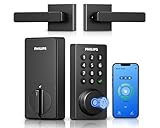
I remember the first time I really thought about my front door. It was late, a weird noise outside, and my hand instinctively went to the deadbolt. It felt… flimsy. Like a suggestion, not a guarantee. For years, I just assumed a lock was a lock, period. But then I started digging, and honestly, it got complicated fast. So, let’s cut to the chase: are door locks an active safety feature? My answer is a resounding ‘it depends,’ and most people get it wrong.
We’ve all seen movies where a hero can jimmy a lock in seconds. While Hollywood exaggerates, the reality is that not all locks are created equal, and relying on the standard one that came with your house might be like putting up a ‘kick me’ sign.
The Illusion of Security: What Locks actually Do
Look, your standard doorknob lock and the little deadbolt that usually comes with it are, at their core, about privacy and basic deterrence. They’re designed to keep out the casual passerby who might be looking for an easy opportunity. Think of someone trying your door while you’re out for groceries. That basic lock might be enough to make them think twice and move on to an easier target. But is that ‘active’ safety? Not really. It’s passive resistance. It’s like wearing a coat in the rain; it offers some protection, but it’s not going to stop you from getting soaked in a downpour.
The real problem is that most people stop there. They get the house, it has locks, job done. I was one of them. For years, my entryway consisted of a basic knob lock and a deadbolt that felt like it was made of play-doh. I never considered its actual strength. I figured, hey, it locks, right? It wasn’t until a buddy of mine had his shed broken into – and the lock was still technically intact, just pried open – that I started to question things. The lock itself wasn’t defeated; the door frame around it was.
This is where we get into the nuances. A lock’s strength isn’t just about the mechanism itself; it’s about the entire system: the door material, the strike plate, the frame, and how they’re all installed. A ridiculously strong deadbolt installed in a rotting door frame is practically useless. The force won’t break the lock; it’ll tear the frame apart. So, while the lock is part of the security, it’s often the weakest link, or more accurately, the whole chain is only as strong as its weakest component, and that component isn’t always the lock cylinder itself.
It’s also important to understand how locks are typically defeated. We’re not usually talking about picking them like in the movies. Most break-ins involve brute force: kicking the door in, prying it open, or damaging the frame. High-quality locks, especially those with longer bolts and reinforced strike plates, can resist this for a significantly longer time, giving you precious minutes to react or deterring the attacker altogether. But again, ‘resisting’ is not ‘actively stopping.’ It’s a delaying tactic, a form of passive defense.
What ‘active’ Even Means for a Lock
So, if a standard deadbolt is passive, what would make a door lock ‘active’? This is where things get interesting, and frankly, where a lot of the marketing hype comes in. An active safety feature implies something that not only resists an intrusion but actively detects, alerts, or even prevents it in a more dynamic way. Think of a motion-sensing light that turns on when someone approaches, or an alarm system that blares when a window is forced open. These are active responses to a threat.
True active safety features in door locks are usually found in the world of smart home technology. We’re talking about locks that can send notifications to your phone if they detect tampering or if the door is opened unexpectedly. Some can even integrate with other smart home devices, like turning on lights, sounding a siren, or locking other doors in the house. That’s active. It’s the lock doing something beyond just sitting there and hoping for the best.
I made the mistake of thinking a ‘smart lock’ automatically meant ‘more secure.’ I bought one of the first ones I saw online, a sleek-looking gadget that promised remote access and auto-locking. It looked cool, sure, but it didn’t do much to convince me it was actually tougher. It still had a pretty standard bolt.
The ‘smart’ part was connectivity and notifications. It felt like putting a Ferrari engine in a bicycle frame. The connectivity was neat – I could let my sister in remotely when I was away – but the physical security hadn’t significantly improved. It took me a few months and a rather unsettlingly easy attempt to pry it open with a screwdriver (which the lock thankfully resisted, but not with the confidence I’d hoped for) to realize the ‘active’ part was more about convenience and awareness than brute force stopping power. (See Also: Are There Different Size Holes For Installing Door Locks )
The common advice is often to get a deadbolt. And yes, a good deadbolt is way better than no deadbolt. But the definition of ‘good’ is where it counts. A deadbolt with a short bolt, a flimsy strike plate, or one that’s not properly anchored into the wall stud is just a decorative piece. The ‘active’ component comes when the lock is part of a system that responds. A lock that tells you someone is trying to get in before they succeed, or one that can trigger a loud alarm, that’s the active part.
Here’s a breakdown of what different lock types generally offer:
| Lock Type | Primary Function | Active Safety Potential | My Verdict |
|---|---|---|---|
| Doorknob Lock | Privacy, basic deterrence | Very low | Bare minimum, not recommended alone. |
| Standard Deadbolt | Increased security over knob lock | Low (passive resistance) | Good, but needs reinforcement. |
| High-Security Deadbolt | Stronger bolt, pick/drill resistance | Low (enhanced passive resistance) | Excellent physical barrier, but still passive. |
| Smart Lock (basic) | Keyless entry, remote access | Medium (notifications, alerts) | Adds awareness, but physical security varies wildly. |
| Smart Lock (integrated) | Keyless, remote, system alerts | High (alarms, integration, alerts) | The closest to ‘active’ for a single unit. |
The Common Mistakes People Make (and I Made Them Too)
The biggest mistake, and one I’ve certainly fallen into, is assuming that just because something is called a ‘lock,’ it’s inherently secure. We see a shiny deadbolt, we assume it’s doing its job. But the devil, as always, is in the details. People buy the cheapest deadbolt they can find, or they rely on the one that was installed when the house was built twenty years ago. These often have short bolts (less than an inch), flimsy strike plates, and aren’t anchored into the framing studs. They’re more for show than actual defense.
I remember shopping for locks after that shed incident. I walked into a big box store, overwhelmed by options. There were locks that cost $20 and locks that cost $150. Naturally, I gravitated towards the middle. I figured, ‘good enough.’ What I didn’t realize was that the $20 lock might as well have been made of cheese for all the resistance it offered. The $150 one had a longer bolt and felt heavier, but the sales guy barely mentioned the strike plate or door frame reinforcement, which, as I learned, is half the battle. I spent about $180 across four different versions before I realized I was just throwing money at the problem without understanding it.
Another common error is focusing only on the lock cylinder. While pick resistance is important for some scenarios, for the vast majority of home invasions, brute force is the method of choice. A strong lock cylinder is pointless if the door frame splinters like balsa wood or the strike plate rips out of the wall with minimal effort. People often neglect to reinforce their door frames and strike plates, which is a relatively inexpensive upgrade that can make a massive difference.
The ‘People Also Ask’ section online often highlights questions like, ‘Can a door lock be hacked?’ and ‘How do I make my door more secure?’ This shows a common understanding that locks aren’t foolproof. Yes, traditional locks can be picked or bypassed by skilled individuals, but for most break-ins, it’s about overwhelming the physical barrier. For smart locks, the hacking concern is real, but it’s usually about exploiting wireless vulnerabilities rather than physically picking the lock. You’re trading one set of risks for another, and often, the ‘active’ features come with these digital risks.
My own experience with a faulty smart lock taught me this. A firmware update went wrong, and suddenly my phone couldn’t communicate with the lock. I was locked out of my own house until I could perform a hard reset, which involved taking the lock apart. It worked afterward, but that moment of being unable to get into my own home, simply because a digital signal failed, was a stark reminder that ‘smart’ isn’t always ‘better’ or ‘more secure’ in the traditional sense. It’s just… different.
Real-World Use: When Locks Actually Matter
Let’s be blunt: your front door lock’s primary job is to keep honest people honest and to provide a reasonable barrier against opportunistic criminals. It’s the first line of defense. If someone is determined to get into your house, and they have the tools and the time, most locks will eventually fail. The goal, then, isn’t to build an impenetrable fortress, but to make your home a less appealing target than your neighbor’s. This is where understanding the difference between passive and active safety comes in.
A standard deadbolt, properly installed with a long bolt and reinforced strike plate, is a good passive deterrent. It requires more time and effort to breach. If a burglar is casing a neighborhood, they’re looking for the path of least resistance. A house with a solid door, a sturdy frame, and a deadbolt that looks like it means business is going to be passed over for a house with a flimsy-looking entry. This is the everyday reality for most of us. (See Also: Are Sesame Seeds Kosher For Passoveris Pollock Kosher )
Where locks become truly ‘active’ is when they integrate with a broader security system. I recently helped a friend install a smart lock that not only allowed keyless entry but also connected to his existing alarm system. If the lock is tampered with, or if the door is forced open while the alarm is armed, it triggers a deafening siren and sends an alert to his phone and a monitoring service. This is active safety in action. It’s not just about resisting; it’s about detecting and responding with an immediate, significant deterrent. The siren alone is often enough to send an intruder running.
I’ve seen this play out in less dramatic ways too. A neighbor’s smart lock sent them an alert that their son had left the door opened after school. They were able to remotely lock it from their office. That’s an active safety feature that prevented a potential security lapse. It wasn’t about stopping a break-in, but about actively managing the security status of their home in real-time. This kind of awareness is invaluable.
The question ‘Can a door lock alert you to a break-in?’ directly ties into this. Basic locks can’t. Deadbolts can’t on their own. Only smart locks, or locks integrated into a system, can provide that alert. This alert is the ‘active’ component – it turns a passive barrier into a monitored one. It gives you the chance to call the police or take other actions before the situation escalates. It’s the difference between finding out you’ve been robbed hours later and getting a heads-up while it’s happening.
For me, the best real-world use of a lock that leans towards active safety is one that gives you peace of mind through information and the ability to react. It’s not about being invincible; it’s about being informed and capable of responding. A good smart lock, paired with a solid physical door and frame, offers a blend of passive resistance and active awareness that’s hard to beat for the average homeowner.
Practical Tips for Boosting Your Door’s Defense
Okay, so we’ve established that most standard locks are passive and that true ‘active’ safety often involves smart technology or integration. But what can you actually do without bankrupting yourself or turning your home into a tech-bro fortress? Here are a few things I’ve learned and implemented that make a real difference.
- Upgrade Your Strike Plate: This is arguably the single most effective, low-cost upgrade you can make. Forget the tiny little plate that came with your door. Get a heavy-duty, three-screw strike plate that screws directly into the wall stud. This is what prevents your door from being kicked in easily. I’ve seen cheap ones bend like tin foil, while a good one anchored into solid wood makes your door incredibly resistant to forced entry. I spent about $30 on a couple of these, and it was the best money I spent on home security.
- Longer Deadbolt Throw: Make sure your deadbolt bolt extends at least an inch, ideally 1.5 inches, from the edge of the door. Shorter bolts offer less engagement with the frame and are easier to pry past. If your current deadbolt has a short throw, consider replacing the entire deadbolt mechanism. Look for ANSI Grade 1 or Grade 2 ratings, which indicate higher quality and durability.
- Reinforce the Door Frame: If your door frame is old or seems weak, consider reinforcing it. Metal security plates can be installed around the frame to add strength. Sometimes, simply making sure the frame is properly secured to the wall studs with long screws is enough.
- Consider a Smart Lock for Awareness: If your budget allows and you like the idea of knowing what’s happening with your door, invest in a reputable smart lock. Look for ones with good reviews regarding both their physical build quality and their app/connectivity stability. My experience taught me to prioritize brands known for reliability over flashy features. Some offer integration with home security systems or voice assistants, adding that active layer of communication and control.
- Don’t Forget the Door Itself: A strong door is important. Solid core doors (wood or metal) are far more secure than hollow core doors. If you have a hollow core door on an exterior entry, that’s your weakest point, and no lock will truly compensate for it.
- Peep Hole or Door Viewer: A simple wide-angle peephole allows you to see who is at your door without opening it. This is a fundamental, low-tech active safety measure.
It’s easy to get overwhelmed by all the tech and marketing, but often, the most effective upgrades are the simple, physical ones. A well-installed deadbolt with a reinforced frame is a formidable passive barrier. Adding a smart lock can provide that extra layer of active awareness, turning your front door into a much more intelligent guardian of your home.
The Future of Door Security: What’s Coming Next?
The concept of ‘are door locks an active safety feature’ is really pushing the boundaries of what we expect from our homes. We’re moving beyond simple mechanical resistance to integrated, intelligent systems. For years, a deadbolt was the peak of home security for most people, a passive guardian. Now, the industry is rapidly evolving, driven by the smart home revolution and a desire for greater control and awareness.
What I’m seeing and anticipating are locks that do more than just lock and open. Imagine a lock that can detect not just tampering, but also the sound of a forced entry attempt – like a glass break detector built right into the mechanism. Or a lock that can communicate with smart cameras to automatically start recording and zoom in on a suspicious individual approaching the door. These are extensions of the ‘active’ concept, where the lock becomes a sensor node within a larger home security network.
Biometric locks, while still somewhat niche and expensive for the average consumer, represent another step towards active security. Instead of a key or code, your unique physical traits become the access credential. If designed correctly, these could offer a high level of security that’s difficult to bypass physically. However, the software and hardware behind them need to be solid to prevent spoofing or digital vulnerabilities. I tried one of these a few years back – a fingerprint scanner lock – and while it was cool, it was also sensitive to moisture on my fingers, leading to a couple of frustrating lockouts. The technology is getting there, but it’s not quite foolproof yet. (See Also: Are Sliding Door Locks Common )
There’s also a growing focus on interoperability. The goal is for different smart home devices, including locks, to communicate with each other smoothly. This means your smart lock could, for example, tell your smart lights to turn on if it detects you’re approaching after dark, or flash them red if a break-in is detected. This interconnectedness is where the real power of active safety lies – not in individual devices, but in how they work together to create a responsive environment.
The challenge, of course, will be making sure that these increasingly complex systems are also reliable and secure from digital threats. The more connected a device is, the more potential entry points there are for hackers. Manufacturers will need to prioritize solid cybersecurity measures, regular firmware updates, and transparent data privacy policies. The hope is that as these technologies mature, the balance will tip further towards enhanced active safety without compromising our digital privacy or leaving us vulnerable to new types of attacks.
Can a Door Lock Alert You to a Break-in?
Yes, certain types of smart door locks can alert you to a potential break-in. These smart locks can detect tampering attempts, unusual force applied to the lock, or the door being opened when it shouldn’t be. They can then send notifications directly to your smartphone, allowing you to take immediate action, such as contacting authorities or checking security cameras. Standard mechanical locks cannot provide such alerts.
What Is Considered a High-Security Door Lock?
A high-security door lock typically refers to a mechanical lock that offers enhanced resistance to picking, bumping, drilling, and brute-force attacks. These locks often feature hardened steel components, complex internal mechanisms (like multi-pin tumblers or disc detainer systems), and longer, stronger bolts. They are rated by organizations like ANSI/BHMA, with Grade 1 being the highest level of security for commercial and residential use. Even with a high-security lock, proper installation in a reinforced door and frame is important.
How Do I Make My Door More Secure?
To make your door more secure, focus on strengthening the entire entry system, not just the lock. Upgrade your deadbolt to one with a longer throw bolt (at least an inch) and make sure it’s ANSI Grade 1 or 2 rated. Importantly, install a heavy-duty strike plate secured with at least three long screws that go into the door frame’s studs. Consider reinforcing the door frame itself. If you have a hollow-core door, replace it with a solid-core or metal door. For added awareness and control, a reputable smart lock can provide notifications and remote locking capabilities.
Conclusion
So, to circle back to the original question: are door locks an active safety feature? For the vast majority of traditional locks, the answer is a polite ‘no.’ They are passive barriers, designed to resist intrusion. True active safety comes into play with smart technology that can detect, alert, and even trigger responses. It’s about turning your door from a silent sentinel into a vigilant guardian.
My own journey from assuming any lock was enough to understanding the nuances of strike plates, bolt throws, and the potential of smart tech has been an education. It’s easy to get caught up in marketing, but the fundamentals of physical security, combined with smart awareness, are what truly matter for securing your home.
Don’t just buy a lock; buy a system. Look at how the lock interacts with your door, your frame, and your life. And if you’re considering smart tech, remember that reliability and security updates are just as important as the convenience features. What’s your next step in bolstering your home’s defenses?