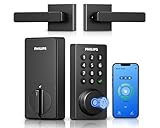
I remember the sheer panic. My brand new, supposedly ‘indestructible’ smart lock, the one that cost more than my last used car, just… died. No lights, no response, nothing. It sat there on my door, a useless hunk of expensive metal. I spent two days fiddling with it, reading the manual until my eyes crossed, and then finally called customer support, bracing myself for the worst.
This whole ordeal got me thinking about what we actually get when we buy these things. It’s not just the lock; it’s the promise of security and convenience. But what happens when that promise breaks? The big question rattling around my head was: are door locks covered under warranty?
We shell out good money for peace of mind, and it’s infuriating when that peace is shattered by a product failure. Let’s cut through the corporate jargon and figure out what you’re actually entitled to.
When Your Fancy Lock Goes Belly Up: What the Warranty Actually Means
Look, nobody buys a door lock thinking it’s going to fail. You pick one that looks good, has the features you want – maybe it’s a sleek smart lock that syncs with your phone, or a heavy-duty deadbolt that promises to withstand a battering ram. You install it, feel a bit more secure, and then… life happens. For me, it was that shiny smart lock. About six months in, completely out of the blue, it just gave up the ghost. No warning, no sputtering, just dead silence and a door that wouldn’t lock electronically. My first instinct was, ‘This has to be covered.’ I mean, it’s practically new!
The reality, however, is that ‘warranty’ is a word that can mean a lot of different things, and often, it’s not as straightforward as you’d hope. Most manufacturers will offer some kind of warranty on their hardware, but the devil is always in the details.
You’ll see terms like ‘limited warranty,’ ‘manufacturer’s warranty,’ and ‘lifetime warranty’ thrown around like confetti. What does it all mean for your actual door lock?
For mechanical locks, like a good old-fashioned deadbolt, the warranty is usually pretty straightforward. If the mechanism jams or a part breaks due to a manufacturing defect, they’ll likely replace it or the faulty part. It’s the smart locks and electronic components where things get murky.
These have batteries, circuit boards, and software – all things that can fail for reasons beyond simple wear and tear, and often outside the manufacturer’s control.
I’ve wasted money on countless gadgets that promised the moon and delivered a damp squib. Take that first smart lock I mentioned – it was supposed to be ‘weatherproof.’
Well, a particularly brutal Chicago winter proved that wrong. The internal electronics fogged up, and it started misbehaving constantly, eventually dying. The manufacturer’s response? ‘Not covered, water damage.’
I argued it was defective to begin with, but their fine print had a clause about ‘extreme weather conditions’ that they conveniently pointed to. It taught me a valuable lesson: always, always read the warranty, even the parts that sound like they don’t apply to you.
The terms are usually written to protect the company, not necessarily the consumer. So, when you ask ‘are door locks covered under warranty?’, the honest answer is: it depends entirely on the lock, the issue, and the specific terms of that company’s warranty.
What to Look for: Decoding the Warranty Paperwork
Let’s be blunt: reading a warranty document can feel like deciphering ancient hieroglyphics. They’re often buried deep in the product packaging or on a company’s website, written in legalese designed to make your eyes glaze over.
But honestly, it’s the most important piece of paper you’ll get with your lock, especially if you’ve invested in a pricier smart lock. What should you be scanning for? First off, the duration.
This is the most obvious part. You’ll see things like ‘one year,’ ‘five years,’ ‘limited lifetime,’ and ‘full lifetime.’ A ‘limited lifetime’ warranty often means for as long as the original purchaser owns the product, but it might have exclusions for certain parts, like electronics or finishes, which typically have shorter terms.
A ‘full lifetime’ warranty is rarer and generally more complete. For mechanical components, a longer warranty period is usually a good sign of quality. For smart locks, expect shorter terms on the electronic guts, maybe one to three years, while the mechanical parts might have a longer warranty.
Next, look for exclusions. This is where most people get burned.
Common exclusions include damage from improper installation, misuse, abuse, natural disasters (hurricanes, earthquakes, floods – standard stuff), power surges, battery leakage, and cosmetic damage. The ‘improper installation’ one is a biggie. If you didn’t install it yourself and hired someone, the warranty might be void if the installer messed up. Similarly, if you try to ‘fix’ a smart lock yourself and fry the circuit board, you’re on your own.
Also, pay attention to what the warranty actually covers. Does it cover replacement parts only? Or will they cover the labor to install the new part?
Most warranties cover parts, but labor is a whole different story. For a simple deadbolt, replacing a part yourself is usually easy. For a complex smart lock, that might mean calling a locksmith, which adds cost. (See Also: Are There Different Size Holes For Installing Door Locks )
I learned this the hard way with a set of door handles. They had a ‘lifetime warranty’ on the finish. After about five years, the brushed nickel started to peel off, looking like cheap chrome. I called the company, expecting them to send new ones, maybe even pay for the installation.
Their response? They’d send replacement handles, but I had to pay for installation.
The handles themselves were only $70 a set, but hiring a handyman would cost $150. So, I ended up living with peeling handles for another year before I just replaced them myself with something else.
It’s a classic example of a warranty that technically covers the item but doesn’t really help you solve the problem without significant out-of-pocket expense. Always ask: what’s really covered? Is it just the part, or the whole fix?
Common Mistakes People Make (and How to Avoid Them)
One of the biggest blunders I see people make is assuming that ‘warranty’ means ‘free repair or replacement, no questions asked.’ It’s just not how it works. The most common mistake is thinking that the warranty covers everything, including your own screw-ups.
I’ve heard stories from friends who tried to upgrade their smart lock firmware themselves, it failed, and they were surprised the company wouldn’t cover the bricked unit. Another classic is the ‘DIY disaster.’ You try to install a new lock, you strip a screw, you overtighten something, and suddenly the thing isn’t working right. Then you try to claim it under warranty, and the company sees the damage and says, ‘Nope, user error.’
It’s infuriating, but technically, they’re usually right if the damage is clearly from installation or misuse.
Another trap is the ‘out of sight, out of mind’ approach. You buy a lock, install it, and promptly shove the warranty card and manual into a drawer, never to be seen again. Then, months or years later, something goes wrong. You can’t find the paperwork, you don’t remember the model number, and you have no idea what the warranty even was.
By the time you dig it out, you might be past the claim period, or you might not even have the right documentation. My advice? Take a photo of the warranty information immediately after purchase, or better yet, scan it and save it to a cloud drive or a dedicated folder on your computer. Include the receipt.
This way, it’s always accessible. Also, many smart locks require you to register the product online for the warranty to be valid. If you skip this step, you might find yourself out of luck when you need to make a claim.
I’m guilty of this too – I’ve bought things and meant to register them, then just forgot.
The third major pitfall is not understanding what constitutes a ‘defect’ versus ‘normal wear and tear.’ Your smart lock’s battery will eventually die. The finish on a metal lock will fade or scratch over time.
These are expected outcomes of using a product. A warranty typically covers manufacturing defects – things that were wrong with the product from the start but weren’t obvious, or parts that failed prematurely due to poor quality materials or assembly. If your lock mechanism is stiff after five years of heavy use, that’s probably wear and tear.
If it seizes up after six months with light use, that’s more likely a defect. The companies are banking on you not being able to distinguish between the two, or not bothering to fight them on it. So, before you call support, ask yourself honestly: is this a genuine defect, or is it just the product showing its age?
Are Door Locks Covered Under Warranty? Real-World Scenarios
Let’s break down some common scenarios to see how warranties play out in the real world. This is where we move beyond the paperwork and into the trenches. Imagine you bought a solid, reputable brand deadbolt for your front door.
After about three years, the deadbolt cylinder starts sticking. It’s not completely seized, but it requires a good jiggle to turn the key. You’ve kept the receipt and the warranty card.
Most good brands offer a 5-year or even a limited lifetime warranty on the mechanical parts of their deadbolts. In this case, you’d contact the manufacturer, provide your proof of purchase and describe the issue.
They will likely send you a replacement cylinder or a new lock, depending on their policy and the severity of the issue. This is usually a pretty smooth process because mechanical locks are simpler, and failures like this are often due to manufacturing tolerances or material issues.
Now, consider a smart lock. You purchased a top-tier smart lock with all the bells and whistles. (See Also: Are Sesame Seeds Kosher For Passoveris Pollock Kosher )
Two years in, the Bluetooth connectivity starts acting up. It intermittently fails to connect to your phone app, making remote locking/opening unreliable. The manufacturer’s warranty might cover electronic components for one to three years.
You contact support. They’ll likely have you go through a troubleshooting process first: factory reset, re-pairing the device, checking for firmware updates.
If that doesn’t work, they’ll ask for proof of purchase. If they determine it’s a fault with the Bluetooth module or the main board, they’ll typically issue an RMA (Return Merchandise Authorization) and send you a replacement unit or a refurbished one. However, this is where things can get tricky. If the smart lock also has a physical key override, and that mechanism is still working fine, they might argue that the ‘key’ locking function is still operational, even if the smart features are not.
Some warranties are very specific about what ‘failure’ means.
Here’s a contrarian view: I’ve found that for many mid-range to high-end mechanical locks, the warranty is almost secondary. These things are built like tanks.
I have a Schlage deadbolt on my back door that’s probably 15 years old. It’s seen extreme weather, kids slamming the door, and everything else.
It still works flawlessly. I’ve never even thought about its warranty. For smart locks, however, the warranty is more of a lifeline, but it’s also a gamble. The technology is still evolving, and components can fail.
I once bought a smart lock that had a terrible battery life issue, and the company refused to acknowledge it as a defect, saying it was ‘within operating parameters.’ After a lot of back and forth, I finally got them to replace it, but it was a battle. So, while the warranty might cover it, be prepared for a fight, especially with more complex electronics.
What the Manufacturer’s Documentation Actually Says (and Doesn’t Say)
Let’s talk about the actual documentation you get with your lock. Manufacturers are required by law in most places to provide warranty information, but how they present it is a whole different ballgame. The most basic warranty is for mechanical defects. For a brand like Kwikset or Yale, their mechanical warranties are often quite solid, sometimes labeled as ‘limited lifetime.’ This usually covers the internal workings – the springs, levers, and latches – against failure due to manufacturing defects for as long as you own the product. They’re betting that the mechanical parts are solid and the main failure points will be elsewhere, or that you’ll move before it breaks.
The real catch comes with smart locks. These usually have a separate warranty for the electronic components. This is almost always a much shorter period, typically one to three years.
You’ll see language like, ‘Electronics limited to two (2) years from date of purchase.’ This means if your Wi-Fi module fries, or the touchscreen stops responding after year three, you’re out of luck. What they often don’t say explicitly is how they define a ‘defect’ versus ‘normal obsolescence’ for electronics that are constantly connected and updated. Think about your smartphone; its battery degrades over time.
While a lock isn’t a phone, the underlying electronic principles are similar. Manufacturers rarely cover the natural degradation of electronic components, which can be accelerated by constant use and environmental factors like temperature fluctuations.
Here’s a table summarizing what you might typically find, with my honest opinion on each:
| Warranty Type | Typical Duration | What it Usually Covers | My Verdict |
|---|---|---|---|
| Mechanical Defects (Deadbolts, Handles) | Limited Lifetime / 5-10 Years | Internal springs, latches, levers, cylinders | Generally reliable. Good brands stand by these. Look for reputable names. |
| Electronic Components (Smart Locks) | 1-3 Years | Circuit boards, Wi-Fi/Bluetooth modules, sensors, touchscreens | The weak link. Expect these to fail sooner than mechanical parts. Short duration is a red flag. |
| Finish / Aesthetics | 1-5 Years (sometimes lifetime for specific finishes) | Surface coating, color, plating | Often the first to go. ‘Lifetime’ here is usually aspirational, not guaranteed against wear. |
| Software / App Functionality | Often NOT Explicitly Covered | — | This is a grey area. If an app update breaks your lock, they might fix it, but it’s not guaranteed. |
The documentation also rarely details the process for a claim in a user-friendly way. It’s usually a reference to contacting customer support, and then you’re on your own to figure out the next steps. So, while the words are there, the practical application can be a whole different story.
Practical Tips for Making a Warranty Claim
Alright, so you’ve identified a problem with your lock, and you suspect it’s covered under warranty. Don’t just sit there and hope for the best. Here’s what you need to do to actually get a resolution. First, gather your documentation. This is a must. You need proof of purchase – your original receipt, an order confirmation email, or even a bank statement showing the transaction. You also need the warranty information. Dig out that manual, the card that came in the box, or find the warranty page on the manufacturer’s website. Note the specific model number of your lock, as this is important for them to look up the correct warranty terms.
Next, contact customer support. Don’t be shy. Call them, email them, or use their online chat if available. Be polite but firm. Explain the problem clearly and concisely. Stick to the facts: when did you buy it, what is the lock doing (or not doing), and when did the problem start. Avoid emotional outbursts, but don’t downplay the issue either. If they offer troubleshooting steps, follow them diligently. Sometimes, a simple reset or a firmware update can fix the problem, and it saves everyone a lot of hassle. If troubleshooting doesn’t work, clearly state that the issue persists and you believe it’s a defect covered under warranty. Ask them for the next steps for filing a claim.
Be prepared for them to ask for photos or even videos of the problem. If it’s a mechanical issue, a video of the sticking lock might be helpful. For a smart lock, a screenshot of an error message or a video showing the connectivity issues can be key.
This helps them diagnose the problem remotely. If they agree to a claim, they will likely issue an RMA number and provide instructions for returning the faulty part or the entire lock. Make sure you package it securely, as damage during return shipping can also void your claim.
Keep records of all your communications – names of people you spoke to, dates, times, and reference numbers. This paper trail is invaluable if you encounter further resistance. If you feel your claim is being unfairly denied, don’t be afraid to escalate it. (See Also: Are Sliding Door Locks Common )
Ask to speak to a supervisor or manager. Some companies have a formal dispute resolution process. If all else fails, consider leaving honest reviews online, as public pressure can sometimes sway a company’s decision. Remember, the goal is to resolve the issue, and being prepared and persistent is your best bet.
The Truth About ‘lifetime’ Warranties on Door Locks
Ah, the ‘lifetime warranty.’ It sounds like the ultimate promise of quality, doesn’t it? You buy a lock with a ‘limited lifetime’ or ‘full lifetime’ warranty, and you picture it outlasting your house.
In reality, it’s a bit more nuanced, and honestly, often a bit of a marketing ploy. The ‘lifetime’ in a ‘limited lifetime’ warranty typically refers to the product’s expected lifespan or the manufacturer’s ability to support it, not necessarily your own lifetime or the lifespan of the building. For mechanical locks, this is often a reasonable guarantee. A well-made deadbolt or handle set, built from solid brass or steel, can indeed last for decades.
Manufacturers offering lifetime warranties on these types of locks are usually confident in their durability. If a spring snaps or a latch mechanism fails due to a manufacturing fault within, say, 20 years, they’ll probably replace it.
However, the devil, as always, is in the details, especially with ‘limited’ lifetime warranties. These often carve out exceptions for specific components or finishes. For instance, a ‘lifetime’ warranty on a lock might cover the mechanical parts indefinitely, but the ‘brushed nickel’ finish might only be covered for 5 years. Or, if it’s a smart lock, the electronics might have a separate, much shorter warranty, as we’ve discussed.
So, while the core function of the lock might be covered for ‘life,’ the cosmetic appeal or the smart features might expire well before you do. I’ve seen this with door handles where the finish starts to corrode or peel, but the lock mechanism itself still works perfectly.
The warranty covers the mechanism, but not the unsightly exterior.
My own experience with a ‘lifetime’ warranty involved a set of antique-style brass door knobs. They looked fantastic for about seven years, then the brass plating started to wear off in spots, revealing a duller metal underneath. The warranty stated ‘lifetime warranty on finish.’ I contacted the company, sent them photos, and they sent me new knobs.
Great, right? Except these new knobs, within three years, started showing the exact same wear. It became clear that the issue wasn’t a ‘defect’ in the traditional sense, but perhaps an inherent flaw in the plating process for that specific line of product, or just the reality of that finish under regular use. They replaced them twice more over the next decade, but each time the finish started to fail.
It felt like a game of whack-a-mole. The company was technically honoring the warranty, but it wasn’t solving the underlying problem of a finish that just didn’t hold up.
So, when you see ‘lifetime warranty,’ always dig deeper. What exactly does ‘lifetime’ mean for each part of the product?
Don’t let marketing buzzwords blind you to the practical realities.
Do Smart Door Locks Have Warranties?
Yes, smart door locks typically come with warranties, but they often differ from traditional mechanical locks. While the mechanical components might have a longer warranty, the electronic parts – such as circuit boards, Wi-Fi modules, and sensors – usually have a shorter warranty period, often ranging from one to three years. It’s important to check the specific warranty terms for the electronic components, as these are more prone to failure over time.
What Is Usually Not Covered by a Door Lock Warranty?
Door lock warranties commonly exclude damage resulting from improper installation, misuse, abuse, attempted unauthorized repairs, normal wear and tear, cosmetic damage, and environmental factors like extreme weather, power surges, or vandalism. Battery leakage in smart locks is also frequently excluded. Basically, anything deemed outside of a manufacturing defect is usually not covered.
How Long Is a Typical Door Lock Warranty?
The duration of a door lock warranty varies significantly by type and brand. Mechanical locks often come with limited lifetime warranties on their components, meaning they are covered for as long as the original purchaser owns the product. Smart locks, however, typically have shorter warranties. The mechanical parts might still have a longer warranty, but the electronic components are often covered for only one to three years.
Is Installation Labor Covered by a Door Lock Warranty?
In most cases, door lock warranties cover replacement parts only and do not include the labor costs for installation. If a part is defective and needs replacement, the manufacturer will send you the part, but you will be responsible for the cost of having it installed, whether you do it yourself or hire a professional. This is a common exclusion that can add significant cost, especially for complex smart lock installations.
What Should I Do If My Door Lock Fails Within the Warranty Period?
If your door lock fails within the warranty period, the first step is to gather your proof of purchase and the warranty documentation. Then, contact the manufacturer’s customer support to report the issue. Be prepared to provide details about the problem and potentially go through troubleshooting steps. If it’s deemed a covered defect, they will guide you through the process of obtaining a replacement part or unit, which may involve returning the faulty item.
Final Verdict
So, to circle back to the main question: are door locks covered under warranty? The short, honest answer is yes, but with a big asterisk. For solid mechanical locks, you’re usually in pretty good shape with a decent warranty that should cover you for a good long while. But for the increasingly complex world of smart locks, the warranty is a more fragile thing, often limited in scope and duration, especially for those fancy electronic bits.
Don’t just assume you’re covered. Read the fine print, understand what ‘lifetime’ really means, and be prepared for the possibility that labor isn’t included. Keep your receipts, register your products, and know your rights. The warranty is a safety net, but you have to know where it is and how to use it effectively.
My advice? When you’re buying, look at the warranty terms as seriously as you look at the aesthetics or the smart features. It might just save you a headache – and a lot of money – down the line.