The first time I ever locked my RV door, I just yanked the handle. Seemed to work. Fast forward a year, and I’m standing in a Walmart parking lot at 2 AM, key in hand, and the lock just… spins. Useless. It’s moments like those that make you wonder, are all RV door locks the same? Spoiler alert: they absolutely are not, and learning that the hard way cost me a lot more than just a night of sleep.
Most folks think a lock is a lock. You turn the key, it locks. Simple. But in the world of RVing, where your home is on wheels and often parked in less-than-ideal spots, the cheap, flimsy hardware that comes standard on many rigs can be a serious liability. It’s not just about convenience; it’s about security.
I’ve seen enough cracked plastic and bent spindles to know that not all RV door locks are created equal. Some are barely better than a padlock on a shed, while others offer genuine peace of mind. Let’s get real about what’s actually out there.
Why That Factory Lock Is Probably Garbage
Let’s be brutally honest here: the locks that come standard on most RVs are the absolute bare minimum. They’re designed to meet a price point, not to deter a determined thief or even a strong gust of wind. I remember my first RV, a decent starter rig, but the door lock felt like it was made of the same brittle plastic as a dollar store toy. The keyhole was loose, the deadbolt didn’t always engage smoothly, and the whole assembly felt wobbly. It was more of a suggestion of security than actual security.
The common advice you’ll find online is often just to “upgrade your RV door lock.” That’s like saying “fix your leaky roof” without telling you how. What does that even mean? What should you look for? The problem is, most RV manufacturers use very similar, very basic locksets across a wide range of their models, especially on the entry-level and mid-range campers. Think of it like the basic radio that comes in a new car – it does the job, but nobody buys that car for the radio.
The main issue with these stock locks is the materials and the mechanism. They often use thin, stamped metal for the internal components and cheap polymers for the housing. This makes them susceptible to picking, bumping, and even simple brute force. I once saw a guy’s RV door lock just pop open when he leaned on it too hard after a long day of hiking. He wasn’t even trying to break in; he just put his weight on the door. That’s how bad some of them are.
Another common failure point is the connection between the interior handle and the exterior lock mechanism. These often use plastic rods or cables that can stretch, break, or simply come disconnected, leaving you unable to open your door from either side. I’ve personally experienced this frustration, finding myself locked out of my own rig because a plastic piece inside had snapped. It was a cold, rainy evening, and fumbling with a bent coat hanger to try and jimmy the latch was not how I envisioned my night. So, no, are all RV door locks the same? Absolutely not, and the factory ones are usually the worst offender.
The Wild West of RV Door Lock Types
So, if the stock ones are junk, what are your options? The RV door lock market is, frankly, a bit of a wild west. You’ve got everything from direct replacements that are only marginally better to high-tech smart locks. It’s easy to get overwhelmed. The most common upgrade people make is to a more solid “paddle-style” lockset, often called a “friction-style” or sometimes a “slam-latch” lock. These are designed to replace the standard handle and deadbolt assembly.
These paddle locks usually feature a more substantial deadbolt, often with a longer throw (meaning it extends further into the frame), and the paddle mechanism itself is typically more solid. They often come with two keys, and some models offer a combined handle and deadbolt in one unit, which can be simpler to operate. The idea is to offer better security with a more user-friendly operation. You just push the paddle down to open the door from the outside, and use the inside handle as usual. The deadbolt is usually operated by a separate key cylinder. (See Also: Are Sesame Seeds Kosher For Passoveris Pollock Kosher )
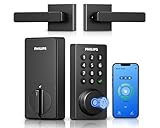
Then you have the more specialized locks. Some folks opt for high-security deadbolts that are designed to resist drilling and picking. These are often heavier duty and might require more modification to install. You’ll also see a growing number of smart locks appearing. These use keypads, Bluetooth, or even fingerprint scanners. They offer the convenience of keyless entry, which is pretty sweet when your hands are full of groceries, but they also introduce new potential failure points, like battery life and electronic malfunctions. I’ve heard stories of people getting locked out because their smart lock’s battery died in a remote area with no cell service. That’s a whole new level of panic.
The key takeaway is that there isn’t a single standard. You have different brands, different locking mechanisms (deadbolts, latches, electronic), and different build qualities. What looks similar on the shelf might have completely different internal workings and security features. So, are all RV door locks the same? Definitely not. It’s about choosing the right type for your needs and budget, and understanding what you’re getting into with each option.
Common RV Door Lock Upgrades
When people talk about upgrading, they’re usually looking at a few key types:
- Improved Paddle Locksets: These replace the entire standard handle/deadbolt assembly with a more solid unit. They often have a sturdier deadbolt and a smoother exterior paddle.
- High-Security Deadbolts: These are standalone deadbolts designed for maximum resistance to picking and forced entry. They might require more complex installation.
- Smart Locks: These offer keyless entry via keypads, apps, or biometrics. Convenience is the big draw, but they come with their own set of concerns.
What to Actually Look for (and What to Avoid)
Okay, so you’ve decided to ditch that cheesy factory lock. What should you be hunting for? This is where experience really matters, because the glossy pictures on Amazon don’t tell the whole story. First off, and this is a big one: materials. If it feels too light, if the metal flexes easily, or if you see a lot of exposed plastic on the internal mechanism (even if the outside looks okay), walk away. Look for solid metal construction, especially for the deadbolt and the internal workings of the latch. Brass, zinc alloy, and stainless steel are generally good indicators of better quality, though the machining is just as important as the material itself.
Pay attention to the deadbolt. How long is the throw? A longer throw means it engages deeper into the door frame, which is significantly harder to force open. Does it feel smooth when you operate it, or does it bind up? A lock that struggles to engage is a lock that might fail when you need it most. I once bought a supposedly “heavy-duty” lock where the deadbolt would stick halfway out. Took me three tries to get it to fully retract sometimes. It was infuriating and I ended up replacing it after only a few months.
Another thing to check is the internal mechanism. Can you see how it’s constructed? Some locks have exposed gears or flimsy linkages. The more enclosed and well-machined the internal parts, the better. Think about how the lock will be exposed to the elements. RV doors are constantly rattling down the road, getting rained on, and subjected to temperature swings. You want something that’s built to withstand that abuse without seizing up or corroding. Stainless steel hardware is your friend here.
Now, what to avoid? Anything that seems overly complicated for the sake of it, unless you’re a tech wizard and willing to deal with the potential headaches. Cheap “universal” fit locks that promise to work on any RV door – these are rarely a good idea. They often require significant modification or just don’t fit snugly, compromising security. And for the love of all that is holy, avoid locks that feel cheap. If the price seems too good to be true, it probably is. You’re not just buying a lock; you’re buying peace of mind. Don’t skimp on that. Remember, are all RV door locks the same? Absolutely not, and your wallet will thank you for being discerning.
Installation Pitfalls and How to Avoid Them
Installing a new RV door lock isn’t rocket science, but it’s not quite as simple as swapping out your house doorknob either. The biggest hurdle most people face is the template and the hole alignment. Many aftermarket locks will come with a template, but these aren’t always perfectly accurate, especially for older RVs or rigs that might have had modifications over the years. Always, always, always double-check the measurements against your existing door and frame before you start drilling new holes or enlarging existing ones. Measure twice, cut once is an understatement here. (See Also: Are Sliding Door Locks Common )
My first attempt at replacing a lock involved a slightly off-center template. I ended up with a gap between the lockset and the door that wasn’t pretty, and more importantly, it weakened the mounting. I had to shim it and use a bit of silicone sealant to make it look halfway decent and prevent water intrusion. Lesson learned: trust your own measurements more than the printed paper.
Another common mistake is over-tightening the mounting screws. These screws go into thin fiberglass or aluminum framing. Overtightening can crack the fiberglass, strip the screw holes, or warp the lock mechanism itself. You want the lock to be snug and secure, but not so tight that you’re deforming the door or frame. It’s a delicate balance. For those who aren’t handy, it might be worth paying a mobile RV tech to do the install. It’s a few hundred bucks, but cheaper than a damaged door or a lock that doesn’t work right.
Also, consider the weatherstripping. When you install a new, thicker lockset, you might compress your existing weatherstripping too much, creating drafts or allowing water to seep in. You might need to adjust or even replace your weatherstripping to make sure a good seal. This is a detail most DIYers overlook. Finally, test the lock thoroughly from both the inside and outside before closing the door completely. Make sure the deadbolt engages smoothly into the strike plate on the frame and that the main latch operates without sticking. These seemingly small installation errors can lead to big headaches down the road. So, are all RV door locks the same when it comes to installation? No, the complexity and compatibility vary wildly.
Real-World Use: My Own RV Lock Saga
Let’s talk about my personal descent into the rabbit hole of RV door locks. When I bought my current camper, it came with a standard, dual-handle lockset – one handle for the main latch, and a separate deadbolt. Within six months, the deadbolt started sticking. It wasn’t a complete failure, but it required a wiggle and a prayer to get it to engage fully. I’d stand outside, fiddling with the key, feeling increasingly annoyed, while my family waited inside, probably judging my mechanical prowess.
I decided to upgrade. I bought a popular brand’s paddle-style lockset that looked beefy and got decent reviews. The installation was… an adventure. As I mentioned, the template was a bit off, leading to a slightly wonky fit. But the real issue was the deadbolt mechanism itself. It was stiffer than the old one, and sometimes it would just refuse to turn, even with the key. I spent about $180 on that lockset, and frankly, I regretted it within a month. It was better than the original one, but only marginally. It still felt a bit flimsy internally, despite the solid exterior.
So, I did more research. I spoke to other RVers, watched countless YouTube videos, and read forums until my eyes crossed. That’s when I discovered that many of the “premium” locks are still made by a handful of manufacturers that supply the RV industry, and they often use similar internal designs. The real difference, I found, is often in the quality of the components and the precision of the machining.
My current lock is a different beast. It’s a single-unit lockset with a paddle for the main latch and a keyed knob for the deadbolt, and it feels like a tank. The deadbolt throw is significantly longer, and the mechanism is smooth as butter. It cost me close to $250, which felt steep at the time.
But you know what? It’s been two years, and it hasn’t missed a beat. It locks securely, opens easily, and hasn’t shown any signs of wear. (See Also: Are The Rams Locked Into The 6th Seed )
It’s the kind of upgrade that just fades into the background because it works perfectly, every single time. It made me realize that when it comes to security and reliability, you often get what you pay for. Are all RV door locks the same? My wallet and my sanity say a resounding no.
The Faq: Your RV Door Lock Questions Answered
What Is the Most Common Type of RV Door Lock?
The most common type of RV door lock is the standard dual-handle lockset, featuring a main latch handle on the exterior and a separate deadbolt operated by a key. These are often made with basic materials and are what most RVs come with from the factory. While functional, they are typically not the most secure option and are frequently upgraded by owners seeking better protection and durability.
Are RV Door Locks Interchangeable?
Not always, but many are designed to be. Most aftermarket RV door locks are made to fit standard cutouts for common RV door sizes and styles. However, there can be variations in door thickness, hole spacing, and strike plate dimensions. It’s important to measure your existing lock and door cutout carefully and compare it to the specifications of any new lock you consider to make sure compatibility. Some specialized or high-security locks might require custom fitting.
How Can I Tell If My RV Door Lock Is Old or Worn Out?
Signs of an old or worn-out RV door lock include a stiff or sticky deadbolt that requires excessive force to turn, a main latch that doesn’t retract or engage smoothly, visible rust or corrosion on metal parts, cracks or chips in plastic components, and a loose or wobbly handle. If the key sticks in the cylinder, or if you have to jiggle the lock repeatedly to get it to operate, it’s likely time for a replacement. Anything that feels flimsy or doesn’t operate with a satisfying click is suspect.
Can I Install a Smart Lock on My RV Door?
Yes, you can install a smart lock on your RV door, but it’s not always straightforward. Many smart locks are designed for standard house doors and might not fit the thinner, hollow construction of an RV door. You’ll need to find smart locks specifically designed for RVs or those that offer adjustable fits for different door thicknesses. Additionally, consider power sources (battery life), connectivity (Bluetooth, Wi-Fi), and potential electronic failures, especially in remote locations where power and cell service might be unavailable. It’s a trade-off between convenience and potential complications.
Final Thoughts
So, to put it plainly, are all RV door locks the same? Absolutely not. It’s a market filled with cheap imitations and genuinely solid options, and the difference can be night and day for your security and sanity. Don’t fall into the trap of thinking any lock will do. Your RV is your home away from home, and it deserves more than the bare minimum security.
The next time you’re looking at upgrading or even just inspecting your current lock, give it a good shake. Does it feel solid? Does the deadbolt extend and retract smoothly? If you have any doubts, it’s probably time to start researching alternatives. Your peace of mind on the road is worth the investment, even if it means spending a bit more than you initially planned.
My advice? Start by understanding the basic types available – the improved paddle locks, the standalone deadbolts, and the smart options. Then, focus on build quality, materials, and the smooth operation of the mechanism. It might seem like a small detail, but a good RV door lock is the first line of defense for your belongings and your sense of security. Take the time to choose wisely.