I remember the first time I saw a brand-new HVAC system installed in a ridiculously tall house, the kind where you need a step ladder just to reach the thermostat. The technician was meticulously running these long, skinny copper lines up, up, up. And then he paused, pulled out a little U-shaped piece of pipe, and bent it. My eyebrows went up. I’d always heard about traps for condensate drains, but for the actual refrigerant lines? That’s when I started digging, and let me tell you, the answer to ‘are intermediate traps required for long vertical refrigerant lines’ isn’t a simple yes or no. It’s more of a ‘well, it depends, and here’s why you need to know.’
Over the years, I’ve seen firsthand what happens when things aren’t set up right, and trust me, refrigerant line issues can get ugly fast. We’re talking efficiency hits, compressor strain, and repairs that make your wallet cry. So, let’s cut through the noise and get to what actually matters.
Why Your Ac Tech Might Be Bending Pipe Upwards
Okay, so you’ve got a split system, meaning the compressor and condenser unit are outside, and the evaporator coil is inside. The refrigerant has to travel between these two points. Sometimes, this path involves a significant vertical run. Think of a multi-story house, a commercial building with equipment on the roof, or even just a really tall single-story with a crawlspace or attic install. When these lines go up, gravity starts playing a role, and not always a good one for your system.
The main player here is the oil. Your compressor needs a little bit of oil to keep its moving parts lubricated. This oil circulates with the refrigerant. In a horizontal run, or even a short vertical one, gravity helps the oil return to the compressor pretty easily.
But when you have a long vertical riser, especially with the refrigerant moving upwards at speed, that oil can get carried all the way up to the indoor coil and get stuck there. Imagine a greasy film coating your evaporator fins – not good for heat transfer. Worse, if enough oil gets stuck upstairs, the compressor can run low on oil, leading to premature wear and tear, overheating, and eventually, failure. I once worked on a system where the compressor started making this awful grinding noise.
Turns out, it was almost bone dry on oil because the refrigerant lines were ridiculously long and vertical, and no traps had been installed. The fix involved not only adding traps but also replacing a fried compressor. That was a $2,000 lesson learned.
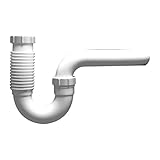
The ‘trap’ we’re talking about here isn’t a plumbing trap for water. It’s a specific configuration of the refrigerant line, usually a U-bend, installed at the bottom of the vertical riser. This U-bend is designed to catch and hold a small amount of oil. When the refrigerant flow slows down or stops (like when the system cycles off), gravity pulls the oil down into the trap.
Then, when the system kicks back on, the surge of refrigerant flow pushes the accumulated oil back up the line and towards the compressor. It’s a simple mechanical solution to a very real problem of oil return.
The common advice is that if your vertical line is over 20-25 feet, you should strongly consider installing these traps. It’s a preventative measure that can save you a world of headaches and expensive repairs down the line. Many manufacturers specify this in their installation manuals.
When Gravity Becomes Your Enemy: Oil Return Explained
Let’s get a bit more technical about why oil return is such a big deal. Refrigerant systems are designed to be a closed loop. The refrigerant boils in the evaporator (inside), absorbs heat, then travels as a gas to the compressor (outside), where it’s compressed into a high-pressure liquid. This liquid then goes through the condenser (outside), releases heat, and becomes a high-pressure liquid again before returning to the evaporator. This entire cycle relies on the refrigerant moving smoothly and efficiently.
The refrigerant itself doesn’t lubricate the compressor. That job falls to a specialized oil, often mineral oil for older systems orPOE (polyolester) oil for newer ones with synthetic refrigerants like R-410A. This oil is mixed with the refrigerant, and it’s supposed to circulate.
The compressor needs its oil to keep seals from drying out, prevent friction between metal parts, and help with cooling. If the oil stays in the evaporator coil or gets trapped in the suction line (the larger, insulated line carrying refrigerant gas back to the compressor), the compressor starts to starve.
This starvation can manifest as increased operating temperatures, reduced efficiency, and ultimately, mechanical failure. I’ve seen compressors seize up completely because of this. It wasn’t a dramatic explosion, but more of a slow, painful death from lack of lubrication.
The refrigerant line temperature can give you clues. If the suction line feels unusually hot, it might be an indication of oil not returning properly, as the oil is a better conductor of heat than the refrigerant vapor alone. Conversely, if the suction line feels too cold, it could mean liquid refrigerant is backing up, which is a whole other set of problems, but poor oil return can contribute to that too by affecting refrigerant velocity.
The design of the refrigerant lines themselves also plays a role. The velocity of the refrigerant vapor moving through the suction line is important for carrying oil back. When the lines are long and vertical, the velocity can drop, especially at lower load conditions or when the system cycles off. This is where the intermediate traps, or oil traps, come in.
They act as a holding area. When the system restarts, the initial surge of refrigerant gas velocity is high enough to pick up the collected oil from the trap and carry it back to the compressor. Without these traps, the oil might just sit at the lowest point of the vertical run, effectively being removed from circulation until the next significant refrigerant surge. (See Also: Are Omega Watch Straps Real Alligator )
For systems with long vertical runs, especially those exceeding the manufacturer’s recommendations (often around 20-25 feet, but always check your specific equipment manual), these traps are not just recommended; they are often considered a necessity for long-term reliability. They are a small investment compared to the potential cost of a premature compressor failure.
What to Look for: Trap Design and Placement
So, if you’re getting a new system installed or having a problematic one serviced, what exactly should you be looking for when it comes to these traps? They’re not complicated, but their placement and execution are key. The standard configuration is a U-bend. Imagine the vertical refrigerant line going up, then making a 180-degree turn downwards for a short distance, and then turning back up to continue its path. This creates a small reservoir where oil can collect when the refrigerant flow is low.
The important factor is placement. For a long vertical riser, the oil trap should be installed at the bottom of that vertical section.
This is where gravity will naturally pull any accumulated oil. If the trap is placed somewhere in the middle of the vertical run, it won’t be as effective because oil could still pool below it, or it might not get swept up effectively. The size of the trap also matters.
It needs to be large enough to hold a sufficient amount of oil, but not so large that it impedes refrigerant flow or traps too much oil, leading to potential slugging (large amounts of liquid refrigerant entering the compressor, which can cause damage). Most manufacturers have specific guidelines on the size and configuration of these traps based on the refrigerant type, line size, and the length of the vertical run.
I’ve seen some DIY jobs where they just bent a loop anywhere, and it was completely ineffective. It’s not just about making a bend; it’s about making the right bend in the right place.
Another consideration is for systems with very long vertical runs, say over 50-75 feet. In these extreme cases, a single trap might not be enough. Some larger systems might require multiple traps spaced at intervals along the vertical run.
This is less common in residential settings but can be found in commercial applications. The principle remains the same: provide a collection point for oil to be re-entrained into the refrigerant flow. It’s also worth noting that not all refrigerants behave the same way with oil. For instance, R-410A systems, which use POE oil, can be more sensitive to oil return issues than older R-22 systems with mineral oil.
This is because POE oil is miscible (mixes well) with R-410A, but it can also become quite viscous at low temperatures. Therefore, proper oil return is arguably even more important with modern systems. Always, always refer to the manufacturer’s installation manual for the specific equipment you are installing or servicing.
They are the ultimate authority on what is required.
| Scenario | Trap Recommendation | Reasoning | My Verdict |
|---|---|---|---|
| Vertical Run < 20 ft | Generally Not Required | Oil return is usually adequate due to shorter distance and gravity assist. | Skip it if it’s short. Saves a bit of copper and labor. |
| Vertical Run 20-40 ft | Recommended (at bottom of riser) | Helps make sure consistent oil return to the compressor. | Absolutely do it. Cheap insurance. |
| Vertical Run > 40 ft | Required, consider multiple traps | Important for compressor longevity, especially for very tall structures. | A must. Don’t even think about skipping this. |
| System Cycling Frequently | Recommended, regardless of height | Frequent starts/stops can reduce refrigerant velocity, hindering oil return. | Add one if your system short-cycles. It’s a common culprit for issues. |
Common Mistakes and What to Avoid
You’d think installing a simple bend in a pipe would be foolproof, but I’ve seen people mess it up in spectacular fashion. The most common mistake, as I’ve mentioned, is improper placement.
Putting the trap halfway up the vertical run, or even worse, at the top, defeats its purpose entirely. It needs to be at the lowest point of the vertical section to catch oil effectively.
I remember a call-out where a system was failing prematurely. The technician who installed it had put a trap in, but it was about 15 feet up a 30-foot run.
The oil was just pooling below it, and the compressor was starving. We had to cut it out and put a new trap in at the base.
It was a simple fix, but it highlighted how important the details are. (See Also: Are Traditional Mouse Traps Humane )
Another mistake is making the U-bend too large or too small. A trap that’s too large can act like a floodback eliminator, potentially allowing too much liquid refrigerant to return to the compressor during certain operating conditions, which is called liquid slugging. This can damage valves and pistons.
On the other hand, a trap that’s too small might not hold enough oil to be effective, or it could become easily clogged. The size of the trap needs to be proportional to the line size and the amount of oil the compressor holds. This is why following manufacturer specifications is so important.
Don’t just eyeball it. I’ve also seen installers use the wrong type of pipe or fittings for the refrigerant lines, which can lead to leaks or improper brazing.
The copper needs to be clean and properly brazed to prevent contamination and make sure a strong, leak-free connection. Any air or moisture introduced into the system can lead to acid formation, which corrodes the internal components, including the compressor.
One less obvious mistake is neglecting the line set insulation. For the suction line (the larger, insulated one carrying vapor back to the compressor), proper insulation is vital.
It keeps the cold refrigerant from absorbing ambient heat unnecessarily, maintaining the desired temperature and velocity. It also prevents condensation, which can lead to water damage and mold growth.
If the insulation is damaged or missing, it affects the system’s efficiency and can indirectly impact oil return. I once inspected a system where the suction line insulation had been chewed by rodents. The refrigerant was warming up significantly before it reached the compressor, and the system was struggling.
So, when you’re thinking about traps, also think about the overall integrity of your line set. It’s all interconnected. Ignoring any part of the refrigerant circuit can lead to problems down the line, literally and figuratively.
Real-World Applications: When Traps Make a Difference
I’ve seen these traps make or break systems in various scenarios. The most obvious is in tall, multi-story homes. If you have an air handler in the basement and the condenser on the roof, or vice-versa, you’re looking at a significant vertical run.
Without traps at the bottom of each vertical riser, that compressor is on borrowed time. I helped a friend who had a recurring problem with their AC in a three-story house. The compressor kept failing every 2-3 years.
They’d been told it was just bad luck or a faulty part. When I looked at the installation, the line set went up maybe 40 feet from the basement air handler to the attic condenser, with absolutely no traps. We added them, and the system has been running fine for five years straight now.
That’s tangible proof right there.
Another scenario where traps are often overlooked is in situations where the indoor unit is in a crawl space and the outdoor unit is on ground level, but the vertical distance is still substantial. Even 25-30 feet can be enough to start causing issues over time. I remember one job specifically where the condenser was at ground level, and the evaporator was in a raised attic space, about 35 feet up. The contractor didn’t install traps, and within two years, the compressor was making noises.
We ended up having to go back, add the traps correctly, and thankfully, the compressor survived, but it was a close call. The refrigerant lines are often routed through wall cavities, and sometimes these cavities are much taller than the actual cooling or heating area served.
This creates unintended long vertical runs. (See Also: Are Sticky Mouse Traps Humane )
Commercial buildings are another prime example. Rooftop units serving lower floors, or multiple floors connected by long vertical shafts, are prime candidates for oil return problems if traps aren’t installed correctly. I’ve seen older office buildings where units have been replaced piecemeal over the years, and the original designers’ intentions for oil management might have been lost in translation. This can lead to systems that run poorly, have higher energy bills, and require frequent maintenance.
A properly installed oil trap is a small detail that has a huge impact on the system’s efficiency and longevity. It’s not just about getting the refrigerant from point A to point B; it’s about making sure that the oil that keeps the heart of the system pumping gets back home safely and consistently.
It’s about understanding the physics of the refrigerant cycle in the real world, not just on a schematic.
Practical Tips for Homeowners and Technicians
If you’re a homeowner and you’re getting a new system or having significant work done on an existing one, here are a few things to keep in mind. First, don’t be afraid to ask questions. When you see those copper lines running up, ask your HVAC technician if oil traps are being installed or if they are present. If they look at you blankly or give you a vague answer, that’s a red flag. You can even ask them to show you the installation manual for your specific equipment and point out the section on refrigerant line requirements. A good technician will be happy to explain why or why not something is needed.
Second, if you have an older system that’s been experiencing compressor issues or declining efficiency, and you know you have long vertical refrigerant lines, ask for an inspection specifically for oil return. It might be that the traps were never installed, or they were installed incorrectly. Sometimes, retrofitting traps is possible, though it can be a more involved process than installing them during the initial setup.
I’ve had to recover refrigerant, cut into the lines, add the traps, braze them in, and then recharge the system. It’s doable and often worth the cost if it saves the compressor. My own cousin had a system like this, and after years of dealing with minor issues and efficiency dips, we finally went back and added traps.
The difference in performance was noticeable, and the compressor seemed much happier.
For technicians, the advice is simple: read the manual. Every manufacturer has specific requirements for refrigerant line installation, including the need for oil traps based on vertical height and line size. Don’t assume. Don’t guess.
If the manual says to install a trap for a 25-foot vertical run, install the trap. Use the correct tools and techniques for brazing to make sure a clean, leak-free installation. Double-check your work. Make sure the trap is at the lowest point of the vertical rise and that its size and configuration match the specifications.
It’s a small detail that can prevent massive headaches and make sure your customer’s system runs reliably for years to come. A few extra minutes and a bit of copper can save thousands in potential repair costs and unhappy clients. It’s about doing the job right the first time.
Frequently Asked Questions About Refrigerant Line Traps
Are Intermediate Traps Necessary for All Vertical Refrigerant Lines?
No, not for all. Traps are typically recommended for vertical refrigerant lines exceeding a certain length, often around 20 to 25 feet. Shorter vertical runs usually allow for adequate oil return to the compressor without the need for intermediate traps due to gravity and refrigerant velocity. However, manufacturer specifications should always be consulted for precise requirements.
What Happens If Oil Doesn’t Return to the Compressor?
If oil doesn’t return to the compressor, it can lead to a lack of lubrication. This can cause increased friction, overheating, reduced efficiency, and premature wear of compressor components. In severe cases, it can result in compressor seizure and complete failure, which is a very expensive repair.
Where Should an Intermediate Trap Be Installed?
An intermediate trap, or oil trap, should be installed at the bottom of the vertical refrigerant line riser. This placement allows gravity to collect any oil that migrates upwards, creating a reservoir that can be easily swept back up into the refrigerant flow when the system restarts.
Can You Add Oil Traps to an Existing System?
Yes, it is often possible to add oil traps to an existing system. This involves recovering the refrigerant, cutting into the existing line set, installing the trap in the correct location, brazing it in, and then recharging the system. While more involved than installing them during initial setup, it can be a worthwhile repair if oil return issues are suspected.
Final Thoughts
So, to circle back to our original question: are intermediate traps required for long vertical refrigerant lines? The honest answer is: if your vertical run is pushing 20 feet or more, you should be seriously considering them. Skipping them on a long vertical run is like building a house on a shaky foundation; it might stand for a while, but eventually, something’s going to give.
I’ve seen systems fail, compressors burn out, and homeowners spend a fortune because a simple U-bend wasn’t installed correctly, or at all. It’s one of those things that sounds minor, but it’s a important piece of the puzzle for making sure your HVAC system runs efficiently and reliably for its intended lifespan. Don’t let a technician gloss over this detail. Ask the questions, check the manuals, and make sure it’s done right. Your wallet will thank you in the long run.
If you’re in doubt about your current system, especially if it’s experiencing odd noises or cooling/heating inconsistencies and has long vertical refrigerant lines, have a qualified technician inspect your installation for proper oil return provisions. It could be the key to preventing a much larger, more expensive problem down the road.