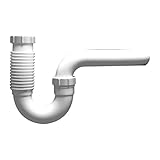
I remember the first time I wrestled with a plumbing trap. It was under a sink, dark and cramped, and I was convinced the whole thing was designed by sadists. The question of whether are hub p traps larger or smaller than other types gnawed at me then, mostly because I couldn’t get the damn thing to fit. The marketing blurb swore it was the simplest installation ever. Liars.
Years later, after countless leaky joints, a few minor floods, and enough trips to the hardware store to know the staff by name, I’ve learned a thing or two. And the truth about plumbing fittings, like so many things, is often less glamorous and more… practical than the brochures suggest.
The Real Deal with P-Trap Sizes
Let’s cut to the chase: when people ask if are hub p traps larger, they’re usually not asking about the overall diameter of the pipe itself, but rather the physical volume or the space it occupies. Most standard P-traps you’ll find under a residential sink, whether they’re PVC, brass, or ABS, are designed to fit a specific set of pipe dimensions. The key thing isn’t usually the ‘size’ in terms of external width, but the internal diameter of the pipe and the overall footprint it makes.
A P-trap’s primary job is simple: hold a bit of water to create a seal that blocks sewer gases from coming up your drains. Think of it like a mini water barrier. This water seal is the hero here. The ‘hub’ in ‘hub p trap’ typically refers to the fitting style where one end has a socket (the hub) designed to receive the plain end of another pipe. This is a common connection method, especially in older plumbing or specific types of installations.
So, are hub p traps inherently larger in terms of the amount of water they hold or their physical bulk compared to, say, a slip-joint P-trap? Not necessarily. The volume of water held is largely determined by the bend radius and the diameter of the pipe it’s made from. Standard P-traps, regardless of connection type, usually use 1-1/4 inch or 1-1/2 inch diameter pipes for sinks and 2-inch for tubs and showers. The ‘hub’ aspect is more about how it connects to the rest of your drain pipe system.
What can make a difference is the specific design and the intended application. Some traps are designed for very tight spaces, meaning their overall shape might be more compact. Others might have a slightly deeper U-bend to make sure a more solid water seal, especially in areas with infrequent use (where evaporation is a bigger concern). But this isn’t a function of it being a ‘hub’ trap specifically; it’s a design choice for that particular model.
My first plumbing screw-up involved a vanity. I bought what I thought was a standard P-trap kit, only to find the hub connection was a millimeter or two different from the existing pipe. Cue a frantic dash to the store, explaining my predicament to a guy who looked like he’d heard it all before. He just nodded and handed me a different adapter. The ‘hub’ detail was the snag. It wasn’t bigger, just… different. Cost me an extra $15 and an hour I’ll never get back. (See Also: Are Omega Watch Straps Real Alligator )
What to Actually Look for (beyond the ‘hub’ Buzzword)
Forget the fancy jargon for a second. When you’re looking at P-traps, especially wondering if are hub p traps larger in a way that matters for installation, focus on a few key things that will save you headaches. The material is a big one. You’ll see PVC, ABS, brass, and sometimes even stainless steel. PVC is cheap, easy to work with, and perfectly fine for most under-sink applications. ABS is similar but can be more brittle and is less common these days. Brass is more durable, looks nicer if it’s exposed, but costs more.
Then there’s the connection type. This is where the ‘hub’ comes in, but it’s not the only game in town. You’ll encounter slip-joint fittings, which use nuts and washers to create a seal. These are super common and are what most DIYers are familiar with because they allow for some wiggle room and are easy to take apart for cleaning. Hub connections, as mentioned, are designed to slide onto another pipe. This can be more of a permanent, glued-in connection or a compression-style connection depending on the specific type of hub fitting.
The diameter of the pipe is probably the most important measurement. For bathroom sinks and kitchen sinks (that aren’t commercial grade), you’re almost always dealing with 1-1/4 inch or 1-1/2 inch nominal pipe size. Check what your existing drainpipe is. They’re usually marked on the pipe itself or you can measure the outer diameter and do a quick online conversion. Getting this wrong means you’ll either have a gap or you won’t be able to connect it at all.
The overall length and height of the trap also matter, especially if you have a cabinet with limited space or a particularly shallow vanity. Measure the distance from the wall tailpiece (the pipe coming out of the wall) down to where your drain pipe connects. You need a trap that can bridge that distance without being kinked or stressed. Some traps have adjustable arms, which can be a lifesaver. Others are fixed. If you’re replacing an old trap, taking a picture or even taking the old one with you to the store is your best bet.
Lastly, consider the trap seal depth. Most codes require a minimum of 2 inches of water in the trap to prevent sewer gases. Most standard P-traps achieve this easily. However, if you live in a very dry climate or have a fixture that’s rarely used, a trap with a slightly deeper seal might offer a bit more peace of mind. Again, this is a design feature, not usually tied to the ‘hub’ connection itself.
Here’s a quick rundown of common P-trap pipe sizes you’ll encounter: (See Also: Are Traditional Mouse Traps Humane )
| Application | Common Pipe Diameter (Nominal) | My Verdict |
|---|---|---|
| Bathroom Sink | 1-1/4 inch or 1-1/2 inch | 1-1/2 inch is more solid and less prone to clogs, but 1-1/4 inch is standard and often matches existing fixtures. Always double-check. |
| Kitchen Sink | 1-1/2 inch | Almost always 1-1/2 inch. Don’t mess with this; kitchen sinks have more gunk. |
| Tub/Shower Drain | 2 inch | Definitely 2 inch. Needs to handle more volume. |
Common Mistakes That Cost You Time and Money
The biggest mistake I see, and honestly, one I’ve made myself more times than I care to admit, is assuming all P-traps are interchangeable. They’re not. The seemingly minor differences in connection types, pipe diameters, and even the slight variations in the U-bend shape can cause major headaches. If you’re looking at a hub-style trap and the pipe coming from your wall is a standard slip-joint connection, you’re going to need an adapter, or the whole thing won’t mate up. This is where the question of whether are hub p traps larger becomes important, not in their overall size, but in their specific fitting compatibility.
Another classic blunder is not measuring your space. You grab a trap that looks right, only to get home and find it’s an inch too long, too tall, or just won’t snake around that vanity leg. Plumbing under a sink is often a tight, awkward puzzle. Take your tape measure and your phone (for pictures) with you. Know the distance from the wall pipe to the drain opening, and the available vertical space. Don’t be shy about holding up potential traps in the aisle to visualize the fit, if the store allows. I’ve done it. No shame.
Over-tightening is another culprit. Especially with plastic fittings, you can strip the threads or crack the plastic. Finger-tight plus a quarter-turn with a wrench is usually enough for slip-joint connections. For glued hub connections, follow the adhesive instructions precisely. The goal is a snug, leak-free seal, not a Herculean effort. I once cracked a PVC trap trying to get it ‘extra tight’ – cue a slow, steady drip that only appeared after I’d cleaned up and thought I was done. Humiliating.
Failing to check for existing clogs or blockages before installing a new trap is also a common oversight. Sometimes, the reason you’re replacing a trap is because it’s clogged. If you just slap a new one on without clearing the pipes leading to and from it, you’re just delaying the inevitable. A quick drain snake or some drain cleaner beforehand can save you a future service call.
Finally, and this is a bit of a contrarian take, people often overspend on fancy materials. For 99% of residential applications, a basic PVC P-trap kit from a reputable brand is perfectly adequate. It’s cheap, easy to find, and does its job reliably. Unless your trap is visible and you’re going for a specific aesthetic, don’t feel pressured to buy expensive brass or chrome unless you have a very specific reason (like extreme corrosion concerns, which is rare in a typical home). I learned this the hard way, spending $80 on a brass trap for a utility sink that just collected dust and grime anyway. The $12 PVC one works just as well.
Common Mistakes at a Glance
- Assuming interchangeability of trap types and sizes.
- Not accurately measuring the installation space.
- Over-tightening plastic fittings, leading to cracks or stripped threads.
- Neglecting to clear existing clogs in the drain lines.
- Overspending on premium materials when basic options suffice.
Real-World Use: When Does the ‘hub’ Size Matter Most?
So, when does the ‘hub’ aspect of a P-trap connection actually come into play as a deciding factor, rather than just a descriptor? It’s primarily when you’re dealing with specific types of drainpipe installations or when you’re trying to connect to a pipe that uses a hub-style fitting. Think of it like connecting Lego bricks – you need the right shape to snap together. (See Also: Are Sticky Mouse Traps Humane )
In many older homes, you might find solid brass or cast iron drain pipes where the connections are designed to receive another pipe end directly, using solvent cement or lead joints. In these scenarios, a hub P-trap designed for that specific pipe material and connection method is what you’ll need. Trying to force a modern slip-joint trap onto an old hub fitting is a recipe for leaks and frustration. The internal diameter of the hub on the trap has to match the external diameter of the pipe it’s going onto.
Similarly, if you’re working with certain types of commercial plumbing or specialized industrial applications, hub connections might be standard. Here, the ‘larger’ aspect might refer to the robustness and the often-permanent nature of the seal achieved. These aren’t traps you’re going to be unscrewing to clear hair balls regularly; they’re designed for longevity and a secure, gas-tight seal.
For the average homeowner, though, the distinction between a hub trap and a slip-joint trap is often about how it’s installed and potentially serviced. A hub connection that’s glued or solvent-welded is generally considered more permanent and less prone to loosening over time than a slip-joint. However, it’s also harder to disassemble for cleaning. If you have a history of significant clogs or tend to pour grease down the drain (don’t do that!), a slip-joint trap might offer more convenience for DIY maintenance.
The ‘size’ concern, in terms of capacity or how much water it holds, is almost always related to the nominal pipe diameter (1-1/4″, 1-1/2
Conclusion
So, to circle back to the initial question: are hub p traps larger? Not in a way that typically impacts their function or the space they take up compared to other traps of the same pipe diameter. The ‘hub’ refers to the connection style, not necessarily an increase in physical size or water capacity. It’s about how it mates with your existing drain pipes.
My advice? Stop worrying about the ‘hub’ label and focus on the pipe diameter (1-1/4″ or 1-1/2″ for sinks) and the connection type that matches your existing plumbing. Measure carefully, buy the right material for your needs (usually PVC is fine), and take your time during installation. You’ll save yourself the frustration and expense I’ve dealt with over the years.
If you’re unsure, take a picture of your current setup and head to a good hardware store or plumbing supply shop. They can point you to the exact fitting you need. Don’t guess, measure. And for heaven’s sake, don’t overtighten plastic. It’s a lesson learned the hard way, but a vital one.