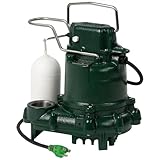
I remember the first time my basement flooded. It wasn’t a gentle trickle; it was a full-on, water-logged disaster that sent me scrambling for solutions. I’d always heard sump pumps were the go-to, but picking one felt like walking into a minefield. Suddenly, the question of ‘are barracuda sump pumps good’ wasn’t just a random query; it was a desperate plea for reliable information.
You see, when water decides to make itself at home in your basement, you don’t have time for fluff. You need something that works, and works hard. Over the years, I’ve seen a lot of pumps come and go, some living up to the hype and others being absolute paperweights.
So, let’s cut to the chase. What’s the deal with Barracuda sump pumps?
Barracuda Sump Pumps: The Lowdown From Someone Who’s Been There
Look, I’m not going to pretend I’ve spent decades in a lab analyzing pump impellers. My experience is on the front lines: basement floods, DIY nightmares, and the sheer relief of a pump that actually does its job. When folks ask ‘are barracuda sump pumps good,’ they want the real story, not marketing jargon. Barracuda is a brand that pops up, and like many of you, I’ve wondered if they’re worth the investment or just another shiny object that breaks when you need it most.
My first sump pump was a cheap, no-name thing I grabbed in a panic. It lasted exactly one storm. One. That taught me a brutal lesson: cheap often means ‘you get what you pay for,’ and when it comes to water management, that’s a lesson you don’t want to learn the hard way. So, when I started looking at Barracuda, I was armed with that experience. I wanted to know if they offered a decent balance of performance and price, or if they were just another entry in the ‘overhyped’ category. I’ve seen some reviews praising their simplicity, while others point to issues with longevity. It’s a mixed bag, and that’s exactly what we need to dig into.
The core of any sump pump is its ability to move water. Barracuda pumps, generally speaking, aim to do just that. They come in various horsepower ratings, which is your first indicator of how much water they can handle and how quickly. A common mistake is buying a pump that’s too small for your needs. I once underestimated the water flow in my yard after a heavy rain, and my ‘adequate’ pump was basically just treading water, leaving my basement damp. That’s not just annoying; dampness leads to mold and structural issues. You need a pump that can clear the water effectively, not just stir it around.
Barracuda offers both submersible and pedestal pump designs. Submersible pumps sit directly in your sump pit, meaning they’re quieter and out of the way. Pedestal pumps have the motor above the pit, with a long shaft connecting to the impeller. While often cheaper, they can be louder and more prone to damage if they get wet. For most homeowners, a submersible unit is the way to go, and Barracuda has a decent selection in that category.
What I appreciate about some of Barracuda’s offerings is their focus on straightforward operation. They’re not typically packed with fancy digital displays or Wi-Fi connectivity that most people don’t need and that can fail. This simplicity can be a good thing. Fewer complex parts often mean fewer things to break. However, this can also mean a lack of advanced features that might be helpful, like automatic shut-offs based on water level or diagnostic alerts.
When considering any sump pump, including Barracuda, always look at the materials used. Cast iron is a good sign of durability, especially for the pump housing and impeller. Plastic, while lighter and cheaper, can become brittle over time, especially with constant exposure to water and temperature changes. I’ve had plastic components crack on me, which is just… frustrating. Barracuda uses a mix, so checking the specific model’s construction is key.
How Barracuda Sump Pumps Actually Work (and What to Watch For)
Let’s get down to the nitty-gritty of how these things actually function, because understanding the mechanism helps you appreciate (or criticize) the design choices Barracuda makes. At its heart, a sump pump is a pretty simple device: it’s a pump designed to remove water that has collected in a sump pit, usually in a basement or crawl space. The pit itself is a hole dug in the lowest part of your foundation, designed to collect groundwater or surface water that seeps in.
When the water level in the pit rises, it eventually reaches a float switch. This switch is the ‘brain’ of the operation. Think of it like the float in your toilet tank. As the water level lifts the float, it triggers the pump motor to turn on. The motor then powers an impeller, which is a rotating disc with vanes. As the impeller spins, it forces water up and out of the pump, through a discharge pipe, and away from your foundation. Once the water level drops sufficiently, the float switch deactivates the motor, and the pump shuts off. Simple, right?
Now, where do Barracuda pumps fit into this? They offer both tethered and vertical float switches. A tethered float is attached to the pump body by a cord. As the water rises, it lifts the float.
The length of this cord determines how high the water needs to get before the pump kicks on and how low it needs to go before it shuts off. A common mistake here is having the float switch snagged on something in the pit, preventing it from moving freely.
I once spent an hour fishing around in a muddy pit because the float was caught on a stray pipe fitting. Barracuda’s vertical float switches, often found on their more compact models, have the float attached to a rod that moves up and down along the pump body. These are generally less prone to snagging, which is a definite plus. (See Also: Are Pumpkin Seed Husks Edible )
The horsepower of the pump is directly related to its ability to move water. Barracuda offers pumps in ranges like 1/4 HP, 1/3 HP, and 1/2 HP. A 1/4 HP might be fine for a small crawl space with minimal water issues, but for a basement prone to heavy inflow, you’ll want at least 1/3 HP, and possibly 1/2 HP for serious situations. Going too small is a recipe for disaster, as I learned the hard way with my initial panic purchase. It just couldn’t keep up, and the basement ended up smelling like a swamp for weeks.
Discharge size is another important factor. Most Barracuda pumps are designed for standard 1-1/4 inch or 1-1/2 inch discharge pipes. Make sure your existing plumbing matches or that you have the right adapters. A bottleneck here can significantly reduce the pump’s efficiency. The pump has to push water through that pipe, and if the pipe is too small for the volume of water the pump is trying to move, you’re going to have problems.
One thing to be aware of with Barracuda, and many budget-friendly brands, is the motor type. Many use single-phase, thermally protected motors. This means that if the motor overheats, it has a built-in protection that will shut it off temporarily until it cools down. This is a safety feature, but it can be annoying if the pump is cycling frequently in a heavy rain event. You want a pump that can handle continuous operation without overheating.
I’ve found that many of the complaints about sump pumps, Barracuda included, often boil down to installation or maintenance issues rather than inherent design flaws. People neglect to clean out their sump pits, letting debris clog the intake, or they don’t properly secure the discharge pipe, leading to water pooling back near the foundation. It’s not just about buying the pump; it’s about giving it a clean environment to work in and making sure it’s set up right.
Common Installation Pitfalls
Improper float switch installation is a big one. If it’s not set up to activate and deactivate at the correct levels, the pump will either run constantly or not run at all. Also, make sure the discharge pipe is properly sloped away from the house and that the outlet is at least 20 feet away, ideally more, to prevent water from flowing back into the pit.
Barracuda Sump Pump Models and What I’ve Seen
Barracuda offers a range of sump pumps, and like any brand, some models stand out more than others. It’s easy to get lost in the specs, so let’s break down what I’ve typically encountered and what you should be looking for. The primary differentiating factors are horsepower, pump type (submersible vs. pedestal), and the float switch mechanism.
Their submersible pumps are generally their most popular offering. You’ll find models with 1/4 HP motors, which are usually suitable for smaller sumps or areas with only occasional water intrusion. These are often entry-level pumps. I’ve seen these work okay for light-duty tasks, but if you have any serious water issues, you’ll outgrow it faster than you can say ‘mold remediation.’ I once put one in a small workshop sump, and it was fine for the infrequent drips, but a heavy storm would have overwhelmed it.
Moving up, the 1/3 HP submersible pumps are a common sweet spot for many homes. These offer a better balance of power and efficiency. Barracuda’s 1/3 HP models often come with tethered floats, which are generally reliable but, as I mentioned, can be prone to snagging if the pit isn’t kept clean. Some of their slightly more premium 1/3 HP units might feature vertical floats, which I tend to prefer for their reduced snagging potential.
The 1/2 HP models are where you get into serious pumping power. These are for basements that are prone to significant flooding or have a high water table. These pumps can move a substantial amount of water quickly. If you’re in an area with clay soil or a lot of rainfall, this is likely the horsepower you’ll need. Barracuda’s 1/2 HP units are usually solid and built for the heavy lifting. My neighbor used one of their higher-end 1/2 HP models after his basement flooded three times in a year, and he said it made a noticeable difference in how quickly the water was cleared.
Then there are the pedestal pumps. Barracuda offers these too. The motor sits on a shaft above the water. The upside is they can be cheaper and easier to access for maintenance. The downside? Noise. They tend to be significantly louder than submersible pumps, and the motor is exposed, which can be a concern if your basement humidity is high or if there’s any chance of splashing reaching the motor. I’ve always leaned towards submersible for my own home because I value the quiet operation and the fact that the motor is protected. It’s a personal preference, but one rooted in experience with the noise factor.
When evaluating a specific Barracuda model, pay attention to the warranty. A longer warranty period (say, 2-3 years) suggests the manufacturer has some confidence in the product’s durability. However, remember that warranties often have exclusions for improper installation or lack of maintenance, so don’t assume it’s a get-out-of-jail-free card.
I’ve seen a few people online complain about the plastic components on some of Barracuda’s lower-end models. While plastic is lighter and cheaper, it can degrade over time, especially with constant exposure to water. I’m always a bit wary of pumps that are entirely plastic. Metal, particularly cast iron, generally offers better longevity and resistance to wear and tear. Barracuda does use cast iron in some of their more solid models, which is a good sign.
Barracuda Pump Comparison Snippet
| Model Type | Horsepower | Typical Float | My Verdict |
|---|---|---|---|
| Submersible | 1/4 HP | Tethered | Good for light duty, small areas. Might be underpowered for basements. |
| Submersible | 1/3 HP | Tethered or Vertical | Solid all-around choice for most homes, but make sure pit is clean for tethered. |
| Submersible | 1/2 HP | Vertical | For serious water issues. Powerful and can handle high volumes. A worthwhile investment for problem areas. |
| Pedestal | 1/3 HP | Built-in | Budget-friendly and accessible, but expect more noise and motor exposure. |
The ‘overrated’ vs. ‘underrated’ Debate for Barracuda
This is where we get into the really opinionated part. Are Barracuda sump pumps good, or are they just… there? It’s a question that sparks debate because, frankly, they aren’t usually the top-tier, ‘buy-it-for-life’ brands that command premium prices. This means they often fall into a middle ground, which can be either a fantastic value or a disappointing compromise, depending on your expectations and the specific model you choose. (See Also: Are Pumpkin Seed Acid Or Alkaline )
Here’s my contrarian take: Many people overspend on sump pumps with all sorts of bells and whistles they’ll never use. They buy the most expensive model they can find, convinced that price equals performance. I disagree. For the average homeowner dealing with occasional basement dampness or moderate flooding, an overly complex, high-end pump is often overkill. Barracuda, by focusing on simpler designs and more accessible price points, can actually be a smarter buy for a lot of people. It’s about finding the right tool for the job, not just the most expensive one.
However, it’s important to acknowledge where they might fall short. If you live in an area with a consistently high water table or experience severe, frequent flooding, you might find that Barracuda pumps, especially their lower-horsepower models, struggle to keep up. The materials used in their less expensive lines can sometimes be a weak point. I’ve heard anecdotal evidence of certain plastic components becoming brittle after a few years, or seals failing prematurely. This isn’t unique to Barracuda; it’s a common trade-off in the budget-friendly pump market. It’s why I always push for cast iron construction where possible.
The “People Also Ask” questions often touch on reliability. “How long does a Barracuda sump pump last?”
is a big one. Honestly, it varies wildly. I’ve seen reports of them lasting 5-7 years, which is decent for a mid-range pump. I’ve also seen complaints about them failing within 2-3 years.
My own experience with a similar-tier pump (not Barracuda specifically, but in the same price bracket) was about 4 years before I saw signs of wear. This often depends on how hard the pump is working.
A pump that runs 10 times a year will last far longer than one that runs 100 times a year during a wet season. Maintenance is also huge; a clean pit and a clear discharge line can double or triple a pump’s lifespan.
Another common question is about noise. Pedestal pumps are inherently louder. Submersible pumps from Barracuda, particularly their cast-iron models, tend to be relatively quiet, but you’ll still hear them kick on. It’s not a silent operation. If you’re extremely noise-sensitive and the pump is near a living space, you might need to consider advanced soundproofing or a higher-end, specialized quiet-operation pump, which will cost considerably more.
So, are they underrated? Potentially, for the homeowner who understands their needs and doesn’t buy more pump than they require. Are they overrated? Possibly, if you expect them to perform like a top-tier, heavy-duty unit designed for extreme conditions without any potential for future issues. My take is they’re a solid mid-tier option that offers decent value if you pick the right model for your situation and maintain it properly. They aren’t the cheapest, nor are they the most expensive, and that’s often where you find a good balance.
Real-World Use and Common Mistakes with Barracuda
Let’s move beyond the brochures and into what actually happens when you install a Barracuda sump pump and it’s doing its job – or, more importantly, when it’s not. I’ve seen plenty of people make the same mistakes, and it usually ends with a call to a plumber or a very damp rug. The question of ‘are barracuda sump pumps good’ often hinges on whether the user made these avoidable errors.
One of the most glaring mistakes I’ve witnessed is improper sizing. A homeowner, thinking ‘bigger is always better,’ buys the 1/2 HP monster for a small crawl space that gets a little damp. This can actually be detrimental. An oversized pump can cycle on and off too quickly (short-cycling) because it empties the pit too fast. This rapid cycling puts excessive wear on the motor, potentially leading to premature failure. Conversely, as I’ve mentioned, an undersized pump just can’t keep up, leaving you with a flooded basement and the feeling of being utterly helpless. Barracuda offers a range, so match the HP to the volume of water you actually expect.
Another common pitfall is the float switch. I’ve seen them installed too high, meaning the water level gets dangerously high before the pump even kicks on. Or, they’re set too low, causing the pump to run constantly, which again leads to wear and tear. The tethered float is notorious for getting caught on debris or the pit wall. I once saw a pump that was technically working, but the float was snagged just right so it only activated when the water was about two inches from overflowing. Not ideal. Vertical floats are generally more reliable in this regard, but even they need a clear path.
Installation of the discharge pipe is a major source of failure. People forget that water needs to flow away from the foundation.
If the pipe is sloped back towards the house, or if the outlet is too close (less than 20 feet, ideally more), the water pumped out can just seep back into the sump pit, creating a vicious cycle. I’ve seen pipes that were basically dumping water right at the foundation’s edge. (See Also: Are Organic Pumpkin Seeds From China Bad )
It’s like trying to bail out a boat with a hole in it. Always make sure a downhill slope and ample distance from the house. A check valve is also often overlooked; it prevents water from flowing back down the discharge pipe when the pump shuts off, which can cause hammering sounds and unnecessary wear.
Maintenance is where many Barracuda pumps, and indeed most pumps, get a bad rap. Sump pits collect mud, sand, leaves, and all sorts of gunk. This debris can clog the pump’s intake screen or even get sucked into the impeller, jamming it or causing damage. I make it a habit to pull my pump out at least twice a year (spring and fall) to clean out the pit and check the pump itself. It takes maybe 20 minutes and has saved me from potential disaster more than once. Neglecting this is like never changing the oil in your car – you’re just asking for trouble.
Finally, the electrical connection. Sump pumps need a dedicated, GFCI-protected outlet. Plugging them into an extension cord or a non-protected outlet is a safety hazard and can lead to pump failure. I’ve seen people jury-rig connections that are just begging for an electrical short, especially in a damp environment like a basement. Always follow the manufacturer’s electrical recommendations.
My Sump Pit Maintenance Checklist
- Empty the Pit: Carefully bail out any standing water.
- Remove Debris: Scoop out any accumulated mud, sand, leaves, or sediment.
- Inspect Pump: Check the intake screen for clogs. Make sure the impeller spins freely.
- Check Float Switch: Make sure it moves without obstruction and is set at the correct height for activation and deactivation.
- Test Run: Briefly turn on the pump to make sure it operates smoothly and discharges water.
Faqs About Barracuda Sump Pumps
Are Barracuda Sump Pumps Reliable?
Reliability for Barracuda sump pumps is generally considered moderate. They offer a good balance for their price point, suitable for many residential needs. However, like most budget-to-mid-range brands, longevity can vary. Factors like the specific model, the frequency of use, and regular maintenance play a significant role in how long a Barracuda pump will reliably perform. For consistently severe flooding, higher-end models might offer greater peace of mind.
What Is the Lifespan of a Barracuda Sump Pump?
The typical lifespan for a Barracuda sump pump can range from 5 to 10 years, but this is highly variable. Pumps used in areas with frequent heavy rainfall or high water tables, leading to more frequent operation, will naturally have a shorter lifespan than those used less often. Proper installation, regular cleaning of the sump pit, and making sure the discharge line is clear are important for maximizing the pump’s operational life.
Where Are Barracuda Sump Pumps Made?
Barracuda sump pumps are generally manufactured overseas, with assembly and components sourced from various international locations, which is common for brands in this price segment. The focus is often on providing a cost-effective solution rather than emphasizing domestic manufacturing.
Can I Replace a Barracuda Sump Pump Myself?
Yes, in most cases, replacing a Barracuda sump pump can be a DIY project for someone with moderate DIY skills and basic tools. The process involves disconnecting the discharge pipe, unplugging the old pump, removing it from the sump pit, and then installing the new pump, connecting the pipe, and plugging it into a GFCI-protected outlet. It’s important to follow the specific instructions for both the old and new pump and to make sure the sump pit is clean before installing the new unit.
Barracuda Sump Pumps: The Verdict From My Basement
After wrestling with leaky basements and sifting through more pump specs than I care to remember, I’ve come to a pretty straightforward conclusion about Barracuda sump pumps. They’re not the flashiest, nor are they the most expensive, but for a lot of homeowners, they can be a solid, reliable choice. The key is understanding what you’re getting into. If you’re expecting a top-tier, heavy-duty unit that will last 20 years through every conceivable flood event, you might be setting yourself up for disappointment. But if you need a dependable pump for moderate water issues, and you’re willing to pick the right horsepower for your situation and keep the pit clean, then Barracuda absolutely can be good.
I’ve seen too many people get burned by buying the absolute cheapest option, only to have it fail when they need it most. Barracuda often strikes a better balance. I’ve found their 1/3 HP and 1/2 HP submersible models, especially those with vertical float switches and cast-iron construction, to be quite capable. They’re not perfect, and like any product, you can find lemons or individual units that fail prematurely. But as a brand offering a decent value for the money, they have a place in the market.
Ultimately, asking ‘are barracuda sump pumps good’ is like asking if a particular tool is good. It depends on the job you need it to do, how you use it, and how well you maintain it. So, do your homework, check the specs for the specific model you’re considering, and don’t neglect that all-important maintenance. Your basement will thank you.
Verdict
So, are barracuda sump pumps good? My honest answer is yes, they can be, but with important caveats. They’re a solid mid-range option for many homes, offering a decent performance-to-price ratio. Don’t expect them to be the absolute toughest pumps on the market, but for everyday basement dampness or moderate flooding, they can certainly get the job done.
The trick, as with most things in home maintenance, is matching the pump to your specific needs and, importantly, keeping up with maintenance. A clean sump pit and a clear discharge line go a long way in making sure any sump pump, Barracuda included, operates effectively and lasts as long as possible.
Before you buy, figure out how much water you’re typically dealing with and choose the horsepower accordingly. And for goodness sake, clean out that sump pit at least twice a year. It’s the cheapest insurance policy you can get against a flooded basement.