I remember the first time my well pump went belly-up. The water pressure dropped to a pathetic dribble, and I had that sinking feeling in my gut. Immediately, I was on the phone with a guy who sounded like he’d swallowed a technical manual. He started rattling off terms like ‘centrifugal’ and ‘submersible’ and I just nodded along, hoping for the best. But then came the real head-scratcher: trying to figure out if deep well pumps are rotary vane or positive displacement. It felt like a foreign language.
Most folks just want water, and they don’t care about the nitty-gritty. But if you’re going to drop serious cash on a pump that’s supposed to last you a decade or more, you should probably know what you’re buying. This isn’t rocket science, but it’s definitely plumbing science, and knowing the difference can save you a headache – and maybe some money.
How the Heck Does a Deep Well Pump Actually Push Water?
Alright, let’s cut to the chase. When you’re talking about getting water from way down in a deep well, you’re not dealing with the little pond pumps you see for garden features. These things have to fight gravity and a whole lot of pipe. So, are deep well pumps rotary vane or positive displacement? The overwhelming majority, especially the submersible kind you see in most deep wells, are positive displacement pumps. This is the core answer, and it’s important for understanding how they work.
Rotary vane pumps, while they exist and are a type of positive displacement pump, aren’t typically the workhorses for deep wells. Think of a rotary vane pump like a squirrel trying to push acorns through a tight tunnel. It has vanes that rotate inside a housing, creating chambers that capture and move fluid. They’re good for certain applications, like oil transfer or some industrial uses where consistent flow and moderate pressure are needed, but they struggle with the sheer volume and head pressure required for a deep well system. Imagine trying to suck water up from 100 feet down with a gizmo designed for a few feet – it’s just not built for that kind of grunt work.
Positive displacement pumps, on the other hand, are all about trapping a fixed volume of fluid and forcing it out. They do this by creating a seal, reducing the volume, and then expelling the fluid.
This method is far more effective for overcoming the high static head (the vertical distance the water needs to be lifted) and delivering a consistent flow rate, even as the well’s output or the demand changes. This is why when you’re looking at most deep well setups, you’re almost certainly looking at a positive displacement design. Now, within positive displacement, there are different types, and submersible pumps often use designs that act like positive displacement, even if they aren’t strictly ‘rotary vane’.
We’ll get into that.
Submersible Pumps: The Deep Well Champions
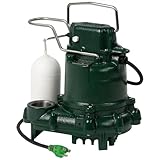
When you say ‘deep well pump,’ 99% of the time people are picturing a submersible pump. These are the long, cylindrical units that get lowered all the way down into the well casing, sitting right in the water. And guess what?
They operate on the principle of positive displacement, though the exact mechanism can vary. The most common type you’ll find in submersible pumps for deep wells is often a multi-stage centrifugal design, which acts like a positive displacement pump in its ability to generate high head pressure. But let’s clarify: a pure centrifugal pump is technically not a positive displacement pump.
However, the way submersible pumps are engineered with multiple impellers stacked on top of each other creates a ‘series’ effect, meaning the output of one stage feeds the input of the next, building pressure incrementally. This staged approach, while based on centrifugal force, results in a consistent, high-pressure output characteristic of positive displacement systems for deep wells.
Here’s where it gets a bit nuanced and why the ‘rotary vane or positive displacement’ question can be confusing. A pure rotary vane pump is a specific type of positive displacement pump. Submersible pumps are almost always positive displacement in their effect for deep wells, but the mechanism isn’t usually a simple rotary vane. They use stacked impellers (think little propellers) that spin, flinging water outwards and into the next stage. (See Also: Are Pumpkin Seed Husks Edible )
Each stage adds more pressure. This is what allows them to lift water from hundreds of feet down. They don’t just ‘fling’ it up; they trap and pressurize it through multiple stages.
This is why they are so effective at overcoming that massive vertical lift. If you tried to use a basic centrifugal pump without multiple stages, you’d barely get water halfway up a deep well.
My first real pump install was a nightmare. I thought I could save a few bucks by getting a ‘bargain’ submersible. It was advertised with a high ‘flow rate,’ but the pressure was pathetic. Turns out, it was a single-stage centrifugal that was completely inadequate for my 120-foot well. I ended up frying the motor after about three months of it struggling. That $150 mistake taught me that for deep wells, you need that multi-stage positive displacement effect, even if the tech jargon gets fuzzy. It’s about the outcome: pushing a consistent volume of water against serious resistance.
Understanding Positive Displacement Principles
So, we’ve established that deep well pumps are fundamentally operating on a positive displacement principle, even if the most common submersible types aren’t rotary vane in the strictest sense. Let’s break down what ‘positive displacement’ actually means in practical terms for your water supply. At its heart, a positive displacement pump works by physically trapping a fixed amount of liquid and then forcing that trapped volume through an outlet. There are no ‘slippage’ losses in the way a pure centrifugal pump can experience them, especially when dealing with high pressures or low flow rates.
It’s a direct, mechanical push. This is why they’re fantastic for applications where consistent pressure and flow are a must, like supplying a house from a deep source.
Think of it like this: Imagine you have a bucket and you’re trying to empty it by tipping it over a wall. A positive displacement pump is like carefully scooping out a full bucket of water every single time and pouring it over. It doesn’t matter how high the wall is (within its limits), you’re always moving a fixed amount of water with each scoop. A centrifugal pump, on the other hand, is more like trying to spray water over the wall with a hose – the pressure from the spinning impeller pushes the water, but the volume and force can drop significantly if the resistance (the wall’s height) is too great or if there’s not enough water to spin against.
This trapping and forcing mechanism is key. For deep wells, this means the pump can maintain adequate pressure to get water to your faucets even when the well level fluctuates or you’re using multiple fixtures simultaneously. This reliability is why positive displacement principles are so important. The common advice you’ll hear is that centrifugal pumps are for higher flow, lower head, and positive displacement for lower flow, higher head. While that’s a simplification, it holds a lot of truth. For the extreme ‘high head’ scenario of a deep well, positive displacement is the way to go, and submersible pumps achieve this effect through their multi-stage design.
Common Types of Positive Displacement Pumps (and Why They Aren’t Typical for Deep Wells)
While we’re focusing on deep wells, it’s worth noting some other common positive displacement pump types to highlight why they aren’t the go-to for your water well. This helps solidify why the submersible’s multi-stage centrifugal approach is so effective.
- Gear Pumps: Two meshing gears trap fluid between their teeth and the pump housing, moving it from the inlet to the outlet. Great for viscous liquids like oil, but not ideal for the thin water and high head of a well.
- Lobe Pumps: Similar to gear pumps but use lobes instead of teeth. Again, better for thicker fluids and lower pressures.
- Screw Pumps: One or more screws rotate to move fluid along their length. Can handle some solids and are efficient, but often used for larger industrial applications, not typically submersible well pumps.
- Piston Pumps: A reciprocating piston in a cylinder draws fluid in and pushes it out. These are very common in high-pressure applications, but getting a piston pump to be submersible and handle the volume needed for a home, while also being efficient and long-lasting, is complex and not the standard.
The reason submersible pumps, with their multiple centrifugal stages, have become the de facto standard for deep wells is a combination of efficiency for that specific task, cost-effectiveness in manufacturing, and reliability. They deliver the positive displacement effect – consistent high pressure – without needing a complex piston or screw mechanism that would be harder to seal and maintain deep underground.
The ‘rotary Vane’ Confusion: Separating Fact From Fiction
The question of whether deep well pumps are rotary vane or positive displacement often leads to a specific point of confusion: the rotary vane pump itself. Rotary vane pumps are a type of positive displacement pump. They use a rotor with slots in it, and vanes that slide in and out of these slots. (See Also: Are Pumpkin Seed Acid Or Alkaline )
As the rotor turns, the vanes are pushed outwards by centrifugal force or springs, creating a seal against the pump casing. This action creates expanding and contracting chambers that draw fluid in and push it out.
They are known for their ability to handle a wide range of viscosities and provide a relatively smooth flow. I’ve seen them used in some smaller, specialized water transfer applications, but never in a deep well scenario that required significant lift.
Why aren’t they used for deep wells? Primarily, it’s about efficiency and head pressure. While they are positive displacement, their design isn’t optimized for generating the hundreds of PSI (pounds per square inch) needed to lift water from 100, 200, or even 400 feet down. The sealing mechanism, while effective, can be a limiting factor for such extreme pressures. Also, the wear on the vanes and the rotor in such demanding conditions would likely be significant, leading to reduced lifespan and performance. The multi-stage centrifugal design used in submersible pumps is simply far more practical and cost-effective for achieving the required head pressure in deep wells. It’s about scaling the technology appropriately for the task.
So, when someone asks if deep well pumps are rotary vane or positive displacement, the most accurate answer is that they operate on positive displacement principles. The specific mechanism is usually a multi-stage centrifugal design that mimics positive displacement, not a rotary vane mechanism. Think of it like this: All squares are rectangles, but not all rectangles are squares. All rotary vane pumps are positive displacement, but not all positive displacement pumps are rotary vane. And for deep wells, the pump type used achieves the positive displacement outcome through a different, more suitable method.
What to Look for When Buying a Deep Well Pump
Okay, so you know the principle, but what does this mean when you’re actually standing in the plumbing aisle or staring at a supplier’s website? You need to look beyond the broad ‘rotary vane or positive displacement’ question and focus on the practical specs that matter for your specific deep well.
The most important factor is the Total Dynamic Head (TDH) your pump needs to overcome. This isn’t just the depth of your well; it’s the well depth PLUS the friction loss in your piping PLUS the pressure needed at your house.
A pump that’s rated for 200 feet of head will be useless if your system needs 250 feet. Overlooking this is a common mistake that leads to weak pressure or a burned-out pump.
I learned this the hard way, as I mentioned, with my first undersized pump.
Next, consider the Flow Rate, measured in gallons per minute (GPM). This needs to match your household demand. Do you have one person or a family of five with multiple bathrooms and a garden hose running constantly? A pump that’s too small will leave you waiting for water. One that’s too big can be inefficient, though with positive displacement pumps, they’re generally more forgiving than centrifugals in this regard. You want a pump that can deliver your peak demand without straining.
Third, look at the Pump Type. For deep wells, you’re almost certainly looking at a submersible pump. These are designed to be submerged, which provides cooling and reduces priming issues. Make sure it’s specified for ‘deep well’ use and can handle the TDH and GPM you need. The motor horsepower (HP) is also an indicator of its power, but always check the TDH and GPM charts provided by the manufacturer. Don’t just eyeball the HP. Look for reputable brands known for reliability in well pump systems. Brands like Franklin Electric, Lorentz, and Grundfos are often cited for their durability and performance in demanding situations. Read reviews, but filter them for real-world experiences, not just initial impressions. (See Also: Are Organic Pumpkin Seeds From China Bad )
Finally, consider the Power Requirements. Deep well pumps can be energy-intensive. Make sure your electrical system can handle the load, and consider energy-efficient models if you’re concerned about your electricity bill. Some modern pumps also offer variable speed drives (VSDs) which can significantly improve efficiency by matching pump speed to demand, but these are often a more expensive upfront investment. For most standard deep well applications, a reliable, properly sized multi-stage submersible pump operating on positive displacement principles will serve you well.
Common Mistakes and Practical Tips
One of the biggest blunders I see, and that I’ve made myself, is not accounting for the full system head. People look at the well depth and think that’s it. Wrong. You’ve got friction in your pipes, fittings, valves, and the pressure needed at your house. If your total dynamic head calculation is off by even 20 feet, you can have a pump that sputters. I once installed a pump that should have been perfect, but the pipe diameter I’d chosen was too small for the distance, and the friction loss was a killer. The water trickled out, and I spent a weekend pulling that heavy thing out of the well, cursing myself.
Another mistake is thinking all pumps are created equal. That cheap, no-name pump might seem like a deal, but I’ve found they often use lower-quality components that fail prematurely under the constant stress of a deep well. The motor might overheat, the seals might leak, or the impellers might wear out fast. It’s almost always worth paying a bit more for a reputable brand. I’d rather spend an extra $150-$200 upfront on a pump I know will last 10-15 years than save money and have to replace it in 2-3 years, not to mention the cost of the service call to pull it out again. That’s an expensive way to be thrifty.
Here are a few practical tips that have saved my bacon:
- Get a Proper TDH Calculation: Don’t guess. Use online calculators or consult with a well professional. Measure your pipe length, account for fittings, and decide on your desired house pressure.
- Check Manufacturer Performance Curves: Every pump has charts showing flow rate vs. head pressure. Find the point where your required TDH intersects the pump’s curve to see its actual GPM.
- Consider a Pressure Tank and Switch: These work in tandem with your pump to maintain consistent pressure and prevent the pump from cycling on and off too frequently, which wears it out.
- Install a Surge Protector: Power surges can fry pump motors. A good surge protector is a cheap insurance policy for an expensive piece of equipment.
- Test the Water Quality: If your water has a lot of sediment or minerals, you might need a pump designed to handle abrasive conditions or consider pre-filtration.
Finally, remember that a pump is just one part of a system. The well itself, the piping, the pressure tank, and the electrical supply all need to be in good working order for your water system to function reliably. Don’t neglect the other components.
Faq: Deep Well Pump Types
Are Deep Well Pumps Rotary Vane or Positive Displacement?
Deep well pumps operate on the principle of positive displacement, meaning they trap and force a fixed volume of fluid out. While rotary vane pumps are a type of positive displacement pump, the most common submersible pumps for deep wells use a multi-stage centrifugal design that effectively achieves positive displacement by building pressure incrementally through stacked impellers.
What Is Total Dynamic Head (tdh) and Why Is It Important?
TDH is the total equivalent height that a fluid must be pumped to overcome all losses, including static lift, friction losses from piping, and the desired pressure at the discharge point. For deep wells, accurately calculating TDH is important because it dictates the pump’s required performance to deliver water reliably, and a pump undersized for TDH will perform poorly or fail prematurely.
Can I Use a Standard Centrifugal Pump for a Deep Well?
Typically, no. Standard single-stage centrifugal pumps are not designed to generate the high head pressure required for deep wells. Multi-stage centrifugal pumps, used in submersible designs, are engineered specifically to build the necessary pressure through sequential stages, mimicking the consistent output of a positive displacement pump for this application.
What Are the Signs of an Undersized Deep Well Pump?
Signs of an undersized deep well pump include consistently low water pressure at faucets, the pump running for very long periods without shutting off, weak flow when multiple fixtures are used, and sometimes the pump overheating due to overexertion. It might also struggle to keep the pressure tank adequately filled.
Final Thoughts
So, to circle back and make it plain: are deep well pumps rotary vane or positive displacement? The answer is they operate on positive displacement principles, but the mechanism you’ll most commonly find in a submersible deep well pump is a multi-stage centrifugal design. It’s like saying a car has an engine that provides power – the specific type of engine (V8, inline-4, etc.) is a detail, but the core function is delivering power. For deep wells, the outcome of consistent high pressure is key, and that’s what these pumps deliver.
Don’t get too hung up on the ‘rotary vane’ part unless you’re looking at very specialized, non-submersible systems. Focus on the pump’s ability to meet your Total Dynamic Head and flow rate requirements. I’ve wasted enough money on the wrong gear to know that understanding the fundamental principle and then looking at the practical specifications is the real way to get it right.
Before you buy, do your homework. Measure your well depth, estimate your pipe runs, and figure out what kind of pressure you actually need. A little upfront effort in understanding your system’s needs will save you a massive headache down the line, making sure you get a pump that actually does the job it’s supposed to do, day in and day out.