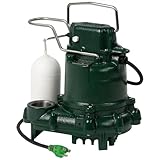
So, you’re staring at a damp basement, or maybe just anticipating the next downpour, and you’re wondering: are Everbilt sump pumps any good? I’ve been there. My first basement flood was a rude awakening. I thought I was prepared, but the cheap pump I’d grabbed from the big box store sputtered and died faster than a politician’s promise. It left me knee-deep in murky water and a whole lot wiser about what actually keeps the water out.
Everbilt is one of those brands you see everywhere. They’re affordable, readily available, and they promise to do a job. But does that translate to actually doing the job when your house depends on it? Let’s cut through the marketing fluff and get down to brass tacks.
My Sump Pump Battle Scars: What I Learned About Everbilt
Look, I’m not here to blow smoke. I’ve bought my fair share of junk, and I’ve seen what happens when a sump pump decides it’s had enough. My first real introduction to the world of basement waterproofing was a disaster, literally.
I’d bought a house, felt a bit smug about my DIY skills, and figured a basic sump pump was a no-brainer. I picked one up from a place that rhymes with ‘Home Depot’, a brand that sounded… functional. It was Everbilt, I think. Or maybe it was another house brand.
Anyway, it worked for about six months. Then came a storm that decided to test my resolve. The pump, this little plastic thing, started making this awful grinding noise.
I ran downstairs, and sure enough, water was rising. That pump, that supposed guardian of my dry basement, was choked with a bit of silt and a small twig. It just gave up.
No warning, no graceful retirement, just… death. I ended up scrambling to get a replacement, hauling a bucket out of my basement in the rain, feeling like a total idiot. That experience taught me that while ‘good enough’ might work for some things, a sump pump is not one of them.
You need something that’s built to last, and that means looking beyond just the price tag.
The common advice often boils down to ‘get the cheapest one you can find’ or ‘any pump will do’. That’s just plain wrong. You’re playing with fire, or rather, water. My first mistake was assuming all sump pumps were created equal. They’re not. There are differences in horsepower, construction materials, how they handle debris, and even how they turn on and off. Everbilt, being a popular brand, often comes up when people are looking for budget-friendly options. So, the question remains, are Everbilt sump pumps any good? Let’s break it down from a real-world perspective, not from a glossy catalog.
Horsepower, Head, and the Guts of the Matter
When you’re looking at any sump pump, forget the fancy features for a second and focus on the core stuff: horsepower and head rating. These are the two main things that tell you how powerful the pump is and how high it can push water. For Everbilt pumps, like most brands, you’ll see them advertised with horsepower ranging from 1/4 HP all the way up to 1/2 HP or even 3/4 HP for their more heavy-duty models.
What does that mean for you? Well, a 1/4 HP pump is generally fine for small basements or areas that only get occasional, minor water intrusion. It can move about 30-40 gallons per minute (GPM) under normal conditions. If you’ve got a larger basement, a history of significant flooding, or your water table is high, you’ll want to step up. (See Also: Are Pumpkin Seed Husks Edible )
A 1/3 HP or 1/2 HP pump can move significantly more water, often 50-70 GPM or more. This is where Everbilt can be a bit of a mixed bag.
I’ve seen their 1/4 HP models struggle in situations where a slightly more solid pump would have sailed through. They can get overwhelmed if there’s a sudden influx of water, or if there’s a decent amount of debris in the pit.
The ‘head’ rating is also vital. This is the maximum vertical height the pump can lift water. Most residential basements won’t need an extremely high head rating, but if your discharge pipe goes a long way up or horizontally, you need to account for that pressure loss.
Everbilt typically offers pumps with adequate head ratings for standard applications, but it’s always worth double-checking the specifications if your setup is unusual. My personal experience with a standard Everbilt model was that it was ‘okay’ for light duty, but I wouldn’t trust it for serious water issues.
It felt a bit flimsy compared to some of the heavier cast-iron models I’ve seen, which is a common point of contention when evaluating these pumps.
Construction Materials: Plastic vs. The Beast
This is where my bias really kicks in, and I’m not ashamed. When I think of a sump pump that’s going to face down a flood, I picture something solid. Something that feels like it’s built to last. Many of Everbilt’s popular, entry-level models are made primarily of thermoplastic. Now, thermoplastic has its advantages – it’s lightweight, corrosion-resistant, and cheaper to produce. That’s why you see it so often in budget pumps. However, when you’re dealing with the constant vibration, potential impacts from debris, and the stress of moving potentially thousands of gallons of water day in and day out, plastic just doesn’t have the same gravitas as cast iron or stainless steel.
I’ve had a plastic pump impeller get chipped by a rogue pebble. It wasn’t a catastrophic failure, but it definitely reduced its efficiency and made a racket.
I’ve also seen plastic housings develop hairline cracks over time due to temperature fluctuations and stress. Everbilt does offer some cast iron models, and those are generally a step up in terms of durability. They feel more substantial, and the motor is often better protected. However, they also come with a higher price tag.
So, the question of are Everbilt sump pumps any good really hinges on which model you’re looking at and what your expectations are. If you’re looking for a pump for a vacation home that might get a little damp, or a ‘just in case’ backup, a thermoplastic Everbilt might serve you well. But for a primary pump in a flood-prone area?
I’d be looking for something with more metal under the hood. It’s a trade-off between cost and long-term reliability. My gut feeling, based on years of dealing with basement water, is that for a primary pump, you want cast iron or at least a heavy-duty composite body. (See Also: Are Pumpkin Seed Acid Or Alkaline )
Installation and Common Pitfalls
Installing a sump pump isn’t rocket science, but there are definite ways to mess it up, and these mistakes can make even the best pump perform poorly. With Everbilt pumps, since they’re often a DIY-friendly option, you’ll find they come with straightforward instructions. However, there are a few common pitfalls that people, myself included in my early days, tend to fall into.
- Incorrect Pit Size: The sump pit needs to be the right size and depth. Too small, and the pump might cycle on and off too frequently, shortening its lifespan. Too shallow, and it won’t fully drain.
- Debris Buildup: As I mentioned, my first Everbilt choked on debris. Regularly cleaning out the sump pit is a must. Look for pumps with a screened intake or a design that minimizes clogging. Some Everbilt models have basic screens, but they’re not always foolproof.
- Discharge Line Issues: Make sure your discharge line is properly installed, sloped away from your foundation, and not kinked. A common mistake is having a discharge line that allows water to flow back into the pit when the pump shuts off.
- Float Switch Placement: The float switch is the brain of the operation. If it’s positioned incorrectly, the pump might not turn on until the water is too high, or it might run dry.
I once installed a pump where the float switch was just a little too low. The pump would kick on, clear the water, and then shut off, only for the water level to creep back up and trigger it again minutes later. It sounded like a miniature jackhammer in my basement. I learned to test the float switch thoroughly by manually filling the pit with a hose to make sure it activated at the right level and shut off at the right low level. For Everbilt pumps, pay extra attention to the float switch mechanism, as sometimes the plastic arms can be a bit fiddly or prone to getting caught on the pump body or pit walls.
Comparing Everbilt to the Competition: A Tough Call
When I’m asked are Everbilt sump pumps any good, I often have to qualify my answer by saying, ‘it depends.’ They compete in a crowded market, going up against brands like Wayne, Zoeller, and Little Giant, which often have a reputation for bomb-proof reliability, but at a higher price point. To give you a clearer picture, here’s a rough comparison:
| Feature | Everbilt (Typical Entry-Level) | Competitor (Mid-Range/Reputable) | My Verdict |
|---|---|---|---|
| Price | $$ (Affordable) | $$$ – $$$$ (Moderate to High) | Everbilt wins on initial cost. |
| Build Material | Thermoplastic Housing, Plastic Impeller | Cast Iron or Heavy-Duty Composite, Metal Impeller | Competitors are generally more durable. |
| Horsepower Options | 1/4 HP to 1/2 HP common | 1/3 HP to 3/4 HP common, wider range | Competitors offer more solid options. |
| Reliability (Anecdotal) | Moderate (can be hit or miss) | High (generally long-lasting) | Competitors offer greater peace of mind. |
| Ease of Installation | High (DIY friendly) | High (standard installation) | Both are generally easy to install. |
| Noise Level | Moderate | Often quieter, better motor insulation | Competitors can be less intrusive. |
| Warranty | Typically 1-2 years | Often 3-5 years | Longer warranties signal manufacturer confidence. |
The data above is a generalization, of course. Everbilt does make some higher-end models that might perform better, but their most common offerings are the budget-friendly ones.
My personal experience with mid-range Wayne pumps has been significantly better in terms of longevity and performance under load. I remember one 1/2 HP Wayne pump that ran for almost ten years straight through some brutal winters and heavy spring thaws without a single hiccup, whereas my experience with the cheaper plastic pumps has been more… eventful.
If your budget is extremely tight and you only need minimal protection, an Everbilt might be your only option. But if you can stretch your budget even a little, you’re usually better off investing in a pump from a brand with a proven track record for durability. It’s like buying a car – you can get a very cheap one, but you might end up spending more on repairs in the long run.
When an Everbilt Might Actually Make Sense
Despite my reservations, there are specific scenarios where an Everbilt sump pump can be a perfectly reasonable, even good, choice. It’s not always about buying the most expensive, most rugged thing on the market if your needs are less demanding.
For instance, if you live in a very dry climate and your basement only ever gets a little bit of seepage during the heaviest rainstorms, a basic 1/4 HP thermoplastic Everbilt might be all you need. It’s designed to handle that kind of light duty.
I have a friend who lives on a hill and rarely sees any water, but he installed a simple Everbilt as a ‘just in case’ backup. It sits there, mostly unused, and has been fine for years.
Another situation is for accessory pumps. Maybe you have a primary, heavy-duty sump pump for your main pit, but you have a small crawl space or an auxiliary area that occasionally gets a bit damp. (See Also: Are Organic Pumpkin Seeds From China Bad )
In that case, a smaller, less expensive Everbilt pump can be a cost-effective solution. They’re also great if you’re building a temporary setup or if you’re just trying to dewater a small area for a short period. The key is understanding the limitations. These pumps are generally not designed for constant, heavy-duty work in a high-water-table environment.
They are entry-level tools. So, if you’re asking are Everbilt sump pumps any good for a situation where failure would lead to thousands of dollars in damage, I’d say probably not.
But for minor issues, secondary protection, or very light duty, they can absolutely get the job done without breaking the bank.
People Also Ask: Everbilt Sump Pump Faqs
How Long Do Everbilt Sump Pumps Last?
On average, you can expect an Everbilt thermoplastic sump pump to last anywhere from 2 to 5 years. Their cast iron models might last longer, potentially 5 to 10 years. However, this is heavily dependent on usage, maintenance, water quality (debris, silt), and whether it’s used for light duty or heavy-duty applications. Regular cleaning and proper installation are key to maximizing their lifespan.
Are Everbilt Pumps Submersible?
Yes, most Everbilt sump pumps are designed to be submersible. This means they are placed directly in the sump pit, submerged in the water they are pumping out. This design allows them to be efficient and operate without needing to be manually primed. Make sure the pump is fully submerged according to the manufacturer’s instructions during operation.
What Is the Best Horsepower for a Sump Pump?
The best horsepower depends on your specific needs. For minor seepage or small basements, a 1/4 HP pump is often sufficient. For larger basements or areas prone to more significant flooding, a 1/3 HP or 1/2 HP pump is usually recommended. If you have extreme water issues or a very deep pit, a 3/4 HP or even 1 HP pump might be necessary. It’s always better to slightly oversize than undersize if you’re unsure.
Can I Use a Sump Pump with a Battery Backup?
Absolutely. Many sump pump systems are designed to work with battery backups. This is highly recommended, especially in areas prone to power outages during storms when your sump pump is most needed. You can purchase Everbilt pumps that are compatible with battery backup systems, or find standalone battery backup units that connect to your existing pump.
Verdict
So, the long and short of it? Are Everbilt sump pumps any good? They’re… okay. They’re the budget option. They’ll get the job done for light-duty applications and for folks who just need a basic failsafe without shelling out big bucks. My personal history with them is mixed, leaning towards ‘you get what you pay for.’ If your basement is a recurring water hazard, or if you’ve experienced significant flooding before, I’d strongly consider looking at brands with a more established reputation for durability and performance under pressure. Don’t learn the hard way like I did with that twig and silt.
Think of it this way: would you bet your house’s foundation on the cheapest tool you can find? Probably not. For important applications, investing a little more upfront in a more solid pump can save you a massive headache, and a lot of money, down the road. For lighter needs, though, they can certainly fill the void.
Ultimately, the decision is yours, but weigh your risk tolerance against your wallet. Happy pumping (or not pumping, if all goes well).