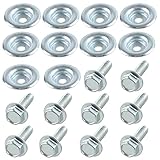
I remember the first time I pulled heads off a 351 Windsor. I was maybe 19, thought I knew everything, and definitely figured those bolts could just go right back in. Saved myself some cash, or so I thought. Fast forward a few weeks, and I’m chasing down a coolant leak that just wouldn’t quit. Turns out, my ‘money-saving’ idea cost me way more in time and frustration than new bolts ever would have. So, let’s cut to the chase: are 351w head bolts reusable? The short, blunt answer is usually no, and here’s why you should probably stop even asking that question.
Don’t Be That Guy: Why Reuse Can Be a Disaster
Look, I get it. Every dollar counts, especially when you’re building an engine. You’ve got gaskets, maybe some machine work, and suddenly a set of fresh head bolts starts looking like a luxury you can’t afford.
But here’s the deal: head bolts aren’t just glorified screws holding your cylinder heads to the block. They’re precision components that are subjected to immense clamping forces, thermal cycling, and chemical environments. When you torque them down, especially to the stretch specifications many modern engines (and performance builds) require, you’re actually stretching the bolt material.
This stretching is what creates the clamping force. Think of it like a really strong rubber band – you stretch it, and it holds things together. But if you stretch that rubber band too many times, or too far, it weakens and eventually snaps or just loses its grip.
The 351 Windsor, especially in performance applications, generates serious heat and pressure. These bolts go through cycles of expansion and contraction every time the engine heats up and cools down. This constant stress can lead to microscopic fatigue cracks, changes in the bolt’s material grain structure, and a loss of tensile strength. Even if a bolt looks perfectly fine to the naked eye – no obvious rust, no bent shank, no stripped threads – it might be compromised.
Reusing them is like playing Russian roulette with your engine’s sealing integrity. A weak bolt might not hold the required clamping force, leading to a poor seal between the head and the block. This is where coolant leaks into the combustion chamber, oil seeps into coolant passages, or worst of all, compression escapes, robbing you of power and potentially causing catastrophic damage.
I once had a buddy insist on reusing his ARP studs on a mild street build. He swore they were ‘just fine.’
Six months later, he was crying to me about a constantly disappearing coolant level and a milkshake-looking oil. We pulled the heads, and sure enough, one of the studs had stretched beyond its elastic limit and wasn’t providing enough clamp load. The gasket was literally weeping coolant into a cylinder.
It cost him a new set of studs, a gasket job, and a significant chunk of his weekend to fix what he tried to avoid paying for initially. It’s a hard lesson, but one that sticks.
You’re not just buying bolts; you’re buying peace of mind and making sure the integrity of your engine’s most important seal. (See Also: Are All Honda Atv Bolt Patterns The Same )
What to Look for (and Not Look For)
So, if you’re staring at a box of used 351w head bolts and wondering if they’re ‘good to go,’ what exactly are you looking for? Honestly, the list of ‘good to go’ is depressingly short. The vast majority of the time, the answer is ‘no.’ However, let’s say you absolutely had to inspect a set, perhaps from a very low-mileage, never-been-overheated engine that was disassembled for a minor reason. You’d be looking for pristine condition. That means:
- No signs of stretching: This is the big one. Head bolts designed for torque-to-yield or stretch applications should ideally never be reused. For older, non-stretch designs, you’d ideally measure the length. If the bolt is significantly longer than its original spec (and you know that spec), it has stretched. Many performance builds use torque-to-yield bolts, making reuse a definite no-go.
- Perfect threads: Any nicks, burrs, cross-threading, or damaged threads are an immediate disqualifier. These bolts thread into the block, and damaged threads can lead to improper seating and insufficient clamping force, or make them impossible to install correctly.
- No corrosion or pitting: Rust, especially in the area that seals against the head or block, can create leaks and compromise the bolt’s integrity. Pitting weakens the bolt.
- No heat damage: Look for discoloration that might indicate overheating. Bluing or darker colors suggest the metal has been stressed beyond its normal operating parameters.
- No visible cracks or deformation: A visual inspection for any signs of stress fractures or bending is obvious but necessary.
Here’s the contrarian take: While most mechanics and performance shops will tell you to toss used bolts, I’ve heard whispers from old-school guys who swear by re-using standard, non-stretch head bolts from engines that were clearly well-maintained and never overheated. Their logic is that if the bolt hasn’t been stressed beyond its yield point, it’s still good. Personally? I wouldn’t risk it on anything I cared about, especially with the relatively low cost of new, quality head bolts. The potential for catastrophic engine failure or costly leaks far outweighs the small savings. It’s a gamble that just isn’t worth taking in my book.
The Case for Brand New: Why It’s Worth the Investment
Let’s talk about why spending money on new head bolts for your 351w isn’t just a good idea, it’s downright smart. First off, you’re dealing with a part that’s directly responsible for the seal between your cylinder head and engine block.
This is arguably the most important seal in the entire engine. It prevents combustion gases from escaping, coolant from entering the cylinders, and oil from contaminating your coolant. If this seal fails, you’re looking at a cascade of problems that can quickly turn a simple repair into a major overhaul. The cost of a new set of head bolts, whether they’re OEM-style replacements or aftermarket performance units, is a tiny fraction of the cost of fixing the damage caused by a blown head gasket.
When you buy new head bolts, you know you’re getting material that hasn’t been through the thermal and mechanical stresses of previous use. You’re getting consistent tensile strength and predictable stretch characteristics. This is especially true if you opt for quality aftermarket bolts. Brands like ARP, Fel-Pro, or even high-quality OEM replacements are engineered to meet or exceed factory specifications. Many aftermarket kits come with specific installation instructions detailing torque sequences and torque-to-yield (TTY) specifications, which are designed to achieve optimal clamping force by stretching the bolt to a precise measurement. Trying to achieve this with used bolts is like trying to hit a bullseye with a bent arrow – you might get lucky, but it’s highly unlikely.
I’ve seen engines built with reused fasteners fail prematurely. It’s not always immediate, but over time, the compromised bolts can lead to gradual loss of clamping force, manifesting as minor oil or coolant seeps that eventually escalate into full-blown leaks. The ‘savings’ on head bolts can easily be eaten up by the cost of repeated repairs, diagnostic time, and the sheer frustration of dealing with an unreliable engine. For instance, a set of decent aftermarket 351w head bolts might run you anywhere from $60 to $150, depending on the brand and material.
Compare that to the potential cost of a head gasket job, which can easily run into the hundreds, or even thousands, if more severe damage is found. It’s a no-brainer from a risk-management perspective.
Common Mistakes and What the Pros Say
One of the biggest mistakes people make when it comes to reusing head bolts is underestimating the ‘torque-to-yield’ concept. A lot of modern engines, and certainly any performance-oriented 351w build you’d be doing, use TTY bolts. These bolts are designed to be stretched to their elastic limit. Once they’ve been yielded, they have basically reached their intended service life and should not be reused. The material has been plastically deformed, and its ability to hold clamping force consistently is compromised. Many enthusiasts, thinking they’re saving a buck, will reuse these, leading to leaks and potential engine damage down the line. It’s a classic case of ‘penny wise, pound foolish.’
Another common error is simply not inspecting the bolts thoroughly enough. People might give them a quick once-over, see no obvious damage, and assume they’re fine. They miss the subtle signs of fatigue or stretching that a more experienced eye, or specialized tools, would catch. For example, using a simple tape measure to check length isn’t always accurate enough for modern, high-tolerance engines. Precision measuring tools are often needed to detect the slight elongation that indicates a bolt has yielded. Furthermore, improper cleaning can leave debris on the bolt or in the bolt hole, which can affect torque readings and lead to uneven clamping. (See Also: Are Ak Bolts Interchangeable )
What do the pros say? Well, most reputable engine builders and mechanics will tell you, unequivocally, to use new head bolts. It’s a fundamental step in making sure a reliable rebuild. They understand the stresses involved and the importance of proper clamping.
For example, when you look at a service manual for a 351w (or any Ford V8 of that era), it will often specify using new bolts or re-torqueing procedures for specific applications, but for performance builds or major repairs, new is always the recommendation. The reason is simple: liability and reputation. No professional wants their work to fail because of a reused fastener. They know that the cost of failure – both financial and reputational – is far too high.
They’ll always err on the side of caution, and that means new head bolts.
Choosing the Right Bolts for Your 351w
The type of head bolts you need depends heavily on your 351w’s intended use. For a stock rebuild of a mild street engine, high-quality OEM-style replacement bolts are usually sufficient. These will mimic the original specifications and materials. However, if you’re building a performance engine – one that will see higher RPMs, increased cylinder pressures (from higher compression or forced induction), or aggressive driving – you’ll want to step up to aftermarket performance head bolts.
These are typically made from stronger alloy steels and are designed to withstand higher clamping forces and thermal loads. They often feature rolled threads for increased strength and smoother installation. Some high-performance applications might even benefit from head studs, which can offer more consistent clamping force and make head removal/installation easier in the future, as the threads are in the block, not the bolt itself, and studs are generally less prone to stretching than bolts.
| Bolt Type | Typical Application | Reusability Verdict (Opinion) | Notes |
|---|---|---|---|
| OEM Style | Stock replacement, mild street builds | NO | Designed for specific torque specs; often torque-to-yield |
| Aftermarket Performance Bolts | Performance street, mild racing | NO (unless specified otherwise by manufacturer for specific types) | Stronger alloys, higher tensile strength, often better thread rolling. |
| Aftermarket Head Studs | High-performance racing, forced induction, extreme street | YES (generally, but inspect carefully) | Offer superior clamping force consistency; easier installation/removal. |
Practical Tips for Installation
Once you’ve got your shiny new head bolts, the job isn’t done. Proper installation is just as vital as using new hardware. First things first: clean your bolt holes. Use a tap or a dedicated bolt hole cleaner to remove any old thread sealant, carbon, or debris from the threaded holes in your engine block.
This makes sure the bolts thread in smoothly and achieve the correct depth and clamping force. A little bit of debris can throw off torque readings significantly. I learned this the hard way when I didn’t clean one hole properly, and the bolt bottomed out too early, leading to an under-torqued cylinder head on that bank. Took me hours to figure out why the compression was low.
Next, make sure you’re using the right lubricant. Most new head bolts, especially aftermarket ones, will come with specific installation instructions.
They’ll often recommend a specific thread lubricant or oil. Never use anti-seize unless the manufacturer explicitly states to do so. Anti-seize compounds alter the torque readings, basically making the bolt tighter than you think it is, which can lead to overstretching and failure. Follow the manufacturer’s guide precisely for how many threads to lubricate and where. (See Also: Are All Bolt Patterns The Same )
Some bolts are coated and don’t require any additional lube. Also, pay close attention to the torque sequence. Engines are complex machines, and applying clamping force in the correct order prevents distortion of the cylinder head and makes sure an even seal across the entire gasket surface.
Start from the center and work outwards in a criss-cross pattern, tightening in stages as specified in your service manual or the bolt manufacturer’s instructions. Don’t just crank them down all at once. Gradual, staged tightening is key.
Finally, double-check everything. After the final torque pass, give each bolt a quick spin with your wrench to make sure it hasn’t loosened. If you’re dealing with torque-to-yield bolts, you’ll be using an angle gauge after the initial torque setting. Make sure you’re hitting the specified angle accurately. These numbers are not suggestions; they are engineering requirements for optimal performance and longevity. Missing a step or being imprecise can negate all the effort you put into buying quality parts. For instance, a common mistake is over-torquing by angle, which can snap the bolt head right off. I’ve seen it happen, and it requires drilling out the bolt shank, a job nobody enjoys.
People Also Ask
Can You Reuse Stock 351w Head Bolts?
Generally, no. Most stock 351w head bolts are designed to be used once and are either torque-to-yield or prone to stretching with repeated tightening. Reusing them risks insufficient clamping force, leading to head gasket failure. It’s a gamble with your engine’s integrity.
What Happens If You Reuse Head Bolts?
If you reuse head bolts, especially torque-to-yield ones, they may not provide the necessary clamping force. This can cause the head gasket to fail, leading to coolant leaks into the combustion chamber or oil passages, loss of compression, and potentially severe engine damage.
How Do You Know If a Head Bolt Is Stretched?
The most reliable way is to measure its length against the manufacturer’s specifications. If it’s significantly longer than its original length, it has stretched. Visual inspection can sometimes reveal deformation or heat discoloration, but length measurement is the definitive test for yield.
Are Arp Head Bolts Reusable?
ARP head bolts and studs are generally made from higher-strength materials and are often designed with rolled threads, which are more durable. While they are more solid, they should still be inspected carefully for any signs of stretching or damage. For important applications, replacing them periodically or using studs is often recommended by performance builders, but they are typically more forgiving than standard OEM bolts.
What Is the Torque Spec for 351w Head Bolts?
Torque specifications for 351w head bolts vary depending on the specific year, engine variant (e.g., 2V vs. 4V), and the type of bolts used (standard vs. torque-to-yield). Always consult the specific service manual for your engine or the manufacturer’s instructions for the aftermarket bolts you are using. A common range for later models is around 25-30 ft-lbs initial torque followed by an angle torque specification, but this is a generalization.
Conclusion
So, after all this, let’s circle back to the original question: are 351w head bolts reusable? My honest, no-nonsense advice is to skip the question altogether and just buy new ones. The few bucks you might save by trying to reuse old bolts are simply not worth the massive risk of engine failure, costly leaks, and the frustration of a botched rebuild. Think of new head bolts as cheap insurance for one of the most vital seals in your engine.
When you’re building or repairing an engine, especially a Ford 351 Windsor, you want it to be reliable. You want it to perform as intended without worrying about whether a fastener is going to give up the ghost. Investing in a quality set of new head bolts is one of the easiest and most effective ways to make sure that reliability and prevent headaches down the road.
Your engine block and heads are the foundation of your entire project. Don’t compromise that foundation with questionable hardware. Do yourself a favor, buy new, and sleep better knowing you’ve done it right.