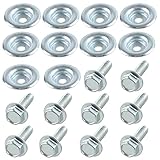
I remember the first time I tried to build a serious outdoor structure. Had this grand plan for a pergola that looked amazing in the magazine. Naturally, I went to the hardware store and grabbed what looked like the heftiest bolts they had. They were stamped A325. Seemed official, right? Fast forward a year, and one of the main support beams is looking… wobbly. Turns out, just grabbing the ‘strong-looking’ bolts isn’t enough. You gotta know what you’re actually buying, especially when you’re asking if are a325 bolts heat treated. It’s not as simple as just looking tough.
I learned the hard way that a little knowledge upfront saves a lot of headaches – and potential structural failures – later. This isn’t about corporate jargon; it’s about what actually holds up when the wind blows or the load gets heavy.
What Makes an A325 Bolt Different?
So, you’ve seen the A325 stamp on bolts and wondered what it means. It’s not just some random number. That designation, A325, is a mouthful from the American Society for Testing and Materials (ASTM). It tells you this bolt is designed for structural connections, the kind that hold up bridges, buildings, and yes, that pergola I was so proud of (and then had to fix). When people ask if are a325 bolts heat treated, they’re really asking about the strength and reliability they can expect. The short answer is: yes, they are, and that’s a huge part of why they’re used.
The heat treatment process is what gives these bolts their superior mechanical properties. It’s not just about making them hard; it’s about making them strong, tough, and capable of handling significant stress without failing. Think about it: these bolts are often used in applications where a failure could be catastrophic. A bridge collapsing or a building’s frame giving way isn’t a minor inconvenience; it’s a disaster. So, the manufacturers have to jump through hoops to make sure these fasteners meet rigorous standards.
The ASTM A325 specification is pretty detailed. It covers things like the chemical composition of the steel, the tensile strength, the yield strength, and importantly, the heat treatment. You can’t just take any old piece of steel, forge it into a bolt shape, and call it an A325. There’s a precise recipe involved. This spec is important for engineers and builders because it gives them a predictable level of performance. They can design structures knowing that a bolt marked A325 will behave in a certain way under specific loads. That predictability is gold when you’re talking about safety and longevity.
The heat treatment itself typically involves heating the steel to a specific temperature, holding it there for a set amount of time, and then cooling it rapidly (quenching). This process changes the microstructure of the steel, making it stronger and harder. However, just quenching can make steel brittle. That’s where the tempering step comes in. Tempering involves reheating the quenched steel to a lower temperature and holding it there before cooling again. This reduces brittleness while retaining a good portion of the hardness, giving you that sweet spot of strength and toughness. The exact temperatures and times are part of the proprietary knowledge of the bolt manufacturers, but the ASTM standard dictates the resulting properties.
Understanding that A325 bolts are indeed heat treated is the first step in appreciating why they are the go-to for structural applications. It’s not magic; it’s metallurgy and adherence to strict standards. I learned this when I had to replace a couple of those bolts on my pergola. The ones I bought initially, which I now suspect weren’t actual A325s despite the stamp (a lesson in itself), had stretched and weakened. Replacing them with certified A325s, which I confirmed had the proper heat treatment documentation, made the whole structure feel solid again. It was a stark reminder that not all bolts are created equal.
The Heat Treatment Process Explained (simply)
Alright, let’s break down what ‘heat treated’ actually means for these bolts, without making your eyes glaze over. When we talk about A325 bolts, the heat treatment isn’t just a random step; it’s the core reason they’re strong enough for serious jobs. Imagine you have a piece of metal, and you want to make it tougher and more resilient. Heat treatment is like giving it a high-tech spa treatment, but with way more intense heat and controlled cooling.
The main goal is to alter the internal structure of the steel. The most common process for bolts like the A325 is called quenching and tempering. First, the bolts are heated to a really high temperature – think glowing red hot, probably somewhere around 1500-1600 degrees Fahrenheit. They hold them at this temperature for a while. This heat rearranges the atoms within the steel into a specific crystalline structure, usually martensite, which is incredibly hard but also very brittle. If you stopped here, the bolt would be hard, but it would snap like a dry twig under any real stress.
So, the next important step is tempering. After the quenching (rapid cooling, usually in oil or water), the bolts are reheated to a much lower temperature, say 400-800 degrees Fahrenheit. This is where the magic happens to get them usable. This lower heat allows some of the internal stresses to relax, and it softens the steel just enough to make it tough and ductile – meaning it can bend and deform slightly under load without breaking. The specific temperature and time for tempering dictate the final balance between hardness and toughness. Too low a temperature, and it’s still too brittle. Too high, and you lose too much hardness and strength.
This whole cycle – heating, quenching, and tempering – is what imbues the A325 bolt with its specified mechanical properties. It’s not about making the bolt physically bigger or heavier; it’s about fundamentally changing the material’s internal makeup. This controlled process makes sure that every A325 bolt meets the stringent requirements for tensile strength (how much pulling force it can withstand before breaking) and yield strength (how much force it can withstand before permanently deforming). Without this precise heat treatment, an A325 bolt would be just another piece of metal, completely unsuitable for structural applications where safety is most important.
I remember a project where we got a batch of bolts that looked good but were suspiciously cheap. A few weeks into the job, one of the guys noticed a slight deformation on a couple of them. We pulled them out, and you could just feel they were ‘off’. They weren’t brittle, but they also didn’t have that solid, unyielding feel.
Turns out, the supplier had skimped on the tempering stage, or done it incorrectly. The bolts were harder than standard hardware store bolts, but they lacked the necessary toughness. It was a costly lesson: you can’t fake heat treatment.
It requires specialized equipment and expertise, which is why reputable manufacturers invest heavily in it. For A325 bolts, it’s a must for their intended purpose.
What to Look for: Beyond the ‘a325’ Stamp
Okay, so you know A325 bolts are heat treated. Great. But how do you actually know you’re getting the real deal when you’re standing in a store, or worse, ordering online? The ‘A325’ stamp is the starting point, but it’s not the whole story. I’ve been burned by bolts that had the right stamp but were clearly not up to snuff. It’s like seeing a fancy label on a jar of pickles and finding out it’s mostly brine and disappointment. (See Also: Are All Honda Atv Bolt Patterns The Same )
The first thing to look for is the manufacturer’s mark. Alongside the A325 designation, there should be a symbol or name identifying the company that made the bolt.
This is important because reputable manufacturers are usually invested in maintaining their reputation and adhering to standards. If you see an A325 stamp with nothing else, or a weird, unidentifiable mark, be suspicious. I’ve learned to stick with brands I recognize or suppliers who can provide documentation.
I once bought some bolts online that were advertised as A325, but they only had the number and no manufacturer ID. They felt lighter, and the threads seemed rougher.
When I tried to torque them down on a deck joist, one of them actually stripped before reaching the proper tension. That’s a big red flag.
When you’re buying in bulk or for a important project, you should be able to get a Material Test Report (MTR) or a Certificate of Conformance (COC). These documents are provided by the manufacturer and certify that the bolts meet the A325 specifications, including the results of their mechanical testing and confirmation of the heat treatment process.
For A325 bolts used in structural applications, especially those subject to building codes, having this documentation can be a legal requirement. It’s not just a piece of paper; it’s proof that the bolts have undergone the necessary processes to achieve the specified strength and toughness. I always ask for these if I’m doing anything more than a small DIY repair. It adds a layer of assurance that’s worth the effort.
Another indicator, though less definitive, is the finish. While A325 bolts are often galvanized for corrosion resistance (which is a coating, not part of the heat treatment itself), the underlying steel should look and feel like quality material. The threads should be clean and well-formed. The head should be properly shaped and stamped. A bolt that looks sloppily made, with rough edges or uneven threads, is probably a sign that quality control wasn’t a top priority throughout the manufacturing process, including the important heat treatment stage. I’ve seen bolts where the heads were slightly off-center, or the threads looked like they were cut with a dull knife. Those are not the bolts you want holding up something important.
Here’s a quick comparison of what you might find, and my take:
| Bolt Type/Marking | Heat Treated? | Typical Use | My Verdict |
|---|---|---|---|
| ASTM A325 | Yes (Quenched & Tempered) | Structural connections (bridges, buildings, heavy frames) | The real deal for heavy-duty work. Worth the price and the search for documentation. |
| ASTM A307 | No (or minimal) | General purpose, light-duty connections (fencing, basic frames) | Fine for non-important stuff, but don’t push it for anything structural. Definitely not a substitute for A325. |
| Generic Hardware Store Bolt (No ASTM Mark) | Varies wildly (often none) | Light assembly, temporary fixings | A gamble. Usually lower strength. Avoid for anything load-bearing. |
| ‘High Tensile’ Bolt (No ASTM Mark) | Likely, but not specified | Unknown, depends on manufacturer | Can be decent, but the lack of spec is a problem. A325 is a known quantity. |
My advice? Don’t guess. If your project demands the strength of an A325, invest the time to source them from a reputable supplier and get the paperwork to back it up. It saves you from the ‘lesson learned’ moment I’ve had more than once.
Common Mistakes When Using A325 Bolts
So, you’ve got your properly heat-treated A325 bolts. High five! But hold on, just screwing them in isn’t the end of the story. I’ve seen people mess this up in ways that make the heat treatment almost pointless. It’s like having a Ferrari and driving it like a golf cart – you’re not using it for what it’s designed for, and you risk damaging it.
The most common blunder is improper tightening. A325 bolts are designed to be tightened to a specific tension, often using a method called “turn-of-nut” or by using calibrated torque wrenches. If you overtighten them, you can actually exceed the yield strength, which means the bolt will permanently stretch and weaken, even though it doesn’t break immediately.
This is where that toughness from the heat treatment is supposed to prevent failure, but you’re still compromising the bolt’s integrity. On the flip side, if you undertighten them, you won’t achieve the clamping force needed for a secure structural connection. The joint can loosen over time, leading to fatigue and eventual failure. I had a friend build a deck extension, and he just cranked on his impact wrench until it “felt tight.”
A year later, the whole thing was creaking and groaning. Turns out, he’d either stretched some bolts or left others too loose. We had to go back and re-tension everything properly.
Another mistake is using the wrong washers, or no washers at all. A325 bolts typically require hardened washers, usually ASTM F436 washers. These washers are also heat treated to be tough and strong. They distribute the load evenly under the bolt head and the nut, preventing the bolt from digging into the wood or steel and damaging the material. They also help make sure a more consistent clamping force when tightening. I’ve seen people use regular, thin washers that just deform, or skip them entirely, thinking it’s a cost-saving measure. It’s a false economy. When that washer deforms or is absent, you lose that uniform pressure, and you’re not getting the full benefit of the A325 bolt’s strength. (See Also: Are Ak Bolts Interchangeable )
Then there’s the issue of corrosion. While A325 bolts are often galvanized for protection, this coating can be damaged during installation if you’re not careful. If the threads get scraped or the coating is compromised, the steel underneath can start to rust, especially in damp environments.
This corrosion weakens the bolt over time. It’s why using proper installation tools and handling the bolts with care is important. If you’re using plain steel A325s (less common for outdoor use), you absolutely need to make sure they are protected from the elements, either through painting or other coatings after installation, or by using them in dry, protected areas.
For my pergola, I specifically chose hot-dip galvanized A325s and made sure not to over-wrench them, which can damage the zinc coating.
One thing that really grinds my gears is when people use A325 bolts for applications where they aren’t needed, or try to use regular bolts for A325 jobs. The heat treatment and specs for A325 bolts make them more expensive. Using them for a simple garden bench is overkill.
Conversely, using standard, non-heat-treated bolts for structural framing is just asking for trouble. It’s about matching the fastener to the load and the consequence of failure.
The ‘People Also Ask’ question about whether A325 bolts are stronger than regular bolts is a good one. Yes, they are significantly stronger due to their material composition and, critically, their heat treatment. Trying to substitute one for the other is a common, and dangerous, mistake.
Real-World Applications and Why They Matter
When you’re talking about A325 bolts, you’re talking about the backbone of serious construction. These aren’t the little bolts you use to hang a picture frame. They are designed for situations where failure isn’t an option. Think about the bridges you drive over every day. Many of them rely on A325 bolts (or their metric equivalent, M22 or M24 depending on the standard) to hold the structural steel together. The sheer scale of these structures means the forces at play are immense. The heat treatment that makes A325 bolts strong also gives them the necessary toughness to withstand vibration, temperature changes, and the constant stress of traffic.
Construction of commercial buildings, stadiums, and industrial facilities is another huge area where A325 bolts are indispensable. They’re used to connect steel beams, columns, and other structural members that form the skeleton of these massive structures. The engineers who design these buildings specify A325 bolts because they know exactly what kind of strength and performance they can expect, thanks to the ASTM standards and the rigorous heat treatment process. This predictability is what allows them to calculate loads, stresses, and safety margins with confidence. If you’re building a workshop, a large shed, or any kind of sturdy frame, using A325 bolts makes a lot of sense.
I’ve used them myself for several projects where standard hardware store bolts just wouldn’t cut it. My aforementioned pergola was one. I also built a heavy-duty workbench for my garage that needed to support thousands of pounds of tools and materials. I used A325 bolts to connect the main frame. The workbench feels like it’s bolted to the concrete floor, rock solid. The heat treatment means I don’t worry about it shifting or loosening under load, and that peace of mind is worth a lot to me. It’s the difference between a piece of furniture and a piece of engineered equipment.
Here’s the deal: if the structure you’re building has significant load-bearing requirements, or if a failure could cause damage or injury, you should be looking at A325 bolts. This includes things like decks, porches, retaining walls (especially if using timber framing), gazebos, and heavy-duty shelving units. The ‘People Also Ask’ question about how to properly install A325 bolts is really about respecting their purpose. It involves using the correct washers, making sure the surfaces are clean, and tightening them to the specified tension. It’s not just about having a strong bolt; it’s about using it correctly to achieve the designed clamping force and structural integrity.
The reason they matter so much is that they provide a reliable, standardized method for creating strong, durable connections. Unlike welding, which requires specialized skills and equipment, or adhesives, which can degrade over time or be affected by environmental conditions, bolted connections with A325s offer a solid, repeatable, and inspectable method of fastening. The heat treatment is the foundational element that allows them to perform reliably under stress, making them a cornerstone of modern structural engineering and heavy-duty construction. My own projects have benefited immensely from this understanding; what used to be a guessing game is now a confident choice based on material science.
A325 Bolts vs. Other Fasteners: A Straight Comparison
It’s easy to get lost in the world of nuts and bolts, but when you’re dealing with structural integrity, you need to know what you’re using. The question often comes up: are A325 bolts heat treated, and how do they stack up against other common fasteners? The short answer to the first part is a resounding yes. The heat treatment is what fundamentally separates them from lower-grade bolts. Let’s lay it out plainly.
Standard hardware store bolts, often marked with grades like Grade 2 (or just having no specific grade marking), are generally not heat treated for strength. They’re made from softer steel and are designed for light-duty applications – think assembling furniture, attaching hinges, or simple repairs.
Their tensile strength is significantly lower than an A325. If you were to try and use a Grade 2 bolt where an A325 is specified, it would likely stretch, deform, or break under the load. I once tried to use a bunch of generic bolts to reinforce a garden shed frame during a storm. They looked beefy enough, but they all bent outward under the wind pressure. (See Also: Are All Bolt Patterns The Same )
The A325 bolts on the main door hinge, however, held firm.
Then you have higher-grade bolts like the A307. These are a step up from Grade 2 but still generally don’t undergo the same intensive quenching and tempering process as A325s. A307 bolts are often used for low-strength structural applications, like joining pipe flanges or for general construction where the loads aren’t extreme. They have better tensile strength than Grade 2, but they still lack the specialized toughness and high tensile/yield strength that A325 bolts achieve through their heat treatment. They’re a middle ground, but not a substitute for A325s in important structural joints.
Another common comparison is with high-strength bolts like A490. These are even stronger than A325s and are also heat treated. They are often used in applications with even higher stress demands, like seismic connections or bridges designed for very heavy loads. The A325 is a workhorse, designed for a wide range of structural uses. The A490 is for the extreme end. For most typical structural framing, decks, and heavy-duty DIY projects, A325s are perfectly sufficient and the standard choice. The difference in heat treatment and material composition between A325 and A490 is designed to meet these escalating strength requirements.
The key takeaway is that the heat treatment process for A325 bolts isn’t just a formality; it’s the science that gives them their specified performance. It’s what makes them suitable for important structural connections where safety and longevity are most important. When you see the A325 stamp, know that it signifies a bolt that has been precisely engineered and treated to meet demanding standards, far exceeding what you’ll find in basic hardware. For any project where a failure could have serious consequences, sticking to the specified fastener, like the A325, is a must. I always double-check the specs for my projects; assuming a bolt is strong enough without verifying its grade and ASTM designation is a mistake I learned to avoid the hard way.
Why Are A325 Bolts Considered Superior?
A325 bolts are considered superior for structural applications because they are specifically designed and manufactured to meet rigorous strength, toughness, and performance standards defined by ASTM. This is achieved through a controlled heat treatment process (quenching and tempering) that significantly increases their tensile and yield strength, allowing them to withstand substantial loads and stresses without permanent deformation or failure. Their reliability makes them the standard choice for important connections in bridges, buildings, and other heavy-duty structures.
Can I Use A325 Bolts for General Purposes?
While you can use A325 bolts for general purposes, it’s usually overkill and more expensive than necessary. Standard hardware store bolts (like Grade 2 or unmarked) are sufficient for light-duty tasks like assembling furniture or hanging shelves. A325 bolts are designed for structural applications where high strength and load-bearing capacity are key; using them for minor tasks means you’re paying for performance you don’t need and potentially making assembly more difficult due to their required tightening procedures.
How Do I Identify a Genuine A325 Bolt?
To identify a genuine A325 bolt, look for the ‘A325’ marking clearly stamped on the head, usually alongside a manufacturer’s mark. Reputable suppliers will also be able to provide a Material Test Report (MTR) or Certificate of Conformance (COC) which certifies that the bolt meets ASTM A325 specifications, including confirmation of its heat treatment. Visually, they should appear well-made with clean threads and a solid feel, distinct from lower-grade fasteners.
Are A325 Bolts Heat Treated?
Yes, A325 bolts are heat treated. This is a fundamental part of their manufacturing process and is what gives them their high strength and toughness required for structural applications. The heat treatment typically involves quenching and tempering the steel to achieve specific mechanical properties defined by the ASTM A325 standard.
What Is the Difference Between A325 and A490 Bolts?
Both A325 and A490 bolts are heat-treated structural bolts, but A490 bolts are stronger. A490 bolts have higher tensile and yield strength requirements and are made from a steel alloy that allows them to withstand even greater loads than A325 bolts. A325 bolts are suitable for most structural connections, while A490 bolts are typically used in applications with exceptionally high stress demands, such as heavy-duty bridges or seismic-resistant structures.
Can You Overtighten A325 Bolts?
Yes, you can definitely overtighten A325 bolts. While they are designed for high strength, overtightening can cause them to exceed their yield strength, leading to permanent stretching and weakening of the bolt. This compromises the integrity of the joint, even if the bolt doesn’t immediately break. Proper installation involves tightening to a specific tension, often using methods like the “turn-of-nut” procedure or calibrated torque wrenches, to make sure optimal performance without overstressing the fastener.
Verdict
So, to circle back to the main question: are a325 bolts heat treated? Absolutely. It’s not just a feature; it’s the defining characteristic that makes them suitable for the heavy-duty jobs they’re designed for. From bridges to sturdy workshop benches, that heat treatment provides the strength and reliability we need. Don’t skim on this detail; it’s the difference between a structure that lasts and one that becomes a DIY disaster story.
When you’re picking out fasteners for a project that matters, don’t just grab the shiniest or the most common ones. Take a moment to understand the grade and the specifications. For structural work, A325 is often the standard for a reason. It means predictable performance, thanks to that carefully controlled heat treatment.
Next time you’re at the hardware store or browsing online for bolts, remember this. Look for that A325 stamp, and if you’re doing anything important, ask for the documentation. It’s the best way to make sure your project is built on a solid foundation, literally.