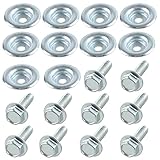
I remember the first time I stared at a pile of camshaft bolts, all looking suspiciously identical. My buddy swore up and down that any B-series cam bolt would do for my old Civic. Turns out, he was half right, and I ended up with a stripped thread and a much lighter wallet. So, are all b series cam bolts the same? The simple answer is: not exactly, and understanding the nuances can save you a heap of trouble.
It’s easy to get lost in the jargon and the sheer volume of parts out there. Many people just grab whatever looks like it’ll fit. But when it comes to the heart of your engine, those small differences can matter more than you think. Let’s cut through the confusion.
Why You Can’t Just Grab Any B Series Cam Bolt
Look, I’m not going to lie. When I first got into working on cars, I thought “camshaft bolt, same difference.” My first attempt at replacing a timing belt on a B18C engine involved me confidently ordering what I thought was the right part. It looked right, the thread pitch seemed okay, but when it came time to torque it down, the wrench just spun. A quick call to the parts counter revealed I’d ordered a bolt meant for a different generation, a subtle difference in shank length that made all the difference.
I ended up needing to order the correct one overnight, costing me an extra $30 and a whole day of wrenching. That little mistake taught me a valuable lesson: not all B-series cam bolts are created equal, even if they appear visually similar.
The main function of the camshaft bolt is to secure the camshaft pulley to the end of the camshaft. This pulley is driven by the timing belt, which synchronizes the opening and closing of valves with the movement of the pistons. If that bolt isn’t the right one, or if it fails, the synchronization goes out the window. This can lead to anything from poor engine performance, misfires, and rough idling to catastrophic engine damage if the timing jumps severely. You’re talking bent valves, damaged pistons – the kind of repairs that make your eyes water.
The key differences usually lie in minor variations in shank length, head diameter, thread pitch, or the material strength. For example, some bolts might have a slightly longer shank to make sure full engagement with the camshaft threads, especially if there’s a slight variation in the camshaft’s end design across different B-series sub-models or aftermarket camshafts. Others might use a higher-grade steel for increased tensile strength, important for maintaining proper torque under high-stress conditions. While a visually identical bolt might seem to thread in, the subtle differences can compromise its ability to hold the correct torque or withstand the rotational forces and vibrations experienced during engine operation. It’s like using a regular screw when you need a specific load-bearing bolt; it might hold for a bit, but it’s a ticking time bomb.
When you’re shopping, you’ll often see part numbers that seem specific to your engine code (like B16A, B18B, B18C). These aren’t just for show. They denote the precise specifications that Honda engineers determined were necessary for optimal performance and reliability for that particular engine. Don’t be tempted to think a bolt from a B20 will automatically work in a B18, or that an older B16 bolt is interchangeable with a newer one without verification. The cost of a genuine or high-quality aftermarket bolt is minuscule compared to the potential engine damage from using the wrong one.
What to Look for: Specs That Actually Matter
Forget just grabbing the cheapest one or the one that looks the same. When you’re trying to figure out if a B-series cam bolt is the right one, you need to get a bit nerdy. It boils down to a few key specifications that are often overlooked by the casual DIYer.
The first thing to check is the thread pitch and diameter. Most Honda B-series engines use a standard metric thread size, but even slight variations can cause problems.
A bolt that feels like it’s threading in might be cross-threading, which is a one-way ticket to stripped threads on both the bolt and the camshaft itself. This is a nightmare to fix, often requiring thread repair kits or even replacing the camshaft, which is a significant undertaking and expense.
Next up is the shank length. This is the unthreaded portion of the bolt between the head and the start of the threads. Even a millimeter or two difference can mean the bolt doesn’t seat properly against the camshaft, or it might bottom out before it’s fully tightened. The camshaft pulley has a specific depth, and the bolt needs to engage the correct number of threads within the camshaft to hold it securely. A bolt that’s too long might prevent the pulley from sitting flush, while one that’s too short won’t provide enough clamping force.
Material and grade are also important. Camshaft bolts are typically made from hardened steel to withstand the stresses they endure. You’ll see designations like Grade 8.8, 10.9, or even 12.9. Higher numbers indicate stronger materials. While you probably don’t need a military-grade bolt for a daily driver, using a bolt made of significantly weaker material than the original can lead to failure over time, especially in performance applications or if the engine is subjected to high RPMs. The head size and style also play a role, particularly in how a socket or wrench fits. Most B-series cam bolts use a 17mm or 19mm hex head, but making sure your tool fits snugly is part of proper torque application.
Here’s a quick rundown of what to pay attention to. I’ve seen too many people rely on vague advice, so getting these specifics is a must. The common advice is often just to get a ‘B-series cam bolt’, but that’s too generic. (See Also: Are All Honda Atv Bolt Patterns The Same )
| Spec | What to Look For | Why It Matters | My Verdict |
|---|---|---|---|
| Thread Size & Pitch | Typically M12x1.25 (verify for your specific engine) | Makes sure proper engagement and prevents cross-threading. Important for secure fit. | Must Match Exactly |
| Shank Length | Compare to OEM spec (can vary slightly) | Makes sure full thread engagement in camshaft and proper pulley seating. | Close is Good, Exact is Best |
| Material/Grade | Hardened steel, equivalent to Grade 8.8 or higher | Withstands torque and vibration without stretching or failing. | Don’t Skimp Here |
| Head Size | Usually 17mm or 19mm hex | Makes sure proper tool fit for correct torque application. | Standard is Fine |
Common Mistakes and Why They’re Costly
I’ve made enough mistakes for a small army of mechanics, and one I see people fall into constantly is the belief that generic aftermarket parts are always equivalent to OEM. When it comes to something as important as a camshaft bolt, this is a dangerous assumption. People often think, “It’s just a bolt, what’s the big deal?” The big deal is the potential for catastrophic engine failure. I once had a friend who, trying to save a few bucks, bought a set of “universal” cam bolts for his Integra.
A few thousand miles later, the timing belt skipped a tooth because the bolt had slowly vibrated loose. The resulting valve-to-piston contact cost him over $2,000 in repairs.
He still brings it up whenever someone mentions buying cheap parts.
Another common blunder is assuming all B-series engines are identical. Honda made a lot of B-series engines over the years – B16A, B18B, B18C1, B18C5 (GSR, Type R, etc.). While they share a common lineage, there are subtle differences in the camshafts themselves, which can affect the required bolt specifications. A bolt that works perfectly in a B18C1 might not be ideal for a B16A, even if they look very similar. The best practice is always to consult your specific vehicle’s service manual or a reputable parts supplier who can cross-reference part numbers based on your VIN or engine code. Relying on forums or generic advice can lead you astray.
People also underestimate the importance of torque specifications. Even with the correct bolt, if it’s not torqued to the manufacturer’s specification, it can back out or, conversely, be over-tightened, which can strip the threads or even shear the bolt head off. The torque spec is usually quite high, often around 70-80 ft-lbs, and it’s important to use a calibrated torque wrench. Many DIYers use their impact wrench for this, thinking it’s faster. That’s a recipe for disaster. The impact wrench has no feedback mechanism; you’re either under-torquing or snapping bolts. I’ve seen people strip threads during installation just by overzealous use of an impact gun.
Finally, there’s the issue of used parts. While some engine components can be safely reused, a camshaft bolt is not one of them. Unless you’re absolutely sure of its history and have inspected it meticulously for any signs of wear, stretching, or thread damage, it’s best to buy new. The slight cost saving of a used bolt is not worth the risk of it failing prematurely and causing extensive engine damage. It’s cheap insurance to buy a fresh, quality bolt.
Real-World Use: My Experience with Aftermarket Options
I’ve dabbled with a few different aftermarket B-series cam bolts over the years, mostly out of necessity or curiosity when OEM parts were hard to find or prohibitively expensive. My experience has been… mixed. For a mild street build on a B18B, I once used a set from a well-known aftermarket performance parts supplier. They were advertised as high-strength and direct replacements. Visually, they looked good – good finish, correct head size. They threaded in smoothly, and I torqued them to spec. For about 50,000 miles, they performed flawlessly. No issues, no weird noises, just solid engine operation.
However, on a more aggressive build with a performance camshaft and higher rev limit, I tried a different brand. These were noticeably cheaper, and I chalked it up to a good deal. Big mistake.
Within a few thousand miles, I started hearing a faint ticking noise that I initially attributed to valve lash. But it got louder, and then I noticed a slight oil weep around the cam seal.
Upon inspection, the bolt on one side had started to back out. Not a lot, maybe a full turn, but enough to cause a slight wobble in the pulley and compromise the seal. I immediately replaced it with an OEM bolt, and the noise and leak vanished.
This taught me that while some aftermarket parts are great, others are just… not. The cheaper ones often use lower-grade materials or less precise manufacturing, and the stress of a performance engine exposes those weaknesses quickly.
I’ve also found that aftermarket camshafts themselves can sometimes have slightly different dimensions on the end where the bolt threads in. If you’re using an aftermarket camshaft, it’s wise to check if the manufacturer recommends specific bolts or has any notes regarding bolt fitment. Some might even come with their own bolt. If not, it’s worth calling them to confirm compatibility with standard or specific aftermarket bolts. (See Also: Are Ak Bolts Interchangeable )
For my latest B18C build, I decided to stick with OEM, or a very reputable brand known for OEM-quality replacements. The peace of mind is worth the extra few dollars. The feel of the bolt threading in, the way it seats, and the confidence when torquing it down – these are subtle but important indicators of quality. A cheap bolt might feel rough, or have slight imperfections in the threads that you can feel with your fingertips.
The LSI keyword ‘camshaft pulley bolt’ is relevant here, as that’s what this component is ultimately securing. When researching, you’ll often find these parts listed under either camshaft bolt or camshaft pulley bolt. Always cross-reference part numbers if you’re unsure, and don’t hesitate to ask a knowledgeable parts counter person. My personal rule now is: if it’s a important engine component, and the price difference between a known-good brand and a cheap unknown is significant, walk away from the cheap option.
Contrarian Opinion: When Generic Might actually Be Okay
Now, here’s where I go against the grain a bit. Everyone, and I mean everyone, will tell you to only use OEM camshaft bolts. And for the most part, they’re right. However, I’ve had a couple of experiences where a specific aftermarket brand, not just any generic one, has proven to be perfectly reliable and a great value. I’m talking about brands that have a solid reputation for producing high-quality replacement parts across the board, not just for Honda but for other manufacturers too. These aren’t the cheapest bolts on the market, but they are typically less expensive than genuine Honda parts.
I remember using a set of these bolts on a B20 engine in a CR-V that was basically a farm vehicle, driven hard and rarely maintained beyond oil changes. It wasn’t a performance application at all, just basic transportation.
The bolts were from a company known for its solid engine components, and they installed without a hitch. Years later, when I sold the vehicle, the engine was still running strong, and the timing belt had been replaced once with no issues related to the camshaft bolt. So, if you’re not building a high-revving race car or a heavily modified street machine, and you opt for a reputable aftermarket brand with a good track record for quality, you might be okay.
The key here is reputable brand and non-performance application.
My reasoning is that Honda, like most manufacturers, designs parts with a certain margin of error. They don’t design them to fail at the absolute limit of their material strength. There’s a buffer. Reputable aftermarket companies understand these design principles and often use materials and manufacturing processes that meet or exceed OEM specifications, even if they don’t have the Honda logo on them.
They’re not cutting corners on material grade or thread precision. They’re often just cutting out the OEM markup. So, while I generally preach OEM for important parts, I’m willing to admit that for certain applications and with certain brands, an aftermarket option can be a perfectly viable and cost-effective choice.
Just do your homework on the brand. Don’t just buy the cheapest thing labeled “camshaft bolt” you can find online without doing any research.
Practical Tips for Buying and Installing
Alright, let’s get practical. You’ve decided to tackle this, or at least buy the right parts. Here’s how to make it as painless as possible.
First, and I cannot stress this enough, know your exact engine code. Is it a B16A, a B18B, a B18C1, a B18C5? This is the absolute starting point. If you don’t know, pop your hood and look for the sticker on the timing cover or valve cover, or check your VIN with an online decoder.
Once you have that, your best bet is to consult an OEM parts catalog or a reputable online dealer that specializes in Honda parts. They can look up the exact part number for your specific application. If you’re at a local auto parts store, don’t just give them “Honda Civic.” (See Also: Are All Bolt Patterns The Same )
Give them the year, make, model, and engine. Then, ask to see the bolt and compare it visually to the one you’re removing, paying close attention to shank length and thread condition.
If you’re going the aftermarket route, do your research. Look for brands with a proven track record in the Honda community. Sites like hondatech.com or specific forums for your model can be treasure troves of information where people share their experiences with different parts. Avoid brands you’ve never heard of, especially if the price seems too good to be true. Buying a set of 4 bolts from a no-name brand for $15 is a red flag. A quality set from a reputable brand might run you $30-$60, which is still a significant saving over OEM but a reasonable price for peace of mind.
When it comes to installation, the most important tool you’ll need is a calibrated torque wrench. Seriously, don’t guess. Get one that’s accurate and know how to use it.
If your torque wrench doesn’t go low enough for the initial snugging torque (often around 20 ft-lbs), use a smaller wrench or a breaker bar with a torque stick if you have one. Then, use your main torque wrench for the final torque. Many B-series applications also require a final angle torque (e.g., torque to 70 ft-lbs, then turn an additional 90 degrees). Make sure you have an angle gauge or a good feel for degrees of rotation.
If you’re unsure about the torque sequence or final angle, consult your service manual.
Finally, before you even put the new bolt in, clean the threads in the camshaft. A little carb cleaner and a soft brush can remove old thread locker or debris. If the threads look suspect, stop. Don’t force it. Thread repair is a pain, but much less of a pain than a damaged camshaft. A quick check of the camshaft pulley itself for cracks or damage is also a good idea while you’re in there. It’s all part of doing the job right. Many people overlook this aspect, but that’s why they ask ‘are all b series cam bolts the same?’ because they’re trying to simplify a process that requires attention to detail.
Frequently Asked Questions About B Series Cam Bolts
Can I Reuse My Old Camshaft Bolt?
Generally, no. It’s strongly recommended to use a new camshaft bolt every time you remove the timing belt or camshaft pulley. Bolts can stretch and weaken over time, especially under repeated torque cycles and engine vibrations. Reusing an old bolt increases the risk of it failing prematurely and causing significant engine damage. The cost of a new bolt is minimal compared to the potential repair bill.
What Happens If I Use the Wrong Camshaft Bolt?
Using the wrong camshaft bolt can lead to several serious issues. The most common are cross-threading (damaging the threads on both the bolt and the camshaft), insufficient clamping force leading to the pulley slipping, or the bolt backing out due to vibration. In severe cases, this can cause the timing belt to jump or break, leading to catastrophic engine damage such as bent valves and piston damage.
How Do I Know Which B Series Cam Bolt to Buy?
The best way to know for sure is to identify your specific engine code (e.g., B16A, B18B, B18C1, B18C5). Consult an OEM Honda parts catalog or a reputable online parts supplier that can cross-reference part numbers based on your vehicle’s year, make, model, and engine. If you’re unsure, it’s always better to err on the side of caution and consult a mechanic or a knowledgeable parts professional.
Are Aftermarket B Series Cam Bolts Reliable?
The reliability of aftermarket bolts varies greatly by brand. Reputable brands known for producing high-quality engine components can be just as reliable as OEM, especially for non-performance applications. However, cheap, no-name aftermarket bolts are often made with lower-grade materials or less precise manufacturing, increasing the risk of failure. Always research the brand and its reputation before purchasing.
Conclusion
So, the short answer to ‘are all b series cam bolts the same?’ is a resounding no. While they might look similar, the subtle differences in shank length, thread pitch, and material strength can make a world of difference. I’ve learned the hard way that skimping on this part is a gamble you don’t want to take. The potential for costly engine damage far outweighs any minor savings you might get by using a generic or used bolt.
My advice? Stick to OEM or a highly reputable aftermarket brand with a proven track record for important engine components. Always verify your specific engine code and consult reliable parts resources. Treat that little bolt with the respect it deserves; it’s holding a vital piece of your engine together.
When you’re next doing timing belt work, take an extra five minutes to double-check the part number and inspect the bolt. It might save you a significant headache down the road.