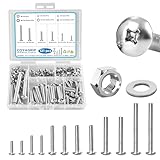
I remember staring at a pile of loose bolts after a roadside repair. Not just any bolts, mind you, but the ones that held my exhaust system together. It was a Sunday, parts stores were closed, and the only solution I could think of was to grab whatever I had lying around in my garage. That’s when the question hit me: Can you just bolt a car back together with whatever you find? It’s a tempting thought, especially when you’re stranded and frustration is high. But the reality of whether a car can bolt car is a lot more complex than grabbing a random bolt from your junk drawer.
Forget the glossy YouTube videos promising quick fixes with universal parts. The automotive world isn’t quite that forgiving. I’ve learned this the hard way, often after spending more money chasing a ‘cheap’ fix than it would have cost to do it right the first time. Let’s get real about what’s actually possible and what’s just asking for trouble.
When ‘just Bolting It On’ Becomes a Gamble
Look, I’m all for a DIY spirit. I’ve spent countless hours in my garage, wrestling with engines, replacing brake pads, and generally making my cars and bikes do things they probably weren’t designed to do easily.
But when it comes to the nuts and bolts that hold your car together – literally – you have to be way more precise than just picking something out of a miscellaneous bin. The first time I tried to jury-rig a strut mount with a bolt that was almost the right size, the clunking noise came back within a week, louder and more ominous than before.
It turns out that thread pitch and material strength aren’t just suggestions; they’re vital engineering specifications. Trying to ‘bolt car’ without respecting these details is like trying to build a house with toothpicks. It might hold for a minute, but it’s not going to last, and it’s going to be a safety hazard.
The common advice often leans towards buying the OEM (Original Equipment Manufacturer) part or a reputable aftermarket equivalent. And for good reason. These parts are designed to exact specifications for your specific make and model. They’ve undergone testing for strength, durability, and compatibility. When you start substituting, you’re introducing variables that the engineers never accounted for. Think about important components like suspension parts, steering linkages, or engine mounts. A slightly undersized bolt, or one made of weaker steel, could shear under load, leading to a catastrophic failure. It’s not just about the part fitting; it’s about it performing its intended function reliably, under all sorts of stresses – vibrations, temperature changes, and impacts.
I’ve seen people try to use hardware store bolts for things like exhaust hangers or even minor interior trim. Fine, maybe for something non-structural where failure won’t cause an accident. But when you’re talking about anything that could affect the vehicle’s safety or driveability, you’re playing with fire.
The sheer variety of bolt types – metric, SAE, fine thread, coarse thread, hardened steel, stainless steel, different head types (hex, Torx, Allen) – means that a random bolt is rarely the correct one. It’s a tempting shortcut, but one that nearly always leads to more work and potentially higher costs down the line. You might save a few bucks in the short term, but the long-term consequences can be severe, both financially and in terms of your personal safety.
The Real Deal: What ‘can Bolt Car’ Actually Means
So, what does it really mean when we talk about whether you can bolt a car together? It means using the right fastener for the job, every single time. It’s not about improvisation; it’s about precision. When a manufacturer specifies a particular grade and size of bolt, they’ve done the math. They’ve considered the forces it will experience, the environment it will be in, and the lifespan required. For instance, a bolt holding a brake caliper bracket needs to be incredibly strong and resistant to corrosion, likely a high-tensile steel with a specific plating. A bolt holding a plastic fender liner might be a much simpler, self-tapping screw. They look similar, but their purposes and required properties are worlds apart.
The temptation to reuse old bolts is also a trap. Bolts can be weakened by stress, vibration, or even just age. They can develop microscopic cracks that aren’t visible to the naked eye. Reinstalling a bolt that has already been torqued to its limit and then removed can compromise its integrity. This is why professional mechanics often advise replacing certain fasteners, especially important ones, with new ones every time. It’s a small cost that makes sure the integrity of the assembly. When I rebuilt my motorcycle’s engine, the manual explicitly stated to use new bolts for certain components like the cylinder head. I grumbled about the cost, but doing it wrong would have been far more expensive and dangerous.
When you’re looking at common repairs, like replacing a water pump or a manifold, you’ll often find that the bolts themselves are specialized. They might have specific lengths, shoulder diameters, or even integrated sealing washers. Generic bolts from a hardware store might fit the threads, but they won’t necessarily provide the correct clamping force, seal properly, or withstand the heat cycles. This is where the idea of ‘can bolt car’ needs a serious reality check. It’s not a universal ‘yes’ or ‘no’; it’s a ‘yes, if you’re using the correct bolt designed for that specific application and engineered to the required specifications. Anything less is a compromise that rarely pays off.
Common Misconceptions About Fasteners
A lot of folks think that all bolts are pretty much the same, as long as they thread in. That’s a dangerous oversimplification. There are different thread standards (like UNC, UNF, and metric M series), different grades of steel (like Grade 5, Grade 8, or ISO equivalents) that dictate strength, and different coatings (like zinc, cadmium, or chrome) for corrosion resistance. Using a lower-grade bolt where a higher grade is needed is asking for it to fail. (See Also: Are All 350 Chevy Truck Engines Four Bolt Mains )
For example, many automotive suspension components use Grade 8 or equivalent fasteners. If you substitute a Grade 2 bolt (the kind you might find on a cheap shelf bracket), you’re reducing the strength by more than half. That’s not just a little weaker; that’s a recipe for disaster.
My First ‘almost Right’ Bolt Experience
I once tried to fix a rattling exhaust heat shield on an old pickup. The original bolt had rusted away. I found a bolt in my shop that looked identical in length and thread.
It screwed in perfectly. I tightened it down, and the rattle was gone. Success! Or so I thought.
A few weeks later, driving on a bumpy road, I heard a loud bang followed by the distinct sound of my exhaust dragging on the pavement. The ‘almost right’ bolt had vibrated loose and then snapped.
The entire heat shield, which was also held by that one bolt, had fallen off. I ended up having to get it towed. That lesson cost me a tow truck fee, a new bolt (the correct one this time), and a significant amount of embarrassment. It hammered home the point that ‘close enough’ is rarely good enough for car parts.
The ‘why’ Behind Specific Bolts: Engineering and Safety
The engineers who design our cars aren’t just randomly selecting fasteners to make their jobs easier. They’re calculating loads, stresses, vibrations, and thermal expansion. Every bolt has a purpose and a specific set of requirements. Take, for instance, wheel lug nuts.
They’re not just there to hold the wheel on; they’re designed with specific taper angles to center the wheel on the hub and create even clamping force. They’re made of hardened steel to withstand the immense forces involved in turning and braking.
Using a lug nut with the wrong taper or made of inferior material can lead to the wheel coming loose, which is obviously a terrifying scenario. It’s the kind of thing that makes you realize that when it comes to safety-important components, you absolutely cannot afford to guess or substitute.
Then there are specialized fasteners like self-locking nuts (nylock nuts) or prevailing torque nuts, which have a built-in locking mechanism to prevent them from vibrating loose. Or vibration-resistant bolts that have specific thread designs. These aren’t just fancy additions; they are often engineered solutions to known problems of vibration and loosening in automotive applications. If your car uses one of these, simply replacing it with a standard nut or bolt isn’t a good idea. You’re removing a safety feature. It’s like putting a regular zipper on a parachute – it might zip, but you wouldn’t trust it.
Consider engine components. Bolts holding the crankshaft pulley, or connecting the transmission, are under extreme load and vibration. They often require specific torque-to-yield specifications, meaning they are designed to stretch to a precise point to achieve the correct clamping force.
Reusing these bolts or using the wrong ones can lead to premature wear, leaks, or even catastrophic engine failure. The idea that you can just ‘bolt car’ parts together without adhering to these engineering principles is a myth perpetuated by a lack of understanding of the forces and stresses involved in automotive engineering. The consequences of getting it wrong can range from minor annoyances to life-threatening accidents. (See Also: Are All Golf Cart Bolt Patterns Sames )
The question isn’t just ‘can it bolt?’, it’s ‘can it bolt safely and reliably for the intended lifespan?’
DIY vs. Professional: When to Splurge on the Right Part
There’s a fine line between saving money with DIY and being penny-wise and pound-foolish. For many basic maintenance tasks – changing oil, replacing an air filter, swapping wiper blades – using readily available, quality parts is straightforward.
But when the repair involves important safety systems or complex engine/drivetrain components, the decision to ‘bolt car’ with a generic part becomes much riskier. I’ve learned to be brutally honest with myself about my skill level and the potential consequences of a failure. For instance, I’ll happily replace a radiator hose, but if it involves dropping the subframe to access a suspension component, I’m calling a professional. It’s not about ego; it’s about recognizing when the risk outweighs the reward, and when the specialized knowledge and tools of a mechanic are worth the cost.
A prime example of where splurging on the correct part is a must is anything related to the braking system. Brake pads, rotors, and calipers are designed to work together as a system. The bolts that hold the caliper bracket to the steering knuckle, for instance, are high-strength fasteners that must withstand immense braking forces and road shock. Using a bolt of lesser grade or incorrect dimensions could lead to caliper detachment, resulting in a complete loss of braking power. There are no shortcuts here. The same applies to steering components – tie rod ends, ball joints, and the bolts that secure them. A failure in these areas can lead to a complete loss of steering control.
Here’s a table to illustrate my thinking. It’s not exhaustive, but it covers common scenarios where I’d be very cautious about generic substitutes:
| Component Area | Can I Use Generic/Hardware Store Bolts? | Why (My Verdict) |
|---|---|---|
| Exhaust Hangers/Shields (non-important) | Maybe, with caution | If they’re the correct size and grade, and failure won’t cause damage or noise. But proper exhaust bolts are often stainless and designed for heat. |
| Interior Trim Panels | Usually, yes | Low-stress, non-important. Just make sure they don’t strip plastic threads. |
| Body Panels (Fender Liners, Splash Shields) | Often yes, but specific clips are better | Many use plastic clips or specific self-tapping screws that hold better. Generic bolts might not seat correctly or could strip plastic. |
| Brake Caliper Bracket Bolts | Absolutely NOT | These are safety-important, high-strength, often torque-to-yield. Failure is catastrophic. |
| Suspension Components (Control Arms, Struts) | Absolutely NOT | Important for handling and safety. Require specific grades and often torque-to-yield. |
| Engine Mounts | Generally NO | Designed to absorb vibration and support engine weight. Incorrect bolts can lead to excessive vibration or mount failure. |
| Wheel Lug Nuts | Absolutely NOT | Important for wheel security. Specific taper, material strength, and thread pitch are vital. |
The key takeaway is that ‘can bolt car’ is heavily dependent on the specific part’s function. For non-important, low-stress applications, you might get away with it. But for anything that affects safety, structural integrity, or the proper functioning of a complex system, sticking to OEM or high-quality aftermarket parts designed for your vehicle is the only sensible approach. I’ve learned that the few dollars saved on a generic bolt can cost you hundreds, if not thousands, in repairs and potential safety risks later on.
Practical Tips for Getting It Right
So, how do you avoid the pitfalls and make sure you’re getting the right fasteners when you need to bolt a car component back on? It’s all about being prepared and doing your homework. First off, get yourself a good service manual for your specific vehicle. These manuals are goldmines of information, including detailed specifications for fasteners – their size, thread pitch, grade, and the correct torque values. Don’t rely on guesswork. If you’re unsure about a bolt’s specifications, try to find the part number from the manufacturer and order the exact replacement. Many reputable online auto parts stores will list the OEM part number, which you can then use to find the correct fastener.
If you’re doing a repair that involves multiple bolts, keep them organized. Use a magnetic parts tray, labeled containers, or even a piece of cardboard with holes poked in it to keep track of where each bolt came from. This prevents the temptation to grab a random bolt from your garage later. When you remove a bolt, note its location, size, and any distinguishing features. If it’s a important fastener, make a point of ordering a new one even if the old one looks okay. Many manufacturers recommend replacing certain fasteners once they’ve been torqued. For example, on many newer vehicles, bolts for the crankshaft pulley or some suspension components are torque-to-yield and should be replaced with new ones.
Invest in a quality set of sockets and wrenches, including metric and SAE sizes, as well as common Torx and Allen bits. Having the right tools makes the job easier and reduces the chance of damaging fasteners. If a bolt is seized, don’t just keep cranking on it with brute force.
Use penetrating oil, heat, or a breaker bar, and if all else fails, consider bolt extractors. Damaging the threads in the component you’re attaching to is far worse than a stubborn bolt. Lastly, always torque important fasteners to the manufacturer’s specifications. Overtightening can strip threads or break bolts, while undertightening can lead to loosening and component failure.
A torque wrench is an indispensable tool for anyone who plans to do their own car maintenance. For example, when reattaching my motorcycle’s brake caliper, the manual specified a very precise torque setting. (See Also: Are Ford Brake Caliper Banjo Bolts Standard )
I used my torque wrench and felt confident that it was secure.
A Word on Specialized Kits and Fastener Suppliers
You’ve probably seen those fancy ‘universal’ bolt kits or assortments at auto parts stores. My take? Most are a waste of money if you’re looking for specific, important replacements. They’re often filled with common sizes and grades, but they’re unlikely to have the exact bolt you need for a specific application on your car. They might be okay for a very minor, non-important repair, like replacing a missing bolt on a plastic engine cover, but I wouldn’t trust them for anything serious. It’s better to buy individual, high-quality bolts from a reputable supplier when you know exactly what you need.
There are specialized fastener suppliers online and in some industrial areas that offer a much wider selection of automotive-grade bolts, nuts, washers, and clips. These places often have databases where you can search by vehicle make and model, or by fastener specifications. If you’re undertaking a significant restoration or repair, or if you just want to have a good stock of quality fasteners on hand, it’s worth looking into these suppliers.
They can provide everything from standard metric bolts to specialized clips and hardware that are exact matches for OEM parts. For example, if you need a specific type of plastic clip that holds a fender liner in place, a dedicated supplier is much more likely to have it than a general auto parts store. I’ve used places like McMaster-Carr (though they’re more industrial) for high-quality fasteners when I couldn’t find exactly what I needed locally, and the quality difference was noticeable.
When it comes to the question of ‘can bolt car,’ the answer is a resounding ‘yes, but only with the correct bolts.’ It’s not about finding something that fits, but about finding something that works as designed. For minor cosmetic or non-structural elements, you might get away with a generic substitute if you’re careful. But for anything that impacts safety, performance, or the longevity of the vehicle, investing in the right, specification-matched fasteners is most important. It’s the difference between a repair that lasts and one that fails, potentially with serious consequences. Always prioritize safety and engineering integrity over a perceived cost saving.
Faq: Can Bolt Car? Your Questions Answered
This is where I clear up some common confusion.
Can I Use Regular Hardware Store Bolts for Car Repairs?
For non-important components like interior trim or some plastic body panels, you might be able to use generic hardware store bolts if they match the size and thread. However, for anything related to safety, suspension, brakes, or engine components, using generic bolts is highly discouraged. Automotive-grade bolts have specific material strengths, thread pitches, and coatings that generic hardware store bolts often lack, making them unsafe for important applications.
What Happens If I Use the Wrong Size Bolt on My Car?
Using the wrong size bolt can lead to several problems. If it’s too small, it may not thread properly, strip the threads in the receiving component, or not provide adequate clamping force, leading to loosening or failure. If it’s too large, it might not fit or could damage the threads. Even if a bolt seems to thread in, using one with the wrong thread pitch or grade can compromise the structural integrity of the assembly, leading to premature wear or catastrophic failure, especially under stress or vibration.
Are All Car Bolts the Same?
No, car bolts are far from the same. They vary significantly in size, thread pitch (how many threads per inch or millimeter), material grade (indicating strength), head type (hex, Torx, Allen, etc.), and coating (for corrosion resistance). Manufacturers specify particular bolts for each application based on engineering calculations for load, vibration, and environmental exposure. Using a bolt that doesn’t meet the original specifications can compromise safety and component function.
What’s the Difference Between a Grade 5 and Grade 8 Bolt?
Grade 5 and Grade 8 are common US-made bolt strength classifications. Grade 8 bolts are significantly stronger and tougher than Grade 5 bolts. For reference, a 1/2-inch Grade 8 bolt has a tensile strength of around 150,000 psi, while a 1/2-inch Grade 5 bolt is around 74,000 psi. Many important automotive applications, especially in suspension and steering, require Grade 8 or equivalent strength fasteners. Substituting a Grade 5 where a Grade 8 is specified is a major safety risk.
Conclusion
So, can you just bolt a car back together with whatever you find? The short answer, as you’ve probably gathered, is a resounding ‘no,’ unless you’re talking about the most trivial, non-structural, cosmetic bits. My personal experience, and the countless hours I’ve spent learning the hard way, have shown me that automotive fasteners are engineered for a reason. When you mess with those specifications, you’re not just playing a minor role; you’re actively compromising the safety and reliability of your vehicle.
It boils down to understanding the function of the part you’re fixing. If it’s something that, if it fails, won’t cause you to lose control of the car or suffer a major breakdown, you might have some leeway with generic hardware. But for anything else – brakes, steering, suspension, important engine components – you absolutely must use the correct, manufacturer-specified fastener. It might cost a little more upfront, but trust me, it’s a fraction of what you’ll pay if something goes wrong. Next time you’re faced with a loose bolt, resist the urge to grab the nearest thing from your toolbox and instead, take the time to get the right part.
Think about the last time you had to replace a bolt. Did you go for the exact match, or did you wing it? What was the outcome?