You’re elbow-deep in transmission fluid, the smell of old oil thick in the air, and you’re staring at a bolt. It’s one of those vital ones holding the whole damn thing together. The question pops into your head: do I need a torque wrench for transmission bolt duty? I’ve been there, staring at a Haynes manual diagram that looks like it was drawn by a caffeinated squirrel, wondering if ‘snug’ is good enough. Spoiler alert: usually, it’s not. And sometimes, ‘snug’ is the fastest way to a very expensive repair bill.
This isn’t about fancy tools for show. This is about not stripping threads, not cracking housings, and not having your transmission decide to take a permanent vacation halfway through your commute. It’s about knowing when to reach for that clicky, fancy wrench and when to just use your gut. Let’s get real about it.
The ‘just Tight’ Myth: Why Your Gut Is Lying to You
Look, I’m all for being a hands-on DIYer. I’ve wrestled with stubborn exhaust bolts, hammered my way through frozen lug nuts, and generally relied on a healthy dose of brute force and common sense. For a lot of jobs, that’s perfectly fine. You feel the resistance, you give it a bit more, and you stop when it feels… right. But transmissions? They’re a different beast entirely. I learned this the hard way, trying to save a buck on a clutch job for a ’98 Honda Civic. I figured the bolts holding the bell housing to the engine block didn’t need anything fancy. Just tighten ‘em up good and tight, right?
Wrong. One bolt, in particular, felt a little too easy to turn initially. I cranked it down, thinking it was just lightly threaded. A few weeks later, driving home from work, I heard a sickening clunk, followed by a grinding noise that would make a grown man weep. Turns out, I’d over-tightened it, crushing a gasket and creating a microscopic leak that eventually starved a bearing. The fix? Yanking the whole damn transmission out again. That little shortcut cost me a weekend, a bunch of new fluids, and a heaping dose of humility. This is precisely why the question ‘do i need a torque wrench for transmission bolt’ comes up so often – because the consequences of guessing are dire.
The problem is that ‘tight’ is subjective. What feels tight to you might be way over spec for the engineers who designed the thing. Too loose, and vibrations can back them out. Too tight, and you can stretch or snap the bolt, strip the threads in the aluminum transmission case (oh, the joy of helicoiling aluminum!), or even warp or crack the housing itself. Think of it like a joint. You want it snug, but you don’t want to crack the bone. Bolts are no different, and transmissions are complex, often made of relatively soft metals like aluminum that don’t take kindly to being manhandled.
What the Heck Is Torque and Why Does It Matter?
So, what exactly is torque? It’s basically a twisting force. When you’re tightening a bolt, you’re applying torque. It’s measured in units like foot-pounds (ft-lbs) or Newton-meters (Nm). Think of a wrench as a lever. The longer the lever arm (your wrench), the more torque you can apply for the same amount of effort. But it’s not just about how much force you apply; it’s about applying the correct amount of force.
Manufacturers spend a ton of time and money figuring out the precise torque specifications for every single bolt on a vehicle. Why? Because they know that the material properties of the bolt, the nut, the threaded hole, and the parts being clamped together all have specific tolerances. They know how much clamping force is needed to hold things together securely without deforming them. They know how much torque will stretch the bolt to its optimal point (which is key to its clamping ability) without exceeding its yield strength, which would permanently weaken it.
For transmission bolts, this is especially true. These components deal with high pressures, extreme temperatures, and constant vibration. A loose bolt can lead to leaks, internal damage, or even catastrophic failure. An over-tightened bolt can strip threads, crack housings, or cause components to bind. I remember a buddy who was replacing the rear differential cover on his old pickup. He got it all buttoned up, feeling pretty good about himself, only to have the cover start weeping gear oil after a few hundred miles. He’d cranked those little bolts down way too hard, distorting the cover and the flange it bolted to. It looked like a simple job, but those specific torque specs were there for a reason.
Torque vs. Tightness: A Important Distinction
It’s easy to confuse ‘tight’ with ‘torqued.’ Tightness is a feeling. Torque is a measurable force. You can tighten a bolt until it feels incredibly tight, but if you haven’t reached the manufacturer’s specified torque value, it might still be dangerously loose in terms of clamping force. Conversely, you can apply a specific torque value and achieve the correct clamping force without it feeling ‘super tight’ to you. This is especially true for bolts going into softer materials like aluminum, where the threads can strip before you even get close to what feels ‘tight’ with a regular wrench.
The Role of Friction
Friction plays a huge role too. The torque value specified by the manufacturer accounts for the friction between the bolt threads and the mating threads, as well as the friction between the bolt head and the surface it’s clamping. Things like thread pitch, thread condition (clean vs. dirty/corroded), and the presence of lubricants or thread-locking compounds can all significantly affect how much torque is needed to achieve a certain clamping force. This is why manufacturers often specify whether the threads should be dry, oiled, or have thread locker applied – it all impacts the final torque reading and the resulting clamping force.
When Does a Torque Wrench Become a Must?
Okay, let’s cut to the chase. If you’re working on your transmission, especially internal components, external housings, or anything that seals a important fluid passage, the answer to ‘do i need a torque wrench for transmission bolt’ is almost always a resounding YES. Here are the scenarios where you absolutely cannot afford to guess: (See Also: Do You Need Torque Caliper Bolts )
- Internal Transmission Components: Anything that bolts together inside the transmission case – clutch packs, valve bodies, planetary gear sets, torque converter bolts – these have incredibly precise tolerances. Over or under-tightening here can immediately grenade the transmission.
- Transmission Pan Bolts: While it might seem simple, these bolts clamp the oil pan to the transmission housing. Overtightening can warp the pan or the housing, leading to leaks. Undertightening will definitely cause leaks. The gasket material requires a specific, even pressure.
- Bell Housing Bolts: These connect the transmission to the engine. They are important for alignment and structural integrity. Uneven or incorrect torque here can lead to misalignment, vibration, and stress on the input shaft or torque converter.
- Torque Converter Bolts: These spin at high speeds and are under significant stress. Getting these torqued correctly is vital to prevent them from coming loose or damaging the flexplate or flywheel.
- Transmission Cooler Lines/Fittings: While often smaller, these are high-pressure fluid lines. A loose fitting means a leak and potential fluid loss, while an over-tightened fitting can crack the delicate cooler or the transmission bung.
Honestly, if you’re going through the effort of dropping a transmission or working on it in place, you’ve already invested time and probably a decent chunk of money in parts. Spending another $50-$150 on a decent torque wrench to make sure that work is done correctly is a no-brainer. I’ve seen people try to get away with impact wrenches on low settings, or just cranking with a regular ratchet, and it’s a gamble I wouldn’t take. The cost of a transmission rebuild or replacement far outweighs the cost of the tool.
The Great Gearhead Debate: ‘good Enough’ vs. Precision
There’s a faction of wrenches out there who swear by the ‘feel.’ They’ll tell you that years of experience give them a sixth sense for tightness. And sure, for some applications, maybe they’re right. But when it comes to the intricate, high-pressure, high-heat environment of a transmission, that ‘feel’ is a risky gamble.
I’ve heard the arguments: “Back in my day, we didn’t have fancy torque wrenches…” Yeah, and back in their day, cars broke down a lot more often, and mechanics charged a fortune for repairs that could have been avoided. The common advice is to always follow the spec, and I agree. My contrarian take?
While experience can develop a feel, it’s a feel for your own hands and tools on that specific bolt. It doesn’t magically translate to the manufacturer’s intended clamping force, which is what actually matters. The torque wrench removes the guesswork.
Types of Torque Wrenches and What to Actually Buy
Alright, so you’re convinced. You need one. But walking into an auto parts store can be overwhelming. They’ve got click-type, beam-type, digital, and split-beam. Which one won’t leave you broke or cursing?
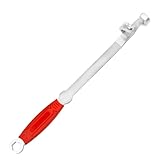
For most DIYers tackling transmission work, a good quality click-type torque wrench is your best bet. Here’s why:
- Ease of Use: You set the desired torque value, and when you reach it, the wrench makes a distinct ‘click’ and often has a slight release of tension. This audible and tactile feedback is hard to miss.
- Accuracy (for the price): Decent click-type wrenches are accurate enough for automotive applications. You don’t need aerospace-grade precision for most car parts.
- Availability: They are the most common type and come in a wide range of prices and brands.
What about the others?
- Beam-type: These are the simplest and often cheapest. They have a pointer that moves along a scale as you apply force. They’re okay for general use, but it can be hard to accurately read the scale, especially in awkward positions under a car. They’re also easier to damage if dropped.
- Digital: These are very accurate and offer readouts, often with audible alerts. They’re great, but pricier. They also rely on batteries. For a transmission job, a good click-type will do the trick without breaking the bank.
- Split-beam: A more advanced design that can be more accurate and durable than a standard click-type. They often have a smaller profile. Excellent if you have the budget and want something a bit more solid.
My Personal Recommendations (no Bs)
I’ve owned a few. My first was a cheapie from a big box store. It was probably about as accurate as a weather vane in a hurricane. I eventually upgraded to a Craftsman click-type, and that thing has been solid for years. Recently, I picked up a GearWrench, and it feels even better. For transmission work, you’ll want a wrench that covers a range from maybe 20 ft-lbs up to around 150 ft-lbs. Most mid-range wrenches will cover this. Brands like Tekton, GearWrench, and even some of the better Craftsman or Kobalt models are usually a good bet for the home mechanic. Avoid the absolute cheapest options; they’re often more frustrating than useful.
Here’s a quick rundown of what I’d look for in a torque wrench for transmission tasks:
| Feature | Verdict for Transmission Work | Why |
|---|---|---|
| Type | Click-Type or Split-Beam | Reliable, easy to use, accurate enough. |
| Torque Range | 20-150 ft-lbs (approx.) | Covers most transmission pan, bell housing, and internal bolts. |
| Drive Size | 3/8-inch and 1/2-inch | 3/8 is good for finer adjustments and lower torque values. 1/2 is useful for higher torque applications. Having both is ideal. |
| Brand Reputation | Reputable tool brands (Tekton, GearWrench, Craftsman, etc.) | Avoid generic unbranded tools; accuracy is questionable. |
| Calibration | Consider if it’s recently calibrated (or user-serviceable) | Important for accuracy, especially if buying used. |
| Storage Case | Included | Protects the wrench and maintains calibration. |
The key is that it needs to be accurate and reliable. A torque wrench is a precision instrument, and treating it as such will save you headaches and money in the long run. Don’t leave it set to a high torque value when you store it; always back it off to the lowest setting to preserve the spring mechanism. (See Also: Do I Need Special Replacement Bolts For Car Engines )
Common Mistakes to Avoid When Torquing Transmission Bolts
Even with a torque wrench in hand, you can still mess things up. It’s not rocket science, but there are definitely pitfalls. Learning from others’ mistakes (and my own) can save you a lot of grief.
- Not Cleaning Threads: Gunk, dirt, or old threadlocker on the bolt or in the threaded hole can throw off your torque reading. You might reach the click, but the actual clamping force will be lower because of the extra friction. Clean threads are a must. A wire brush and some brake cleaner usually do the trick.
- Using the Wrong Lubricant (or None): As mentioned, manufacturers specify whether threads should be dry, oiled, or have threadlocker. Deviating from this can mess up your torque values. If the spec says ‘dry,’ don’t oil it. If it says ‘lubricated,’ use the specified type of lubricant, as different oils have different friction coefficients.
- Jerking the Wrench: When you’re using a click-type wrench, apply steady, smooth pressure. A sudden jerk can cause you to overshoot the torque value without the wrench clicking, or it can make the click feel less distinct. You want to feel that click, not just hear it.
- Not Re-Torquing (When Specified): Some applications require bolts to be tightened in stages or re-torqued after a certain amount of time or mileage. This is especially common for head bolts, but can apply to some transmission components. Always check your service manual.
- Cross-Threading Bolts: This is a mechanical disaster. Starting a bolt crooked into its hole will strip the threads, often ruining both the bolt and the threaded hole. A torque wrench won’t save you from cross-threading; you need to start bolts by hand until they are fully threaded in before using the wrench.
- Ignoring the Service Manual: This is probably the biggest mistake. Your car’s service manual (Haynes, Chilton, or factory service manual) is your bible. It has the exact torque specifications, sequences, and any special instructions. Don’t guess. Don’t rely on YouTube videos that might not be specific to your exact vehicle.
The ‘people Also Ask’ Section: Straight Answers
Do I need to torque transmission bolts?
Yes, for most important transmission bolts, you absolutely need to torque them. This includes bolts for the transmission pan, bell housing, torque converter, and any internal components. Incorrect torque can lead to leaks, stripped threads, cracked housings, or catastrophic transmission failure. Following the manufacturer’s specifications makes sure proper clamping force and longevity.
What happens if transmission bolts are too loose?
If transmission bolts are too loose, they can vibrate out over time, leading to leaks of transmission fluid. This can cause the transmission to run low on fluid, leading to overheating, increased wear, and eventually significant internal damage or complete failure. In some cases, a loose bolt could even fall out entirely and cause serious internal damage.
What happens if transmission bolts are too tight?
Overtightening transmission bolts can strip the threads in the transmission housing (especially common in aluminum cases), crack the transmission pan or housing, or warp mating surfaces. This can lead to leaks, prevent proper sealing, or cause components to bind. Stripped threads often require costly repairs like Heli-Coils or thread inserts.
Can I use an impact wrench to tighten transmission bolts?
Generally, no. An impact wrench is too powerful and difficult to control for precise torque applications. While some mechanics might use them on a very low setting for initial snugging, final tightening to the specified torque requires a torque wrench. Using an impact wrench for the final torque risks over-tightening and damaging the bolts or the transmission components. It’s always best to finish with a torque wrench.
My Story: The Over-Torqued Oil Pan Saga
This one wasn’t transmission, but it’s a perfect example of the same principle. I was helping a friend change the oil on his vintage Triumph motorcycle. The oil pan bolts were tiny, and the pan itself was made of thin aluminum. He grabbed his trusty old socket wrench and started zipping them in. I, being the ‘expert’ back then, casually mentioned torque specs. He waved me off, saying, “These are just little bolts, mate. Just got to make ‘em snug.” Well, ‘snug’ turned out to be about twice what the manual called for. A few rides later, he noticed a small weep of oil. Then a bigger one. (See Also: Can You Use A Torque Wrench To Break Bolts Loose )
Long story short, he’d warped the oil pan, creating a slight separation from the engine case. No matter how much he tightened, it leaked. We ended up having to buy a new oil pan and carefully torque each bolt to the specified value.
The old pan was slightly bowed, a testament to his ‘snug’ approach. It was a cheap lesson for him, but a valuable one for me: the ‘feel’ isn’t always right, and especially on older or more delicate components, the manufacturer’s torque specs are there for a damn good reason. It hammered home the fact that when it comes to important fasteners, especially on something as complex and expensive as a transmission, following the book is the only sane way to go. So, when you ask yourself ‘do i need a torque wrench for transmission bolt’, remember my friend’s Triumph.
The Price of Guessing vs. The Cost of the Tool
Let’s talk brass tacks. A decent click-type torque wrench that will handle most transmission tasks can be found for anywhere from $50 to $150. For that price, you get peace of mind and a tool that will last you for years if you treat it right. Now, consider the cost of transmission repair. A simple leak might cost a couple of hundred bucks for a shop to fix. A stripped thread in an aluminum transmission case? That could easily run $500-$1000 or more, depending on the location and severity. A full transmission rebuild can cost thousands. Suddenly, that $75 torque wrench looks like the best investment you’ll ever make.
I’ve seen people try to skip this step, thinking they’re saving money or time. Almost invariably, they end up spending more money, more time, and a lot more frustration down the road. It’s like trying to save money by not buying a fire extinguisher – you might be okay for a while, but when disaster strikes, you’ll wish you had it. For anyone doing serious DIY auto repair, especially on something as important as a transmission, a torque wrench isn’t a luxury; it’s a necessity. It’s the difference between a job done right and a job that will likely come back to bite you.
Practical Tips for Using Your Torque Wrench on Transmission Work
Alright, you’ve got your wrench, you’ve got your manual. Here are a few practical tips to make the job smoother and make sure you’re doing it right:
- Start by Hand: Always thread bolts in by hand for the first few turns. This helps you feel if the threads are engaging properly and prevents cross-threading. If it feels stiff or goes in crooked, back it out and try again.
- Work in a Star Pattern: For components like the transmission oil pan, tighten the bolts in a crisscross or star pattern. This makes sure even pressure on the gasket and prevents warping. Tighten them in a few stages: first to about half the final torque, then to the full torque.
- Keep it Clean: Make sure both the bolt threads and the threaded holes in the transmission case are clean. Use a wire brush and a degreaser. This makes sure accurate torque readings.
- Understand Your Wrench’s Range: Don’t try to use a torque wrench for bolts that require significantly less or more torque than its specified range. If you need to torque a very small bolt to 5 ft-lbs, a wrench that goes down to 20 ft-lbs might not be sensitive enough. Conversely, don’t use a small torque wrench for a heavy-duty axle nut.
- Listen and Feel: While you’re aiming for the click, pay attention to how the wrench feels. A smooth, consistent click is good. Grinding or a mushy release might indicate a worn or damaged wrench.
- Store It Properly: Always store your torque wrench in its case and with the adjustment set to the lowest torque setting. Leaving it compressed can damage the internal spring and affect its accuracy over time.
- Calibrate Periodically: Torque wrenches can lose accuracy over time. Most manufacturers recommend recalibration every 12 months or after a significant drop or impact. Many auto parts stores or tool shops offer this service.
Following these simple tips will help you use your torque wrench effectively and make sure that your transmission repairs are done correctly the first time. It’s about building confidence in your work and in the reliability of your vehicle.
Verdict
So, when it comes down to it, do I need a torque wrench for transmission bolt tasks? The overwhelming answer, based on years of experience and a few costly lessons, is a definite yes. The precision required for these components, the potential for catastrophic failure from incorrect tightening, and the relatively low cost of a decent torque wrench make it an indispensable tool for anyone serious about working on their vehicle’s transmission.
Don’t be the guy who ends up pulling the transmission again because a bolt backed out or stripped. Invest in a good click-type wrench, familiarize yourself with your service manual’s torque specs, and take your time. It’s not just about following instructions; it’s about respecting the engineering and making sure your vehicle’s longevity and your own safety. Trust me, your wallet and your sanity will thank you.
The next time you find yourself facing a transmission bolt, ask yourself if you’re willing to gamble with potentially thousands of dollars in repairs versus the cost of a tool that guarantees the job is done right. It’s a pretty simple calculation.