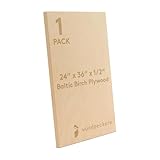
Look, I get it. You’re staring at a project, maybe building some shelves, maybe a workbench, and the thought of wrangling a giant sheet of lumber into your truck and then your workshop just fills you with dread. That’s where the idea of a c 10ft plywood sheets starts to sound pretty good. Less lifting, fewer seams, maybe even a little smug satisfaction about being ‘pro’.
But before you go ordering enough of these beasts to build a small shed, let’s have a real talk. I’ve been there, I’ve lugged these things, and I’ve definitely cursed my past self for choosing convenience over sanity.
We’re going to cut through the marketing fluff and figure out if these oversized panels are actually the miracle solution they’re made out to be, or just another way to make a simple job a whole lot more complicated.
The Lure of the Giant Sheet: Why 10ft Plywood Seems So Appealing
Let’s be honest, the primary draw of a 4×10 sheet of plywood, often referred to as a c 10ft plywood in many DIY circles, is the promise of fewer seams. If you’re building something large, like a big workbench top, a floor for a shed, or a substantial cabinet, the idea of one continuous surface sounds like a dream. Fewer joints mean less to sand, less to fill, and a cleaner look if done right. For certain applications, like wainscoting or even large wall panels where you want that monolithic feel, this is a genuine advantage.
Then there’s the perceived efficiency. If you need a 5-foot section, you can get it from a 10-foot sheet with less waste than cutting it from two 5-foot pieces, assuming your cuts are optimized. This can be a big deal when you’re working with expensive hardwood plywood or specialized veneers where every inch counts. It feels like you’re getting more bang for your buck, or at least, less effort for the same buck.
The sheer scale can also be impressive. There’s a certain satisfaction in handling large, solid pieces of material. It feels more substantial, more ‘professional’ almost. For some builders, especially those working on larger commercial projects or very specific furniture designs, the 4×10 format is simply the standard and makes sense for their workflow and equipment. They might have forklifts, large panel saws, and dedicated transport. For the average DIYer wrestling it into a minivan? Not so much.
I remember the first time I bought a couple of 4×10 sheets of birch plywood for a large built-in bookshelf project. I was envisioning long, uninterrupted shelves.
The lumberyard guys helped me load them onto my trailer, which was a relief. But getting them off the trailer and into my relatively narrow garage workshop? That was a whole different story. I nearly scraped a doorway, wedged it against the garage door opener, and spent a solid ten minutes just trying to pivot it without damaging anything or myself.
The sheer awkwardness of its dimensions, even when empty, was a wake-up call. My initial excitement about those long shelves quickly turned into a healthy respect for the physical challenge these oversized sheets present.
The ‘reality Check’ Section: What Nobody Tells You About Handling 10ft Plywood
Okay, let’s get down to brass tacks. The biggest hurdle with a c 10ft plywood sheet isn’t the cost, it’s the sheer physical logistics. Unless you have a truck with a long bed, a dedicated trailer, or a very understanding lumberyard willing to deliver, getting these things home is a challenge. I once tried to stuff two 4×10 sheets into a standard SUV. Let’s just say it involved a lot of praying, some slightly bowed interior panels, and a very stern warning from the store employee about structural integrity. It was a disaster waiting to happen, and honestly, a foolish risk. (See Also: Can A 4x8 Plywood Fit In A Honda Pilot )
Once it’s home, the fun continues. Maneuvering a 10-foot sheet through standard doorways, down hallways, or around existing furniture is a wrestling match. You need space. Lots of it. I’ve learned the hard way that my humble 10×12 workshop, which feels spacious enough for most projects, becomes claustrophobic the moment a 10-foot sheet enters the equation. You’re constantly pivoting, stepping back, and praying you don’t put a hole in the drywall or take out a shelf. It requires at least two people for any kind of controlled movement, and even then, it’s precarious.
Cutting is another beast. Most standard jobsite saws have a 4-foot or 5-foot cutting capacity. To cut a 10-foot sheet effectively, you need a larger table saw with an extension or a track saw system that can span the entire length. Trying to cut a 10-foot sheet on a smaller table saw is a recipe for disaster. You’ll be fighting the weight, dealing with unstable offcuts, and risking kickback. I’ve seen guys try to make it work with circular saws and guide rails, but it’s a delicate dance to keep everything stable over that length. It’s not impossible, but it demands a higher level of precision and a more solid setup than you might anticipate.
Here’s a breakdown of what you’re up against:
| Aspect | 4×8 Plywood | 4×10 Plywood | Verdict |
|---|---|---|---|
| Transport Difficulty | Manageable for most vehicles | Requires truck, trailer, or delivery | 4×10 is a pain |
| Workshop Maneuverability | Easy to moderate | Difficult, requires ample space | 4×10 is a struggle |
| Cutting Setup Needs | Standard table saw okay | Larger saw or track system needed | 4×10 demands better tools |
| Potential for Damage (to sheet & surroundings) | Moderate | High | 4×10 is riskier |
| Seam Reduction | More seams on large projects | Fewer seams, cleaner look | 4×10 wins here, IF you can manage it |
The truth is, for 90% of DIY projects, the standard 4×8 sheet is perfectly adequate, and infinitely easier to handle. The perceived benefits of the 4×10 often get overshadowed by the practical headaches.
Choosing the Right Plywood: Beyond Just the Size
So, you’ve decided you’re brave enough, or your project absolutely demands a 4×10 sheet. Great. Now, what kind of plywood are you actually buying? Because ‘plywood’ is a broad term, and the quality varies wildly. When you’re dealing with a c 10ft plywood, you can’t afford to skimp on quality, as any flaws will be magnified across that larger surface.
First up, consider the grade. You’ve got A-D grades (with F being the worst). ‘A’ faces are sanded smooth with minimal defects, ‘B’ has some footballs (small, oval patches) and slight imperfections, ‘C’ allows for more knots and veneer patches, and ‘D’ is pretty rough. For visible surfaces, you’ll want A-A, A-B, or maybe B-B. If it’s going to be painted or hidden, C-grade might be fine, but even then, I tend to lean towards B-grade for a smoother finish with less filler work.
Next, the wood species. Common options include pine, fir, birch, oak, and maple. Pine and fir are generally less expensive and easier to work with but also softer. Birch is a popular choice for cabinets and furniture because it’s harder, has a finer grain, and takes finishes well. Hardwood plywoods like oak and maple are beautiful but significantly more expensive and heavier. For a 10-foot sheet, the weight difference between pine and oak can be substantial.
Thickness is also key. Plywood is measured in fractions of an inch, typically 1/4″, 3/8″, 1/2″, 5/8″, and 3/4″. The standard for most structural applications like shelving or cabinet carcasses is 3/4″. Thinner sheets are okay for drawer bottoms, cabinet backs, or decorative paneling, but they won’t hold much weight. For a 10-foot span on a shelf, 3/4″ is an absolute minimum, and you’d still need good support.
Finally, look at the core. Is it a solid core (made entirely of plies) or an open/void core (which might have gaps)? For structural integrity, especially on a long sheet where any weakness is amplified, you want a solid core. Void-core plywood is cheaper but can delaminate or break under stress. When you’re investing in a large sheet of a c 10ft plywood, don’t be afraid to ask about the construction and check for any signs of delamination or warping. (See Also: Can Bondo Be Applied To Plywood )
Common Mistakes and How to Avoid Them
Mistake number one, and I’ve seen it countless times: assuming a 10-foot sheet will fit in your car or truck without issue. Measure your vehicle’s cargo area before you go to the lumberyard. Seriously. Check the length, width, and height. Factor in the angle needed to get it in. A 10ft sheet needs at least 10ft of usable space at an angle, or a flat 10ft length. If you’re not sure, get delivery. It’s usually worth the small fee to avoid damaging your vehicle, the plywood, or your sanity.
Mistake number two is not having a plan for cutting. Just because you have a 10-foot sheet doesn’t mean you can just hack away at it. If you’re using a circular saw, invest in a good quality guide rail or make a straight-edge jig. For table saws, make sure your table is large enough to support the entire sheet. I once tried to cut a 10ft sheet of MDF on a small contractor saw, and the offcut end dropped as I was cutting, creating a nasty tear-out and nearly throwing the piece back at me. Lesson learned: support is key. Always have a way to support the offcut and make sure the entire sheet is stable during the cut.
Mistake number three: not accounting for the extra weight. A 3/4″ 4×10 sheet of plywood can weigh upwards of 60-70 pounds. That’s significantly more than a 4×8 sheet. If you’re working alone, this is a major safety hazard. You risk back injuries, dropping the sheet, or damaging your project. Always have a helper when moving these larger sheets. If you can’t find one, consider if the project is truly worth the risk. Sometimes, breaking a large project into smaller sections using 4×8 sheets is the smarter, safer choice.
Mistake number four: overlooking quality for price. When you’re buying a large sheet, the temptation is to go for the cheapest option. However, cheaper plywood often has more voids in the core, weaker glue, and rougher faces. These issues become much more apparent on a 10-foot span. A warped sheet will be incredibly difficult to flatten. A sheet with voids might sag or break under load. It’s often better to pay a little more for a higher grade and a solid core to avoid headaches down the line. For a c 10ft plywood, I’d strongly advise against the bargain bin.
Real-World Uses: When a 10ft Sheet Actually Makes Sense
Despite all my grumbling, there are situations where a c 10ft plywood sheet is genuinely the superior choice. The most obvious is for very large, continuous surfaces. Imagine building a massive L-shaped desk or a walk-in closet shelving system that stretches 10 feet in one direction. Using a single 4×10 sheet for the top surface, for example, means you have one clean, unbroken plane. No visible seams to sand, fill, or potentially crack over time. This aesthetic is hard to beat if that’s what you’re going for.
Another prime candidate is subflooring for sheds or small workshops. Laying down 4×10 sheets means fewer seams to worry about tripping over or needing to perfectly butt together. You’ll have fewer joints for water or debris to potentially get into. It can speed up the installation process for the flooring itself, though as we’ve discussed, getting those sheets into place is the real challenge.
For large workbench tops, especially those that need to be incredibly flat and strong, a single 4×10 sheet can be ideal. Many commercial workbenches use thick plywood tops, and a single large sheet reduces the complexity of joining multiple smaller pieces perfectly flush. You might still laminate two thinner sheets together for extra thickness and rigidity, but using 4x10s for this purpose makes the initial layout simpler.
Consider large wall panels or wainscoting where you want a smooth look. If you have a long, uninterrupted wall, using 4×10 sheets can give you a much cleaner finish than piecing together 4x8s. This is particularly true if you’re going for a modern or minimalist aesthetic. It requires precise cutting and fitting, but the payoff in a smooth, uniform appearance can be substantial. For these applications, investing in a higher-grade hardwood plywood makes sense to get that premium look.
I once built a large custom entertainment center where the main media cabinet was designed to be a single, long unit spanning almost 9 feet. Using 4×10 sheets for the sides and top made the construction much simpler than trying to join two 4x8s perfectly. It saved me a lot of finicky sanding and filling at the join. So yes, while I often advocate for the smaller, more manageable 4×8 sheets, I’ll admit there are specific, large-scale projects where the 10-foot length really shines, provided you have the muscle and the space to handle it. (See Also: Can Cat Plywood Be Used For Exterior Siding )
Practical Tips for Working with Oversized Plywood
If you’re committed to using a c 10ft plywood, here are some tips I’ve picked up the hard way. First, get help. I can’t stress this enough. Don’t be a hero. Find a friend, a neighbor, or hire someone for an hour to help you move, position, and cut these sheets. It’s safer, easier, and reduces the risk of damage to the material and your surroundings. A second person makes a world of difference, especially when trying to pivot a sheet in a tight space.
Second, invest in proper material handling tools. If you’re going to be doing this regularly, consider a plywood dolly or a pair of panel carriers. These simple tools can make moving these heavy, awkward sheets much more manageable. For cutting, as mentioned, a track saw with a long guide rail is invaluable. It allows for precise, straight cuts over the entire length of the sheet and keeps the dust down better than a standard circular saw.
Third, plan your cuts meticulously. Measure twice, cut once is amplified when dealing with 10-foot lengths. Lay out your project plan and mark all your cuts on the plywood before you do anything. Use a good quality measuring tape and a sharp pencil. For important cuts, consider using chalk lines or laser levels to make sure accuracy. Double-check your measurements against your project plans. A mistake on a 10-foot sheet is a lot harder and more expensive to fix than on a 4-foot section.
Fourth, prepare your workspace. Clear out as much clutter as possible. You need clear paths to move the plywood and ample space around your cutting area. If you’re using a table saw, make sure you have outfeed support that can handle the full length of the sheet. If you’re using a circular saw, make sure the piece is well-supported and the offcut won’t drop unexpectedly. Think about dust collection too; 10-foot sheets generate a lot of dust when cut.
Finally, consider alternatives. Is a 10-foot sheet really necessary? Could you achieve the same result with two 4×8 sheets joined strategically? Sometimes, the effort and risk associated with the larger sheets outweigh the benefits. For many standard DIY projects, the 4×8 is simply the more practical choice. Don’t choose the 10-foot just because it exists; choose it because your project genuinely benefits from it and you are prepared for the challenges.
Frequently Asked Questions About 10ft Plywood
Can I Fit a 10ft Plywood Sheet in a Standard Pickup Truck?
It’s unlikely to fit flat without significant overhang. Most standard pickup beds are only 6 to 8 feet long. You would need to angle it, which means a portion of the sheet would extend well past the tailgate, requiring a red flag and careful securing. For safe transport and to avoid damage, a trailer or delivery is highly recommended.
How Much Does a 4×10 Sheet of Plywood Typically Weigh?
The weight varies significantly by thickness and wood species. A 3/4-inch 4×10 sheet of standard pine or fir plywood can weigh anywhere from 60 to 75 pounds. Hardwood plywoods like birch or oak will be heavier, potentially reaching 80-90 pounds or more. Always have a helper for lifting and maneuvering.
What’s the Best Way to Cut a 10ft Plywood Sheet?
The best method is with a track saw system that can span the full 10-foot length, providing a straight edge and clean cut. A large cabinet-style table saw with an extension and outfeed support is also effective. A standard circular saw can be used with a high-quality guide rail clamped to the sheet, but making sure stability over the entire length is important and more challenging.
Is 10ft Plywood More Expensive Per Square Foot Than 4×8 Plywood?
Generally, yes, it can be. While the per-sheet cost might seem attractive for a larger volume, the manufacturing and handling of 10-foot sheets can be more complex, sometimes leading to a higher price per square foot. However, for projects where it significantly reduces waste or labor, the overall project cost might still be favorable.
Verdict
So, there you have it. The 4×10 sheet of plywood. It’s not the magical lumber solution some might paint it to be, but it’s not entirely without its merits. For those truly grand-scale projects where a single, uninterrupted surface is king, a c 10ft plywood can be a fantastic choice. But for most of us, with average-sized vehicles and workshops, the practical headaches—the transport, the maneuvering, the cutting—often outweigh the benefits.
My honest take? Unless your project specifically calls for it and you’re fully prepared for the logistical challenge, stick with the trusty 4×8. It’s easier on your back, your wallet, and your stress levels. If you do go the 10-foot route, do your homework, get help, and measure everything three times. Your future self will thank you for it.