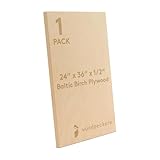
I remember staring at a pile of 1/2 inch plywood, wondering if I was about to make a monumental, expensive mistake. Building cabinets seemed straightforward enough, right? Grab some wood, slap it together. Turns out, it’s a bit more nuanced than that, especially when you’re trying to keep costs down without sacrificing quality. So, let’s get down to brass tacks about whether 1/2 inch plywood is a viable option for your next cabinet project. Can 1/2 inch plywood be used in cabinets? The answer isn’t a simple yes or no, and I’ve learned that the hard way.
Years ago, I saw a guy online who swore by using thinner plywood for everything. Sounded like a genius way to save a few bucks. I tried it for a small pantry unit, and let me tell you, the sagging started almost immediately. It was a lesson learned in structural integrity versus budget. This whole plywood situation for cabinets is a balancing act, and understanding the different types and their limitations is key.
The Real Deal with 1/2 Inch Plywood for Cabinets
Alright, let’s cut through the noise. The question, ‘can 1/2 inch plywood be used in cabinets,’ comes up a lot, especially when you’re staring down the barrel of a cabinet build and looking at your wallet. My honest take? Yes, you can use 1/2 inch plywood, but you need to be smart about it. It’s not the go-to for every single component, and frankly, for a lot of the main structural parts of a cabinet carcase, it’s probably not the best choice if you want something that’ll last and not bow under pressure. Think of it as a good contender for certain parts, but not the undisputed champion for everything.
The big issue with 1/2 inch plywood, especially the cheaper grades, is its tendency to flex. If you’re building the main box of a kitchen cabinet that’s going to hold heavy dishes, pots, and pans, you’re asking for trouble. I’ve seen shelves sag like sad hammocks after just a few months. It’s infuriating. That’s why most reputable cabinet makers, and frankly, anyone who’s built a few sets of cabinets and learned from their mistakes, tend to lean towards 3/4 inch for the main carcase – the sides, top, bottom, and back. The extra 1/4 inch makes a significant difference in rigidity and load-bearing capacity. It’s just a sturdier foundation.
However, that doesn’t mean 1/2 inch plywood is worthless. Far from it.
It can be perfectly fine, even excellent, for drawer sides, drawer bottoms (often with a groove), and for the backs of smaller, less stressed cabinets. For a garage cabinet holding tools or a linen closet where things aren’t super heavy, 1/2 inch might be totally adequate. It boils down to the intended use and the weight it’s expected to bear.
You wouldn’t use a toothpick to build a bridge, and you shouldn’t use 1/2 inch plywood for the main structure of a heavy-duty kitchen cabinet without serious reinforcement. My first attempt at a kitchen island base using mostly 1/2 inch ended up being a very expensive lesson in physics. The drawer slides started to pull away from the side panels because the material just wasn’t strong enough to hold the screws under load.
Understanding Plywood Grades and What to Look For
When you’re considering plywood, especially for cabinets, the grade is everything. It’s not just about how pretty the wood looks on the face; it’s about what’s going on underneath the surface and how it’s constructed. For cabinet boxes, you’re generally looking at veneers and the quality of the core. The American Plywood Association (APA) has standards, and while you don’t need to be an expert, knowing a few basics can save you a headache. For cabinets, you want something that’s not going to delaminate or have huge voids in the middle. Those voids are weak spots.
For 1/2 inch plywood, you’ll typically see grades like A-D, B-C, or even utility grades. For cabinet carcases, I’d steer clear of anything labeled ‘utility’ or ‘D’ on the interior surface. You want at least a ‘C’ or ‘C+ ‘ veneer on the interior so the glue has something solid to adhere to when you’re joining pieces, and so it doesn’t disintegrate if it gets a bit damp.
An ‘A’ or ‘B’ veneer on the visible face is great for appearance, but for the guts of the cabinet, the core is what matters most for strength. Look for plywood with fewer voids, meaning the layers (plies) are packed tightly together. When you tap on a sheet, it should sound solid, not hollow and tinny. (See Also: Can A 4x8 Plywood Fit In A Honda Pilot )
Birch plywood is a popular choice for cabinets because it’s generally stronger and has a smoother, more consistent grain than many pine or fir options. It holds screws well, which is a big deal when you’re assembling boxes and attaching hinges or drawer slides. Even in 1/2 inch, good quality birch plywood will perform better than lesser grades of other woods. For drawer bottoms, a 1/4 inch or 1/2 inch premium plywood can work wonders, especially when seated in a dado groove.
It’s lighter than 3/4 inch, which can be a plus for drawer operation, but it needs that groove for support. My personal preference for drawer bottoms, if I’m using 1/2 inch for the sides, is to go with a full 1/2 inch thickness for a bit more robustness. It feels more substantial and less likely to flex under the weight of cutlery or cooking utensils.
| Plywood Type | Thickness | Best Use in Cabinets | My Verdict |
|---|---|---|---|
| Hardwood Plywood (e.g., Birch) | 3/4 inch | Main Carcase (Sides, Top, Bottom) | The gold standard. Strong, stable, holds screws well. Worth the extra cost for important structure. |
| Hardwood Plywood (e.g., Birch) | 1/2 inch | Drawer Sides, Drawer Bottoms, Cabinet Backs (smaller units) | Good for these applications if the grade is decent. Don’t overload shelves made with this. |
| Softwood Plywood (e.g., Pine, Fir) | 3/4 inch | Main Carcase (can be okay for utility/garage) | Acceptable for less important, heavy-duty applications where aesthetics aren’t most important. Might need more bracing. |
| Softwood Plywood (e.g., Pine, Fir) | 1/2 inch | Backing panels, temporary jigs, extremely light-duty shelves | Generally avoid for any structural cabinet parts. Prone to sagging and damage. |
| MDF (Medium Density Fiberboard) | 1/2 inch or 3/4 inch | Cabinet Doors (painted), Shelves (well-supported) | Great for smooth painted surfaces, but can sag. Not ideal for cabinet carcases due to weight and moisture issues. |
Contrarian Corner: Why 3/4 Inch Isn’t Always the Boss
Now, here’s where I might ruffle some feathers. Everyone, and I mean everyone, will tell you 3/4 inch plywood is the only way to go for cabinet boxes. And for good reason – it’s strong, it’s stable, it’s the industry standard for a reason. But here’s my contrarian take: for certain applications, particularly smaller, wall-mounted upper cabinets where the load is distributed differently and the spans are shorter, 1/2 inch plywood can be perfectly adequate, provided it’s a good quality hardwood plywood, like birch or maple, and you’re using solid joinery.
I’ve built a few sets of upper cabinets for a small kitchen remodel using 1/2 inch birch plywood for the carcase, and they’ve held up beautifully. The key is using strong joinery – pocket screws are my friend here, along with a good wood glue – and making sure the shelves aren’t excessively long.
If you’re spanning more than 30 inches without a divider, 3/4 inch is definitely the way to go. But for narrower upper cabinets, the weight savings and cost reduction can be noticeable.
The common advice is to use 3/4 inch for everything structural. I disagree if you understand the limitations and adjust your design accordingly. For example, if you’re building a base cabinet for a bathroom vanity that will hold only lightweight toiletries and cleaning supplies, and the span of the shelves is less than 24 inches, you might be able to get away with 1/2 inch hardwood plywood for the sides and top/bottom.
But you absolutely need to consider the weight of the countertop and sink that will sit on top. If it’s a heavy stone countertop, I’d push back towards 3/4 inch for the entire carcase to be safe.
It’s all about the specific load and span. My mistake early on was applying the ‘use 3/4 inch everywhere’ rule rigidly, even to very small, light-duty cabinets where it was overkill. It’s about understanding the engineering, not just following a rule blindly.
Common Mistakes and How to Avoid Them
The biggest mistake I see, and one I’ve made myself, is using the wrong grade of plywood for the job. You might grab a sheet of Construction Grade or Utility Grade 1/2 inch plywood thinking it’s all the same. It’s not. These grades have voids, knots, and weaker veneers that will cause issues down the line. (See Also: Can Bondo Be Applied To Plywood )
They’re fine for a temporary workbench or bracing, but not for the visible or structural parts of your cabinets. Always look for cabinet-grade plywood.
This typically means at least a B-grade veneer on the face and a C or better on the back, with a core that’s as void-free as possible. For 1/2 inch, you’re looking for something like B-B or B-C grade hardwood plywood for any part that will bear weight or be seen.
Another common pitfall is not properly supporting shelves. Even with 3/4 inch plywood, long shelves can sag if they aren’t adequately supported.
If you are using 1/2 inch for shelves, you absolutely need to install shelf supports every 12-18 inches, or design them with a reinforcing edge, like a dado groove with a solid wood strip inserted. I learned this when I built a pantry with 1/2 inch shelves.
I thought they were strong enough because I used good quality birch. But after loading them up with canned goods and jars, I came back a month later and the middle of every shelf had a noticeable dip.
Adding center supports and a solid wood front edge was a pain, but it saved them from becoming useless. Don’t skimp on shelf supports or design for the material you’re using.
Finally, people often underestimate the importance of the cabinet back. While many cabinets have open backs or thin hardboard backs, a solid plywood back adds significant rigidity to the entire cabinet structure. If you’re using 1/2 inch plywood for the carcase, a 1/2 inch plywood back panel, glued and screwed into the sides, top, and bottom, will make a world of difference in how sturdy the cabinet feels. It helps prevent racking and twisting. I’ve seen cabinets that felt wobbly until I added a solid back, and suddenly they felt like they could withstand a minor earthquake. It’s a simple step that dramatically improves the overall integrity.
Practical Tips for Using 1/2 Inch Plywood in Cabinets
If you’ve decided 1/2 inch plywood is the right choice for certain parts of your cabinets, here are a few tips from the trenches. First, always buy a little extra. Plywood can have hidden defects, and you’ll want to be able to select the best pieces for important areas. For drawer bottoms, I like to cut them slightly oversized and then trim them to fit perfectly into the dado grooves. This makes sure a snug fit and adds to the overall strength of the drawer box.
When joining 1/2 inch plywood, especially for drawer sides or shelves that will carry some load, use a combination of glue and fasteners. Pocket screws are fantastic for this because they pull the joint tight and provide mechanical strength. If you don’t have a pocket hole jig, good old-fashioned butt joints with glue and screws or nails will work, but pre-drilling is key to prevent splitting. Make sure your screws aren’t so long that they poke through the other side. For drawer sides, a 1 1/4 inch screw is usually sufficient for joining to the front and back pieces when using 1/2 inch material. (See Also: Can Cat Plywood Be Used For Exterior Siding )
For cabinet backs that are 1/2 inch plywood, consider using a rabbet joint or a dado. This means cutting a groove or a recess around the back edge of the cabinet sides, top, and bottom, and then setting the back panel into that groove. It’s a more solid connection than simply screwing or nailing the back onto the edges. It adds a significant amount of stiffness to the cabinet. Even for smaller upper cabinets, this technique makes them feel much more solid and professional. I spent an entire weekend reinforcing a set of cabinets with this method, and the difference was night and day. It felt like I’d bought new, high-end cabinets instead of just fixing old ones.
Faq: Your Burning Questions Answered
Can 1/2 Inch Plywood Be Used for Cabinet Shelves?
Yes, but with significant caveats. For 1/2 inch plywood shelves, you must make sure they are not too long (ideally under 24-30 inches) and are well-supported. Using a dado groove along the front edge with a solid wood strip inserted, or installing center supports, is highly recommended to prevent sagging. If the shelves will hold heavy items, it’s always safer to opt for 3/4 inch plywood or a stronger material.
Is 1/2 Inch Plywood Strong Enough for Drawer Sides?
For most standard drawers, 1/2 inch hardwood plywood (like birch or maple) is strong enough for the sides, provided you use good joinery (glue and screws/nails) and a quality drawer slide system. The key is that the drawer slides are attached securely to the sides, and the sides themselves are well-constructed. Avoid using cheap, weak plywood for drawer sides as it can warp or break.
What Is the Difference Between Cabinet-Grade Plywood and Regular Plywood?
Cabinet-grade plywood is manufactured with higher quality veneers and a core that has fewer voids and defects. The face veneers are typically smooth and uniform (rated A or B), and the back veneers are at least C-grade. This makes sure better stability, strength, screw-holding ability, and a smoother surface for finishing. Regular or utility-grade plywood often has significant voids, knots, and rougher veneers, making it unsuitable for visible or structural cabinet components.
Can I Use 1/2 Inch Plywood for the Back of Cabinets?
Absolutely. Using 1/2 inch plywood for the back of cabinets is a great way to add structural integrity and prevent racking. It’s much stronger than thin hardboard or leaving the back open. Making sure the back panel is securely attached to the sides, top, and bottom, ideally with a dado or rabbet joint, will significantly stiffen the entire cabinet structure.
Is 1/2 Inch Plywood Considered Strong Enough for Kitchen Cabinet Boxes?
Generally, no, 1/2 inch plywood is not considered strong enough for the main structural components (sides, top, bottom) of kitchen cabinet boxes, especially if they are base cabinets that will hold heavy items. While it might work for very small, lightweight upper cabinets with short spans, the risk of sagging and failure under load is too high for typical kitchen cabinet applications. 3/4 inch plywood is the standard and recommended material for kitchen cabinet carcases.
Conclusion
So, to circle back to the million-dollar question: can 1/2 inch plywood be used in cabinets? My answer remains a qualified yes. It’s not your go-to for every single piece, especially not the main carcase of your kitchen cabinets if you want them to last a lifetime without issues. But for drawer sides, drawer bottoms, and the backs of many cabinets, it’s a perfectly acceptable and cost-effective material, provided you choose a good quality hardwood plywood and understand its limitations.
Don’t be afraid to mix and match materials if budget is a concern. Use 3/4 inch for the guts that need strength and 1/2 inch where it makes sense. The key is knowing the difference between a good decision and a cheap shortcut that’ll bite you later. My own journey through countless DIY projects has taught me that sometimes spending a little more upfront on the right material saves you a lot of headaches and rework down the line.
Before you buy, always think about what you’re storing, how big the span is, and how much weight it needs to hold. If you’re still on the fence, especially for important structural parts, err on the side of caution and go with 3/4 inch. Your cabinets will thank you, and so will your sanity when you’re not trying to fix sagging shelves.