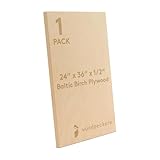
I remember staring at a sheet of 3/4 inch plywood, a glorious, thick beast, and wondering if it could really handle the weight I had planned for it. This wasn’t just any project; it was a DIY workbench that needed to be bombproof. Too many times I’ve seen flimsy shelves sag or projects crumble because someone skimped on material or used something clearly not up to the task.
So, can 3/4 inch plywood sgear for serious stuff? The short answer is usually yes, but there’s a lot more to it than just grabbing the thickest sheet off the lumber rack. You need to understand what ‘sgear’ really means in practical terms – load-bearing capacity, durability, and how you’re actually using it.
The Real Deal on Plywood Thickness: Why 3/4 Inch Matters
Look, when you’re building something that needs to hold up to actual use, not just sit there looking pretty, the thickness of your material is your first line of defense. And 3/4 inch plywood? That’s the heavyweight champion in the common panel goods aisle. It’s not some flimsy decorative veneer. This stuff is built to take a beating, to support significant weight, and to be the backbone of projects that you don’t want to worry about constantly.
Think about it: a standard sheet of 3/4 inch plywood is made up of multiple layers, or ‘plies,’ glued together with the grain running in alternating directions. This cross-graining is what gives it immense strength and stability, resisting warping and splitting far better than solid wood of the same thickness. For anything that needs to bear weight – shelves, workbenches, cabinet bases, even subflooring – 3/4 inch is often the go-to for a reason. It’s not just about being thick; it’s about the engineering of how those plies are put together. This is why the question ‘can 3 4 inch plywood sgear’ for demanding tasks is typically a resounding yes, provided you’re buying decent quality.
I learned this the hard way with a set of garage shelves I built about five years ago. I thought I’d save a few bucks and went with 1/2 inch plywood for the shelves. Big mistake. Within a year, I had noticeable sag, even with just tools and storage bins on them. I ended up having to rip them out and replace them with 3/4 inch, which, of course, cost me more in the long run. That experience cemented my belief that sometimes, you just need to buy the right material the first time. 3/4 inch plywood provides that peace of mind for structural applications.
Choosing the Right Grade: Not All Plywood Is Created Equal
Here’s where a lot of folks get tripped up. They think ‘3/4 inch plywood’ means they’re all the same. Nope. Just like cars, there are economy models and luxury models, and the same applies to plywood. The grade of the plywood – usually indicated by letters like A, B, C, D, and X for the face and back veneers – tells you a lot about its appearance and structural integrity. For projects where strength and stability are most important, like when you’re asking if 3/4 inch plywood can sgear for a workbench, you want something with good structural ratings.
Generally, for structural applications, you’ll see designations like CDX or AC. The ‘C’ and ‘D’ grades mean the back and front (or core) veneers might have more knots, patches, or imperfections. That’s usually fine for subflooring or the base of a cabinet where it won’t be seen. However, if you’re building something visible, like a nice set of built-in shelves, you’d opt for something like an AC or even an AB grade, where the face veneer is smoother and has fewer cosmetic flaws. But for pure load-bearing capacity, the grade of the face veneer is less important than the quality of the core plies and the adhesive used.
I once grabbed a sheet of what looked like cheap, contractor-grade 3/4 inch plywood for a temporary workshop partition. It was labeled ‘Utility Grade’. Man, that stuff was full of voids in the core. When I tried to screw into it, the screws just spun in empty space. It was a nightmare to work with and didn’t feel nearly as solid as good quality plywood. It taught me that while 3/4 inch is thick, you still need to be mindful of what’s inside that thickness. For true ‘sgear,’ you want good, solid plies all the way through. (See Also: Can A 4x8 Plywood Fit In A Honda Pilot )
Common Plywood Grades and What They Mean
| Grade Designation | Face Veneer | Back Veneer | Typical Use & Opinion |
|---|---|---|---|
| A-A | Smooth, paintable, few defects | Smooth, paintable, few defects | High-end furniture, cabinets. Overkill for structural where ‘sgear’ is the main concern. Pricey. |
| A-C | Smooth, paintable | Rougher, may have plugs/knots | Good for visible cabinets, built-ins where one side is primary. Solid enough for shelves. |
| C-D | Rough, knots, patches | Rough, knots, patches | Utility grade. Subflooring, sheathing, rough work. Will ‘sgear’ but looks rough. 3/4 inch C-D is common for structural. |
| CDX | Rough, knots, patches | Rough, knots, patches | Commonly used for roof and wall sheathing. The ‘X’ means exterior glue, which is good for damp conditions. 3/4 inch CDX is a workhorse. |
| Cabinet Grade | Varies (often B or better) | Varies (often C or better) | Designed for furniture and cabinetry. Good balance of looks and strength. |
Load-Bearing Capacity: How Much Can 3/4 Inch Really Hold?
This is the million-dollar question when you’re asking if 3/4 inch plywood can sgear. The honest answer is: it depends. It’s not a simple number you can find stamped on the sheet. Several factors come into play. First, and most obvious, is the span. A 3/4 inch plywood shelf supported every 12 inches is going to hold a lot more than the same shelf supported only every 36 inches. The longer the span, the more likely you are to see sag, regardless of thickness.
Then there’s the type of load. Is it static, like a stack of books, or dynamic, like someone jumping on a workbench (please don’t do that)? Dynamic loads put much more stress on the material. The way the plywood is fastened also plays a huge role.
Using appropriate screws or nails, spaced correctly, and making sure they bite into solid wood, not voids, makes a massive difference. For example, I recently built a couple of heavy-duty drawers for my shop. They’re made from 3/4 inch birch plywood, and the bottom is set into a rabbet joint and glued, then further secured with screws.
Those drawers can hold a frightening amount of weight – think full of heavy hand tools, impact wrenches, and spare parts. They haven’t budged an inch.
It’s also important to understand the difference between the plywood’s inherent strength and how it’s used. A 3/4 inch sheet might be rated for a certain load in a lab setting with perfect conditions, but in the real world, with variations in material and construction, that number can change. For most DIY applications, like shelving for a garage, a sturdy workbench top, or a durable cabinet base, 3/4 inch plywood is more than capable of handling typical loads. If you’re building something that needs to support thousands of pounds, you’re probably moving into engineered beams or steel framing anyway, not just plywood.
Factors Affecting Load Capacity
- Span Length: Shorter spans support more weight.
- Load Type: Static loads are less stressful than dynamic loads.
- Fastening Method: Proper screws/nails and placement are vital.
- Plywood Grade and Construction: Interior ply quality matters.
- Edge Support: How well the edges are supported and reinforced.
Common Mistakes When Using 3/4 Inch Plywood
You’d think with something as straightforward as 3/4 inch plywood, there aren’t many ways to mess it up, right? Wrong. I’ve seen it all, and I’ve made some of these mistakes myself. The biggest one? Not accounting for the span. People will use 3/4 inch for a long shelf, say 4 feet, without any intermediate support, and then wonder why it sags under the weight of a few books. It’s like expecting a single plank of wood to hold up a car – it’s just not designed for that kind of unsupported stretch.
Another common pitfall is improper fastening. When screwing or nailing into 3/4 inch plywood, you need to make sure your fasteners are long enough to get a good bite into the plies but not so long that they poke through the other side. And don’t just screw into the face veneer; aim for the core layers. I’ve also seen people over-tighten screws, which can crush the wood fibers and weaken the area around the fastener, especially in softer plywood grades. This is particularly true if you’re using power tools without a clutch. Remember, you want to pull the material together, not rip it apart. (See Also: Can Bondo Be Applied To Plywood )
Then there’s the issue of moisture. While some plywoods are made with exterior glue (like CDX), most standard construction-grade plywood is not waterproof. If you plan to use 3/4 inch plywood in a damp environment, or outdoors where it will be exposed to the elements, you absolutely need to seal it properly. I once built a potting bench for my patio using standard 3/4 inch plywood. I painted it, but didn’t seal the edges or the underside. Within a year, the edges started to delaminate and swell from rain and dew. So, while 3/4 inch plywood can sgear, it needs protection if it’s going to face moisture.
Real-World Applications: Where 3/4 Inch Plywood Shines
So, where does 3/4 inch plywood truly earn its keep? Everywhere you need solid, reliable structure. For DIYers, the workbench is a classic. A good 3/4 inch plywood top, maybe even doubled up for extra heft, can withstand pounding, clamping, and the general abuse a workshop throws at it. It’s also fantastic for drawer bottoms and cabinet carcasses. When you build a cabinet out of 3/4 inch plywood, you get a piece of furniture that feels substantial and can hold heavy items without flexing.
I’ve used it extensively for built-in shelving in my garage and basement. These aren’t just decorative shelves; they hold stacks of heavy storage bins, tools, and materials. The key is proper spacing of the shelf supports and using screws that go deep enough. I also used it for the subfloor underlayment in a workshop addition I built. It creates a solid, stable base for the finished flooring and adds a layer of sound dampening. Another place it’s invaluable is for speaker enclosures. The rigidity of 3/4 inch plywood helps minimize cabinet resonance, leading to clearer sound.
Honestly, any project where you’re concerned about things sagging, splitting, or failing under load is a good candidate for 3/4 inch plywood. It’s a step up from 1/2 inch in terms of strength and rigidity, and for the slight increase in cost and weight, you gain a significant boost in durability and confidence. It’s the material you reach for when you want something to feel permanent and capable.
Practical Tips for Working with 3/4 Inch Plywood
When you’re cutting 3/4 inch plywood, a sharp blade is your best friend. A dull blade will tear out the plies, leaving a fuzzy edge that’s a pain to clean up. I always opt for a good quality carbide-tipped blade designed for plywood or fine cuts. For straight cuts, a table saw is ideal because you can get a clean, consistent edge. If you’re using a circular saw, make sure you use a guide or fence to keep your cut straight. Clamp the plywood down securely before you start cutting; otherwise, the offcut can shift, leading to a nasty tear-out or a crooked cut.
When it comes to joining 3/4 inch plywood, screws are generally preferred over nails for structural integrity, especially if you’re not gluing. Pre-drilling pilot holes is almost always a good idea, particularly near the edges, to prevent splitting. Countersinking the screw heads allows for a flush finish or a place to fill with wood putty later. For even stronger joints, especially in cabinets or furniture, using wood glue in conjunction with screws or nails is highly recommended. A good clamp will hold the pieces tightly while the glue dries.
I also found that for projects where appearance matters, you might want to consider edge banding or a solid wood trim to cover the exposed plies of the 3/4 inch plywood. While it’s strong, the layered edge isn’t the prettiest thing. Applying a thin strip of hardwood veneer or solid wood can give it a much more finished look. This is especially useful if you’re building open shelving or visible cabinet sides. Remember, the goal is for your project to not only function well but also look good. (See Also: Can Cat Plywood Be Used For Exterior Siding )
People Also Ask:
Can 3/4 Inch Plywood Be Used for Shelves?
Yes, 3/4 inch plywood is an excellent material for shelves, especially for supporting heavier loads. Its thickness and cross-grained construction provide significant rigidity. However, the maximum weight it can hold without sagging depends heavily on the span length between supports. For spans over 30 inches, you might need additional supports or consider doubling up the plywood.
What Is the Weight Capacity of 3/4 Inch Plywood?
There isn’t a single, universal weight capacity for 3/4 inch plywood. It varies greatly based on the specific grade, the type of wood used, the span, and how it’s supported. In general, a well-supported span of 3/4 inch plywood can hold hundreds of pounds, but for important applications, it’s best to consult span tables or err on the side of caution with extra support.
Is 3/4 Inch Plywood Stronger Than 1/2 Inch?
Yes, 3/4 inch plywood is significantly stronger and more rigid than 1/2 inch plywood. The increased thickness provides greater resistance to bending and deflection, making it more suitable for structural applications and heavier loads where preventing sag is important.
Is 3/4 Inch Plywood Good for Subflooring?
Absolutely. 3/4 inch plywood is a very common and effective material for subflooring. It provides a solid, stable base for finished flooring like tile, hardwood, or carpet, and its thickness helps to reduce noise transfer and floor squeaks.
Can 3/4 Inch Plywood Be Used for Cabinet Carcasses?
Definitely. 3/4 inch plywood is ideal for cabinet carcasses because it provides the necessary strength and rigidity to support heavy contents and resist racking forces. It creates durable, long-lasting cabinets that feel substantial.
Verdict
So, to circle back to the original question: can 3/4 inch plywood sgear? For the vast majority of DIY projects that require strength and durability – from workbenches and heavy-duty shelving to solid cabinet construction – the answer is a firm yes. It’s a workhorse material that, when chosen wisely and installed correctly, will not let you down.
Don’t be afraid to invest in a decent grade for visible projects, but for pure structural ‘sgear,’ focus on the quality of the internal plies and the adhesive. Pay attention to your spans, use the right fasteners, and seal it if it’s going to see moisture. These simple steps make all the difference.
Next time you’re facing a project that demands real structural integrity, reach for the 3/4 inch. You’ll likely find it’s exactly what you need to build something that lasts.