I remember the first time I tried to build my own cabinets. Felt like a DIY god, until the drawers started sagging under the weight of a few t-shirts. That cheap, thin plywood I’d used for the bottoms? Total disaster. So, can 5mm poplar plywood be used as a drawer bottom? Let’s cut to the chase: it depends, but usually, you’re better off looking elsewhere.
There’s a temptation to go cheap, especially on parts you don’t see, but drawer bottoms take a beating. They’re constantly being slid in and out, and they hold the weight of whatever you stuff in them. Cutting corners here is a shortcut to frustration, and honestly, wasted money in the long run.
The Reality of 5mm Poplar for Drawer Bottoms
Alright, let’s talk about 5mm poplar plywood for drawer bottoms. Poplar itself isn’t a bad wood. It’s light, relatively inexpensive, and easy to work with. It’s often used for internal cabinet parts like drawer sides or even the carcasses themselves. But when it comes to the absolute base of a drawer, where all the weight and friction happens, 5mm thickness is a real gamble. Think about it: it’s barely thicker than a heavy-duty piece of cardboard. Pushing a drawer full of tools or even just kitchen utensils in and out repeatedly is going to put a lot of stress on that thin sheet.
I’ve seen drawer bottoms made from 5mm poplar bow, warp, and even crack. The worst offender is usually moisture. If you spill something in the drawer, or if the environment is humid, that thin plywood can swell and distort. Then, when it dries, it might not go back to its original shape.
This means your drawer won’t slide smoothly anymore, or worse, the bottom might pop out of its groove entirely. I once built a set of workshop drawers using 5mm for everything, and within six months, the bottoms of the heavier drawers were noticeably dipping. It wasn’t a catastrophic failure, but it was ugly and annoying.
I had to reinforce them with metal bracing, which was just more work and cost I could have avoided by using a better material from the start.
People sometimes think that because it’s plywood, it’s inherently strong. Plywood gets its strength from the cross-grain layering of veneer. However, the thinner the veneer and the fewer layers there are (which is typical for 5mm), the less structural integrity you have. Poplar’s grain can also be a bit soft and inconsistent, which doesn’t help when you’re asking it to bear a load and resist abrasion.
When Might 5mm Poplar Actually Work? (spoiler: Not Often)
So, are there any scenarios where 5mm poplar plywood might, just might, be acceptable for a drawer bottom? Honestly, the list is pretty short and comes with major caveats. Primarily, it’s for drawers that will hold very little weight and experience minimal sliding action. Think of a drawer in a decorative piece of furniture that’s mostly for show, or perhaps a very small, shallow drawer in a kid’s room for holding a few soft toys that won’t be slammed shut. (See Also: Can A 4x8 Plywood Fit In A Honda Pilot )
Another situation is if you’re building very small, shallow drawers where the span between support points (like drawer sides or internal runners) is extremely minimal. If the drawer is only, say, 6 inches wide and 4 inches deep, and you’re using it for light items, the stress might be manageable. But even then, I’d be hesitant. The common advice you’ll find online often suggests 1/4-inch (around 6mm) or thicker, and there’s a good reason for that. Manufacturers and experienced woodworkers know that structural integrity is key for longevity.
Let’s consider an example: I built a small cabinet for my entryway to hold mail and keys. The drawers were small, maybe 10 inches wide. I initially thought 5mm poplar would be fine. But after a few weeks of mail piling up, I noticed a slight sag.
I ended up having to cut a strip of 1/2-inch plywood and slide it underneath as a reinforcement. It worked, but it looked clunky and added unnecessary complexity. That’s the problem – you often end up reinforcing a material that was simply too weak to begin with. It’s like putting a Band-Aid on a problem that needs stitches.
The material itself is just not designed for the sustained, dynamic forces a drawer bottom endures.
Why Thicker Plywood or Other Materials Are the Smart Play
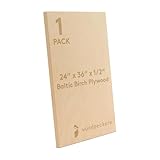
If 5mm poplar is a questionable choice, what should you be using? The standard recommendation for drawer bottoms, especially in cabinets or furniture that will see regular use, is 1/2-inch (around 12mm) hardwood plywood. Baltic birch is a fantastic option. It’s made with multiple thin veneers of hardwood glued cross-grain, giving it incredible strength and stability for its thickness. It’s also usually void-free, meaning there are no air pockets within the layers that could lead to weak spots. It’s a bit more expensive than poplar, sure, but the difference in performance and durability is night and day.
Another excellent choice is 1/4-inch (around 6mm) or 3/8-inch (around 9mm) MDF (Medium Density Fiberboard). Now, I know what some of you might be thinking: MDF? Isn’t that the stuff that swells up like a sponge when it gets wet? Yes, standard MDF is susceptible to moisture damage.
However, there are moisture-resistant grades of MDF available, and even standard MDF, when properly sealed and used in a dry environment, can be a very stable and smooth surface for drawer bottoms. The key is its density and consistency; it doesn’t have a grain like wood, so it’s less prone to warping or splitting. The real advantage of MDF is that it’s incredibly smooth, providing a superior sliding surface if you’re using side-mounted drawer slides. (See Also: Can Bondo Be Applied To Plywood )
For really heavy-duty applications, like tool chests or industrial drawers, you might even consider solid wood (like 3/4-inch oak or maple) or thicker plywoods. But for most home and workshop use, 1/2-inch Baltic birch is the gold standard. It’s strong, stable, looks good, and doesn’t break the bank compared to exotic hardwoods. The cost difference between 5mm poplar and 1/2-inch Baltic birch is often less than you’d think, especially when you factor in the potential for future repairs or replacements with the cheaper option.
Common Mistakes and How to Avoid Them
The biggest mistake, hands down, is choosing a material based solely on price without considering its suitability for the job. Thinking “it’s just the bottom, nobody sees it” is a classic trap. I fell for it myself, as I mentioned. Another common error is not properly preparing the material. Even if you choose a decent plywood, if you don’t seal the edges, especially with poplar, moisture can wick in and cause swelling. A good coat of primer or a couple of coats of polyurethane on all sides and edges of the plywood can significantly improve its resistance to moisture and wear. This is especially true if you’re building drawers for a kitchen or bathroom where humidity levels can fluctuate.
Another mistake is not accounting for the thickness of your chosen material in your drawer box design. If you decide to upgrade from 5mm to 1/2-inch plywood, you need to make sure your drawer sides have a deep enough groove to accept the thicker material, or that your design accounts for it being mounted differently. Many drawer designs use a groove routed into the drawer sides and front. If the groove is only 5mm deep, you can’t just jam a 12mm piece in there.
You’ll either need to re-route the groove or attach the bottom differently, perhaps using screws and glue from the underside. I once had to rebuild an entire drawer box because I didn’t consider the groove depth when switching from 1/4-inch to 1/2-inch plywood. It was a rookie error that cost me a whole afternoon.
Finally, don’t underestimate the importance of the drawer slide system. A weak drawer bottom combined with a cheap, sticky drawer slide is a recipe for disaster. Even a good drawer bottom will struggle if the slide mechanism is poor and causes undue stress on the bottom as it’s opened and closed. Investing in decent drawer slides is almost as important as choosing the right material for the bottom itself. Always match the quality of your components. A cheap bottom with expensive slides is unbalanced, and vice-versa.
Drawer Bottom Material Comparison
| Material | Thickness (Typical) | Pros | Cons | Verdict for Drawer Bottoms |
|---|---|---|---|---|
| 5mm Poplar Plywood | 5mm (approx. 3/16″) | Inexpensive, lightweight | Low strength, prone to warping/sagging, poor moisture resistance | Generally NOT Recommended. Only for very light-duty, decorative drawers. |
| 1/4″ Baltic Birch Plywood | 6mm (approx. 1/4″) | Good strength-to-weight ratio, stable, smooth surface | Can still sag under heavy loads if spans are wide, requires sealing | Acceptable for light to medium-duty drawers, especially if supported well. |
| 3/8″ Baltic Birch Plywood | 9mm (approx. 3/8″) | Excellent strength and stability, void-free construction, smooth | More expensive than thinner options, can be heavier | Highly Recommended. A solid choice for most applications. |
| 1/2″ Baltic Birch Plywood | 12mm (approx. 1/2″) | Maximum strength and stability, very durable, good surface | Heaviest and most expensive common option, may require deeper grooves | The Gold Standard. Ideal for heavy-duty drawers and long-term durability. |
| 1/4″ or 3/8″ MDF (Standard/MR) | 6mm – 9mm (approx. 1/4″ – 3/8″) | Very smooth surface, consistent density, stable, inexpensive | Susceptible to moisture damage (standard), can be heavy, can chip | Good option if properly sealed, especially for drawers with modern slides. Moisture-resistant grade preferred. |
Is Poplar Plywood a Good Choice for Drawer Bottoms? My Contrarian Take
Everyone says you need thick, hardwood plywood or MDF for drawer bottoms. They’re not wrong, mostly. But here’s my contrarian take: 5mm poplar plywood can be used as a drawer bottom, but only if you drastically alter how you build the drawer and what you put in it. Most people who fail with thin plywood are trying to use it like they would a 1/2-inch sheet – expecting it to span across wide openings and hold heavy loads without any extra support. That’s where they go wrong.
If you’re building a drawer where the bottom sits in a tight groove on all four sides, and the drawer itself is small (say, less than 12 inches wide and not very deep), and you’re only putting light items in it – like socks, underwear, or paper documents – then 5mm poplar might hold up. You also need to make sure the wood is well-sealed to prevent moisture issues. (See Also: Can Cat Plywood Be Used For Exterior Siding )
The real trick is to avoid letting the bottom bear the load directly. You can achieve this by adding cross-braces underneath the 5mm sheet. Imagine cutting thin strips of wood (even scrap 1/4-inch plywood or strips of 1×2) and gluing and screwing them perpendicular to the grain of the poplar bottom, spaced every few inches. This effectively turns the thin sheet into a much stronger, corrugated-like structure.
Is this more work? Yes. Is it as elegant as a single, thick piece of Baltic birch? No. But if you’re on an extremely tight budget and have a lot of 5mm poplar lying around, and you’re willing to put in the extra effort for reinforcement, it can function. However, I’d still strongly advise against it for anything that needs to be solid or long-lasting. For me, the time and potential future frustration of dealing with sagging drawers outweigh the initial cost savings. So, while I say it can be done, I also say you probably shouldn’t bother unless you’re really desperate or have a specific reinforcement plan in mind.
Frequently Asked Questions About Drawer Bottom Materials
What Is the Standard Thickness for Drawer Bottoms?
The standard thickness for drawer bottoms generally ranges from 1/4 inch (6mm) to 1/2 inch (12mm). Thicker materials like 3/8 inch or 1/2 inch Baltic birch plywood or MDF are preferred for their strength and stability, especially for heavier loads or larger drawers. For very light-duty applications, 1/4 inch might suffice if well-supported.
Can 1/4 Inch Plywood Be Used for Drawer Bottoms?
Yes, 1/4 inch plywood, particularly hardwood plywood like Baltic birch, can be used for drawer bottoms. It offers a decent balance of strength and cost. However, for drawers that will hold significant weight or have wide spans between supports, 3/8 inch or 1/2 inch plywood is a more reliable choice to prevent sagging.
How Do I Prevent Drawer Bottoms From Sagging?
To prevent drawer bottoms from sagging, use a thicker and stronger material like 1/2 inch Baltic birch plywood. Make sure the bottom is properly seated in a groove on all sides or securely attached to the drawer box. For very wide drawers or if using thinner material, consider adding cross-bracing underneath the bottom panel. Investing in quality drawer slides that operate smoothly also reduces stress on the bottom.
Is Mdf or Plywood Better for Drawer Bottoms?
Both MDF and plywood can be excellent for drawer bottoms, with the best choice depending on the application. Hardwood plywood, especially Baltic birch, offers superior strength and resistance to splitting. MDF provides a very smooth surface and is dimensionally stable, but standard MDF is vulnerable to moisture. Moisture-resistant MDF is a great alternative. For general use, 1/2 inch Baltic birch is often considered the most reliable all-around choice.
Final Verdict
So, to circle back, can 5mm poplar plywood be used as a drawer bottom? My honest answer is: it’s a gamble, and usually one you shouldn’t take unless you’re prepared to reinforce it heavily or you’re building drawers for items that weigh practically nothing. The risk of warping, sagging, or outright failure is just too high for most typical uses. There are plenty of affordable, yet far more durable, alternatives out there.
Instead of saving a few bucks on the bottom, invest that money and a little extra time into materials like 3/8-inch or 1/2-inch Baltic birch plywood or even a good-quality MDF. Your drawers will thank you, they’ll slide smoother, and you won’t be dealing with the frustration of a collapsing bottom a few months down the line. Trust me, I’ve been there, and it’s not worth the headache.