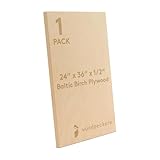
I remember looking at a sheet of Baltic birch plywood, all those pretty, uniform plies, and thinking, ‘This is going to look amazing for that outdoor bench.’ Big mistake. Huge. I ended up with a warped, peeling mess after one rainy season. So, let’s cut to the chase: can Baltic birch plywood be used outside? The short answer is, not without serious caveats, and frankly, you’re usually better off with something else.
It’s a beautiful material, no doubt, but its intended purpose and its performance when you try to push it beyond its limits are two very different things. I’ve learned the hard way what actually holds up when the weather turns.
The Real Deal with Baltic Birch and the Elements
Look, Baltic birch plywood is gorgeous. Those tight, consistent plies give it a smooth surface and a strong core that makes it a favorite for cabinetry, furniture, and even some high-end decorative projects. The glue used is typically a high-quality, water-resistant PVA, which is decent, but it’s the wood itself and the layering that are the main players here. It’s dense, it’s strong, and it doesn’t have those big, ugly voids you find in cheaper construction-grade plywood. For indoor projects, I still reach for it. My workbench top is a testament to its durability indoors. I’ve built drawer boxes and cabinet interiors that have held up for years without so much as a whisper of a warp.
But outside? That’s a whole different ballgame. The core issue isn’t necessarily the glue failing outright, though that can happen. It’s the wood’s reaction to moisture. Even with water-resistant glues, the wood fibers themselves will absorb water. When wood absorbs moisture, it swells. When it dries out, it shrinks. Baltic birch, with its many thin plies, is particularly susceptible to this cycle. Each ply can absorb water independently, leading to uneven expansion and contraction. This constant ‘breathing’ is what causes warping, delamination (where the plies start to separate), and eventual structural failure.
I once tried to build a simple outdoor planter box out of Baltic birch. I meticulously sealed every surface, edge, and even the inside with multiple coats of marine varnish. It looked fantastic for about three months.
Then, the first heavy rain hit. The bottom of the box started to bow upwards.
The sides developed little hairline cracks where the plies met. By the end of the summer, it looked like it had gone through a war.
The varnish had chipped away in places, and I could see the individual plies starting to lift. It was a complete waste of a good sheet of plywood and a solid chunk of my weekend.
That experience really hammered home the point: while you can technically use it outside, it’s a gamble you’re likely to lose unless you take extreme measures, and even then, it’s a compromise.
Why Most Folks Get It Wrong (and What to Use Instead)
Here’s where I see a lot of people get tripped up. They see the ‘plywood’ part and assume it’s all created equal. Or they hear ‘water-resistant glue’ and think that’s a magic bullet. That’s just not the case. The common advice you’ll see online often hinges on the idea that if you seal it well enough, anything is possible. I disagree. While sealing is most important, it’s often a losing battle against the inherent properties of the wood and the constant assault of moisture, UV rays, and temperature fluctuations. It’s like trying to keep a leaky boat afloat by bailing with a teacup.
The real problem with using standard Baltic birch outside is its construction. The plies are typically bonded with a Type I water-resistant glue, which is good for occasional exposure, but not for constant submersion or prolonged dampness. The wood itself, being birch, is relatively dense and strong, but it’s still organic and will absorb moisture. This absorption leads to swelling, which puts immense stress on the glue lines and the wood fibers. When it dries, it shrinks, and the cycle repeats, weakening the material with each pass. This is how you get that dreaded delamination where the layers start peeling apart like a bad sunburn. (See Also: A 4x8 Sheet Of Plywood Covers How Many Square Feet )
So, what should you use if you need something for outdoor projects? My go-to is marine-grade plywood, specifically WBP (Water Boil Proof) rated. This stuff is built tough.
It uses a waterproof glue that can actually withstand prolonged immersion without failing. The veneers are often of a higher quality and the construction is more solid. Another excellent option is exterior-grade plywood, often made from Douglas fir or Southern yellow pine. These woods are naturally more resistant to rot and decay, and they are bonded with exterior-grade glues that are designed for long-term exposure to the elements.
You’ll find they are much more forgiving of moisture and temperature changes. If you’re building something like a deck, a fence, or outdoor furniture, stick to materials specifically rated for exterior use. Trying to make Baltic birch perform in these applications is like asking a racehorse to pull a plow – it’s just not built for the job, and you’ll end up frustrated and with a shoddy result.
The Myth of ‘perfect Sealing’ for Outdoor Baltic Birch
Let’s talk about the ‘seal it perfectly’ crowd. I’ve tried this.
I’ve spent hours meticulously sanding, priming, and applying coat after coat of high-quality exterior paint, marine varnish, and even specialized epoxy coatings. I’ve paid attention to every edge, every face, and every drilled hole.
And you know what? It still fails. Not as quickly, maybe. It might last a season, perhaps even two if you’re lucky and the weather’s mild.
But eventually, the moisture finds a way in. It seeps into the wood fibers through microscopic checks that develop as the wood expands and contracts. It wicks up from the ground if the piece isn’t perfectly lifted. It gets into the wood through fasteners that weren’t perfectly sealed.
The UV rays break down the coating, creating tiny cracks. It’s an uphill battle with no guaranteed victory.
Here’s a concrete example. I built a small, decorative garden screen using Baltic birch.
I sanded it to a mirror finish and applied three coats of top-tier exterior spar varnish, with light sanding in between. It looked stunning. But the screen was placed near a sprinkler system that ran twice a week. Even though the varnish was supposed to be waterproof, the constant dampness, coupled with the drying sun, started to take its toll. (See Also: A Beautiful Mess Plywood Car Christmas Tree )
After about six months, I noticed a subtle lifting of the veneer along the bottom edge, the part that was most consistently exposed to ground moisture and occasional spray. Then, small blisters appeared on the surface, indicating water trapped between the varnish and the wood. Eventually, this led to more significant delamination.
It wasn’t a catastrophic failure, but it was a clear sign that the material was not suited for this level of exposure, no matter how well I thought I had protected it.
The core problem is that wood is hygroscopic – it absorbs and releases moisture. Plywood, even Baltic birch, is no exception.
While the glue offers some resistance, it’s not impermeable. When water gets into the wood, it causes the fibers to swell.
As the wood dries, it shrinks. This constant cycle of expansion and contraction puts incredible stress on the glue lines holding the plies together.
Over time, even the best water-resistant glue will begin to fail under this repeated stress, leading to delamination. UV rays from the sun also degrade the wood fibers and the finish over time, making them more susceptible to moisture intrusion. Trying to create a completely impermeable barrier on a material that breathes and moves is a losing proposition for long-term outdoor use.
Can Baltic Birch Plywood Be Used Outside? A Practical Comparison
So, when people ask, ‘can baltic birch plywood be used outside?’, the honest answer is ‘technically, yes, but it’s a bad idea for most applications.’ It’s like asking if you can drive a sports car off-road. You might be able to coax it over some rough terrain for a short while, but you’re going to damage it, and it’s not what it was designed for. For something like a temporary sign that will only be up for a few weeks, or a decorative element that will be under a deep overhang and get minimal direct exposure, you might get away with it if you seal it meticulously. But for anything that will experience regular rain, humidity, or direct sun – think garden furniture, outdoor sheds, raised garden beds, or even birdhouses – you’re asking for trouble.
Let’s look at how Baltic birch stacks up against more suitable outdoor materials. This isn’t just about specs; it’s about real-world performance:
| Material | Typical Use Case | Moisture Resistance | Durability Outdoors | My Verdict |
|---|---|---|---|---|
| Baltic Birch Plywood | Indoor furniture, cabinetry, crafts | Moderate (Water-resistant glue, but wood absorbs) | Poor to Fair (with extensive sealing, short-term only) | Overrated for outdoors. Stick to indoor projects. |
| Exterior-Grade Plywood (Fir, Pine) | Sheds, fences, subflooring, general construction | Good (Exterior glue, wood species often more rot-resistant) | Good | Reliable workhorse for many outdoor tasks. |
| Marine-Grade Plywood (WBP Rated) | Boat building, docks, high-exposure outdoor projects | Excellent (Waterproof glue, high-quality veneers) | Excellent | The gold standard for serious outdoor durability. Pricey. |
| Cedar/Redwood Boards | Decking, fencing, outdoor furniture, siding | Excellent (Natural oils resist rot and insects) | Excellent | Beautiful, naturally durable, but can be softer. |
You can see from the table that while Baltic birch can be used in a pinch with extreme care, it’s simply not in the same league as materials designed for the elements. The cost savings, if any, are quickly negated by the shortened lifespan and the inevitable repairs or replacements. I’ve learned to accept that some materials are just meant for specific environments, and fighting against nature with Baltic birch outdoors is a fight you’re unlikely to win long-term.
Common Mistakes and How to Avoid Them
The biggest mistake I see people make, myself included, is underestimating the impact of moisture and UV exposure on wood products. It’s not just about rain. Condensation, dew, high humidity, and even the sun’s rays breaking down finishes contribute to the degradation process. When you’re considering if can baltic birch plywood be used outside, think about the entire lifecycle of your project and the environment it will live in. (See Also: Can 3 4 Inch Thick Plywood Be Jointed At Angle )
One common error is not sealing the edges and end-grains adequately. These areas are like sponges, readily soaking up moisture. If you’re building something where you absolutely must use Baltic birch outdoors (and again, I’d strongly advise against it for anything substantial), make sure you slather on extra coats of sealant on all edges and end grains. Another mistake is relying on a single type of finish. A primer, followed by two coats of exterior paint or a good marine varnish, is usually better than just one layer of anything. Also, failing to pre-drill and seal fastener holes is a big no-no. Water can wick into the wood around screws and nails, starting the rot process from the inside out.
I once built a small step stool for my outdoor kitchen area using Baltic birch. I sealed it meticulously, or so I thought. I used a good quality exterior paint.
After about a year, I noticed the paint was peeling around the corners where the feet met the ground. Worse, I could see some slight swelling and delamination starting where the plywood met the ground. The issue was subtle – I hadn’t accounted for water splashing up from the ground during cleaning or heavy rain, and the sheer constant contact with damp concrete was too much, even with the paint.
It also didn’t help that I used standard screws without sealing the holes first. It was a good lesson: never assume your sealant is completely waterproof and never underestimate how much abuse outdoor materials take. If you’re building anything that will be in contact with the ground or regularly splashed, you need materials specifically rated for that kind of punishment, like pressure-treated lumber or marine-grade plywood.
People Also Ask: Baltic Birch Plywood Outdoors
Can Baltic Birch Plywood Get Wet?
Yes, Baltic birch plywood can get wet, but it’s not ideal for prolonged exposure. While it has water-resistant glue, the wood itself will absorb moisture, leading to swelling and potential delamination. Short periods of getting wet might be manageable with a good sealant, but continuous dampness or immersion will cause damage over time.
Is Baltic Birch Plywood Waterproof?
No, Baltic birch plywood is not waterproof. It uses water-resistant glues, meaning it can withstand occasional splashes or brief exposure to moisture. However, it is not designed to be submerged or exposed to the elements for extended periods without significant degradation.
What Is the Best Plywood for Outdoor Use?
The best plywood for outdoor use is typically marine-grade plywood (WBP rated) or exterior-grade plywood made from rot-resistant woods like Douglas fir or Southern yellow pine. These materials use waterproof glues and are constructed to withstand harsh weather conditions.
Can I Use Baltic Birch Plywood for Garden Furniture?
It’s generally not recommended to use Baltic birch plywood for garden furniture that will be exposed to the elements. While you might get away with it for a season or two with extensive sealing, it will likely warp, delaminate, and degrade much faster than furniture made from exterior-grade lumber or specifically designed outdoor plywood.
How Long Will Baltic Birch Plywood Last Outside?
The lifespan of Baltic birch plywood used outdoors can vary wildly depending on the level of exposure, the quality of sealing, and the climate. In ideal, protected conditions, it might last a year or two. In harsh, exposed conditions, it could fail within months. It’s significantly shorter than dedicated outdoor materials.
Final Thoughts
So, to circle back to the burning question: can baltic birch plywood be used outside? My hard-earned advice is to avoid it whenever possible for anything that will face the elements directly. It’s a beautiful material for indoors, and that’s where it truly shines. For outdoor projects, your money, time, and sanity are better invested in materials designed for the job.
If you’re building something that needs to withstand rain, sun, and changing temperatures, reach for marine-grade plywood, exterior-grade plywood, or even solid, naturally rot-resistant woods like cedar or redwood. Trying to force Baltic birch into an outdoor role is a gamble where the house, in this case, the weather, always wins.
Next time you’re planning an outdoor project, take a moment to consider the material’s true purpose. It’ll save you a lot of headaches and a lot of wasted wood.