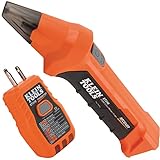
I remember staring at this janky adapter in my garage, the kind that let you plug in a whole workbench’s worth of tools into a single outlet. It looked like something out of a mad scientist’s lab. My buddy swore it was the only way to power everything without rewiring. But the nagging question, the one that kept me up at night (okay, maybe not that late, but it bothered me), was: are plug in circuit breakers legal? And more importantly, are they safe? I’ve wasted enough money and endured enough sparks to know that just because something can be plugged in, doesn’t mean it should be.
The world of electrical doohickies can be a minefield. You see all sorts of gadgets promising to boost power or make your life easier. Most of them are snake oil, pure and simple. But some, like these plug-in breaker-style devices, sit in a grey area that makes you wonder if you’re about to get an electric shock or a hefty fine. Let’s cut through the BS.
What Exactly Is a Plug-in Circuit Breaker? (hint: It’s Not What You Think)
Alright, let’s get down to brass tacks. When people ask if are plug in circuit breakers legal, they’re usually picturing some kind of magic box that you just jam into a wall socket and it suddenly gives you ten new outlets, each with its own safety cutoff. That’s not really what these things are, or at least, not what they should be.
Most of what’s out there marketed as a ‘plug-in circuit breaker’ is actually a multi-outlet adapter, often with some basic surge protection built in, and sometimes, a single fuse or a basic overload protector. It’s important to understand that these are NOT replacements for actual circuit breakers installed in your electrical panel. Those are designed to protect entire circuits from overloads and short circuits by tripping and cutting off power to a whole section of your home.
These plug-in doodads? They’re generally much simpler.
The core idea behind a real circuit breaker is safety. If you draw too much current – say, by plugging in a space heater, a microwave, and a toaster all on the same circuit – the wire gets hot. Too hot, and it can melt its insulation and start a fire.
A breaker senses this excessive current and quickly cuts the power. A plug-in adapter, on the other hand, is primarily a convenience item.
It’s designed to give you more places to plug things in, but the protection it offers is usually far less solid than what your home’s main panel provides. I once bought one of those fancy ones that claimed to have ‘individual overload protection’ for each outlet. It looked promising.
I plugged in my trusty old shop vac and a portable band saw, and a few minutes later, I smelled that awful acrid burning smell. Turns out, the adapter’s ‘protection’ was about as effective as a screen door on a submarine. The main circuit breaker in the wall eventually tripped, but the adapter itself was fried, and I was lucky it didn’t take the outlet or anything else with it. That experience hammered home the difference between a genuine safety device and a glorified power strip.
The confusion often comes from marketing. Companies want to sell you solutions, and ‘circuit breaker’ sounds a lot more protective than ‘surge protector’ or ‘multi-outlet adapter’. So, they slap that term on things. It’s a bit like calling a really sturdy extension cord a ‘portable power conduit’. It sounds fancy, but it’s still just an extension cord. Understanding the fundamental difference between your home’s built-in protection and these plug-in accessories is the first step to making safe and informed decisions about your electrical setup. Don’t let the name fool you into thinking you’re getting industrial-grade safety from something that plugs into a standard wall socket.
The Legalities: When Does ‘plug-In’ Become a No-Go?
This is where things get murky, and honestly, where a lot of people get themselves into trouble. When you ask if are plug in circuit breakers legal, the answer isn’t a simple yes or no. It heavily depends on what the device actually is, what it’s doing, and where you’re using it.
In most residential settings, using a standard multi-outlet adapter or a surge protector that plugs into a wall socket is perfectly legal. These are common household items, readily available at any hardware store or big-box retailer.
They’re designed for convenience – giving you more outlets from a single point. Think of those power strips you use behind your TV or computer; most of those are basically plug-in adapters, and they’re absolutely legal.
The legal issues start to crop up when these devices make claims they can’t back up, or when they’re used in a way that bypasses or compromises your home’s existing safety features. For instance, if a device is marketed as a ‘plug-in circuit breaker’ that is intended to replace or augment the protection provided by your main electrical panel’s breakers, that’s a huge red flag, and likely illegal and incredibly dangerous. Electrical codes, like the National Electrical Code (NEC) in the US, are very specific about how circuits are protected. You cannot just plug something into the wall and expect it to provide the same level of safety as a properly installed and rated circuit breaker in your breaker box. Using such a device would be a violation of code, and if it caused a fire or injury, you’d be in a world of hurt legally and financially. (See Also: Can I Run 12 2 With A 20 Amp Breaker )
Another area of concern is when these adapters are used to ‘daisy-chain’ multiple high-draw appliances onto a single, potentially overloaded circuit. While the adapter itself might be technically ‘legal’ as a product you can buy, using it to create an unsafe situation is where the problem lies. Law enforcement and fire marshals have the authority to cite violations if they find an unsafe electrical setup, regardless of whether the individual components were purchased legally. I once saw a friend’s workshop packed with tools, all running off a single outlet via a monstrous surge protector that had an entire power strip plugged into it.
When the fire inspector did a surprise visit (he was a stickler, that guy), he had them unplug everything. He explained that while the surge protector itself was fine, the way it was being used to overload the existing circuit was a major fire hazard and a code violation.
So, the product might be legal, but its application can easily cross the line into illegal and dangerous territory.
The key takeaway is to verify the product’s certification. Look for markings like UL (Underwriters Laboratories) or ETL (Intertek). These certifications mean the product has been tested and meets safety standards. If a device lacks these markings, or if its claims sound too good to be true, it’s best to steer clear. And remember, the legality of ‘plug-in circuit breakers’ is less about whether you can buy them and more about whether they are being used to meet electrical safety requirements they were never designed for.
What to Look for (and What to Absolutely Avoid)
Alright, you need more outlets, and you’re looking at these plug-in gizmos. What’s the deal? First off, let’s be crystal clear: if you’re looking for something that genuinely acts like a circuit breaker for your entire home, you’re looking in the wrong place. Those are installed in your main electrical panel, period. What you’re likely seeing are advanced power strips or multi-outlet adapters. The goal here is to find one that is safe, reliable, and doesn’t create a fire hazard.
Here’s what I look for:
| Feature | What to Look For | What to Avoid | My Verdict |
|---|---|---|---|
| Certification Marks | UL Listed, ETL Verified. These mean third-party testing for safety. | No markings, or markings from obscure, unknown testing labs. | A must. If it’s not UL or ETL listed, don’t even consider it. Your life is worth more than a few bucks saved. |
| Outlet Count & Spacing | Enough outlets for your needs, with ample space between them for bulky adapters and power bricks. Look for rotating outlets or those arranged in rows. | Overcrowded outlets where plugs will be jammed together, potentially blocking each other or causing heat buildup. | Important for avoiding heat and frustration. I can’t tell you how many times I’ve had to rearrange things because a giant power brick blocked three other sockets. |
| Surge Protection Rating | A decent joule rating (e.g., 1000-2000 joules or more for significant protection). Also, look for indicator lights showing the surge protection is active. | Low joule ratings (under 500) or no surge protection indicators. Devices claiming ‘advanced’ protection without clear specs. | Nice to have, especially for sensitive electronics. But remember, surge protection degrades over time, so replace them periodically. |
| Cord Quality & Length | A thick, heavy-duty cord that feels substantial. A length that allows you to place the unit conveniently without stretching. | Thin, flimsy cords that kink easily. Cords that are excessively long and lead to tripping hazards or being coiled up unnecessarily. | A beefy cord suggests better internal wiring and heat dissipation. Don’t skimp here; a weak cord is a weak link. |
| Overload Protection Features | Some units have a resettable circuit breaker button or a fuse. This is a good sign that the manufacturer has at least considered overcurrents. | Devices that claim to protect against overloads but have no visible reset button or fuse mechanism. | A good indicator that it’s more than just a basic power strip. But again, it’s not a substitute for your panel’s breaker. |
I’ve seen some really dodgy stuff over the years. One time, I bought a six-outlet adapter that looked… well, it looked cheap. The plastic felt thin, the outlets were wobbly, and the cord was about as thick as a piece of spaghetti.
There were no UL markings. I plugged in a small fan and my phone charger, and within an hour, the adapter was noticeably warm. I yanked it out, and you know what?
It felt like I dodged a bullet. That thing was a ticking time bomb. It’s not worth saving a few dollars to risk your home or your safety.
Stick to reputable brands and always check for those safety certifications. If it’s not certified, it’s not worth the risk.
Period.
Real-World Use: When Are These Things Actually Useful?
So, if they aren’t real circuit breakers, and you can’t just plug them in and expect magic, when are these plug-in adapters actually useful? I’ll tell you: for adding convenient outlets in places where you don’t have enough, but you’re not trying to overload existing circuits. Think about a home office setup. You’ve got your computer, monitor, printer, maybe a desk lamp, and a phone charger.
That’s a lot for one wall outlet. Plugging in a good quality, UL-listed multi-outlet adapter or a surge protector gives you the necessary ports without demanding excessive power from that single wall connection. The key here is load balancing. (See Also: Can I Join Two Circuit Breakers Together )
You’re not plugging in a space heater and a microwave and a toaster into that one adapter. You’re spreading out the load of smaller electronics.
Another common use is behind entertainment centers. These areas often have multiple devices – TV, soundbar, streaming box, game console, Blu-ray player – that all need power. A surge protector with plenty of outlets and good spacing is invaluable here. It not only gives you enough plugs but also offers some protection against power surges that could fry your expensive electronics. I’ve got one behind my TV that’s been chugging along for years, powering everything from my PS5 to my LED backlighting. It’s neat, organized, and provides that surge protection I talked about. It’s not trying to be a circuit breaker; it’s fulfilling its role as a sophisticated power strip.
Then there are workshops or garages. You might have a few standard outlets, but you need to power a soldering iron, a battery charger, and maybe a small fan.
A solid, heavy-duty adapter can be a lifesaver. Again, the emphasis is on not overloading the circuit the outlet is on. If your main breaker for that area is a 15-amp breaker, you need to be mindful of the total amperage draw of everything you plug into that adapter. Most common household circuits are 15 or 20 amps.
A typical outlet is rated for 15 amps. You can usually plug in a 15-amp adapter into a 15-amp outlet.
But if you start plugging in tools that draw, say, 10 amps each, you’re going to trip that original breaker very quickly. The adapter itself might have internal fusing, but it’s the circuit’s breaker that’s the ultimate safety net. Using these devices smartly means understanding the limitations of the circuit you’re plugging into.
It’s about convenience, not about circumventing your home’s electrical design.
My own experience taught me this. I used to have a corner in my basement that was just a nightmare of extension cords. I finally invested in a heavy-duty, multi-outlet surge protector that I could mount to the wall. It gave me six outlets right where I needed them for my 3D printers and associated electronics. This was on a 20-amp circuit dedicated to that area, so I wasn’t overloading anything. It transformed the space from a fire hazard waiting to happen into a functional workspace. It was a simple solution, but it solved a real problem without trying to do something it wasn’t designed for.
Common Mistakes and How to Avoid Them
The biggest mistake people make, hands down, is treating these plug-in adapters as if they are equivalent to or a replacement for the actual circuit breakers in their electrical panel. I’ve seen it time and time again: someone plugs in a device that draws a ton of power, the plug-in adapter doesn’t trip (because it’s not designed to), the wires in the wall get hot, and boom – fire hazard. This is why understanding the distinction between a convenience item and a safety device is most important. Never, ever assume that a plug-in adapter will protect you from overloading a circuit. Your home’s breaker panel is the primary safety mechanism.
Another common blunder is ‘daisy-chaining’ – plugging one power strip into another, and then another. This creates a tangled mess of cords, increases the risk of overheating, and makes it nearly impossible to determine which device is causing an overload. Most quality surge protectors and adapters are designed to be plugged directly into a wall outlet. While some heavy-duty models might be designed to have one other similar unit plugged into them in a pinch, it’s generally a bad idea.
Each connection point is a potential failure point and adds resistance, which can generate heat. If you need more outlets than your adapter provides, you need a bigger adapter or, more appropriately, you need to consult an electrician about adding a new circuit.
Overlooking the total wattage or amperage draw is another classic screw-up. People see a plug-in adapter with six outlets and think, ‘Great, I can plug in all my power-hungry tools here!’
But they forget that all those outlets are likely feeding off the same single circuit in their home. A typical 15-amp household circuit can safely handle about 1800 watts (15 amps x 120 volts). (See Also: Can 12v Circuit Breakers Handle Higher Voltage )
If you plug in a space heater (1500 watts), a microwave (1000 watts), and a laptop charger (50 watts), you’re already over that limit, even with a fancy adapter. The adapter might not catch it, but the main breaker will trip, or worse, if the breaker is faulty or bypassed, you’re asking for trouble. Always do the math.
Sum up the wattage of everything you plan to plug in and compare it to the rating of the circuit the outlet is on. If you’re unsure, err on the side of caution.
I made this mistake years ago when I was setting up a temporary grow tent for some… gardening experiments. I had a bunch of lights, fans, and pumps, and I plugged them all into a big power strip. Within an hour, the plastic around the outlet I was using started to feel hot to the touch. I panicked and unplugged everything.
Turns out, I had maxed out the 15-amp circuit. The power strip was fine, but the wiring leading to that outlet was getting overloaded.
It was a stark reminder that the adapter is just one piece of the puzzle. The entire system needs to be considered. Always check the ratings on your appliances, understand your circuit’s capacity, and never plug more than is safe into any single outlet or adapter.
A Few Practical Tips for Safe Usage
Okay, let’s wrap this up with some practical advice. You’ve learned that plug-in adapters are generally for convenience, not for replacing your home’s safety features. So, how do you use them without becoming a statistic?
- Always Buy Certified: I can’t stress this enough. Look for the UL or ETL mark. If it’s not certified, it’s not worth the risk. Period. This is your first and most important line of defense.
- Know Your Load: Before you plug anything in, know the total wattage or amperage your devices will draw. Check the labels on your appliances. Add them up. Compare that total to the amperage rating of the circuit breaker protecting that outlet (usually 15 or 20 amps for standard outlets). If the total draw is close to or exceeds 80% of the circuit’s capacity for continuous use, you’re pushing it.
- Direct to Wall, Always: Plug your surge protector or multi-outlet adapter directly into the wall outlet. Do not plug one adapter into another adapter. This “daisy-chaining” is a recipe for disaster, increasing heat buildup and fire risk.
- Inspect Regularly: Periodically check your plug-in adapters and their cords for any signs of damage – frayed wires, melted plastic, cracked casings, or outlets that feel loose. If you see any damage, unplug it immediately and replace it.
- Understand Surge Protection Lifespan: Surge protectors wear out over time, especially after a significant surge event. Many have indicator lights to show they are still protecting. If the light is off, or if the unit is old (5+ years), consider replacing it even if it looks fine.
- Don’t Overload Specific Outlets: Even if the adapter has plenty of outlets, the circuit feeding that outlet has a limit. Avoid plugging high-draw appliances like space heaters, hair dryers, or power tools into a multi-outlet adapter if that outlet is already serving other devices. Spread the load.
These tips aren’t rocket science, but they’re the difference between a safe, convenient setup and a potential fire starter. I learned this the hard way, and I don’t want anyone else to go through the same thing. Use these adapters for what they are: helpful tools to manage your power needs, not as a workaround for proper electrical installation. If you consistently find yourself needing more outlets in a particular area, the safest and most effective solution is to have an electrician install additional circuits or outlets. It might cost a bit more upfront, but peace of mind and safety are priceless.
Are Plug-in Circuit Breakers the Same as Surge Protectors?
No, they are not the same, though the terms are often confused. A surge protector is designed to absorb and divert excess voltage spikes that can damage electronics. A circuit breaker, whether in your panel or a hypothetical ‘plug-in’ version, is designed to interrupt the flow of electricity when the current exceeds a safe level, preventing overheating and fires. Many plug-in adapters incorporate surge protection, but this doesn’t make them a true circuit breaker for your home’s wiring system.
Can I Plug a Circuit Breaker Adapter Into Another Adapter?
No, you absolutely should not plug one adapter or power strip into another. This practice, known as daisy-chaining, significantly increases the risk of overheating and fire. Each connection point adds resistance, and if the total load exceeds the capacity of the original circuit, it can lead to dangerous conditions. Always plug directly into a wall outlet.
Do I Need a Ul Listed Plug-in Adapter?
Yes, you should always opt for UL (Underwriters Laboratories) listed or ETL (Intertek) verified plug-in adapters. These certifications mean the product has been tested by an independent laboratory and meets established safety standards. Uncertified products may not have undergone safety testing, increasing the risk of electrical shock, fire, or malfunction.
How Many Amps Can a Standard Wall Outlet Handle?
Standard household wall outlets in North America are typically rated for 15 amps. Some may be rated for 20 amps, especially in kitchens, bathrooms, or garages, but 15 amps is the most common. A 15-amp circuit can safely handle a continuous load of about 12 amps or approximately 1440 watts (12 amps x 120 volts). It’s important not to exceed this limit to prevent overheating and tripping the breaker.
Verdict
So, to finally answer the question: are plug in circuit breakers legal? If you’re talking about a legitimate UL-listed multi-outlet adapter or surge protector that plugs into your wall, then yes, they are legal to buy and use for their intended purpose – convenience and basic surge protection. But if you’re thinking they replace the safety provided by your home’s main electrical panel, then absolutely not, and using them as such is incredibly dangerous and likely illegal if it violates electrical codes.
My advice? Treat these plug-in devices as simple tools to expand your available outlets, not as a substitute for fundamental electrical safety. Always prioritize quality, certifications, and understanding the actual load you’re putting on your home’s circuits. That cheap, uncertified adapter might save you a few bucks now, but the cost of a fire or an injury is immeasurable.
If you’re constantly running out of outlets or find yourself needing to power multiple high-draw appliances in one spot, the best and safest course of action is always to call a qualified electrician. They can assess your needs and safely add new circuits or outlets, giving you more power without compromising your safety.