I remember the first time I overloaded a circuit in my garage. Sparks, smoke, and a frantic scramble to find the breaker box. It was a mess, and frankly, it taught me a hard lesson about how little I actually understood about my home’s electrical system. The assumption that every outlet is created equal is a dangerous one, especially when it comes to understanding how sockets are associated with different circuit breakers.
Most folks just plug things in and hope for the best, but there’s a whole system at play behind those plastic covers. Knowing how your breakers and outlets are wired isn’t just about preventing a sudden blackout; it’s about safety, efficiency, and even avoiding costly damage to your tools and appliances.
Why Your Outlets Aren’t All Born Equal
Look, the simple truth is that not all sockets are wired to the same circuit breaker. It’s not magic, it’s just basic electrical distribution. Your home’s electrical panel, that metal box usually humming away in a basement, garage, or closet, is the brain of the operation. From there, wires branch out to different parts of your house, and each of those branches is protected by a circuit breaker. Think of each breaker as a gatekeeper, designed to shut off power if too much electricity tries to flow through a particular circuit, preventing fires and damage.
The big misconception is that every room, or even every appliance, gets its own dedicated breaker. While some high-demand appliances like ovens, dryers, or air conditioners might have their own dedicated circuit, most standard outlets are grouped together. This grouping is what dictates whether your sockets are associated with different circuit breakers. A single breaker might be responsible for several outlets in one room, or even outlets across multiple rooms on the same floor. This is why when you trip a breaker, you might find that multiple lights and sockets in different locations suddenly go dead.
The amperage of the circuit breaker is a key factor here. Standard household circuits are often 15-amp or 20-amp breakers.
A 15-amp breaker is suitable for lighting and general-purpose outlets that will power low-draw devices like lamps, phone chargers, and smaller appliances. A 20-amp breaker, on the other hand, can handle more demanding loads and is often used for kitchen and bathroom outlets, or in workshops where power tools might be plugged in.
You can often tell by looking at the breaker itself – they’re usually color-coded or have the amperage clearly marked. The wiring gauge (the thickness of the wire) also needs to match the breaker’s amperage; you can’t put a 20-amp breaker on 14-gauge wire, for instance, as that’s a fire hazard waiting to happen. The National Electrical Code (NEC) has specific requirements for this, but for a homeowner, it’s about understanding the principle: breakers and wiring are a matched set, protecting the circuits they serve.
Decoding Your Breaker Box: The Real Story
I learned this the hard way when I was setting up my home workshop. I had this fantastic new table saw, a real beast, and I plugged it into what I thought was a perfectly good outlet. About five minutes in, the whole garage went dark. Frustrated, I flipped the breaker, and it worked. Then, a few minutes later, boom – off again. It turned out that the outlet I was using wasn’t just for my tools; it was also powering the lights in the upstairs hallway and the refrigerator in the kitchen. All these things, drawing power simultaneously, were too much for that single 15-amp breaker.
This is a prime example of how sockets are associated with different circuit breakers in a way that often surprises people. Electrical contractors group outlets based on load calculations and the layout of the house, not necessarily by room or convenience. A common setup is to have a 20-amp breaker dedicated to kitchen counter outlets because that’s where you’re likely to plug in multiple appliances at once – toaster, coffee maker, blender. Another breaker might handle all the general outlets in a living room and dining room. Bedrooms often share circuits for outlets and overhead lights. (See Also: Can I Run 12 2 With A 20 Amp Breaker )
The key thing to remember is that the breaker box is your map. Most breaker boxes have labels, but they can be cryptic or downright wrong if the box wasn’t labeled meticulously during installation or if changes have been made over the years. My first house had a breaker labeled ‘Basement,’ which turned out to control half the upstairs lighting. Super helpful.
A more organized approach involves a systematic test. You can go through and flip each breaker one by one, noting down exactly which outlets, lights, and appliances lose power. This is a bit tedious, but it’s the most reliable way to understand your home’s specific wiring. Some people even use a voltage tester or a plug-in circuit tester that can illuminate or beep when a circuit is active, making the process quicker.
This knowledge is invaluable for troubleshooting when you blow a fuse or need to turn off power to a specific area for DIY work.
Common Mistakes and What Not to Do
The biggest mistake I see people make, and that I’ve certainly made myself, is assuming that a higher amperage outlet means you can draw unlimited power. You’ll see outlets with wider slots, sometimes an L-shaped one, which indicates a 20-amp or higher capacity outlet. People think, ‘Great, I can plug my shop vac and my big sander into this one!’ But if that outlet is on a 15-amp breaker, you’re still going to trip it. The outlet itself might be rated higher, but the breaker is the ultimate bottleneck. It’s like having a superhighway on-ramp that suddenly narrows to a single lane – traffic will back up.
Another common trap is overloading a circuit with appliances that have high startup surges. Power tools, refrigerators, and air conditioners all draw a lot more power when they first kick on than they do when they’re running. If you have multiple such devices on the same circuit, even if their running wattages are manageable, their combined startup surge can easily trip the breaker. I learned this when I had my old chest freezer and my dehumidifier on the same circuit in the basement. Every time the freezer compressor kicked on, it would blow the breaker. The fix? Moving the dehumidifier to a different circuit that was less loaded.
Then there’s the ‘chaining’ of power strips and extension cords. While sometimes necessary, daisy-chaining multiple power strips, especially those with surge protectors, can create a hidden overload.
Each device plugged into the power strip draws power, and that load gets transferred back to the single outlet and circuit breaker. It’s easy to forget that all those little vampires are adding up.
The NEC has rules about how many outlets can be on a single circuit, and while most homes follow these, it’s always good to be mindful. Overloading circuits isn’t just inconvenient; it’s a fire hazard. Overheating wires can melt insulation and ignite surrounding materials. (See Also: Can I Join Two Circuit Breakers Together )
So, if you’re frequently tripping breakers, don’t just reset it and forget it. Investigate why it’s happening. It could be a sign of a deeper issue or simply that you need to redistribute your power usage across different circuits.
Practical Tips for Managing Your Circuits
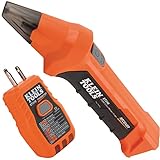
Alright, let’s get practical. If you’re doing a DIY project or just trying to understand your home’s electrical quirks, here are a few things that have saved me time and headaches. First, get yourself a decent circuit breaker finder kit. They usually come with a transmitter you plug into an outlet and a receiver that you move along your breaker panel. The receiver beeps and lights up when it finds the breaker controlling that specific outlet. It’s a big deal compared to the old flip-and-see method, especially in large or complex electrical panels. I picked one up for about $40, and it’s paid for itself in saved frustration.
Second, understand the load. For your power tools, especially those with big motors like saws, grinders, or routers, it’s wise to dedicate a circuit if possible. If not, at least be aware of what else is on that circuit. Avoid running high-demand tools while other major appliances are running on the same circuit. If you’re working in a workshop that’s wired with older 15-amp circuits, and you’re constantly tripping breakers with tools, it might be worth considering an upgrade to 20-amp circuits, or at least making sure the wiring gauge is appropriate for the breaker size. This is where hiring an electrician makes sense, as they can assess your wiring and recommend safe upgrades.
Third, label your breaker box like your life depends on it. And honestly, it might. Use clear, concise labels. Instead of ‘Upstairs,’ try ‘Upstairs Hall Lights & Living Room Outlets.’ If you have dedicated circuits for appliances like your fridge, freezer, or even a sump pump, label them specifically. This makes troubleshooting incredibly fast when something goes wrong. If your fridge dies, you know exactly which breaker to check. I also keep a small notebook or a digital note on my phone with a detailed breakdown of my breaker box. It’s a bit obsessive, maybe, but when a circuit goes down at 2 AM, you’ll be thanking your past self.
Here’s a quick comparison of common breaker types and their typical uses:
| Breaker Amperage | Typical Use Cases | Wiring Gauge | My Verdict |
|---|---|---|---|
| 15 Amps | General lighting, most standard outlets (bedrooms, living rooms), low-draw electronics. | 14-gauge copper | Good for the basics, but easily overloaded with modern demands. |
| 20 Amps | Kitchen outlets, bathroom outlets, workshop tools, high-draw appliances like microwaves. | 12-gauge copper | The workhorse for moderate to heavy loads. Key for kitchens and workshops. |
| 30 Amps+ | Dedicated circuits for major appliances (electric dryers, ovens, central AC units, electric water heaters). | 10-gauge or thicker copper | These are the heavyweights, usually require dedicated circuits and thick wiring. Don’t mess with these unless you know what you’re doing. |
When to Call a Professional
There’s a point where DIY enthusiasm needs to meet electrical reality. If you’re constantly blowing breakers, suspect faulty wiring, or are planning any significant electrical work like adding new circuits or outlets, it’s time to call in an electrician. Messing with your main electrical panel without proper knowledge is one of the most dangerous DIY mistakes you can make. I once tried to add a new circuit for my shed, thinking it was straightforward. Turns out, my old panel was outdated, and the main service wires were corroded. What could have been a simple job turned into a near-disaster. The electrician I finally called pointed out the serious hazards I had narrowly avoided.
Electricians have the tools, the knowledge, and the experience to diagnose complex problems. They can identify issues like overloaded circuits that aren’t immediately obvious, faulty outlets, or even problems with the wiring itself that could be a fire risk. They also understand the National Electrical Code (NEC) inside and out, making sure any work done is up to safety standards. For instance, if you have older aluminum wiring in your home, it requires special connectors and handling, and an electrician is the only one qualified to work on it safely. They can also perform load calculations to determine if your existing service can handle additional demand, or if you need an upgrade.
Don’t be afraid to ask questions when an electrician is working. Understanding what they’re doing and why can be incredibly educational. (See Also: Can 12v Circuit Breakers Handle Higher Voltage )
You can learn about proper wiring techniques, how to choose the right gauge wire for a given amperage, and the importance of proper grounding. This knowledge will not only help you in future DIY projects but also make you a more informed homeowner. Remember, safety first. If you’re ever unsure about an electrical issue, err on the side of caution and call a professional.
It’s far cheaper than dealing with the aftermath of an electrical fire or injury. For instance, the simple act of making sure that the sockets are associated with different circuit breakers correctly is their bread and butter.
Can One Circuit Breaker Power Multiple Rooms?
Yes, absolutely. It’s very common for a single circuit breaker to power outlets and lights in multiple rooms, especially in older homes or standard living spaces. Electrical panels are designed to distribute power efficiently, and often, several outlets and fixtures on the same floor, or even on different floors if they’re on the same branch circuit, will be linked to one breaker. This is why a tripped breaker in one area can sometimes cause a blackout in an entirely different part of the house.
What Happens If You Plug Too Many Things Into One Outlet?
If you plug too many devices into a single outlet, especially if those devices draw a lot of power, you risk overloading the circuit. This will cause the circuit breaker to trip, cutting off power to that outlet and potentially others on the same circuit. If the breaker fails or is bypassed, the wires can overheat, leading to insulation damage, electrical shorts, and a significant fire hazard. It’s important to be mindful of the combined wattage of the devices you connect.
How Do I Know Which Breaker Controls Which Outlet?
The most reliable way to know which breaker controls which outlet is to systematically test them. You can do this by going to your breaker box, flipping off one breaker at a time, and then checking which outlets and lights in your home lose power. Alternatively, a circuit breaker finder kit, which includes a transmitter and a receiver, can make this process much quicker and easier by directly identifying the breaker for a plugged-in transmitter.
Is It Okay to Have Multiple 15-Amp Outlets on One 20-Amp Breaker?
Yes, it is generally permissible and common to have multiple 15-amp rated outlets connected to a single 20-amp breaker, provided that the wiring gauge used throughout the circuit is sufficient for 20 amps (typically 12-gauge wire). The breaker is designed to protect the entire circuit, and the 20-amp breaker can safely handle the combined load of multiple 15-amp outlets as long as the total draw doesn’t exceed 20 amps. However, individual outlets are still limited to their 15-amp rating for the devices plugged into them.
Final Verdict
So, to be blunt, yes, sockets are absolutely associated with different circuit breakers, and understanding this relationship is fundamental to safe and effective electrical use in your home. It’s not a complex mystery; it’s just how the system is designed. Your breaker box is the control center, and each breaker is a guardian for a specific circuit, which in turn powers a group of outlets and lights.
Don’t just plug things in and ignore it when the power goes out. Take a little time to map out your breaker box. It’s a small effort that can prevent headaches, protect your valuable tools and appliances, and most importantly, keep your home safe from electrical hazards. If you’re in doubt about any aspect of your home’s wiring, especially when it comes to upgrades or troubleshooting, don’t hesitate to bring in a qualified electrician. They’re the pros for a reason, and making sure your sockets are associated with different circuit breakers correctly is their expertise.