I remember the first time I tried to change my own brake pads. It was a Sunday afternoon, and I was feeling pretty confident. YouTube videos made it look like a walk in the park. So I grabbed my socket set, a new set of pads, and headed out to the driveway. Turns out, there’s a whole lot more to it than just unbolting the old ones and bolting on the new. I ended up overtightening one of the caliper bolts, which led to a squeaky mess and a much more expensive trip to the mechanic than I’d planned. That’s when I started asking myself: do you need torque caliper bolts?
It’s a question that seems simple enough, but the answer isn’t always a resounding ‘yes’ or ‘no’. It depends on who you ask, what car you’re working on, and frankly, how much you value avoiding headaches down the line. Let’s break down what’s really going on with these seemingly small but mighty bolts.
Why Caliper Bolts Are More Than Just Nuts and Bolts
Look, changing your own brakes can save you a good chunk of cash. I’ve done it dozens of times since that initial screw-up (pun intended). But here’s the thing: caliper bolts aren’t your garden-variety hardware.
They’re holding a pretty important piece of your vehicle’s safety system together. They clamp down on the rotor, and if they’re not tightened correctly, you’re playing with fire.
I’ve seen guys just ‘snug them up’ with a regular wrench, and yeah, sometimes it works out. But ‘sometimes’ isn’t good enough when you’re talking about stopping your car. The force involved in braking is immense, and those bolts are the direct link.
If they loosen, your brakes could start to feel spongy, or worse, the caliper could shift. I once had a buddy’s car where a caliper bolt had backed out just enough to cause a horrific grinding noise. Turned out, the threads were pretty chewed up because it hadn’t been torqued right initially, and then vibrations did the rest.
He was lucky it didn’t lead to a complete brake failure, but it was a close call and an expensive repair.
The reason for specific torque values comes down to a few key factors. First, materials. Modern calipers and mounting brackets are often made of aluminum or lighter alloys, which can be damaged by over-tightening. You can strip the threads right out of the bracket, and replacing that can be a royal pain.
Second, friction. The torque setting is designed to make sure the bolts are tight enough to prevent vibration from loosening them, but not so tight that they deform the caliper or bracket, which can lead to uneven pad wear or even brake fade. It’s a delicate balance. For a long time, I just winged it, relying on feel.
This usually meant putting a good amount of grunt into it. On some older steel components, this might be fine. But on newer cars with their fancy aluminum bits, that ‘grunt’ can spell disaster.
The manufacturers put those torque specs in the service manual for a reason, and ignoring them is like ignoring the warning lights on your dashboard.
Understanding Torque: It’s All About Controlled Tightness
So, what exactly is torque? It’s not just about how hard you turn a wrench. Torque is the rotational or twisting force applied to a fastener, like a bolt. It’s measured in units like foot-pounds (ft-lbs) or Newton-meters (Nm). Think of it like this: if you’re trying to unscrew a stubborn jar lid, you apply a certain amount of twisting force. That’s torque. When you’re tightening a bolt, you’re applying torque to stretch the bolt slightly. This stretch creates tension, which is what holds everything together. Too little tension, and the bolt can loosen. Too much tension, and you can stretch the bolt beyond its elastic limit (making it weaker), strip the threads, or even break the bolt head off.
For caliper bolts, the specified torque is a precise number designed by engineers. This number accounts for the size of the bolt, the material it’s made of, the materials it’s threading into, and the forces it will experience during braking. It’s not arbitrary.
I learned this the hard way when a wheel started wobbling slightly on a road trip. Turns out, I’d done the lug nuts on that wheel with a torque wrench set to the wrong spec – slightly too high.
While not a caliper bolt issue directly, it taught me a visceral lesson about the importance of precise fastener tension. The same principle applies to caliper bolts. (See Also: Do You Need Torque Caliper Bolts )
They need to be tight enough to stay put under constant vibration and the immense forces of braking, but not so tight that they damage the components or weaken the bolt itself. If you just guess, you’re basically gambling with your car’s ability to stop.
I’ve seen cheap torque wrenches that are wildly inaccurate, and that’s another pitfall. It’s not just about having a torque wrench; it’s about having one that’s reasonably accurate.
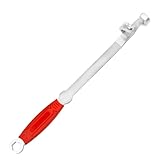
This leads us to the question of how to achieve that specific torque. You need a tool that can measure it. That’s where a torque wrench comes in. Without one, you’re relying on feel, which is notoriously inconsistent. My feel used to be ‘pretty darn tight’. Now, it’s ‘tight enough to click the torque wrench’. Big difference.
My Own Caliper Bolt Calamity (and Yours Too, Probably)
Okay, confession time. Before I wised up, I was definitely in the ‘good and snug’ camp for caliper bolts. I figured if it felt tight, it was tight.
The first real wake-up call wasn’t a catastrophic failure, thankfully. It was a persistent, annoying squeal. Every time I braked, especially at low speeds, there was this high-pitched screech that would make people turn their heads.
I replaced the pads, I even resurfaced the rotors, but the squeal persisted. After a few weeks of driving myself insane, I took it to a mechanic I trusted, more out of desperation than anything.
He spent maybe ten minutes on it. He pointed out that one of the caliper slide pins was seized, and another caliper bolt looked like it had been over-torqued, slightly distorting the caliper bracket.
That distortion was what was causing the pad to be slightly cocked, leading to the squeal. The fix involved freeing the pin and, thankfully, not replacing the bracket, but it was a stark reminder that ‘good and snug’ isn’t precise enough.
The cost of that mechanic’s visit, plus the pads I’d wasted, was way more than a decent torque wrench would have set me back.
Another time, I was working on a friend’s older pickup truck. We were in a hurry to get it back on the road for a camping trip. We skipped the torque wrench for the caliper bolts, just making them really tight. A few hundred miles into the trip, he called me.
He said the steering felt weird, kind of loose. When he got it home, we found that one of the caliper bolts had indeed vibrated loose. Not enough to cause immediate failure, but enough to affect the steering feel and make him nervous.
We ended up having to re-tap the threads because they were a bit galled from being overtightened initially and then allowed to move. That’s the insidious thing about fasteners: over-tightening can weaken them or damage the threads, making them more prone to loosening later, especially under vibration. It’s a vicious cycle.
So, no, you probably don’t need torque caliper bolts in the same way you need an engine. But if you want your brakes to work reliably, quietly, and last as long as they should, then yeah, you absolutely need to be using a torque wrench on them.
When Do You Actually Need to Torque Them?
Okay, so the short answer is: almost always. But let’s be more specific. If you are replacing brake pads, rotors, or the caliper itself, you are disturbing fasteners that are important to brake function. Therefore, you absolutely need to torque them to the manufacturer’s specifications. This applies to pretty much any vehicle you’re working on, from a small sedan to a heavy-duty truck. The specifications are usually found in the vehicle’s service manual. If you don’t have a manual, you can often find them online through reputable automotive forums or repair databases. I’ve found that for many common cars, searching for ‘[Car Make] [Car Model] [Year] brake caliper torque spec’ will yield good results. (See Also: Do I Need Special Replacement Bolts For Car Engines )
However, there are some nuances. For instance, some components might have specific types of fasteners that require different torque procedures. Always check the manual. For example, some calipers use guide pins that might have their own torque specifications or even thread-locking compounds applied.
My rule of thumb has become: if the service manual lists a torque spec for it, you use a torque wrench. This includes not just the main caliper mounting bolts but also any bolts that hold the caliper bracket to the knuckle, and the caliper slide pins if they have a specified torque. I’ve also encountered some DIY kits that come with their own hardware, and while they might not explicitly state torque specs, it’s always best practice to find the OEM spec for similar fasteners and apply it.
It’s cheap insurance. I’ve spent more money on fixing mistakes from skipping this step than I would have on a lifetime supply of decent torque wrenches.
Here’s a quick comparison of what happens when you don’t torque correctly:
| Condition | Potential Problem | Verdict |
|---|---|---|
| Under-torqued Caliper Bolts | Vibration can cause loosening, leading to noise, uneven braking, potential caliper detachment. | Big NO. Safety hazard. |
| Over-torqued Caliper Bolts | Stripped threads, warped caliper/bracket, bolt breakage, difficulty in future removal. | Even Bigger NO. Can destroy parts. |
| Correctly Torqued Caliper Bolts | Secure attachment, reliable braking performance, proper component lifespan. | The Only Way. Absolutely necessary. |
So, to be clear, if you’re asking ‘do you need torque caliper bolts’ in the context of performing brake maintenance, the answer is a resounding yes. It’s not an optional step for a job done right.
Common Mistakes and How to Avoid Them
The biggest mistake, as I’ve hammered home, is not using a torque wrench at all. People think they have a good feel for tightness, but it’s incredibly subjective and varies wildly based on grip strength, use, and even the angle you’re applying force. I used to think my ‘two-second grunt’ was enough. Now I know it was often too much or, sometimes, not enough.
Another common pitfall is using the wrong torque wrench or a faulty one. I’ve seen mechanics use impact wrenches to snug up caliper bolts before final torquing, which is a recipe for disaster. Impact wrenches deliver uncontrolled, shocking force.
You also need to make sure your torque wrench is calibrated. If it’s an old click-type wrench that hasn’t been serviced in a decade, its accuracy can be way off.
I recommend having a decent quality torque wrench, ideally a digital one or a good quality click-type, and getting it calibrated every year or two. They aren’t prohibitively expensive. I picked up a decent digital one for around $70 a few years back, and it’s paid for itself tenfold in avoiding mistakes and repeat repairs.
A less obvious mistake is not cleaning the threads properly. If there’s rust, dirt, or old thread locker on the bolt or in the threaded hole, it can give you a false sense of tightness when torquing.
This means the actual clamping force will be less than intended, even if the wrench clicks. Always clean the threads with a wire brush and, if necessary, use a brake cleaner to remove any debris. Also, be mindful of the type of thread locker recommended by the manufacturer.
Some applications require a specific thread locker (like Loctite Red or Blue) for added security, while others specify just clean, dry threads. Applying the wrong type or amount of thread locker can either prevent you from reaching the correct torque or make the bolt impossible to remove later. I learned this when I used way too much high-strength thread locker on a brake line fitting once, and it nearly fused itself into place. Definitely check your service manual for thread locker recommendations.
People Also Ask: Torque Wrench Usage
How tight should caliper bolts be?
Caliper bolts should be tightened to the specific torque value recommended by the vehicle manufacturer, which is usually found in the service manual. This value is not a suggestion; it’s a precise engineering specification designed to make sure safety and proper function. Overtightening can strip threads or damage components, while undertightening can lead to loosening under vibration, compromising braking performance. (See Also: Can You Use A Torque Wrench To Break Bolts Loose )
Can I use an impact wrench for caliper bolts?
No, you should never use an impact wrench to tighten caliper bolts to their final torque specification. Impact wrenches deliver uncontrolled, jerky force and can easily lead to overtightening, damaging threads or components. They can be used for initial rundown, but final tightening must be done with a calibrated torque wrench.
What happens if caliper bolts are too loose?
If caliper bolts are too loose, they can vibrate and loosen further over time. This can result in a spongy brake pedal, excessive noise, uneven braking, and in severe cases, the caliper could detach from the hub, leading to a complete loss of braking on that wheel and a dangerous situation.
What happens if caliper bolts are too tight?
Overtightening caliper bolts can cause several problems. It can strip the threads in the caliper bracket or the steering knuckle, requiring expensive repairs. It can also warp the caliper or rotor, leading to brake judder, premature wear, and reduced braking efficiency. In extreme cases, the bolt itself can be stretched beyond its elastic limit, weakening it and making it prone to failure.
The Real-World Value of a Torque Wrench for Brakes
Let’s talk brass tacks. You might be thinking, “Is a torque wrench really that important for caliper bolts?
I’ve done it without one before.” And yeah, maybe you have, and maybe nothing bad happened. But the peace of mind that comes with knowing you’ve done the job correctly, to spec, is worth more than you might think. I used to budget for potential mistakes when doing my own work – a little extra for a part I might break, or a trip to the shop to fix something I messed up.
Investing in a quality torque wrench, along with a basic understanding of torque values, has significantly reduced those ‘oops’ moments and the associated costs. I haven’t bought a new set of brake pads due to premature wear in years, and the squeals and noises are a thing of the past.
Think about the cost of not doing it right. A stripped thread in an aluminum caliper bracket can cost hundreds of dollars to repair, often requiring specialized tools or even replacement of the entire part. A caliper bolt backing out could lead to damage to the rotor, wheel, and other suspension components, racking up thousands in repairs. And then there’s the safety aspect.
Brakes are literally the most important safety system on your car. Would you risk your life or the lives of your passengers by guessing on something this fundamental?
I know I don’t anymore. The initial investment in a good torque wrench is relatively small compared to the potential cost of a mistake, both financially and in terms of safety. It’s one of those tools that separates a DIYer from someone who’s truly performing proper maintenance. For anyone serious about working on their own car, especially on important systems like brakes, a torque wrench isn’t a luxury; it’s a necessity.
It’s the difference between a job done and a job done right.
Conclusion
So, after all that, the question of ‘do you need torque caliper bolts’ really boils down to whether you value safety, reliability, and avoiding costly mistakes. For me, the answer is a resounding yes. It’s not about being a professional mechanic; it’s about being a responsible car owner who understands that certain fasteners require precision.
Don’t let my early screw-ups be your own. Invest in a decent torque wrench, find your vehicle’s service manual (or a reliable online source for its torque specs), and take your time. It’s a small step that makes a massive difference in the long run for your car’s braking system and your peace of mind.
Next time you’re planning a brake job, remember this. It’s worth the few extra minutes and the cost of the tool.