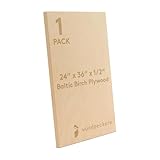
I remember staring at that warped plywood shelf in my garage, a sad testament to a forgotten DIY project. It had swelled up like a cheap sponge after a minor leak, and my initial thought was, ‘Can I just slather some Bondo on this and call it a day?’ It seemed like the magic bullet for fixing any damn thing. So, yeah, the question of whether can bondo be applied to plywood is one I’ve wrestled with, usually in moments of desperation or questionable judgment.
The answer isn’t a simple yes or no, and anyone telling you otherwise probably hasn’t spent enough time scraping dried Bondo off their knuckles. It’s more about understanding what Bondo is, what plywood is, and whether they’re actually compatible for the job you have in mind.
Let’s cut through the noise. This isn’t about fluffy marketing speak; it’s about practical application and saving you some serious headache (and potentially money).
When Bondo and Plywood Collide: The Basics
Alright, let’s get down to brass tacks. Can bondo be applied to plywood? Technically, yes.
You can physically spread Bondo over plywood. But just because you can do something doesn’t mean you should, or that it will end well.
Bondo, specifically the most common automotive body filler, is designed primarily for metal and sometimes fiberglass. Its whole deal is to fill dents, holes, and imperfections in smooth, non-porous surfaces, creating a rigid, sandable patch. Plywood, on the other hand, is a whole different beast.
It’s made of thin layers of wood veneer glued together. It’s porous, it flexes (or can), it can delaminate, and it’s generally organic.
These two aren’t natural bedfellows, and you’re setting yourself up for issues if you treat them as such.
The biggest hurdle is adhesion. Bondo’s resins are formulated to bond with automotive primers and bare metal. Plywood, especially if it’s unfinished or has any kind of coating on it, can be tricky. If the plywood is dusty, greasy, or has a slick finish, the Bondo might just sit on top like a bad toupee, ready to pop off when you least expect it. I learned this the hard way trying to fill a gouge on a plywood workbench. I thought I was being clever, but after a week of hammering and sawing, chunks of Bondo started to chip away. Turns out, I hadn’t prepped the surface properly – a lesson I won’t soon forget.
The moisture content of the plywood is also a factor. Wood expands and contracts with humidity changes. Bondo, once cured, is pretty rigid. If the plywood moves and the Bondo doesn’t, you’re going to create stress points. This can lead to cracks in the Bondo, or worse, damage to the plywood itself. So, while the initial application might seem successful, long-term durability is where the real problem lies. It’s not about the Bondo itself being ‘bad,’ but about its intended application versus the material you’re trying to stick it to. (See Also: Can A 4x8 Plywood Fit In A Honda Pilot )
Prep Work: The Unsung Hero (or Villain)
Look, nobody likes prepping. It’s the boring part. But if you’re determined to try and make Bondo work on plywood, this is where you live or die. I’m talking about aggressive surface preparation. You can’t just slap Bondo onto raw, dusty plywood and expect miracles. First, you need to clean the area thoroughly. Any dust, dirt, or grease will kill your bond. I usually start with a good vacuum, followed by a wipe-down with a degreaser like Simple Green or even just mineral spirits, depending on what I think is on there.
Then comes the mechanical prep. For plywood, you’ll likely need to sand the area you’re applying Bondo to.
You want to create a slightly rough surface for the Bondo to grip onto. I’m talking 80-grit sandpaper, maybe even 60-grit if the plywood surface is particularly smooth or has a coating. You’re not trying to remove a lot of material, just scuff it up enough.
For deeper gouges or holes, you might even consider drilling out the edges slightly to create a small bevel or undercut. This gives the Bondo something to key into, like little mechanical anchors.
It’s tedious, but it dramatically improves adhesion. I once tried filling a knot hole in a piece of marine-grade plywood with Bondo without doing this, and it popped out like a champagne cork the first time I painted it. Never again.
Consider a primer. While Bondo is designed to adhere to bare metal, it often benefits from a primer designed for wood or general-purpose adhesion on porous surfaces. Applying a thin coat of a good quality primer (a wood primer or even a good bonding primer) and letting it cure fully before applying the Bondo can make a world of difference. This creates a more uniform surface and can help prevent the Bondo from soaking too deeply into the wood grain unevenly, which can sometimes lead to shrinkage or cracking. Think of it as building a solid foundation before you put up the walls.
Alternatives: When to Walk Away From Bondo
Here’s my honest take: while you can apply Bondo to plywood, there are almost always better, more appropriate options out there. The common advice is often to use a wood filler, and for good reason. These products are formulated specifically for wood. They tend to be more flexible than automotive body fillers, expand and contract with the wood better, and often have better adhesion to wood fibers. I’ve used various brands over the years, from basic hardware store fillers to more specialized epoxy-based wood fillers for serious repairs. For filling minor dings and scratches, a good quality latex or solvent-based wood putty works wonders and is way easier to work with.
For larger repairs, or when you need something that’s going to be structurally sound and withstand abuse, epoxy wood fillers are often the way to go. Brands like Bondo (yes, they make wood-specific epoxies too, don’t confuse them with the auto stuff!) or other two-part epoxy systems for wood are excellent. They offer superior strength, excellent adhesion to wood, and are much more resistant to moisture and movement than traditional wood putties. I used an epoxy wood filler to reconstruct a rotted section of a wooden deck railing, and it held up for years, surviving brutal winters and scorching summers without a hiccup. That’s the kind of performance you want for wood.
Here’s a quick rundown of what I’d grab instead of automotive Bondo for plywood projects: (See Also: Can Bondo Be Applied To Plywood )
| Product Type | Best For | Pros | Cons | My Verdict |
|---|---|---|---|---|
| Latex/Water-Based Wood Filler | Small cracks, nail holes, minor dents | Easy to use, quick drying, sandable, paintable | Can shrink, not very strong, not great for deep fills | Good for cosmetic touch-ups, not structural repairs. |
| Solvent-Based Wood Filler | Slightly larger cracks, gouges | Durable, sands well, good adhesion | Can be harder to work with, strong fumes, can shrink | A step up from latex, but still not for major issues. |
| Two-Part Epoxy Wood Filler | Deep gouges, rot repair, structural fixes | Extremely strong, excellent adhesion, waterproof, minimal shrinkage | More expensive, requires mixing, longer cure time, can be harder to sand if over-catalyzed | The real deal for serious wood repair. Worth the cost. |
The key is matching the repair material to the demands of the job and the nature of the substrate. Plywood has unique properties that automotive Bondo simply isn’t designed to handle optimally.
My Own Bondo Fiascos and What I Learned
I’m not going to pretend I’ve always made the smart choice. Years ago, I was building a rustic-looking shelf unit out of some cheap plywood for my daughter’s room. I wanted a really smooth finish, and there were a few knots and surface imperfections I wanted to hide. My brain, still young and foolish, immediately screamed ‘Bondo!’ It was sitting in my garage, so it was convenient. I mixed up a batch, slathered it on, and spent a good hour sanding it down to a glassy smooth surface. I proudly painted it a cheerful pink.
A month later, the shelf started to sag slightly under the weight of a few books. Then, I noticed tiny cracks appearing along the edges where the Bondo met the plywood. It wasn’t catastrophic, but it looked terrible. The wood was expanding and contracting with the room’s humidity, and the rigid Bondo was cracking under the strain.
It wasn’t just the cracks; the Bondo itself seemed to be ‘lifting’ slightly in places, losing its grip. The underlying plywood was still solid, but the Bondo ‘repair’ was failing spectacularly. It looked like a bad case of acne on a perfectly good piece of wood. That was my wake-up call.
I ended up scraping most of it off (a real joy, let me tell you) and using a proper wood filler for the rest, which held up perfectly.
The lesson? Convenience isn’t always king. Using the right tool, or in this case, the right filler, for the job saves you time, effort, and embarrassment in the long run. Automotive Bondo is fantastic for what it’s designed for – cars. Trying to force it onto something as different as plywood is like trying to hammer a screw. You might make some progress, but it’s going to be messy, inefficient, and likely to fail.
The ‘why’ Behind the Weak Bond
So, why exactly is automotive Bondo not the ideal choice for plywood? It boils down to chemistry and physics, really. Automotive Bondo is typically a polyester resin-based filler, mixed with a hardener (usually MEKP). This mixture undergoes a chemical reaction that causes it to harden and become very rigid. It’s designed to bond chemically and mechanically to things like primed steel, aluminum, and fiberglass. These materials are relatively inert and don’t expand or contract much with temperature and humidity changes. They provide a stable surface for the Bondo.
Plywood, as I’ve mentioned, is organic. It breathes. It absorbs moisture and releases it. This means it expands when it gets damp and contracts when it dries out. This movement, even if it’s subtle, puts stress on any rigid material bonded to it. The chemical bond between Bondo and wood fibers is also not as strong or as elastic as the bond between Bondo and metal. Wood has a grain, it has pores that can soak up resin unevenly, and its surface can be inconsistent. When the wood moves and the Bondo doesn’t, those stress points are where the bond will eventually fail. You’ll see cracking, peeling, or even delamination of the plywood itself if the stress is severe enough.
Furthermore, Bondo cures to a very hard, brittle state. If you drop something on a Bondo-repaired surface, or if the plywood flexes under load, that brittleness means it’s prone to chipping or cracking. A good wood filler or epoxy will have a bit more flex or be formulated to move with the wood, thus preventing these failures. It’s not that Bondo is bad, it’s just that its strengths (rigidity, hardness) become its weaknesses when applied to a substrate like plywood that inherently moves. (See Also: Can Cat Plywood Be Used For Exterior Siding )
Practical Tips If You Must Use Bondo on Plywood
Okay, I get it. Sometimes you’re in a pinch, you’ve got a small patch of plywood that needs something, and Bondo is what’s within arm’s reach. If you absolutely, positively, have to use automotive Bondo on plywood, here are a few things you can do to mitigate disaster. These are damage control measures, mind you, not endorsements. First, extreme prep is your best friend. Sand aggressively (60-80 grit) and clean meticulously. Then, apply a high-quality bonding primer specifically designed for wood or multi-surface adhesion. Let that primer cure fully – don’t rush it.
When you mix your Bondo, make sure you’re using the right ratio of hardener. Too much and it cures too fast and becomes even more brittle. Too little and it might never fully cure, remaining soft and gummy. Mix it thoroughly on a clean, disposable surface. Apply it in thin layers rather than one thick glob. Letting each thin layer cure partially before applying the next can sometimes improve adhesion and reduce internal stress as it hardens. Avoid applying Bondo to large, unsupported sections of plywood that are likely to flex. Stick to smaller repairs on more stable areas.
And this is important: manage your expectations. Don’t expect a repair made with automotive Bondo on plywood to be as durable or long-lasting as one made with a product specifically designed for wood. If the plywood is going to be exposed to moisture, significant temperature fluctuations, or heavy physical stress, you’re playing with fire. For anything important, or anything that needs to look good long-term, use a wood-specific product. If it’s just a quick, temporary fix for something that’s not important, and you’ve done your prep work, Bondo might get you through for a while. But don’t say I didn’t warn you.
Can Bondo Be Used to Fill Holes in Plywood?
Yes, you can technically fill holes in plywood with automotive Bondo, but it’s generally not the best solution. You’ll need to prep the surface extremely well by sanding and cleaning, and ideally use a bonding primer. However, due to plywood’s natural tendency to expand and contract with moisture and temperature changes, the rigid Bondo can crack or detach over time, especially in larger holes or areas subject to stress. Dedicated wood fillers or epoxy wood fillers are usually more appropriate and durable for this application.
Will Bondo Stick to Painted Plywood?
Bondo can stick to painted plywood if the paint is well-adhered and scuffed up significantly. However, the bond will be only as strong as the paint’s adhesion to the plywood. If the paint is peeling or loose, the Bondo will likely fail. Aggressively sanding the paint down to the bare wood in the repair area, or at least creating a very rough surface on the paint itself, is key for any chance of good adhesion. For best results, removing the paint entirely in the repair zone is recommended.
Is Bondo Waterproof When Applied to Plywood?
Automotive Bondo, once fully cured, is highly water-resistant, but not completely waterproof, especially over the long term on a porous material like plywood. Plywood itself is susceptible to moisture damage, and the bond between Bondo and wood is not as solid as the bond to metal. Repeated exposure to water can lead to the Bondo eventually losing adhesion or the plywood degrading underneath. For truly waterproof applications on wood, marine-grade epoxies or specialized waterproof wood fillers are far superior choices.
How Long Will Bondo Last on Plywood?
The longevity of Bondo on plywood varies greatly depending on the application, the environment, and the prep work. In a stable, dry indoor environment with excellent surface preparation, it might last for years, though minor cracking is always a possibility due to wood movement. In outdoor or humid conditions, or on areas that experience stress or flexing, the Bondo could begin to fail within months. It’s generally considered a temporary or cosmetic fix for plywood rather than a permanent, structural repair.
Final Thoughts
So, to circle back, can bondo be applied to plywood? Yes, the physical act is possible. But from my experience, it’s usually a bad idea if you’re looking for anything more than a very temporary, cosmetic fix on a non-important surface. The inherent nature of plywood – its porosity and movement – clashes with the rigidity and intended bonding properties of automotive Bondo. You’re fighting an uphill battle against wood’s natural tendencies.
My advice? Save the automotive Bondo for cars. When you’re dealing with wood, especially plywood, reach for products specifically designed for it. Your future self will thank you when you don’t have cracked, peeling patches showing up a few months down the line.
If you’ve got a specific repair in mind, take a moment to assess it. Is it a tiny ding on a workbench that gets banged around? Maybe Bondo will hold for a bit. Is it a shelf that needs to hold books, or something outdoors? Absolutely use a wood epoxy or a quality wood filler. Don’t make my mistakes.