I remember the first time I tried to plug in one of those fancy European espresso machines I’d snagged on a trip. It just… hummed. Nothing. I spent a good hour convinced the machine was busted, only to realize later my apartment was pumping out 120 volts, not the 220 it needed. Talk about a facepalm moment. It got me thinking about how much we just assume about the power coming out of our walls. So, let’s cut to the chase: are all outlets 120v?
The short, blunt answer is: mostly, yes, for standard residential use in North America, but it’s not a universal law of physics. There are exceptions, and knowing them can save you a headache (or a fried appliance).
Understanding the voltage you’re dealing with is more than just an electrical nerd thing; it’s about practical application, safety, and not blowing up your stuff. So, let’s get into the nitty-gritty of what’s actually coming out of those holes in your wall.
Why Your Home Usually Has 120v Outlets
Most of the plugs you encounter daily in your house, whether for your phone charger, your TV, or that trusty old toaster, are indeed designed to deliver 120 volts (V). This is the standard nominal voltage for residential electrical systems in North America, including the United States, Canada, and Mexico. Think of it as the baseline setting for most of your everyday gadgets. This voltage level is a sweet spot – it’s high enough to power a wide range of common appliances efficiently but low enough to be relatively safe for household use. Electrical codes and standards are in place to make sure this consistency, making it easier for manufacturers to produce appliances that will work pretty much anywhere they’re plugged in within these regions.
The electrical system in your home is powered by a transformer, usually located on a utility pole or in a nearby underground vault. This transformer takes the high-voltage electricity from the power grid (which can be thousands of volts) and steps it down to a usable voltage for your home. For standard outlets, this is typically around 120V.
The wiring within your house then distributes this power to various outlets and fixtures. Each standard duplex outlet you see is wired in parallel to receive this 120V supply. This is why you can plug in a lamp on one side and a fan on the other, and both will get the same amount of juice.
It’s a carefully engineered system designed for convenience and safety for the average consumer.
So, when you’re looking at a standard two-prong or three-prong outlet, you can generally assume it’s providing 120V. This is why you don’t need to worry about voltage converters for most of your electronics when traveling within North America. Your laptop charger, your game console, your blender – they’re all built with this 120V standard in mind. This uniformity is a massive convenience that we often take for granted until we encounter a situation where it’s different.
The ‘nominal’ part is important, though. What you measure might be slightly more or less than 120V, say 115V or 125V. This variation is normal and usually doesn’t affect your appliances. It depends on factors like the load on the grid, the distance from the transformer, and the quality of your home’s wiring. However, significant deviations outside this range could indicate a problem with your electrical system that should be investigated.
When Things Get Hot: Higher Voltage Needs
While 120V is the norm for most things, there are definitely exceptions. Anyone who’s got a big ol’ electric dryer, an oven that can bake a Thanksgiving turkey in under an hour, or a powerful central air conditioning unit knows these beasts need more oomph. These high-demand appliances typically require a higher voltage, usually 240V. You won’t find these on every corner of your wall. Instead, they’re powered by dedicated circuits with different types of outlets that are physically incompatible with standard 120V plugs. This design is a important safety feature; you can’t accidentally plug a toaster into a 240V socket designed for an oven. (See Also: Are American Outlets Ac Or Dc )
These 240V outlets often look different. For example, a 240V dryer outlet might have three or four slots, arranged in a specific configuration that’s unique to that appliance type. The outlet itself is larger and heavier-duty than a standard 120V outlet. The wiring behind these outlets is also thicker, capable of handling the increased power draw without overheating.
This is not just about more power; it’s about delivering it safely and reliably for appliances that consume a lot of energy. My friend Dave, who is an electrician, once told me about a homeowner who tried to jury-rig a standard plug into a 240V outlet for a powerful shop heater. Let’s just say it didn’t end well – sparks, smoke, and a very expensive repair bill. The physical incompatibility of the plugs is a genius, albeit sometimes frustrating, safety net.
The 240V circuits are supplied directly from your main electrical panel. Inside the panel, you’ll see larger circuit breakers, often double-width, which are used to control these higher-voltage circuits. These breakers are designed to trip and cut power if there’s an overload or a short circuit, protecting both the appliance and your home from damage. It’s this dual-voltage system – 120V for general use and 240V for heavy-duty appliances – that makes a modern home’s electrical system so versatile.
It’s also worth noting that some appliances might appear to be 120V but are designed to run more efficiently or powerfully when connected to a 240V source. Some newer electric vehicle chargers, for instance, can operate on either 120V or 240V, with the 240V providing much faster charging. This flexibility is becoming more common as technology advances. So, while 120V is your go-to, always check the appliance’s label and the type of outlet it requires, especially for anything that draws significant power.
Understanding Outlet Configurations
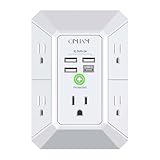
The physical design of an outlet tells a story about the voltage and amperage it’s intended to carry. Standard 120V outlets in North America are typically the NEMA 5-15R type. This is the common duplex receptacle you see everywhere, with two vertical slots for the hot and neutral wires, and a U-shaped hole below for the ground pin. The 15 in 5-15R refers to the amperage rating, meaning it’s designed for circuits with a maximum of 15 amps. For slightly higher power needs on a 120V circuit, you might see a NEMA 5-20R, which looks similar but has a T-shaped neutral slot, allowing it to accept both 15A and 20A plugs.
When you step up to 240V, the configurations change dramatically. As mentioned, large appliances like dryers often use a NEMA 14-30R (for dryers) or 14-50R (for ranges and RVs) outlet. These have multiple slots, often including a neutral slot in addition to the two hot slots and a ground. The number in the NEMA designation (like 30 or 50) indicates the amperage rating of the circuit and outlet. These are solid, heavy-duty connections designed for continuous high power draw.
It’s important to never force a plug into an outlet it doesn’t fit. Not only is this a safety hazard, but it can also damage both the plug and the outlet, potentially leading to electrical fires. If you need to plug an appliance into a different type of outlet, the correct and safe solution is to have an electrician install the appropriate outlet for that appliance, or to have the appliance re-wired by a qualified professional if it’s designed for different voltages.
Here’s a quick look at some common outlet types and their typical uses:
| NEMA Type | Voltage (Nominal) | Amperage | Typical Use | Verdict |
|---|---|---|---|---|
| 5-15R | 120V | 15A | General purpose (lamps, electronics, small appliances) | The workhorse of the home. Reliable for most daily needs. |
| 5-20R | 120V | 20A | Higher-power 120V appliances (some microwaves, portable AC units) | A slight upgrade for demanding 120V tasks. Worth having in kitchens. |
| 6-15R | 240V | 15A | Specialized 240V equipment (e.g., some industrial tools, older spas) | Less common in homes, but important for specific machinery. |
| 14-30R | 120/240V | 30A | Electric clothes dryers | Standard for dryers. Don’t try to plug anything else here. |
| 14-50R | 120/240V | 50A | Electric ranges, RV hookups, high-power EV chargers | The king of home power. Key for serious electric appliances. |
Common Mistakes and How to Avoid Them
One of the biggest mistakes people make is assuming all outlets are the same and assuming that if a plug fits, it’s okay to use it. I once saw a neighbor try to power a large portable heater with an extension cord plugged into a standard 15A outlet. Within minutes, the cord was warm, the outlet felt hot, and the breaker tripped. They were lucky it didn’t cause a fire. That heater was designed for a 20A circuit, possibly even a 240V connection, and trying to force it onto an inadequate circuit was asking for trouble. Always check the appliance’s power requirements and the rating of the outlet and circuit you’re using. (See Also: Are All Power Outlets Ac )
Another common pitfall is using the wrong type of adapter or converter. If you travel internationally, you’ll encounter outlets that are completely different and operate at different voltages (like the 220-240V common in Europe and Asia). Plugging a 120V North American appliance into a 240V outlet without a voltage converter will likely fry it instantly.
Conversely, using a simple plug adapter without a converter for a high-wattage appliance in a lower-voltage country can cause the appliance to perform poorly or not work at all. For travel, always research the local voltage and frequency and get the appropriate adapters and converters for your specific devices. Most modern electronics like phone chargers and laptop adapters are dual-voltage (they’ll say ‘100-240V’ on the brick), so they only need a physical plug adapter.
Overloading circuits is another danger. A standard 15A circuit can only handle so much wattage. If you plug in too many devices – say, a space heater, a hair dryer, and a toaster, all on the same circuit – you’ll exceed its capacity, and the breaker will trip. This is annoying, but it’s also a sign that you’re pushing the limits of your wiring. Continuously overloading circuits can degrade them over time and increase the risk of a fire. The solution is often to spread your high-draw appliances across different circuits or to have an electrician upgrade your home’s electrical capacity if you consistently find yourself tripping breakers.
Lastly, don’t ignore flickering lights or outlets that feel warm to the touch. These are signs of loose connections or overloaded wiring, which are serious safety hazards. A loose connection can create arcing, a dangerous electrical discharge that generates intense heat. If you notice any of these symptoms, it’s time to call a qualified electrician immediately. It’s much cheaper to pay for a professional inspection than to deal with the aftermath of an electrical fire. Don’t be the person who says, ‘I wish I had checked that sooner.’
Real-World Voltage in Action: Beyond the Outlet
Beyond the wall outlets, the concept of voltage plays out in various aspects of our lives. When you’re troubleshooting an appliance that isn’t working, the first thing an experienced technician will often ask about is the power source. Is it plugged into a standard 120V outlet? Is it a 240V appliance? This is fundamental. For instance, if your electric oven isn’t heating up properly, and it’s a 240V model, a technician will check the breaker and the outlet to make sure it’s receiving the correct voltage. If it’s only getting 120V, it means one of the two ‘hot’ legs supplying the 240V circuit isn’t connected or has a fault, and the oven will only partially function or not at all.
Consider the world of portable power. Generators are rated in watts, which is a product of voltage and amperage (Watts = Volts x Amps). So, a generator that outputs 120V at 20A can produce 2400 watts. If you need to run a 1500W appliance that requires 120V, you need to make sure your generator can supply at least that much power, and that you’re using the appropriate outlets on the generator. Some larger generators also have 240V outlets, allowing you to power more demanding equipment, like a well pump or a large air compressor, when you’re off the grid.
The differences in voltage are also why certain tools are designed for specific applications. A small 120V drill is fine for most DIY tasks, but a large industrial metal-cutting saw will almost certainly be a 240V machine, designed to draw more power and torque. Trying to run a tool designed for higher voltage on a lower voltage system will result in it running too slowly, overheating, and potentially damaging the motor. It’s like trying to drive a semi-truck with a scooter engine – it just won’t cut it.
Even something as simple as an extension cord has voltage considerations. While most common household extension cords are rated for 120V and a certain amperage, you can buy heavy-duty cords rated for 240V and higher amperages for specific tools or temporary power needs. Using a light-duty extension cord for a high-demand 240V appliance is a recipe for disaster, leading to overheating and fire risk. Always match the cord’s rating to the appliance’s needs and the available voltage.
Are All Outlets 120v? Putting It All Together
So, to circle back to the main question: are all outlets 120v? No. While the vast majority of standard wall receptacles in North American homes are 120V, it’s not a universal rule. Your home likely also has 240V outlets for high-demand appliances like dryers, ovens, and some air conditioners. These have different physical configurations and are connected to dedicated circuits. Understanding the difference is key to using your appliances safely and effectively, and avoiding costly mistakes or even dangerous situations. (See Also: Are Arc Trip Outlets Required In Hillsborough County )
When in doubt, check the appliance’s label. It will clearly state the voltage and amperage requirements. Also, look at the outlet itself. If it has a unique shape or more slots than the standard two vertical ones and a ground pin, it’s likely a higher-voltage or higher-amperage outlet. If you’re unsure about the voltage of a particular outlet or circuit, it’s always best to consult a qualified electrician. They can identify the voltage, test the outlet, and advise you on safe usage.
The electrical system in your home is a marvel of engineering, designed to provide power where and when you need it. But like any powerful system, it requires understanding and respect. Knowing the difference between 120V and 240V, and the types of outlets associated with each, is a fundamental piece of that knowledge. It’s not just about making sure your gadgets work; it’s about preventing fires and making sure the safety of your household.
Frequently Asked Questions About Outlet Voltage
Can I Plug a 120v Appliance Into a 240v Outlet?
Absolutely not, unless the appliance is specifically designed as dual-voltage and you are using an appropriate adapter. Plugging a standard 120V appliance directly into a 240V outlet will almost certainly destroy the appliance and could cause a fire or electric shock.
How Can I Tell If an Outlet Is 120v or 240v?
Visually, 120V outlets are usually the standard duplex style with two vertical slots and a U-shaped ground hole. 240V outlets have different configurations, often with more slots and a different physical shape (like for dryers or ranges). If unsure, you can use a multimeter to test the voltage, but only if you know how to do so safely. Otherwise, consult an electrician.
What Happens If I Plug a 240v Appliance Into a 120v Outlet?
If the appliance is designed for 240V only and you plug it into a 120V outlet, it will likely not work at all, or it will perform very poorly. Some appliances might have a specific setting for lower voltage, but for most, it’s a non-starter. It won’t damage the outlet or the appliance in this direction, but it just won’t function as intended.
Do All Countries Use 120v Outlets?
No. While 120V is standard in North America, many other parts of the world, including Europe, Asia, and Australia, use 220V-240V as their standard residential voltage. Voltage and outlet types vary significantly by region.
Final Thoughts
So, the next time you plug something in, take a second to think about what’s happening behind the wall. It’s not just a simple connection; it’s a carefully managed flow of electricity. Understanding that not all outlets are 120v is the first step in becoming more aware of your home’s electrical system and how to use it safely.
If you’re ever in doubt about the voltage of an outlet or the requirements of an appliance, don’t guess. Grab your phone and call a qualified electrician. It’s a small price to pay for peace of mind and the safety of your home and family.
For most of us, our daily lives revolve around the trusty 120V outlets, and that’s perfectly fine. But knowing when you’re dealing with something that needs more juice, or a different kind of juice altogether, is part of being a responsible homeowner.