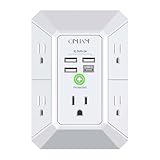
I remember the first time I tried to plug a fancy new gadget into an outlet overseas and it just… died. Nothing. No lights, no hum, nada. I’d bought the right adapter, or so I thought, but it was a stark reminder that not all electricity is created equal. It got me thinking, and honestly, a little annoyed. So, let’s cut through the confusion and talk plainly: are all outlets AC or DC?
The short answer is: most of the ones you plug your regular household stuff into are AC. But like most things electrical, there’s more to it than that. This isn’t some obscure bit of trivia; understanding this can save you from frying your electronics or, worse, a trip to the repair shop.
Why Your Wall Socket Isn’t What You Think (it’s Ac)
Okay, let’s get this straight right out of the gate: the vast majority of outlets you encounter in your home, office, or pretty much anywhere else in the developed world are supplying Alternating Current (AC). This isn’t some newfangled concept; AC power has been the standard for residential and commercial buildings for over a century. Think about it – your toaster, your TV, your laptop charger (well, the brick part of it), they all rely on the AC power coming straight from the wall.
So, what’s the big deal with AC? The main idea behind AC is that the direction of the electrical current reverses itself many times per second.
In the US, this happens 60 times a second (60 Hertz), and in Europe and many other places, it’s 50 times a second (50 Hertz). This constant switching is actually super useful for transmitting electricity over long distances.
Power plants generate AC, and it’s much easier and more efficient to ‘step up’ the voltage for transmission and then ‘step it down’ for use in our homes using transformers. If everything had to be Direct Current (DC), the whole grid system would be a lot more complicated and a lot less efficient. Imagine trying to send DC power across hundreds of miles – you’d lose a ton of energy, and it would be a logistical nightmare to manage the voltages.
My first real ‘aha!’ moment with AC power wasn’t in a classroom, but when I was trying to diagnose a weird hum coming from an old amplifier. I’d heard stories about power supply issues and started digging. It turns out, the hum was often a characteristic sound of the AC waveform interacting with certain components. Understanding that the power wasn’t just a steady flow, but a constant back-and-forth, helped me troubleshoot in a way I never could have before. It’s like understanding that a river flows downstream consistently, versus a tide that constantly ebbs and flows; different behaviors, different implications for what you can do with it.
The common advice often glosses over this, just saying ‘plug it in’. But knowing it’s AC is the first step to understanding why some devices need special converters or adapters. It’s not just about the plug shape; it’s about the fundamental nature of the electricity itself. You wouldn’t try to pump water through a pipe that’s designed for air, would you? Same principle applies here. The electrical infrastructure is built around AC, and most of our appliances are designed to take that AC power directly.
This is why when you look at a typical wall outlet, you’re looking at a gateway to the AC power grid. It’s a simple, solid system designed for mass distribution. The outlets are just the interface, the point where that AC power becomes accessible for your everyday needs. No magic, just good old-fashioned engineering that’s stood the test of time, albeit with a few regional variations in frequency.
The World of Dc: Where It Hides and Why It Matters
Alright, so if most wall outlets are AC, where does Direct Current (DC) fit into the picture? This is where things get a bit more nuanced, and honestly, a lot more interesting if you’re into gadgets and electronics. While your wall socket is pumping out AC, almost every electronic device you own – your smartphone, your laptop, your smart TV, that little USB-powered desk fan – runs on DC power internally. That might sound contradictory, but it’s actually a brilliant piece of engineering.
The magic happens in those little power bricks or adapters you plug into the wall. They contain a rectifier circuit, which is basically a bunch of diodes, that converts the incoming AC power into DC power. This DC power is then regulated to a specific voltage that your device can handle. This is why your phone charger is labeled ‘Output: 5V DC’ – it’s taking the AC from the wall and giving you a steady, unidirectional flow of electricity at a safe voltage. It’s a important step, and if that adapter is faulty, you could be sending the wrong kind of power (or the wrong voltage) to your precious device, which is a surefire way to cause damage.
Think about the early days of electricity. Thomas Edison was a huge proponent of DC power. He envisioned DC power running everything, but he ran into major problems with transmission distances. DC voltage is hard to change efficiently. So, if you wanted to power something across town, you’d need a DC generator right there, which was impractical. Nikola Tesla, with his AC system, and George Westinghouse, who commercialized it, eventually won the ‘War of the Currents’ because AC could be easily stepped up for long-distance transmission and then stepped down for safe use. That’s why our grid is AC. But the devices we use? They often prefer DC. (See Also: Are American Outlets Ac Or Dc )
So, in a roundabout way, DC is everywhere, but it’s usually generated after the AC has come out of the wall. There are some exceptions, of course. Battery-powered devices are inherently DC. Your car’s electrical system is DC (powered by the alternator, which produces AC that’s then rectified to DC, and stored in the battery). Some specialized industrial equipment might use DC directly from dedicated sources. Even solar panels produce DC power. If you’ve ever seen a solar panel array, you’ll know they output DC, which then needs to be converted to AC for your home grid or used directly by DC appliances.
I once spent an entire weekend trying to power a project I was building with a stack of 9-volt batteries. I needed a specific voltage, and I figured I could just string them together. It worked, sort of, but the current was limited, and the voltage dropped faster than I expected. It really hammered home the difference between having a continuous, high-power AC source and a more limited DC source. The batteries were DC, no doubt, but they were a different beast entirely from the power coming out of the wall. It highlighted how ubiquitous AC is for bulk power, and how DC is the preferred flavor for the sensitive electronics that actually do the ‘work’ for us.
Ac vs. Dc: A Simple Breakdown (no Engineers Required)
Let’s strip away the jargon and get to the core of what makes AC and DC different. Imagine electricity as water flowing through a pipe. In Direct Current (DC), the water flows in one direction, always. It’s a steady, predictable stream. Think of a battery powering a flashlight – the electrons flow from the negative terminal to the positive terminal. Simple, unidirectional flow.
Alternating Current (AC), on the other hand, is like water that sloshes back and forth in the pipe. The direction of the flow reverses itself regularly. In your wall outlets, this happens 50 or 60 times every second. This back-and-forth motion is what allows AC to be so easily transformed to different voltage levels. Higher voltage is great for sending electricity across long distances with less loss, and lower voltage is safer for use in our homes. Transformers are the key players here; they use the alternating magnetic field created by AC to induce a current in another coil, allowing them to easily step the voltage up or down.
Here’s a handy way to think about it:
| Feature | Alternating Current (AC) | Direct Current (DC) |
|---|---|---|
| Direction of Flow | Reverses direction periodically | Flows in one constant direction |
| Common Sources | Wall outlets (power grid), generators | Batteries, solar panels, power adapters (after conversion) |
| Voltage Transformation | Easily transformed using transformers | Difficult to transform efficiently |
| Transmission Efficiency | Very efficient over long distances | Inefficient over long distances without complex conversion |
| Typical Use Cases | Powering homes, businesses, heavy machinery | Powering most small electronics, battery-powered devices, cars |
| Opinion/Verdict | The backbone of our power grid; great for bulk transport. | The preferred power for most sensitive electronics; key for portable devices. |
So, when you hear about AC or DC, it’s fundamentally about the nature of the electrical flow. Your wall outlet provides AC. Your battery provides DC. The power adapter between the two converts AC to DC. It’s not an either/or situation for the entire electrical world; rather, they each have their strengths and are used in different parts of the system where they make the most sense. You won’t find a DC outlet in your living room because the grid infrastructure is built for AC, and AC is better for getting that power to your house in the first place. But internally, your gadgets are often begging for that steady DC flow that the little power brick provides.
Common Mistakes and Why They Fry Your Gear
One of the biggest blunders I’ve seen people make, and honestly, I’ve made variations of it myself, is confusing AC and DC requirements for devices, or simply not understanding voltage differences. It’s easy to think, ‘It plugs in, it should work!’ But electricity isn’t always that forgiving. The most common mistake, by far, is plugging a device designed for one voltage into a socket that provides a different voltage. This is especially common when traveling internationally, but it can happen domestically too.
Let’s say you have a device that’s designed to run on 120V AC (common in North America) and you plug it into a 240V AC outlet (common in Europe). You’re basically forcing twice the voltage through your device’s circuits. This can cause components to overheat, melt, or even explode. I had a friend who brought a hair dryer from the US to Europe without a voltage converter. She plugged it in, it made a strange noise, and then… smoke. The hair dryer was toast, and she was lucky it didn’t cause a fire. The outlet was AC, and her device was AC, but the voltage was all wrong.
Another common pitfall is with those USB chargers. While most modern USB power sources provide 5V DC, some older or cheaper chargers might not regulate the voltage properly. If you plug a sensitive device into a charger that suddenly spikes to 9V or 12V (common in fast-charging protocols, but needs to be negotiated), you can damage the battery or charging circuitry. I once used a generic, no-name USB power bank that seemed to work for charging my phone, but after a few weeks, my phone’s battery life seemed to tank. I suspect the power bank wasn’t delivering a clean, stable 5V DC. It’s a gamble.
Here’s my personal screw-up story: I was building a custom LED lighting system for my workshop. I bought a bunch of high-power LEDs and a power supply that I thought was suitable. It was an AC-to-DC converter, but I misread the specs and got one that outputted way too much current (amps) for the LEDs.
The voltage was correct (DC, around 12V), but the current was excessive. I hooked it up, and within seconds, the LEDs flashed brightly and then died. Poof. (See Also: Are All Power Outlets Ac )
Gone. The power supply was technically AC to DC, the voltage was right, but the current rating was way off, and it cooked the LEDs.
I should have listened to my gut and double-checked the amperage. It cost me about $50 in LEDs and a lot of frustration.
The advice I got back then was to always check the voltage and amperage ratings on both the device and the power source. For devices that plug into the wall, look at the label: it will tell you the input voltage (e.g., 100-240V AC) and sometimes the frequency (50/60 Hz). For power adapters, look at the output rating: it will specify the voltage (e.g., 5V DC) and current (e.g., 2A). Never assume. If a device only says ‘120V’, it likely won’t survive 240V. And if your charger doesn’t specify ‘DC’, be very, very suspicious, especially if it’s a generic one. Safety first, always. Don’t let the allure of a cheap gadget lead to a costly mistake.
Real-World Applications: Where Ac and Dc Shine
Understanding the difference between AC and DC isn’t just an academic exercise; it has real-world implications for how we power our lives and the devices we use every day. Think about the backbone of our entire electrical system – it’s AC. Your local utility company generates AC power at a power plant, steps up the voltage for efficient transmission across long distances, and then steps it down again as it gets closer to your home.
The outlets in your walls are designed to accept this AC power. This is why large appliances like your refrigerator, your electric stove, and your washing machine are all designed to run directly on AC power. They’re built with motors and heating elements that are optimized for this type of current.
Now, switch gears to the devices that are probably within arm’s reach right now: your smartphone, your tablet, your laptop, your wireless earbuds. These all run on DC power. Why? Because their internal components, like microprocessors, memory chips, and sensors, require a stable, unidirectional flow of electricity at a specific, low voltage. Imagine trying to send that fluctuating AC signal directly into something as sensitive as a smartphone’s processor – it would likely be damaged instantly. That’s where the AC-to-DC power adapter (your charger) comes in. It’s the important intermediary, taking the AC from the wall and converting it into the clean DC signal your gadgets need.
Consider the automotive world. Your car’s electrical system is primarily DC. The battery provides DC power to start the engine and run accessories when the engine is off. When the engine is running, the alternator generates AC power, but it immediately converts it to DC to charge the battery and power the car’s systems. This is why you can’t just plug a standard household AC appliance into your car’s cigarette lighter (unless you have a specific AC inverter, which converts the car’s DC to AC). The voltage is also different – typically 12V DC in most cars, compared to 120V or 240V AC from your home outlets.
Even renewable energy sources have their own AC/DC stories. Solar panels, for instance, generate DC electricity. This DC power can be used directly to charge batteries or power DC appliances. However, to feed it into your home’s AC electrical system or send it back to the grid, it needs to be converted to AC using an inverter. Wind turbines can be designed to produce AC directly, but they often still require voltage regulation and conditioning.
It’s a layered system. AC is the king of bulk power transmission, thanks to its ease of voltage transformation. DC is the workhorse for the sensitive, low-voltage electronics that have become indispensable in modern life. They aren’t competitors; they’re collaborators, each playing a vital role in how electricity powers our world. Without AC, getting power to your home efficiently would be a nightmare. Without DC, the sophisticated electronics we rely on wouldn’t function.
Practical Tips for Powering Your Stuff Safely
Navigating the world of AC and DC power can seem daunting, but with a few practical tips, you can keep your devices happy and your home safe. First and foremost: always check the labels. Before you plug anything in, especially when traveling or using a new adapter, look for the voltage and frequency requirements. For devices that plug directly into wall outlets, you’ll see something like ‘Input: 100-240V ~ 50/60Hz’. The ‘~’ symbol indicates AC. If a device is only rated for 120V, do NOT plug it into a 240V outlet without a proper voltage converter. Conversely, a 240V-only device will likely just not work or perform poorly on 120V.
For USB devices and their chargers, the output is almost always DC. Look for the ‘Output’ section on the charger. It should specify a DC voltage, typically 5V for standard USB, but it can be higher for fast-charging technologies like Quick Charge or USB Power Delivery. The current rating (in Amperes or ‘A’) is also important. A charger with a higher amperage rating can charge devices faster, provided the device itself supports it. Using a charger with a lower amperage than recommended might work, but it will charge slowly, and in some cases, might not even be enough to keep the device powered while it’s in use. (See Also: Are Arc Trip Outlets Required In Hillsborough County )
Here’s a simple rule of thumb: For AC devices, match the voltage and be aware of the frequency (though most modern electronics are designed to handle both 50Hz and 60Hz). For DC devices and their adapters, match the DC voltage and make sure the amperage is at least what the device requires. You can often use a higher amperage adapter than specified, as the device will only draw the current it needs. However, using a lower amperage adapter can lead to slow charging, overheating of the adapter, or the device not functioning correctly.
When in doubt, err on the side of caution. If a product doesn’t clearly state its voltage or current requirements, or if it comes from a sketchy source, it’s probably best to avoid it. Cheap, uncertified power adapters are a common culprit for damaging devices or even posing a fire risk. Look for products that have certifications like UL, CE, or FCC, which indicate they have met certain safety standards. For example, my rule of thumb is to never buy a charger that doesn’t have a clear UL listing. It’s a small detail, but it’s saved me from potential headaches.
Finally, understand your devices. Your laptop likely came with a specific power adapter for a reason. While you might be tempted to use a generic replacement, sticking with the manufacturer’s recommended adapter or a high-quality, certified alternative is the safest bet. It makes sure that the AC power from your outlet is being converted to the precise DC voltage and current your expensive piece of tech needs to run smoothly and reliably for years to come.
People Also Ask
What Happens If You Plug a Dc Device Into an Ac Outlet?
If you plug a DC-only device into an AC outlet without a proper converter, you will almost certainly damage or destroy the device. AC power constantly reverses direction, while DC devices are designed for a steady, unidirectional flow. The fluctuating AC voltage can overwhelm and burn out sensitive electronic components within the DC device. It’s like trying to force water through a pipe designed for air – it just doesn’t work and causes damage.
Can You Use an Ac Adapter for a Dc Device?
No, you cannot use a standard AC adapter (meaning one that outputs AC) for a DC device. DC devices require a steady, unidirectional flow of electricity. An AC adapter that outputs AC power will not power a DC device correctly and will likely damage it. You need an AC-to-DC power supply or converter that takes AC from the wall and transforms it into the specific DC voltage and current your device needs.
What Is the Difference Between Ac and Dc Outlets?
In typical residential and commercial buildings, there aren’t “AC outlets” and “DC outlets” side-by-side. The outlets in your wall provide AC power from the utility grid. DC power is typically supplied by batteries or through AC-to-DC power adapters (chargers). While some specialized setups might exist, standard wall outlets are designed for AC. You won’t find a direct DC outlet in your home for plugging in your phone charger; the charger itself converts the AC from the wall outlet to the DC your phone needs.
Are All Electrical Outlets Ac or Dc?
No, not all electrical outlets are strictly AC or DC in the way you might think. The standard wall outlets in homes and buildings are designed to provide Alternating Current (AC). However, most electronic devices internally run on Direct Current (DC). This DC power is supplied through power adapters (chargers) that convert the AC from the wall outlet into the required DC voltage. Battery-powered devices also use DC. So, while your wall outlet is AC, the power your gadgets actually use is often DC.
Final Verdict
So, to put it plainly: your wall outlets are almost universally AC. That’s the power the grid delivers. But the vast majority of your electronic gizmos? They run on DC. That little power brick you plug into the wall is the unsung hero, doing the important job of converting that AC into the DC your devices crave. It’s not about whether outlets are AC or DC, but rather understanding what kind of power the outlet provides and what kind of power your device needs.
Don’t get caught out like I did with those fried LEDs. Always check the voltage and current ratings. If you’re traveling, make sure you have the right converter. For your sensitive electronics, invest in good quality, certified power adapters. It’s a small thing, but it makes a world of difference in keeping your gear running smoothly and safely.
The next time you plug something in, take a second to appreciate the journey that electricity takes, from the power plant to your device. It’s a complex dance between AC and DC, and a little knowledge goes a long way in making sure it all plays out perfectly. Are all outlets AC or DC? Well, the ones in your wall are AC, but the story doesn’t end there.