I remember the first time a storm knocked out power in my neighborhood. My computer, which I’d been using right up until the lights flickered, was toast. Dead. I figured it was just bad luck, a freak occurrence. Turns out, it was a lesson learned the hard way about what’s actually protecting your gear. So, let’s cut to the chase: are all power outlets surge protectors? The blunt answer is a resounding no.
Most people assume every wall socket is some kind of guardian angel for their electronics, silently deflecting electrical nasties. It’s a common and expensive misconception. We pay good money for fancy gadgets, and the idea that they’re all just passively waiting to be fried by a power surge feels like a betrayal.
This article isn’t about corporate jargon or marketing fluff. It’s about what I’ve learned through trial, error, and a few too many ruined appliances. We’re going to break down what surge protection actually means, why your standard outlet isn’t doing it, and what you actually need to keep your valuable electronics safe.
Why Your Standard Wall Outlet Is Just a Hole in the Wall
Let’s start with the most basic question: are all power outlets surge protectors? No, they are not. Not even close. Your typical wall outlet, the kind you see everywhere, is literally just a connection point. It’s designed to deliver electricity from the grid to your devices. That’s it. It has no built-in defenses against the unpredictable nature of electrical currents, especially during power surges or lightning strikes. Think of it like a garden hose with no shut-off valve – it just lets the water flow.
A power surge is a sudden, temporary increase in voltage. These can happen for a multitude of reasons, the most dramatic being lightning strikes, but also from things like power outages and restorations, or even when major appliances like refrigerators or air conditioners kick on and off. These fluctuations might seem small, but they can deliver a jolt of electricity that’s far more than your sensitive electronics can handle. Without surge protection, this excess voltage can fry circuit boards, corrupt data, and render your expensive gadgets useless.
I learned this the hard way with my first really nice home theater system. I had a fancy new TV, a high-end receiver, and a Blu-ray player, all plugged directly into the wall. A summer thunderstorm rolled in, a particularly fierce one. There was a flash, a bang, and then… silence. My TV screen was completely black, the receiver wouldn’t power on, and the Blu-ray player emitted a faint, mournful beep before dying. The power company’s diagnostic reported a significant voltage spike. I felt like an idiot. I had spent thousands on electronics and hadn’t even bothered with the most basic protection for them. All those wall outlets did was deliver the surge directly to my gear.
It’s a common mistake, born from the assumption that if a plug fits, it must be safe. But the reality is, standard outlets offer zero protection against electrical transients. They are designed for power delivery, not power conditioning or protection. You’re basically leaving your electronics naked to the elements of the electrical grid. This is why understanding the difference between a regular outlet and a surge protector is so fundamental for anyone who owns anything with a plug.
What ‘surge Protection’ Actually Means (and What It Doesn’t)
Okay, so if a regular outlet isn’t a surge protector, what is? A surge protector is a device designed to shield your electronics from voltage spikes. It does this by diverting the excess voltage away from your connected equipment.
The most common way this is achieved is through Metal Oxide Varistors, or MOVs. These are electronic components that act like a switch. Under normal voltage conditions, they have very high resistance and don’t interfere with the flow of electricity to your devices.
However, when the voltage suddenly spikes above a certain level, the MOVs’ resistance drops dramatically, creating a low-resistance path to ground. This allows the excess electrical energy to flow harmlessly to the ground wire instead of into your delicate electronics.
It’s not a perfect system, though. Every time a MOV absorbs a surge, it degrades a little bit. Think of it like a sponge soaking up water; after enough soaking, it can’t hold much more. This means surge protectors have a finite lifespan. They don’t last forever. Many surge protectors have indicator lights that tell you if they are still actively protecting. When that light goes off, or if the unit has taken a particularly big hit (like from a nearby lightning strike), it’s time to replace it, even if it still powers your devices. If you don’t, you’re basically using a fancy power strip with no surge protection capabilities left. (See Also: Are American Outlets Ac Or Dc )
A common misunderstanding is that surge protectors prevent all electrical damage. That’s not true. They are designed for transient overvoltages – the spikes. They won’t protect against sustained overvoltage (where the voltage stays too high for an extended period) or undervoltage (brownouts), nor will they protect against things like power surges caused by faulty wiring within your own home or short circuits. They are specifically designed to handle the sudden, short-lived bursts of high voltage. Some higher-end units offer additional features like line noise filtering, which can improve audio and video quality by cleaning up the electrical signal, but the core function is surge suppression.
Another point of confusion is the term ‘surge suppressor’ versus ‘surge protector’. They are basically the same thing. The key is understanding that the protection comes from the internal components, not the outlet itself. A power strip with multiple outlets is just a way to plug in more things. Unless it explicitly states it has surge protection and uses components like MOVs, it’s just a power strip. My dad, bless his heart, once bought a shiny new power strip and plugged his brand-new gaming PC into it, assuming it was protected. A week later, during a storm, the PC died. He was baffled, saying, ‘But it had all those plugs!’ It was a standard power strip, not a protector.
What to Look for: Beyond the ‘surge Protection’ Label
So, if you can’t just trust the label, what should you be looking for in a genuine surge protector? The first thing is the joule rating. This is probably the most important spec.
A joule rating tells you how much energy the surge protector can absorb before it fails. The higher the joule rating, the more protection it offers. For basic protection of things like lamps or phone chargers, a lower rating might suffice (say, 300-600 joules). But for sensitive and expensive electronics like computers, TVs, gaming consoles, and home theater systems, you want to aim much higher.
I’d recommend at least 1000 joules, and for valuable setups, 2000 joules or more is a good bet. Think of it as the protector’s capacity to ‘take a hit’.
Next, check for indicator lights. As I mentioned, surge protectors degrade over time. A good surge protector will have a light that indicates it’s actively protecting. If that light goes out, the unit needs to be replaced. Some also have an ‘undervoltage’ or ‘grounded’ indicator light. While less common, these can be helpful. Look for reputable brands. While I’m not going to name names and get corporate, you can usually tell the quality by the price and the warranty offered. A longer warranty (like 5 years or more) on the surge protector itself, and sometimes even on the connected equipment (equipment protection policies), is a good sign that the manufacturer stands behind their product.
Consider the clamping voltage. This refers to the voltage at which the surge protector begins to divert excess electricity. Lower is better. For most household electronics, a clamping voltage of 400-500 volts is generally considered good. This means that once the voltage hits that level, the protector kicks in. Anything significantly higher might mean your electronics are exposed to damaging voltages before the protector acts.
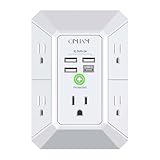
Finally, think about the type of outlets you need. Do you just need a few plugs for a lamp and a phone charger, or do you have a whole entertainment center or a computer workstation? Surge protectors come in various configurations: basic power strips with 4-6 outlets, wall-mount units, and even whole-house surge protectors that are installed at your electrical panel. Some also offer features like USB ports, coaxial cable protection (for cable TV or satellite dish lines), and Ethernet line protection, which is important because surges can travel through these lines too.
Here’s a quick look at what to consider:
| Feature | What It Is | Why It Matters | My Verdict |
|---|---|---|---|
| Joule Rating | Energy absorption capacity | Higher means better protection against stronger surges. Aim for 1000+ for valuable gear. | Must-have. A must for any serious electronics. |
| Indicator Lights | Visual confirmation of protection status | Lets you know when the surge protector needs replacing. Important for ongoing safety. | Highly Recommended. Don’t skip this. It’s your early warning system. |
| Clamping Voltage | Voltage at which protection kicks in | Lower is better. Indicates how much voltage your gear sees before protection starts. | Important. Look for 400-500V or less. |
| Warranty | Manufacturer’s guarantee | Longer warranties often indicate better quality and include equipment protection policies. | Good Indicator. A 5+ year warranty is a solid sign of confidence. |
| Number of Outlets | How many devices you can plug in | Match to your needs. Don’t overload a single protector. | Practical. Get what you need, but don’t sacrifice protection for more plugs. |
Common Mistakes People Make (and How to Avoid Them)
One of the most common mistakes I see, and one I’ve definitely made myself, is assuming a surge protector lasts forever. As I mentioned, MOVs degrade with every surge they absorb. This means a surge protector that saved your gear last year might be useless this year. The indicator light is your best friend here. (See Also: Are All Power Outlets Ac )
If it’s off, the surge protector is just a fancy power strip. I had an old surge protector on my desk for years, and it had saved my computer at least twice, according to the surge history on its status light. But one day, I noticed the light was out.
I replaced it immediately, and a week later, we had a massive power surge from a downed line. Who knows what would have happened if I hadn’t swapped it out?
Another mistake is overloading surge protectors. While they have a joule rating, each individual outlet might not be rated for the full capacity. Plugging in too many high-draw devices into a single surge protector can not only reduce its effectiveness but also potentially overheat the unit. Always consider the total power draw of the devices you’re plugging in. If you have a lot of equipment, it’s better to use multiple surge protectors or invest in a higher-capacity model. Don’t daisy-chain them either – that is, plugging one surge protector into another. This is a recipe for disaster, creating fire hazards and ineffective protection.
People also often forget about protecting other types of lines. Surges don’t just travel through power cords. They can come in through coaxial cable lines for your TV or internet, telephone lines, and even Ethernet cables. If you have a sophisticated home entertainment system or a home office with multiple devices connected to the internet, you need surge protectors that offer protection for these lines as well. I once had a lightning surge come through my cable modem, frying it and my router. The surge protector I had on the power strip did nothing because the surge didn’t even touch it. Now, all my important setups have multi-protection units.
Finally, there’s the mistake of buying the cheapest option. While I love a good bargain, when it comes to protecting thousands of dollars worth of electronics, skimping on the surge protector is a false economy. The cheapest units often have lower joule ratings, lower quality components, and shorter lifespans. You end up paying more in the long run when your electronics get damaged. It’s like buying cheap tires for a sports car; it might save you money upfront, but it’s a terrible idea for performance and safety. Always prioritize quality and ratings over just price.
Surge Protectors in the Real World: My Experience
I’ve been through a few cycles of buying surge protectors, and frankly, it’s not always a pleasant journey. When I first started buying them, I was just looking for something that said ‘surge protection’ and had a few outlets. I bought a few cheap ones, thinking I was covered. Then came the aforementioned home theater incident. After that, I got serious.
My next step was buying a mid-range surge protector for my computer. It had a decent joule rating and an indicator light. It worked for about three years, and the light stayed on the whole time. Then, during a particularly nasty storm, it went dark. The computer was fine, thankfully. That was a moment of vindication for spending a bit more. But then I got into the world of gaming consoles and high-definition TVs, and realized I needed more solid protection.
I ended up investing in a higher-end surge protector that had a very high joule rating, along with protection for coax and Ethernet lines. This was for my main entertainment center. It cost me about $80, which felt like a lot for a power strip back then.
But it has survived several power surges and lightning strikes without a hiccup, and the indicator light is still on. The peace of mind alone was worth it. I also now use a dedicated surge protector for my 3D printer, as those components are quite delicate and expensive to replace. The initial cost of a good surge protector is always less than replacing a fried laptop, a corrupted hard drive, or a dead television.
Contrarian opinion time: Everyone says you need a surge protector for everything. I disagree. For really low-value items – think a cheap bedside lamp, a basic fan that’s not electronic, or an old toaster – a standard outlet is probably fine. The risk and cost of replacing them are minimal. My focus is on anything with a microchip, a digital display, or a significant monetary value. Those are the items that absolutely need protection. Spending $30 on a surge protector for a $10 lamp is just silly. But for a $500 tablet or a $1000 computer? That’s a no-brainer. Prioritize where the real financial risk lies. It’s about smart investment, not blanket coverage. (See Also: Are Arc Trip Outlets Required In Hillsborough County )
I also learned that not all surge protectors are created equal, even within the same brand. I once bought two surge protectors that looked almost identical, but one had a significantly higher joule rating and a better warranty. Always read the specs, don’t just go by the box art. The tactile feel of the unit matters too; a cheap, flimsy plastic casing often indicates cheaper internals. A solid, well-built unit feels more substantial, which, in my experience, correlates with better components.
Do I Need a Surge Protector for Every Outlet?
No, you absolutely do not need a surge protector for every single outlet. Standard outlets are fine for low-value, non-electronic items like simple lamps or fans. The key is to identify which of your devices are sensitive and expensive enough to warrant surge protection. Focus your spending on protecting your computers, TVs, gaming consoles, and other valuable electronics.
How Often Should I Replace My Surge Protector?
Surge protectors degrade over time with each surge they absorb. A good rule of thumb is to check the indicator light regularly. If the light that signifies protection is off, replace the unit immediately. Even if the light is on, it’s generally recommended to replace surge protectors every 5-7 years, as their internal components can wear out even without significant surge events. Think of it as scheduled maintenance for your electrical safety.
Can a Surge Protector Catch Fire?
Yes, in rare cases, a faulty or severely overloaded surge protector can catch fire. This is more likely to happen with cheap, uncertified units, or if the protector is overloaded beyond its capacity. Always purchase surge protectors from reputable brands that meet safety standards (like UL certification), and never overload them by plugging in too many high-draw devices or daisy-chaining them. Proper use and regular inspection are key to preventing such incidents.
The Takeaway: Protection Isn’t Automatic
So, to circle back to our main question: are all power outlets surge protectors? Absolutely not. Your standard wall socket is just a conduit for electricity. It offers no defense against the voltage spikes that can destroy your electronics. This is a fundamental concept that many people overlook, leading to costly damage and frustration.
Understanding surge protection involves recognizing that it’s an added feature, not a standard one. You need to actively choose devices that provide this protection. This means looking beyond the basic outlet and investing in dedicated surge protectors. The joule rating, indicator lights, and clamping voltage are your key metrics when shopping. Don’t be swayed by fancy marketing; focus on the technical specifications that actually matter for safeguarding your gear.
I’ve personally witnessed and experienced the consequences of this oversight. From dead computers to fried home theater systems, the cost of not having adequate surge protection is far greater than the cost of buying it. It’s about making an informed decision to protect your investments. For anything with a circuit board or a significant price tag, a surge protector is not an optional accessory; it’s a necessity. The question isn’t if your outlets are surge protectors, but rather, are you actively protecting your electronics?
Conclusion
The bottom line is this: your standard wall outlet is just a hole in the wall, not a guardian angel for your electronics. If you want protection against damaging power surges, you have to actively seek it out by purchasing dedicated surge protector devices. Don’t assume anything is safe just because it plugs in. I’ve learned that lesson the hard way, and I don’t want you to have to.
Always check the joule rating, look for indicator lights, and consider the clamping voltage when you’re buying. And remember, even the best surge protectors don’t last forever; keep an eye on those indicator lights and replace them when they’re no longer active. Investing in good surge protection for your valuable electronics is one of the smartest, and cheapest, forms of insurance you can get.
So, before the next storm rolls in or that big appliance cycles on, take a moment to check your setup. Are all power outlets surge protectors? No. But are yours? Make sure they are. And if they aren’t, it’s time for a quick trip to the store to pick up some peace of mind.