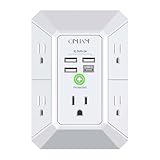
I swear, the number of times I’ve stood in the electrical aisle, staring at a wall of identical-looking white plastic rectangles, and wondered if there’s some secret handshake or code I’m missing… it’s probably embarrassing. Like, are all US single outlets the same? You’d think so, right? They all look like they came off the same mold. But then you start digging, and suddenly you’re knee-deep in amperage ratings and tamper-resistance and wondering if you’re about to accidentally burn your house down because you bought the wrong $2 widget.
For years, I just grabbed whatever was cheapest. Big mistake. Huge. Turns out, there’s more to this simple little thing than meets the eye. And the common advice? Sometimes it’s just plain wrong.
Why the Basic Outlet Isn’t So Basic Anymore
Look, for the longest time, I operated under the delusion that a standard US duplex outlet, or even a single outlet, was just… an outlet. You plug something in, it gets power. Done. I was young, foolish, and probably living in a rental where the landlord handled this stuff.
Then I bought my own place, and suddenly I was tasked with replacing a few dodgy outlets, and the sheer variety hit me like a rogue surge protector. I remember one time, trying to replace an old outlet in the kitchen.
It looked fine, but the plug felt loose. I picked up what I thought was a standard replacement, a pack of maybe three for under ten bucks. Got home, wired it up, and the plug still wobbled.
Turns out, the old one had slightly deeper slots or some internal tension mechanism that the cheap replacement just didn’t replicate. Frustrating? Absolutely. Cost me a second trip to the store and another $15 for something that felt more solid.
The core function remains the same: to provide a point of connection for electrical devices. But the devil, as always, is in the details. For a single outlet, which is less common in modern homes but still found in older constructions or specific applications, the same principles apply. It’s a receptacle designed to accept a plug and deliver AC power from the building’s wiring. The physical dimensions of the slots are standardized by NEMA (National Electrical Manufacturers Association) to make sure compatibility with plugs. For North America, this generally means Type A and Type B plugs, the ones with two flat parallel pins and often a round grounding pin.
But here’s where it gets interesting: not all outlets are built to the same internal specifications or safety features, even if they look identical from the outside. This is especially true when you start looking at outlets designed for specific purposes or higher power demands, though even basic residential outlets have evolved significantly in the last decade due to safety regulations and evolving electrical needs.
Different Strokes for Different Folks (and Amps)
The most fundamental difference you’ll encounter, even with seemingly identical outlets, relates to their amperage rating. Most standard household outlets are designed for 15 amps. You’ll see this often printed right on the outlet itself, usually a small ’15A’ or ’15’.
This is perfectly fine for most of your everyday devices: lamps, phone chargers, TVs, laptops, blenders. However, some appliances draw significantly more power. Things like microwaves, toasters, electric heaters, hair dryers, and power tools can push closer to or even exceed 15 amps, especially under heavy load or when running for extended periods.
For these higher-draw appliances, you need a 20-amp outlet. These outlets have a slightly different configuration on one of the slots (the neutral slot is often a T-shape) to accept the corresponding 20-amp plug. Using a 15-amp outlet with a 20-amp appliance, or wiring a 20-amp circuit with only 15-amp outlets, is a recipe for disaster, or at least a tripped breaker.
My own confusion once led me to install a 15-amp outlet in a spot where I intended to plug in a powerful shop vacuum. It worked, technically, but I kept tripping the breaker. I’d assumed any outlet was an outlet. Wrong. The vacuum’s plug looked like a normal plug, but the circuit was intended for higher demand. I had to swap out that outlet and a section of wiring to accommodate a 20-amp circuit and receptacle. Lesson learned: check the appliance’s plug and the circuit’s rating before you buy an outlet. It’s not just about fitting; it’s about safely handling the load.
The Rise of Tamper-Resistant Receptacles (trrs)
This is a big one, and frankly, something everyone should be aware of. Since 2008, the National Electrical Code (NEC) has mandated that new construction and major renovations must install Tamper-Resistant Receptacles (TRRs) in most locations. So, while you might be able to buy older, non-tamper-resistant outlets, if you’re replacing an outlet in a home built or significantly updated since then, you’re likely replacing it with a TRR. (See Also: Are American Outlets Ac Or Dc )
And that’s a good thing. How do they work?
They have an internal shutter system that prevents foreign objects (like keys, paperclips, or little fingers) from being inserted into the slots. You have to insert a proper plug with both prongs simultaneously to open the shutters. It’s a simple mechanism, but incredibly effective at preventing accidental shocks. I’ve got kids, and the peace of mind that comes with TRRs is worth every penny.
I specifically look for them now, even for minor replacements, because it’s just the smarter, safer choice. They might cost a dollar or two more per outlet, but when you consider the potential consequences, it’s a no-brainer.
The common advice to just buy the cheapest replacement? That’s where the real money gets wasted in potential safety hazards.
Decoding the Codes: What Those Markings Mean
You’d think a simple electrical outlet would be straightforward, but the markings on the back or side can look like a secret code. Understanding them is key to knowing if you’re getting the right thing.
The most important ones to look for are the amperage rating (15A or 20A) and the voltage rating (usually 125V for standard household circuits). You might also see UL (Underwriters Laboratories) or ETL (Intertek) listed, which indicates the product has been tested by a recognized third-party laboratory for safety and performance standards. This is a sign of quality and safety you absolutely want to see.
Cheaper, unlisted outlets might seem like a bargain, but they haven’t undergone the same rigorous testing and could be a fire hazard. I’ve seen too many cheap, no-name electrical components fail spectacularly.
Stick with reputable brands and look for those certification marks.
Then there are markings related to the type of wiring or installation. You might see ‘W’ for back-wiring (using push-in connections) or ‘S’ for side-wiring (using screws). Back-wiring is often easier for DIYers, but side-wiring with the screws tightened down is generally considered a more secure and reliable connection, especially in high-vibration areas or for higher-amperage circuits. For most standard residential wall outlets, either is usually fine, but if you’re doing a professional installation or dealing with a circuit that sees a lot of use, screw terminals are often preferred. I’ve had push-in connections loosen up over time, leading to intermittent power or even overheating. It’s a small detail, but it matters for long-term reliability.
Gfci and Afci: More Than Just Power
Beyond basic power delivery, there are specialized outlets designed for enhanced safety in specific environments. Ground Fault Circuit Interrupters (GFCIs) are mandatory in areas where water is present, like bathrooms, kitchens (near sinks), garages, and outdoor locations.
They are designed to detect imbalances in the electrical current that could indicate electricity is flowing through an unintended path, such as a person. If a ground fault is detected, the GFCI quickly cuts off power, preventing electrocution. You’ll recognize them by the ‘Test’ and ‘Reset’ buttons right on the face of the outlet. While they look different and cost more than standard outlets, their safety function is invaluable.
I always recommend upgrading to GFCI outlets in any area where there’s even a slight risk of water contact. The cost is minimal compared to the potential for severe injury or worse. (See Also: Are All Power Outlets Ac )
Similarly, Arc Fault Circuit Interrupters (AFCIs) are becoming more common, especially in bedrooms and living areas. They are designed to detect dangerous electrical arcs, which can occur due to damaged wiring or faulty connections and are a common cause of electrical fires. While GFCI outlets protect against electrocution, AFCI outlets protect against fires. In many newer homes, you’ll find AFCI protection either at the breaker panel or through AFCI outlets. If you’re doing any significant electrical work or replacing outlets in older homes, especially in sleeping areas, consider upgrading to AFCI protection. It’s another layer of safety that’s often overlooked but can make a real difference.
A Table of Differences: Beyond the Surface
To really drive home that not all outlets are the same, let’s break down some common types you might encounter, even if they look superficially similar. This isn’t an exhaustive list, but it covers the most likely candidates you’ll bump into when doing DIY electrical work or just trying to understand what’s in your walls.
| Outlet Type | Primary Function | Key Features | Common Use Cases | My Verdict |
|---|---|---|---|---|
| Standard 15A Receptacle | Basic power delivery | Two vertical slots, optional ground hole. 15-amp capacity. | General lighting, electronics, small appliances. | Fine for low-draw devices, but upgrade where possible. |
| Standard 20A Receptacle (T-slot) | Higher power delivery | One vertical slot, one T-shaped slot, optional ground hole. 20-amp capacity. | Kitchen appliances, power tools, high-draw devices. | Key for circuits handling more than 15A. Don’t skimp. |
| Tamper-Resistant Receptacle (TRR) | Enhanced child safety | Internal shutters block slots unless a plug is properly inserted. Available in 15A and 20A. | Mandatory in new construction/renovations in most areas. | A must-have, especially with kids or pets. Worth the small extra cost. |
| GFCI Receptacle | Shock protection | ‘Test’ and ‘Reset’ buttons. Detects ground faults and shuts off power. Available in 15A and 20A. | Bathrooms, kitchens, garages, outdoors, laundry rooms. | A must for safety in wet locations. Protects lives. |
| AFCI Receptacle | Arc fault fire prevention | ‘Test’ and ‘Reset’ buttons. Detects electrical arcs. Often paired with GFCI. | Bedrooms, living rooms, and anywhere specified by code. | Great additional safety layer, especially for older homes. |
| USB Receptacle | Integrated charging | Standard outlet slots plus USB-A and/or USB-C ports. | Bedside tables, desks, living rooms – anywhere you charge devices. | Convenient but check the amperage of the USB ports. Not a replacement for high-power chargers. |
Common Mistakes and How to Avoid Them
The biggest mistake people make, myself included, is assuming all outlets are interchangeable and that the cheapest option is the best. This leads to a few common pitfalls. Firstly, buying an outlet with the wrong amperage rating for the circuit or the appliance. If you have a 20-amp circuit, you should ideally have 20-amp rated outlets (with the T-slot). If you put a 15-amp outlet on a 20-amp circuit, it will work, but it bypasses some safety features designed for that higher load. Conversely, putting a 20-amp outlet on a 15-amp circuit isn’t inherently dangerous, but it’s not optimized. The real danger is overloading a 15-amp outlet meant for general use with a high-draw appliance.
Another common error is improper wiring. Even if the outlet looks right, if it’s wired incorrectly – perhaps the hot and neutral are reversed, or the ground wire isn’t connected securely – it can be a serious safety hazard. This is where understanding basic wiring principles is important. Always turn off the power at the breaker before you start.
Use a non-contact voltage tester to confirm the power is off. Double-check your connections: black wire to brass screw (hot), white wire to silver screw (neutral), and bare copper or green wire to the green screw (ground). For GFCI and AFCI outlets, the wiring is more complex as they often protect subsequent outlets on the same circuit, so following the manufacturer’s instructions meticulously is vital.
I once tried to wire a GFCI outlet and got the ‘line’ and ‘load’ wires mixed up. It’s a simple mistake, but it meant the outlet didn’t provide any GFCI protection, making it basically a regular outlet with fancy buttons that didn’t do anything. Cost me a breaker reset and a few hours of head-scratching before I found the manual.
Finally, neglecting to check for existing safety features. If your home has GFCI or AFCI protection already installed at the breaker panel, you might be able to simply replace a standard outlet with a regular 15A or 20A receptacle. However, if you’re replacing an outlet in a location that requires GFCI or AFCI protection by code (like a bathroom or kitchen), you must install an outlet with that protection, or make sure the upstream breaker provides it.
The code is there for a reason, and while it can seem like overkill, it’s designed to prevent serious accidents. For anyone undertaking this work, reading the manufacturer’s instructions and consulting the National Electrical Code (NEC) or a qualified electrician is highly recommended.
The NEC is the foundational document for electrical safety in the US, and its requirements for outlets are detailed and specific.
People Also Ask:
Are All Us Single Outlets the Same Size?
While the physical dimensions of the faceplate are generally standard for wall-mounting, the internal slot configuration and depth can vary, especially between 15-amp and 20-amp outlets. A 20-amp outlet often has a T-shaped slot on one side to accommodate a plug designed for higher amperage. The mounting screw spacing is standardized, making sure they fit into standard electrical boxes.
Can I Replace a Single Outlet with a Duplex Outlet?
Yes, in most cases, you can replace a single outlet with a duplex outlet, provided the electrical box is large enough to accommodate it and the wiring is sufficient for the circuit. A duplex outlet offers two receptacles instead of one, doubling your connection points. Make sure the amperage rating of the new duplex outlet matches the circuit’s requirements.
What Is the Difference Between a 15 Amp and 20 Amp Outlet?
The primary difference is their capacity to handle electrical current. A 15-amp outlet is designed for circuits drawing up to 15 amps, while a 20-amp outlet can handle up to 20 amps. 20-amp outlets often have a T-shaped neutral slot to accept plugs from higher-draw appliances. You must match the outlet’s amperage to the circuit breaker and the expected load of the connected devices. (See Also: Are Arc Trip Outlets Required In Hillsborough County )
What Is the Safest Type of Electrical Outlet?
The safest types of outlets incorporate advanced safety features beyond basic power delivery. Tamper-Resistant Receptacles (TRRs) prevent accidental insertion of foreign objects. Ground Fault Circuit Interrupter (GFCI) outlets protect against electrocution in wet environments, and Arc Fault Circuit Interrupter (AFCI) outlets protect against electrical fires caused by arcing. For general use, a TRR is excellent, but GFCI and AFCI offer important protection in specific scenarios.
Real-World Installation and Practical Tips
When it comes to actually installing an outlet, whether it’s a single, duplex, GFCI, or AFCI, the process is fundamentally similar, but with important variations. First and foremost: kill the power. I cannot stress this enough. Find the breaker for the circuit you’re working on and flip it off. Then, test the outlet with a voltage tester to make sure there’s no power. Once confirmed, remove the old outlet. Note how the wires are connected – take a picture if you need to. Typically, you’ll have a black wire (hot), a white wire (neutral), and a bare copper or green wire (ground).
For a standard 15A or 20A outlet, connect the wires to the corresponding screws: black to brass, white to silver, ground to green. If you’re using back-wiring (push-in connectors), make sure the wire is stripped to the correct length and pushed in firmly. If you’re using side-wiring (screw terminals), loop the wire around the screw clockwise and tighten securely. Make sure no bare wire is exposed beyond the terminal screw. Gently push the wires back into the electrical box and mount the new outlet. Attach the faceplate. Finally, restore power at the breaker and test the outlet with a plug-in tester or by plugging in a low-power device like a lamp.
For GFCI outlets, there are usually two sets of terminals: ‘LINE’ and ‘LOAD’. The power coming from the breaker goes to the ‘LINE’ terminals. The power going out to other outlets on the same circuit is connected to the ‘LOAD’ terminals. If you’re just replacing a single GFCI outlet and it’s the only one on its circuit, you might only use the ‘LINE’ terminals.
Wiring it incorrectly means you won’t have GFCI protection, or worse, you could cause issues with other outlets. Always follow the manufacturer’s diagram. I learned this the hard way when my GFCI outlet tripped, but the outlets downstream on the same circuit kept providing power – because I’d wired the ‘LOAD’ side to the incoming power.
Oops.
A few practical tips:
- Always buy from reputable brands: Leviton, Pass & Seymour, Hubbell are good starting points. Avoid generic, unbranded options.
- Match amperage to circuit: If your breaker is 20A, use 20A rated outlets. If your appliance plug is 20A (T-shaped neutral slot), you need a 20A outlet.
- Use a voltage tester: A non-contact voltage tester is cheap and key for confirming power is off.
- Don’t overstuff the box: Wires need space. If the box is too small or packed too tight, it can cause heat issues.
- Tighten screws: Loose connections are a major cause of electrical problems.
- Consider USB outlets: For convenience, outlets with integrated USB ports are great for charging phones and tablets, but check their charging speed (amperage). They won’t replace a dedicated fast charger.
Understanding that are all US single outlets the same is a myth is the first step to making safer, more informed choices for your home’s electrical system. It’s not just about swapping out a broken part; it’s about making sure the safety and functionality of your entire home.
Verdict
So, are all US single outlets the same? Absolutely not. While the basic form factor might trick you into thinking they are, the internal workings, safety features, and intended applications can vary wildly. From amperage ratings and tamper resistance to GFCI and AFCI protection, there’s a lot packed into that little plastic rectangle.
My advice? Don’t just grab the cheapest thing on the shelf. Take a minute to look at the markings, understand what your appliance needs, and consider the environment the outlet is going into. If you’re unsure about wiring or specific codes, it’s always better to call a qualified electrician. A few extra dollars or a quick consultation can save you a lot of headaches, and more importantly, keep your home and family safe.
Next time you’re in that aisle, remember this: the humble outlet is more complex than it looks. Choose wisely.